
 ЖИ көмекші


 Қауіпсіз төлем

жүктеу мүмкіндігіне ие боласыз
Бұл материал сайт қолданушысы жариялаған. Материалдың ішінде жазылған барлық ақпаратқа жауапкершілікті жариялаған қолданушы жауап береді. Ұстаз тілегі тек ақпаратты таратуға қолдау көрсетеді. Егер материал сіздің авторлық құқығыңызды бұзған болса немесе басқа да себептермен сайттан өшіру керек деп ойласаңыз осында жазыңыз
 10 Қаңтар 2025
 310
310
1 жыл бойы шексіз жүктеңіз
Virtual reality. Theme Expressing and justifying opinions about 2D games.
Сафи Өтебаев атындағы Жылыой мұнай және газ технологиялық колледжінің ағылшын тілі пәнінің оқытушысы Халелова Алия Айсаевна
Сабақ жоспары
|
Teacher |
Khalelova Aliya Aisaevna |
|
Theme of the session |
Virtual reality. Theme Expressing and justifying opinions about 2D games |
|
Title of the module/discipline |
Standard curriculum of agricultural and technical education in the discipline “Foreign language” of the agricultural and technological direction |
|
1. General information Course, group Type of session/activity |
The 1st course, group 93 Practice (2d session) |
|
2. Goals and objectives |
Learners will be able to: -identify main idea of the text about 2 D games -express and justify opinions about the importance and effectiveness of using 2D games |
|
3. Learning outcomes |
1) use Skimming Reading skills 2) give an opinion on the topic orally and in writing; |
|
4. Assessment criteria |
1) Use reading skills to highlight the necessary information (Skimming Reading); 2) discusses with peers to make hypotheses on the topic using syntax and vocabulary |
|
5. Required resources |
Interactive board, pictures, stickers, gadgets, handouts |
|
6. The outline of the session |
45 minutes |
|
Plan |
|
|
Time |
Teacher’s actions/ Student’s actions |
Assessment criteria |
Resources |
|||||||||||||||
|
Lesson 1 |
||||||||||||||||||
|
Organizational moment 5 minutes |
Organization of motivation for learning activities. Teacher greets the students, distributes them stickers, asking them to write down their favorite gadgets and 2D games, and expectations for the lesson. Students write on stickers and share their interests with the peers |
Students greet the teacher |
Gadgets
stickers |
|||||||||||||||
|
Lead- in 5 minutes
|
Group work
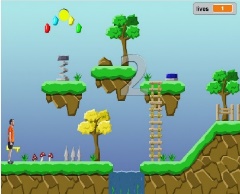
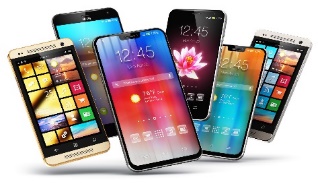
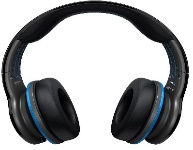
Teacher distributes drawings on the topic 1. Dividing 2 groups Teacher show the pictures (virtual glasses, 2Dgames, headset, helmet, space, computer, keyboard, mobile phone) Warm up: -Now we see interesting things. - Please describing things and try to give some examples from daily life. First group – describing Second group – explain how to use this things
- did we manage to make a forecast for the lesson, so what is the topic of today's lesson about? |
Formative assessment |
Appendix 1 |
|||||||||||||||
|
Pre-reading task 10 minutes
|
•Activity: “Four methods of sentence” to present vocabulary related to the topic. • Students analyze vocabulary using the four-sentence method (opinion, proof, example, conclusion). Adjusted Pre-Reading Task (10 Minutes) 1.Simplify the Activity: • Focus on opinion and example only, skipping “proof” and “conclusion” for brevity. • Provide vocabulary with brief explanations and examples to save time. 2.Interactive Approach: • Introduce the vocabulary quickly by projecting it on the board or using handouts. • Conduct a Think-Pair-Share: • Think: Students individually come up with sentences for one or two words. (2 minutes) • Pair: Discuss and refine sentences with a partner. (3 minutes) • Share: A few students share their sentences with the class. (5 minutes) |
Two stars, one wish strategy |
Appendix 2
A.Alimov "Application of Interactive Methodology in School" Almaty 2015
|
|||||||||||||||
|
While reading task 10 minutes |
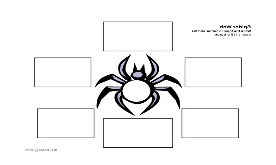
Task 2. Poster defending method The teacher provides a text (resource). Students read the text (3 min) two groups are given the task of analyzing this text in two different ways. Two groups defend the poster on a given text, the first group protects by the spider web method the second group provides protection with a SWOT approach
Differentiation: Differentiation by content: Teacher provides texts of different complexity levels and lengths for the students to work with. Functional literacy: the task of analyzing a text using the spider web and SWOT methods allows students to develop their functional literacy skills by expanding their vocabulary, enhancing critical thinking abilities, and promoting effective communication and discussion. |
Peer assessment
|
Appendix 3
https://myteflsolutions.com/virtual-reality-reading/
https://retrostylegames.com/blog/are-2d-games-still-popular/
Appendix 4
|
|||||||||||||||
|
Post reading task 10 minutes |
- Teacher consistently divided students by mobile phones and computers. Students who choose mobile phones stand on the inner surface of the circle, and the computers remain outside. Then, the question is asked. Questions for pair What is virtual reality? What gadgets do we use to use virtual reality? Do you like 2D games? What kind of games do you prefer? How do you feel comfortable playing 2D games, on your phone or tablet? What is the difference between a 2D game and a 3D game?
Differentiation: Differentiation by content: Teacher provides questions of different complexity levels and lengths for the students to work with.
Functional literacy: Students engaging in discussions and activities related to technology and virtual reality can enhance students' digital literacy skills. By discussing virtual reality and various gadgets, students can develop a deeper understanding of technology, its applications, and its impact on society, thereby improving their functional literacy in a digital age. |
Eaves dropping |
Appendix 5 https://en.wikipedia.org/wiki/Inside-outside_circle
|
|||||||||||||||
|
|
||||||||||||||||||
|
Reflection 5 minutes |
Reflection Phase (Modified) Purpose: To help students better understand the knowledge and skills they gained during the lesson and evaluate their own progress. Time: 5 minutes
1. Reflection Questions (Displayed on the board or screen): • What was the most interesting part of the lesson for me? • What new thing did I learn today? •Which task was the most challenging for me? •Where can I apply this knowledge in real life? •What should I focus on improving next time?
2. Self-Assessment (Scale): Students evaluate their progress using the following scale: •“I fully understood and can apply the knowledge” — 3 points. •“I still need more practice” — 2 points. •“I found this topic difficult” — 1 point.
3. Creative Reflection (Optional): Students are offered creative reflection tasks such as: •Describe your success today with a short drawing or a few key phrases. •Write three sentences about what you learned about virtual reality. |
Students answer the questions |
Appendix 6
A.Alimov "Application of Interactive Methodology in School" Almaty 2015 |
|||||||||||||||


Appendix 2
Appendix 3
The text is adopted by the teacher
https://myteflsolutions.com/virtual-reality-reading/
https://retrostylegames.com/blog/are-2d-games-still-popular/
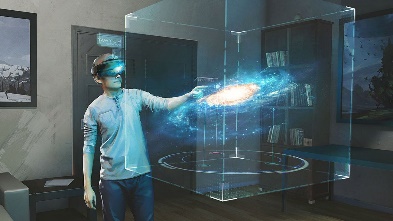
Virtual Reality (VR) is a computer technology used to produce an environment that looks like reality. With VR, students, for example, can imagine themselves flying through space, diving deep under the sea, or traveling the world without stepping foot outside their classroom. In VR, a user wears a headset connected to a computer or mobile device to explore a three dimension (3D) setting. The user can move around in the space. Sights and sounds seem real. Some say the VR experience feels like jumping into a video game.
Are all games technically 2D?
A 3D game consists of 3D characters and assets spread across the game world. A 3D model is a system of triangles given certain coordinates in a three-dimensional space. However, each and every 3D game still appears as 2D to us, since we are projecting it onto a flat monitor. VR is probably a better way to project a 3D game. But still, VR is just two images from a slightly different angle, projected separately to each eye. Then our brain converts these two images from both eyes and understands the depth of space.
Appendix 4
|
Is the idea of the title revealed? Is VR technology important in life? How do we use it? |
Yes |
No |
|
|
|
Appendix 5
https://en.wikipedia.org/wiki/Inside-outside_circle







 Бұл курс Қазақстан Республикасы Оқу-ағарту министрлігімен келісілген










