
 ЖИ көмекші


жүктеу мүмкіндігіне ие боласыз
Бұл материал сайт қолданушысы жариялаған. Материалдың ішінде жазылған барлық ақпаратқа жауапкершілікті жариялаған қолданушы жауап береді. Ұстаз тілегі тек ақпаратты таратуға қолдау көрсетеді. Егер материал сіздің авторлық құқығыңызды бұзған болса немесе басқа да себептермен сайттан өшіру керек деп ойласаңыз осында жазыңыз
 11 Ақпан 2025
 168
168
weather condition
Checked up
The deputy of director on the educational: A.S. Kanatova
|
Unit of a long term plan: Unit 6 Travel and holidays |
Lesson 63 |
||
|
Teacher name: |
Urazova A.Z |
||
|
Date: |
11.02.2025 |
||
|
Grade: 6A |
Number present: 14 |
absent: |
|
|
Lesson title |
Weather conditions |
||
|
Learning objectives |
6.1.1.1 use speaking and listening skills to solve problems creatively and cooperatively in groups 6.2.5.1 understand most specific information and detail of short, supported talk on a wide range of familiar topics 6.3.7.1 use appropriate subject-specific vocabulary and syntax to talk about a limited range of general topics |
||
|
Lesson objectives |
Learners will be able to: • Learn adjectives to describe the weather. • Practise talking about the weather. • Learn how to change nouns to adjectives. |
||
|
Value links |
Open-Mindedness – An open-minded person is someone who is always willing to hear new points of view and even change their own point of view if new arguments are highly convincing. It’s the opposite of stubbornness. |
||
|
Plan |
|||
|
Stages / Time |
Teachers’ actions |
Students’ actions |
Assessment criteria |
Resources |
||||||||||||||||||||||||||||||||
|
Beginning of the lesson 5 min |
Organization moment 1.Greeting. Ask about the weather. The teacher sets the lesson objectives, letting students know what to anticipate from the lesson. Warm-up
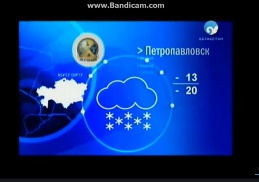
Repeat the affirmation words Lead – In • With books closed, watch the video about weather on the activboard. • Ask the class: What did you see in the video? What was the forecast about?
|
The aim: To develop pupils speaking skills and create friendly atmosphere Efficiency: By telling the wishes they show their appreciations . Students of the class are repeat after the video. Students analyze the given video. Determines the topic and purpose of the lesson Students say different words from the video |
At the organization moment teacher tries to award active pupils. “Good job! Well done!” Formative Assessment
Good job! |
Video Student’s book |
||||||||||||||||||||||||||||||||
|
Middle of the lesson Presentation part. 35 min |
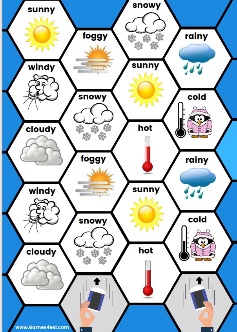
Checking hometask Ex: 1 P: 72 • Students match the words to the pictures in pairs. • Play the CD and ask students to check their answers. • Check that students understand all the adjectives in the box, and drill pronunciation of any new words. Differentiation: «Verbal support» method is used to help Students use new words in the text. Task 2 • Read the task with the class and do an example.
•
Ex: 3 P:72 Students match the adjectives from exercise 1 with the nouns, and answer the question. LANGUAGE NOTE We can form adjectives from some nouns by adding -y to the noun. Sometimes there are other spelling changes, e.g. sometimes the final consonant doubles: sun-sunny, fog-foggy and if the noun ends in -e, it is deleted when -y is added: ice-icy. Not all nouns use this ending, some form adjectives in different ways, for example: heat-hot, cold-cold
Ex: 4 P:72 Look at the photo and listen to an interview with Ken Ford. Choose the correct answer. Ex: 4 P:72 Listen again and choose TRUE or FALSE on Socrative platform.
|
Ss complete the sentence With the correct form of be going to Students match six of the words in the box with the photos. Then listen and check. ANSWERS: 1 snowy 2 sunny 3 rainy 4 stormy 5 foggy 6 icy Students work in pairs. ask and answer the questions: “Is it snowy?” Change the pair and continue to work ANSWERS: Students’ own answers. Students match the nouns with adjectives in exercise 1. Which word doesn’t change ANSWERS: sunny – sun, cold – cold, foggy – fog, windy – wind, icy – ice, . snowy – snow, hot – heat, rainy – rain, cloudy – cloud, stormy – storm ‘cold’ doesn’t change Ss listen to an interview and Choose the correct answer. Ss Listen again and choose TRUE or FALSE on Socrative platform. |
Descriptor: -choose correct form be going to -read correctly Total – 2 points Assessment criteria - Learn adjectives to describe the weather.
Descriptor: - match six of the words in the box with the photos. Total-1 point Descriptor: -can use new words -can ask and answer Total: 2 points Assessment criteria: - Learn how to change nouns to adjectives Descriptor: - match the nouns with adjectives in exercise 1. Which word doesn’t change Total-1 point Descriptor: -Choose the correct answer. Total – 1 point Descriptor: -Choose the correct answer. Total – 3 points |
Cards CD Worksheets CD player |
||||||||||||||||||||||||||||||||
|
End of the lesson 5 min |
Home task: Ex: 1 P: 50 WB |
Learners provide feedback on what they have learned at the lesson.
|
Students use their stickers to show their knowledge according to the lesson.
|
Poster
|
||||||||||||||||||||||||||||||||








 Жүктеу


 Жүктеу
шағым қалдыра аласыз



 Бұл курс Қазақстан Республикасы Оқу-ағарту министрлігімен келісілген










