
 ЖИ көмекші





Scientists discovered respiratory system. The respiratory diseases презентация

 Жүктеу
#1 слайд
Кафедра «Иностранные языки»
Presentation
Scientists discovered respiratory system. The
respiratory diseases.
Prepared by
Group
Checked by
Shymkent-20 99
1 слайд
Кафедра «Иностранные языки» Presentation Scientists discovered respiratory system. The respiratory diseases. Prepared by Group Checked by Shymkent-20 99
#2 слайд
Plan
•
Introduction
•
Main part
•
The earliest discoveries
•
Respiratory diseases
•
Conclusion
•
Internet resourse
2 слайд
Plan • Introduction • Main part • The earliest discoveries • Respiratory diseases • Conclusion • Internet resourse
#3 слайд
Introduction
•
The respiratory system contains the nose, pharynx, larynx, trachea,
bronchi, and lungs. The primary goal of the respiratory system is to
inhale oxygen and deliver it to areas of gas exchange in the lung. In
these areas, the oxygen is deposited into the bloodstream, and waste,
in the form of carbon dioxide, residing in the blood is deposited into the
lungs. The lungs then contract and release the carbon dioxide. The
cardiovascular and respiratory systems work together in order to
exchange gases in the body, so their names are often combined and
called the cardiopulmonary system. In addition, the lymphatic system
works with the respiratory system to destroy any particles that have
bypassed the filtering systems in the tubes that lead to the lungs.
3 слайд
Introduction • The respiratory system contains the nose, pharynx, larynx, trachea, bronchi, and lungs. The primary goal of the respiratory system is to inhale oxygen and deliver it to areas of gas exchange in the lung. In these areas, the oxygen is deposited into the bloodstream, and waste, in the form of carbon dioxide, residing in the blood is deposited into the lungs. The lungs then contract and release the carbon dioxide. The cardiovascular and respiratory systems work together in order to exchange gases in the body, so their names are often combined and called the cardiopulmonary system. In addition, the lymphatic system works with the respiratory system to destroy any particles that have bypassed the filtering systems in the tubes that lead to the lungs.
#4 слайд
Main part
•
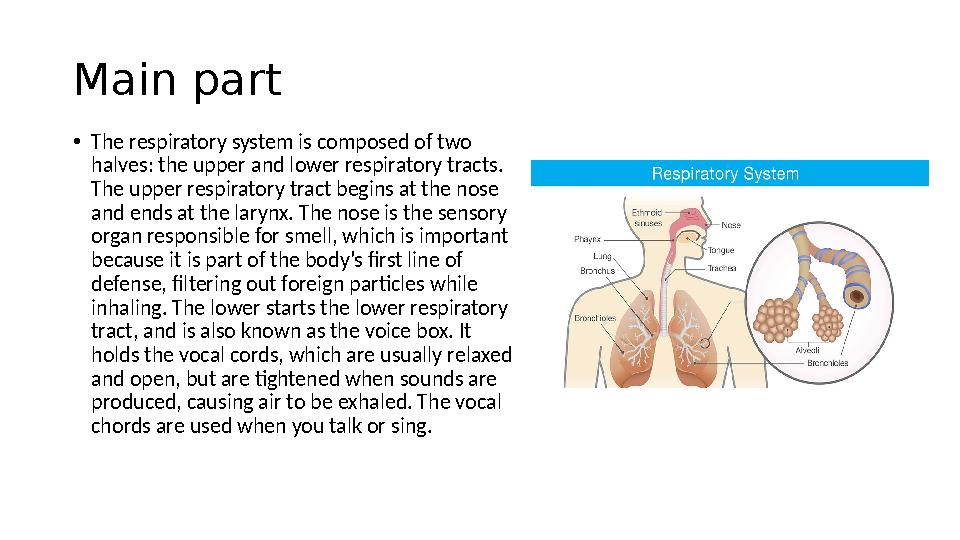
The respiratory system is composed of two
halves: the upper and lower respiratory tracts.
The upper respiratory tract begins at the nose
and ends at the larynx. The nose is the sensory
organ responsible for smell, which is important
because it is part of the body’s first line of
defense, filtering out foreign particles while
inhaling. The lower starts the lower respiratory
tract, and is also known as the voice box. It
holds the vocal cords, which are usually relaxed
and open, but are tightened when sounds are
produced, causing air to be exhaled. The vocal
chords are used when you talk or sing.
4 слайд
Main part • The respiratory system is composed of two halves: the upper and lower respiratory tracts. The upper respiratory tract begins at the nose and ends at the larynx. The nose is the sensory organ responsible for smell, which is important because it is part of the body’s first line of defense, filtering out foreign particles while inhaling. The lower starts the lower respiratory tract, and is also known as the voice box. It holds the vocal cords, which are usually relaxed and open, but are tightened when sounds are produced, causing air to be exhaled. The vocal chords are used when you talk or sing.
#5 слайд
•
The human body possesses two lungs. The right lung has 3 sections, or lobes,
while the left lung has two lobes. Each contains bronchi, which branch into
bronchioles and end in alveoli. Lungs are very light, soft, and elastic, which
makes them similar to sponges. Each is surrounded by the pleura — an
airtight covering. The lungs themselves have no muscles and rely on the
diaphragm and intercostal muscles to function. The diaphragm is a sheet of
muscle that rests below the lungs. It separates the torso into the chest and
the abdomen. When the diaphragm contracts, it moves downward. This
motion creates lower pressure in the lungs, which expand air to neutralize this
effect. When the diaphragm contracts, it moves up and creates higher
pressure in the lungs. The lungs then contract and force air out to neutralize
the pressure. The diaphragm is the main muscle responsible for the process of
breathing, but smaller rib muscles also help with some deep breaths.
5 слайд
• The human body possesses two lungs. The right lung has 3 sections, or lobes, while the left lung has two lobes. Each contains bronchi, which branch into bronchioles and end in alveoli. Lungs are very light, soft, and elastic, which makes them similar to sponges. Each is surrounded by the pleura — an airtight covering. The lungs themselves have no muscles and rely on the diaphragm and intercostal muscles to function. The diaphragm is a sheet of muscle that rests below the lungs. It separates the torso into the chest and the abdomen. When the diaphragm contracts, it moves downward. This motion creates lower pressure in the lungs, which expand air to neutralize this effect. When the diaphragm contracts, it moves up and creates higher pressure in the lungs. The lungs then contract and force air out to neutralize the pressure. The diaphragm is the main muscle responsible for the process of breathing, but smaller rib muscles also help with some deep breaths.
#6 слайд
The earliest discoveries
•
The founders of the doctrine of breathing are considered to be M. V. Lomonosov (1775)
and A. L. Lavoisier (1777). They pointed out that combustion is the Union of a burning
body with air oxygen. Therefore, the Union of substances with oxygen was called
oxidation, and separation-reduction. It was later established that such reactions also
occur in living organisms. They called biological oxidation reactions. In the end, it
gradually became clear that there are similarities between the processes of combustion
in dead nature and respiration in living organisms. According to this concept ,CO2, H2O
and energy are generated from the combination of oxygen with hydrogen and carbon
atoms in tkander during respiration. That is, organic matter undergoes processes of
dissimilation and decomposes by releasing energy, this energy is used for the entire life
processes of the body and for maintaining its structure in an active state. In general, the
breathing process can be connected as follows:
•
C6H12O6+6o26so2+6H2O+288i kJ / mol.
6 слайд
The earliest discoveries • The founders of the doctrine of breathing are considered to be M. V. Lomonosov (1775) and A. L. Lavoisier (1777). They pointed out that combustion is the Union of a burning body with air oxygen. Therefore, the Union of substances with oxygen was called oxidation, and separation-reduction. It was later established that such reactions also occur in living organisms. They called biological oxidation reactions. In the end, it gradually became clear that there are similarities between the processes of combustion in dead nature and respiration in living organisms. According to this concept ,CO2, H2O and energy are generated from the combination of oxygen with hydrogen and carbon atoms in tkander during respiration. That is, organic matter undergoes processes of dissimilation and decomposes by releasing energy, this energy is used for the entire life processes of the body and for maintaining its structure in an active state. In general, the breathing process can be connected as follows: • C6H12O6+6o26so2+6H2O+288i kJ / mol.
#7 слайд
•
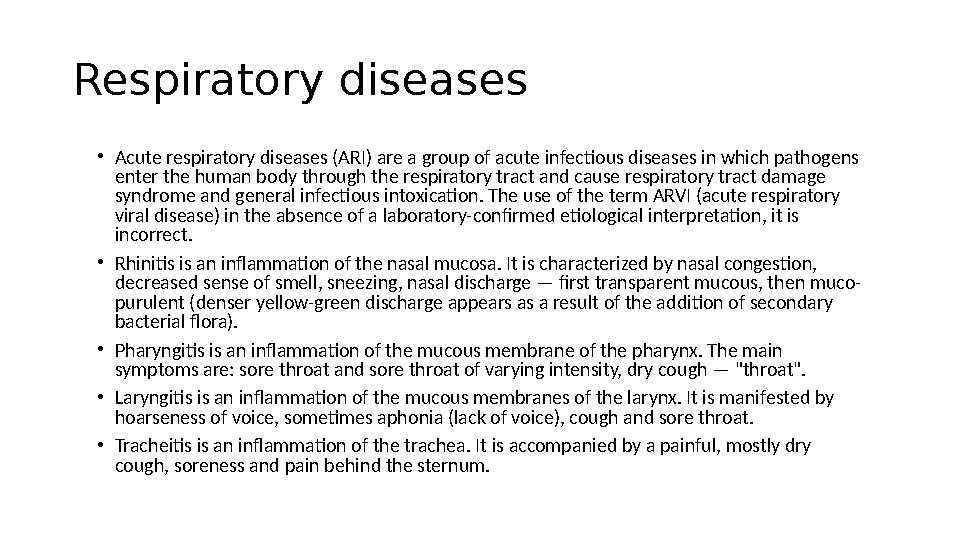
Here and in the same years, Richard Lower
(R.Lower, 1631-1691) not only demonstrated
blood transfusion to humans, but also tried to
find out in an experiment why air and blood come
to the lungs. It was already known that after
contact with air in the lungs, dark venous blood
turns into arterial blood, but it was unknown how
this happens: capillaries were not yet known.
•
Richard Lower, with the blessing of R. Boyle (both
doctors), tried to make the task easier for Nature
by pumping air directly into the venous blood.
Moreover, K. Rehn has already shown the way
and the method, who used bird feathers and
bladders of fish and other animals for intravenous
infusions – hollow needles and syringes were not
yet known.
7 слайд
• Here and in the same years, Richard Lower (R.Lower, 1631-1691) not only demonstrated blood transfusion to humans, but also tried to find out in an experiment why air and blood come to the lungs. It was already known that after contact with air in the lungs, dark venous blood turns into arterial blood, but it was unknown how this happens: capillaries were not yet known. • Richard Lower, with the blessing of R. Boyle (both doctors), tried to make the task easier for Nature by pumping air directly into the venous blood. Moreover, K. Rehn has already shown the way and the method, who used bird feathers and bladders of fish and other animals for intravenous infusions – hollow needles and syringes were not yet known.
#8 слайд
Respiratory diseases
•
Acute respiratory diseases (ARI) are a group of acute infectious diseases in which pathogens
enter the human body through the respiratory tract and cause respiratory tract damage
syndrome and general infectious intoxication. The use of the term ARVI (acute respiratory
viral disease) in the absence of a laboratory-confirmed etiological interpretation, it is
incorrect.
•
Rhinitis is an inflammation of the nasal mucosa. It is characterized by nasal congestion,
decreased sense of smell, sneezing, nasal discharge — first transparent mucous, then muco-
purulent (denser yellow-green discharge appears as a result of the addition of secondary
bacterial flora).
•
Pharyngitis is an inflammation of the mucous membrane of the pharynx. The main
symptoms are: sore throat and sore throat of varying intensity, dry cough — "throat".
•
Laryngitis is an inflammation of the mucous membranes of the larynx. It is manifested by
hoarseness of voice, sometimes aphonia (lack of voice), cough and sore throat.
•
Tracheitis is an inflammation of the trachea. It is accompanied by a painful, mostly dry
cough, soreness and pain behind the sternum.
8 слайд
Respiratory diseases • Acute respiratory diseases (ARI) are a group of acute infectious diseases in which pathogens enter the human body through the respiratory tract and cause respiratory tract damage syndrome and general infectious intoxication. The use of the term ARVI (acute respiratory viral disease) in the absence of a laboratory-confirmed etiological interpretation, it is incorrect. • Rhinitis is an inflammation of the nasal mucosa. It is characterized by nasal congestion, decreased sense of smell, sneezing, nasal discharge — first transparent mucous, then muco- purulent (denser yellow-green discharge appears as a result of the addition of secondary bacterial flora). • Pharyngitis is an inflammation of the mucous membrane of the pharynx. The main symptoms are: sore throat and sore throat of varying intensity, dry cough — "throat". • Laryngitis is an inflammation of the mucous membranes of the larynx. It is manifested by hoarseness of voice, sometimes aphonia (lack of voice), cough and sore throat. • Tracheitis is an inflammation of the trachea. It is accompanied by a painful, mostly dry cough, soreness and pain behind the sternum.
#9 слайд
•
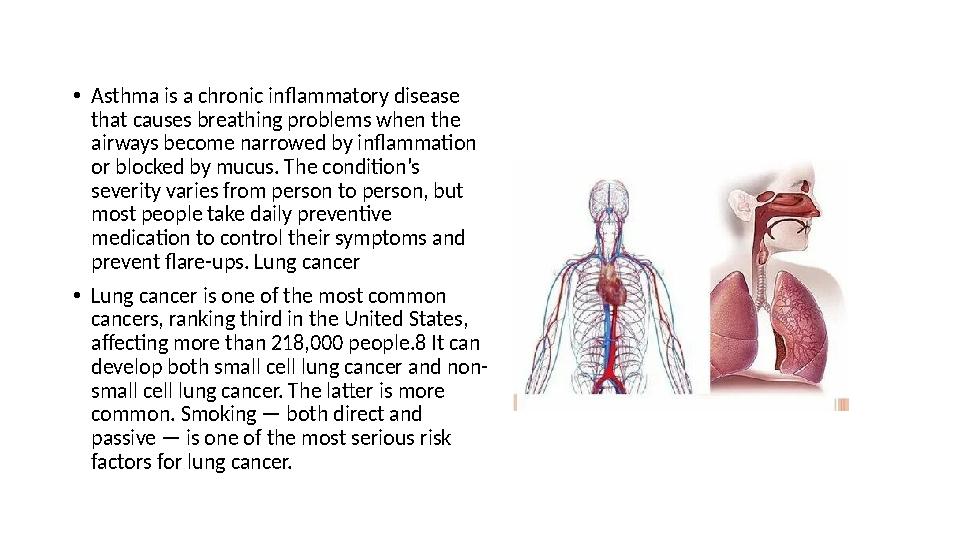
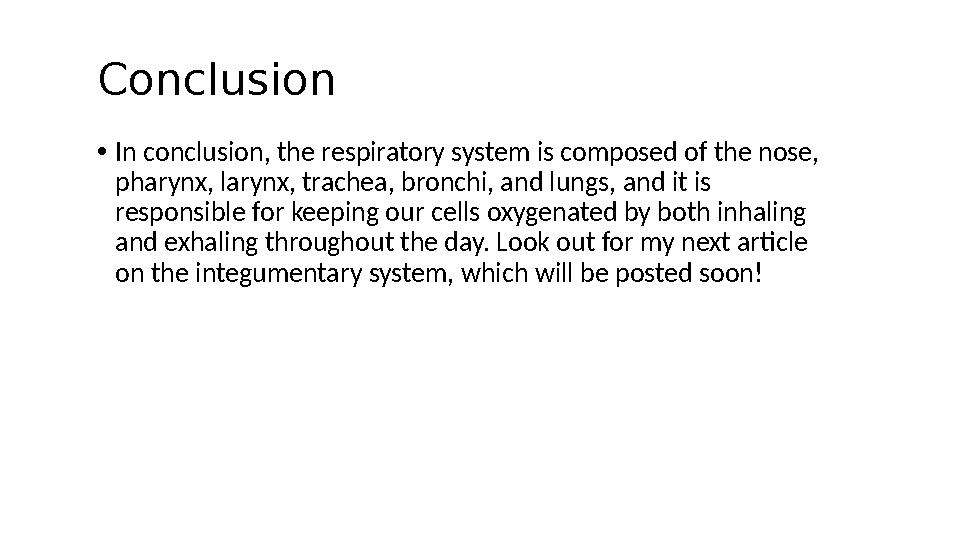
Asthma is a chronic inflammatory disease
that causes breathing problems when the
airways become narrowed by inflammation
or blocked by mucus. The condition’s
severity varies from person to person, but
most people take daily preventive
medication to control their symptoms and
prevent flare-ups. Lung cancer
•
Lung cancer is one of the most common
cancers, ranking third in the United States,
affecting more than 218,000 people.8 It can
develop both small cell lung cancer and non-
small cell lung cancer. The latter is more
common. Smoking — both direct and
passive — is one of the most serious risk
factors for lung cancer.
9 слайд
• Asthma is a chronic inflammatory disease that causes breathing problems when the airways become narrowed by inflammation or blocked by mucus. The condition’s severity varies from person to person, but most people take daily preventive medication to control their symptoms and prevent flare-ups. Lung cancer • Lung cancer is one of the most common cancers, ranking third in the United States, affecting more than 218,000 people.8 It can develop both small cell lung cancer and non- small cell lung cancer. The latter is more common. Smoking — both direct and passive — is one of the most serious risk factors for lung cancer.
#10 слайд
Conclusion
•
In conclusion, the respiratory system is composed of the nose,
pharynx, larynx, trachea, bronchi, and lungs, and it is
responsible for keeping our cells oxygenated by both inhaling
and exhaling throughout the day. Look out for my next article
on the integumentary system, which will be posted soon!
10 слайд
Conclusion • In conclusion, the respiratory system is composed of the nose, pharynx, larynx, trachea, bronchi, and lungs, and it is responsible for keeping our cells oxygenated by both inhaling and exhaling throughout the day. Look out for my next article on the integumentary system, which will be posted soon!
#11 слайд
Internet resourse
https://
medium.com/proximity/the-respiratory-system-an-overview-30cdafb57
4f5
https://stud.baribar.kz/8232/tynys-alu-ortalyghy/#:~:text=
Тыныс%20алу%20туралы%20ілімнің%20негізін,Л.%20Лавуазье%20(
1777)%
20болып%20саналады
https://probolezny.ru/ostrye-respiratornye-zabolevaniya-orz /
11 слайд
Internet resourse https:// medium.com/proximity/the-respiratory-system-an-overview-30cdafb57 4f5 https://stud.baribar.kz/8232/tynys-alu-ortalyghy/#:~:text= Тыныс%20алу%20туралы%20ілімнің%20негізін,Л.%20Лавуазье%20( 1777)% 20болып%20саналады https://probolezny.ru/ostrye-respiratornye-zabolevaniya-orz /


 Жүктеу
шағым қалдыра аласыз

 Бұл курс Қазақстан Республикасы Оқу-ағарту министрлігімен келісілген










