
 ЖИ көмекші


 Қауіпсіз төлем

жүктеу мүмкіндігіне ие боласыз
Бұл материал сайт қолданушысы жариялаған. Материалдың ішінде жазылған барлық ақпаратқа жауапкершілікті жариялаған қолданушы жауап береді. Ұстаз тілегі тек ақпаратты таратуға қолдау көрсетеді. Егер материал сіздің авторлық құқығыңызды бұзған болса немесе басқа да себептермен сайттан өшіру керек деп ойласаңыз осында жазыңыз
 24 Тамыз 2025
 238
238
1 жыл бойы шексіз жүктеңіз
Blogging in English: Writing for the Real world
Жамбыл облысы әкімдігінің білім басқармасы «Тараз қаласы білім бөлімінің Амангелді атындағы орта мектебі» Коммуналдық мемлекеттік мекемесі
Авторлық бағдарлама
Blogging in English: Writing
for the Real world
(10сыеып оқушыларына арналған бағдарлаиа)
Ағылшын тілі пәнінің мұғалімі
Абдралиева Бибигул Жуматаевна
Тараз 2025 ж.
Content
Introduction……………………………………
Consolidation Content Section………………..
Information section……………………………
Normation section……………………………..
Educational-methodological section…………..
Conclusion…………………………………….
References…………………………………….
Links…………………………………………..
Introduction
In today’s digital society, communication is no longer limited to face-to-face dialogue or traditional written formats such as essays and reports. Instead, online communication platforms dominate the way people share ideas, information, and creativity. Among these platforms, blogging has emerged as one of the most powerful and widely accessible tools for personal expression, professional development, and global interaction. For high school students, blogging offers not only an engaging way to practice English but also an opportunity to develop critical life skills that are essential in the 21st century.
The program “Blogging in English: Writing for the Real World” is designed for 10th-grade learners as a response to the changing needs of both education and society. It provides students with an authentic, meaningful context in which they can use English as a tool for self-expression, critical thinking, and digital communication. Unlike traditional language learning approaches that often remain confined to classroom drills and textbook tasks, this program extends learning into the real world. By producing and publishing blogs, students are exposed to genuine communication scenarios where their writing can reach peers, teachers, and potentially even a global audience.
The value of this program lies in its ability to combine linguistic knowledge with digital literacy. Students are not only learning to form grammatically correct sentences but also acquiring the ability to communicate effectively in online environments. They must think about tone, style, clarity, and audience awareness, skills that are directly transferable to academic, professional, and social contexts. Furthermore, the interactive nature of blogging—through comments, feedback, and dialogue—gives students a sense of responsibility and engagement that goes beyond traditional assignments.
Another important aspect of this program is its motivational potential. Adolescents often question the relevance of classroom activities, particularly in language learning. Blogging bridges the gap between school requirements and students’ personal interests by offering them a space to write about topics that matter to them—technology, culture, environment, lifestyle, or social issues. This autonomy not only increases engagement but also builds a sense of ownership over the learning process.
Finally, this program prepares students for the digital realities of the future. In a world where success increasingly depends on one’s ability to communicate effectively online, the skills acquired through blogging—critical thinking, responsible digital behavior, and intercultural competence—are indispensable. The program therefore aligns with the educational mission of preparing learners not only for examinations but for life as active, competent, and responsible global citizens.
2. Objectives and Tasks
The primary objective of this program is to enhance students’ English language proficiency by integrating it with real-world communication practices through blogging.
Specific Objectives:
-
Improve linguistic accuracy and fluency in writing.
-
Develop communicative competence in authentic digital contexts.
-
Foster creativity, critical thinking, and originality in self-expression.
-
Strengthen digital literacy and responsible online citizenship.
-
Connect classroom knowledge with practical, real-world application.
Tasks:
-
Guide students in creating, editing, and publishing blog posts.
-
Introduce learners to multiple genres: personal reflections, informative articles, reviews, opinion pieces.
-
Encourage peer feedback and collaborative learning through comments.
-
Integrate multimedia elements to enrich blog content.
-
Align blogging projects with curricular themes and students’ interests.
-
Promote reflective practices to help students monitor progress.
3. Relevance of the Program
The program is highly relevant to modern education because it addresses the intersection of language learning, digital literacy, and global communication. While traditional teaching focuses on controlled exercises, students today need authentic opportunities to use English in meaningful contexts. Blogging provides this bridge by combining classroom learning with real-world practice.
It is also necessary because students already live in a digital environment, yet many lack guidance on how to use online platforms productively. This program equips them with both linguistic skills and responsible digital practices, preparing them for academic and professional futures. Furthermore, by allowing students to engage with topics of personal and societal importance, the program enhances motivation and makes learning more meaningful.
4. Scientific and Methodological Level (Innovation and Novelty)
The innovative aspect of this program lies in treating blogging not as a supplementary activity but as the central method of language instruction. Unlike traditional curricula that prioritize essays and formal writing tasks, this program uses blogging as an authentic communication tool.
It introduces novelty in several ways:
-
Integrating digital literacy with language learning.
-
Shifting from teacher-centered to student-centered approaches.
-
Using project-based and collaborative tasks for real audiences.
-
Expanding writing genres beyond academic essays to include modern, interactive forms of expression.
This methodological innovation restores the authentic communicative purpose of language learning, ensuring that students see English as a tool for real interaction rather than just a school subject.
5. Scientific Value of the Program
The program reflects the philosophy of modern education, which emphasizes holistic development and learner autonomy.
-
Philosophy: It is rooted in humanistic principles that value students’ individuality, creativity, and voice.
-
Methodology: It draws on constructivist and task-based approaches, encouraging learners to actively construct knowledge through authentic communication.
-
Psychology: It supports adolescents’ cognitive and socio-emotional development by providing a platform for identity formation and self-expression.
-
Pedagogy: It incorporates best practices such as project-based learning, formative assessment, and digital integration.
In this way, the program is scientifically valuable because it combines theory and practice, aligning with the latest trends in pedagogy, psychology, and educational methodology.
6. Directionality of the Program
The directionality extends beyond language learning to:
-
Personal development: Building confidence, critical thinking, and civic responsibility.
-
Health and well-being: Offering safe, creative self-expression to support mental and social health.
-
Multidisciplinary focus: Encouraging blogs on economics, ecology, culture, psychology, and social issues.
-
Humanistic and innovative orientation: Ensuring the program is integrative, learner-centered, and future-oriented.
-
Scientific alignment: Promoting inquiry, hypothesis testing, and evidence-based reflection.
Thus, the program develops not only knowledge and skills but also personality, responsibility, and resilience.
7. Methodological Foundations: Internal Unity and Consistency
The program demonstrates unity and coherence by:
-
Following a systematic, step-by-step approach.
-
Aligning goals, tasks, and evaluation methods.
-
Integrating digital tools with pedagogical strategies.
-
Ensuring consistency between objectives and measurable outcomes.
-
Balancing structure with flexibility to adapt to learners’ needs.
This ensures that the methodology is not fragmented but interconnected, leading to reliable learning outcomes.
8. Validity and Reliability of the Program
The program is valid because its objectives correspond directly to the needs of learners and the demands of modern society. Its methods—task-based learning, blogging, and digital publishing—are authentic and relevant.
It is reliable because outcomes are consistently measured using clear rubrics and both formative and summative assessments. By combining linguistic, creative, and digital criteria, the program ensures trustworthy results. Its grounding in research-based approaches enhances scientific and pedagogical credibility.
9. Expected Outcomes
A. Linguistic Outcomes (Accuracy, Range, and Control)
Outcome A1 — Grammar and
Syntax:
Students write multi-paragraph blog posts with largely accurate
sentence structures (simple, compound, and complex), correct
subject–verb agreement, appropriate tense/aspect, and consistent
pronoun reference. Errors may occur but do not impede
comprehension.
Outcome A2 — Vocabulary
Breadth and Precision:
Students use topic-specific and genre-appropriate vocabulary (e.g.,
for opinion, review, explanatory posts), including collocations and
discourse markers that improve cohesion (e.g.,
moreover, in contrast,
consequently, for instance).
Outcome A3 — Cohesion and
Coherence:
Students organize posts with clear thesis statements, logically
ordered paragraphs, and effective use of headings, bullet points,
and transitions; they maintain a consistent point of view and
register suited to their
audience.
Outcome A4 — Editing and
Mechanics:
Students apply punctuation, capitalization, and spelling
conventions with high consistency; they demonstrate the ability to
self-edit and to incorporate feedback from peers and
teachers.
Evidence:
-
Two or more finalized posts per unit (opinion, review, explainer, narrative), each 400–800 words.
-
Drafts with tracked changes and teacher/peer comments showing development from first to final version.
-
A personal style sheet (preferred spellings, capitalization of proper nouns, tone/voice notes).
Success Criteria:
-
≥80% of sentences free from major grammatical errors; cohesive devices used purposefully; vocabulary choices reflect topic and audience.
B. Communicative Outcomes (Audience, Purpose, and Rhetoric)
Outcome B1 — Audience
Awareness:
Students tailor tone and format to intended readers (peers, school
community, wider public), using hooks, relevant examples, and clear
calls to action where
appropriate.
Outcome B2 — Genre Control
and Rhetorical Moves:
Students compose different blog
genres:
-
Opinion/argument: claim, reasons, evidence, counterargument, conclusion.
-
Review: criteria, evaluation, recommendation.
-
Explainer/how-to: steps, definitions, visuals, troubleshooting.
-
Personal narrative: setting, conflict, reflection, significance.
Outcome B3 — Interaction
and Dialogue:
Students sustain meaningful online discussion by commenting
constructively, asking clarifying questions, and acknowledging
others’ viewpoints.
Evidence:
-
A genre portfolio (at least four distinct genres).
-
Comment logs (3–5 substantive comments per post), demonstrating respectful, specific feedback.
-
Reflection notes on how audience responses influenced revisions.
Success Criteria:
-
Posts demonstrate a clear purpose and persuasive or informative strategy; comments move the conversation forward (not merely “I agree”).
C. Digital Literacy and Citizenship (Safe, Ethical, Effective Use)
Outcome C1 — Platform
Fluency:
Students publish posts with functional formatting (headings, links,
embedded media), create accessible content (alt text, readable
contrast), and troubleshoot basic technical
issues.
Outcome C2 — Ethics,
Attribution, and Plagiarism
Avoidance:
Students credit sources correctly (attribution lines, hyperlinks,
or a simple references list), respect copyright and Creative
Commons licenses, and paraphrase
accurately.
Outcome C3 — Online
Etiquette and Safety:
Students follow community guidelines, protect personal data, and
respond to disagreement
civilly.
Evidence:
-
Posts with at least two correctly attributed external sources and one original visual or curated image with licensing noted.
-
A short digital-safety checklist completed before publication.
-
A “netiquette pledge” co-authored by the class and referenced in comment moderation.
Success Criteria:
-
Zero uncredited borrowings; consistent source links; posts meet agreed accessibility and safety standards.
D. Research, Critical Thinking, and Media Literacy
Outcome D1 — Information
Sourcing:
Students identify and evaluate multiple sources (news, reports,
interviews, reputable websites) for credibility, bias, and
relevance before drafting.
Outcome D2 — Evidence
Integration:
Students synthesize information, distinguishing fact from opinion,
and integrate quotes or data with proper framing (signal phrases,
interpretation, and relevance to the
claim).
Outcome D3 — Argument
Quality and Logic:
Students construct arguments that address counterpoints and avoid
common fallacies; they revise arguments after peer review to
strengthen logic and
evidence.
Evidence:
-
Research notes with source annotations (2–5 sources per major post).
-
A mini literature scan or fact-check memo appended to posts tackling social or scientific topics.
-
Revision memos explaining how feedback or new evidence changed the draft.
Success Criteria:
-
Each claim supported by credible evidence; competing perspectives acknowledged; reasoning remains coherent and fair.
E. Collaboration, Project Management, and Reflection
Outcome E1 —
Teamwork:
Students co-plan editorial calendars, divide roles (writer, editor,
fact-checker, visuals lead), and meet
deadlines.
Outcome E2 — Peer Review
and Metacognition:
Students give and receive actionable feedback aligned with rubrics
(content, organization, language, audience engagement) and write
reflective entries on what they changed and
why.
Outcome E3 — Time and Task
Management:
Students track drafts, revisions, and publication dates using
simple tools (kanban boards, checklists), showing steady throughput
rather than rushed, last-minute
work.
Evidence:
-
Shared editorial board or project tracker screenshots.
-
Two peer-review cycles per major post with checklists/rubrics attached.
-
End-of-unit reflection (300–500 words) connecting goals to outcomes.
Success Criteria:
-
≥90% on-time submissions; feedback references criteria, not just preferences; reflections name at least two concrete improvements.
F. Socio-Emotional and Personal Outcomes (Voice, Agency, and Well-Being)
Outcome F1 — Voice and
Identity:
Students develop a recognizable voice and sense of authorship,
articulating values and interests with confidence and
respect.
Outcome F2 — Resilience and
Growth Mindset:
Students treat feedback as data, not as judgment; they show
persistence through revisions and risk-taking with new genres or
topics.
Outcome F3 — Empathy and
Perspective-Taking:
Students read and respond to peers’ posts with curiosity,
acknowledge lived experiences different from their own, and adjust
language to remain
inclusive.
Evidence:
-
A personal “About the Author” page revised mid-course to reflect developing voice.
-
Reflection journals noting moments of challenge and strategies used.
-
Comment threads where students paraphrase others’ points before responding.
Success Criteria:
-
Reflections contain specific examples of growth; comments demonstrate empathy and accurate restatement of others’ views.
G. Intercultural Competence and Global Citizenship
Outcome G1 — Cultural
Awareness:
Students compare perspectives across cultures on shared themes
(e.g., environmental habits, media, education), avoiding
stereotypes.
Outcome G2 — Ethical
Engagement:
Students represent groups and issues responsibly, checking facts
and choosing language that is accurate and
respectful.
Evidence:
-
Comparative posts drawing on at least two cultural contexts.
-
A short style guide of inclusive language (co-created) applied to posts.
Success Criteria:
-
Posts explicitly identify sources of cultural assumptions and correct them where needed; inclusive language is consistently used.
H. Assessment Artifacts and Rubrics
To ensure reliability, the course uses multiple, triangulated artifacts:
-
Writing Portfolio: 8–10 curated posts across genres, each with drafts and revision notes.
-
Comment Dossier: A record of substantive comments given and received, rated against a feedback rubric.
-
Research Appendix: Annotated sources, fact-check notes, and a simple references list.
-
Process Evidence: Editorial calendars, checklists, and screenshots showing workflow.
-
Reflection Journal: Bi-weekly entries connecting goals, feedback, and outcomes.
Rubric (four performance bands):
-
Exemplary: Purposeful structure; precise language and cohesive devices; credible, integrated sources; strong audience engagement; impeccable ethics/accessibility.
-
Proficient: Clear organization and mostly accurate language; sources used and linked; appropriate tone; minor issues not affecting meaning.
-
Developing: Organization present but uneven; limited evidence or weak integration; occasional inappropriate tone; several language errors obscuring some meaning.
-
Beginning: Minimal structure; frequent errors impede comprehension; little or no sourcing; limited audience awareness.
I. Milestones and Timeline (Short-, Mid-, and End-Course Outcomes)
Weeks 1–5 (Foundations):
-
Students publish two short posts (250–400 words) and practice structured commenting.
-
They learn basic formatting, attribution, and safety; they co-create the netiquette pledge.
-
Indicators: correct headings and links; two sources credited; comments include a question and a suggestion.
Weeks 6–10 (Expansion):
-
Students produce one researched opinion post and one review, each 500–700 words, with data or quotations.
-
They conduct one peer-review cycle per post.
-
Indicators: clear claim and counterpoint; at least three credible sources; visible improvements between drafts.
Weeks 11–16 (Integration and Capstone):
-
Students complete a multi-post series (e.g., “Local Eco-Habits,” “Tech for Teens,” “Cultural Windows”) with multimedia and a final editorial note.
-
They present a brief talk summarizing their series’ purpose, audience engagement, and lessons learned.
-
Indicators: coherent series voice, consistent ethics/accessibility, and reflective analysis of audience data (views, time on page if available).
J. Quantitative and Qualitative Indicators
-
Output: 8–10 posts (≥5 long-form), 20–30 substantive comments written, two mini-presentations.
-
Quality: ≥80% rubric average in language and organization by term end; all posts meet sourcing/ethics/accessibility checks.
-
Engagement: Evidence of interaction (responses to comments, revisions prompted by feedback).
-
Growth: Pre/post diagnostic writing shows measurable gains in accuracy, vocabulary range, and cohesion; reflections cite specific strategies that led to improvement.
K. Transfer and Long-Term Impact
Academic Transfer:
-
Skills carry over to essays, reports, and presentations across subjects (history, science, economics), especially argument structure, source evaluation, and audience-aware writing.
Career and Lifelong Learning:
-
Students can maintain a professional or academic blog/portfolio; they understand digital footprints, privacy, and responsible content curation.
Citizenship and Community:
-
Students can initiate or contribute to constructive online discussions, promote local initiatives, and model respectful discourse.
L. Equity and Inclusion Commitments
-
Differentiated scaffolds (sentence starters, model texts, graphic organizers) support varied proficiency levels.
-
Multimodal options (audio posts, visuals with alt text, captions) allow multiple means of expression.
-
Flexible deadlines within reason and peer-pairing structures ensure all students can participate meaningfully.
Expected
Result:
All learners, regardless of starting point, demonstrate
growth—documented through individualized goals, progress checks,
and a culminating portfolio that evidences competence in language,
digital citizenship, and authentic
communication.
Consolidation Content Section
|
Lesson |
Hours |
Key Concepts |
|
Unit 1. Blogging Foundations |
||
|
1. Introduction to Blogging |
1 |
blog, communication, self-expression |
|
2. Why Blog? Personal and Social Benefits |
1 |
purpose, benefits, motivation |
|
3. Blogging Platforms Overview |
1 |
WordPress, Blogger, platform |
|
4. Digital Safety & Netiquette |
1 |
safety, etiquette, responsibility |
|
5. Blog Structure |
1 |
title, body, conclusion |
|
6. Writing an Engaging Title |
1 |
headline, creativity, attention |
|
7. Personal Narrative Blog |
1 |
storytelling, experience, reflection |
|
8. Peer Feedback Basics |
1 |
comments, feedback, respect |
|
9. Vocabulary for Blogging |
1 |
connectors, expressions, style |
|
Unit 2. Blog Genres and Style |
||
|
10. Writing an Opinion Blog |
1 |
opinion, argument, viewpoint |
|
11. Review Writing |
1 |
evaluation, criteria, recommendation |
|
12. Integrating Multimedia |
1 |
image, link, video |
|
13. Descriptive Language |
1 |
adjectives, detail, imagery |
|
14. Drafting and Revising |
1 |
draft, revision, editing |
|
15. Writing for an Audience |
1 |
tone, reader, purpose |
|
Unit 3. Critical Thinking and Research |
||
|
16. Argumentation Skills |
1 |
claim, evidence, reasoning |
|
17. Counterarguments |
1 |
rebuttal, perspective, logic |
|
18. Midterm Project: Blog Post 1 |
1 |
project, practice, publishing |
|
19. Reflection on Writing Process |
1 |
reflection, progress, learning |
|
20. Explainer Blog |
1 |
instruction, steps, clarity |
|
21. Research Basics |
1 |
sources, credibility, citation |
|
22. Plagiarism & Paraphrasing |
1 |
plagiarism, paraphrase, originality |
|
Unit 4. Collaborative Blogging Project |
||
|
23. Review and Comment Practice |
1 |
review, comment, interaction |
|
24. Group Blog Project |
1 |
teamwork, planning, collaboration |
|
25. Drafting Group Posts |
1 |
co-writing, draft, content |
|
26. Peer Review Workshop |
1 |
peer review, improvement, critique |
|
27. Editing and Proofreading |
1 |
grammar, correction, accuracy |
|
28. Publishing Blogs |
1 |
publishing, layout, finalization |
|
Unit 5. Global Perspectives and Final Project |
||
|
29. Intercultural Blogging |
1 |
culture, comparison, awareness |
|
30. Language for Persuasion |
1 |
persuasion, rhetoric, influence |
|
31. Blog Analytics Basics |
1 |
analytics, data, engagement |
|
32. Final Project Planning |
1 |
outline, structure, goal |
|
33. Final Project Writing |
1 |
drafting, integration, content |
|
34. Final Presentation & Reflection |
1 |
presentation, reflection, outcome |
Introduction to
Blogging
Students are introduced to the concept of blogging, exploring its
role in modern communication and how it differs from traditional
writing.
Why Blog? Personal and
Social Benefits
The class discusses reasons for blogging, focusing on
self-expression, sharing knowledge, and building
communities.
Blogging Platforms
Overview
Students explore popular blogging platforms and compare their
features to decide which best suits different
purposes.
Digital Safety &
Netiquette
The lesson emphasizes online safety, responsible digital behavior,
and respectful communication when
blogging.
Blog
Structure
Learners study the typical structure of a blog post, including the
introduction, body, and
conclusion.
Writing an Engaging
Title
Students practice creating titles that are catchy, clear, and
relevant to their content.
Personal Narrative
Blog
The focus is on storytelling techniques, encouraging students to
write about personal experiences in a blog
format.
Peer Feedback
Basics
Students learn how to give constructive comments and respond to
peers respectfully.
Vocabulary for
Blogging
The class practices key vocabulary and expressions commonly used in
blogs to improve fluency and
style.
Writing an Opinion
Blog
Students write posts that express their viewpoint, supported by
logical arguments and
examples.
Review
Writing
Learners practice writing reviews of books, films, or products,
using criteria and
recommendations.
Integrating
Multimedia
Students learn how to enrich blog posts by adding images, videos,
and hyperlinks effectively.
Descriptive
Language
The lesson develops descriptive writing skills using adjectives and
imagery to make blogs more
vivid.
Drafting and
Revising
Students practice drafting, revising, and editing texts, focusing
on improving clarity and
accuracy.
Writing for an
Audience
The class explores how tone, style, and vocabulary change depending
on the intended audience.
Argumentation
Skills
Students learn to support their opinions with logical reasoning,
evidence, and examples.
Counterarguments
Learners practice identifying opposing views and writing
respectful, logical
rebuttals.
Midterm Project: Blog
Post
Students complete and publish a full blog post applying the skills
learned in previous lessons.
Reflection on Writing
Process
The class focuses on self-reflection, helping students analyze
their progress and
challenges.
Explainer
Blog
Students learn to write “how-to” or explanatory posts with clear
steps and instructions.
Research
Basics
The lesson introduces methods for finding reliable sources and
integrating them into blog
writing.
Plagiarism &
Paraphrasing
Students learn about academic honesty, paraphrasing, and proper
citation practices.
Review and Comment
Practice
Learners strengthen their commenting skills by writing detailed and
constructive feedback.
Group Blog
Project
Students plan a collaborative blog project, assigning roles and
responsibilities within the
group.
Drafting Group
Posts
The class works in groups to draft blog posts collaboratively,
combining ideas and styles.
Peer Review
Workshop
Students exchange drafts and provide structured peer feedback for
improvement.
Editing and
Proofreading
The focus is on correcting grammar, spelling, and punctuation to
produce polished writing.
Publishing
Blogs
Students finalize and publish their blogs, paying attention to
layout and presentation.
Intercultural
Blogging
Learners explore cultural differences and similarities, writing
blogs that reflect global
perspectives.
Language for
Persuasion
Students practice persuasive techniques to influence readers
effectively through their
writing.
Blog Analytics
Basics
The class introduces basic blog analytics, teaching students how to
interpret engagement data.
Final Project
Planning
Students plan their individual final blog series, outlining goals
and structure.
Final Project
Writing
The lesson focuses on drafting and revising the final project blog
posts.
Final Presentation &
Reflection
Students present their final blogs, reflect on their learning
journey, and discuss
outcomes.
Information section
Assessment Criteria (10-point scale)
|
Criterion |
Max Points |
Descriptor |
|
Content and Ideas |
10 |
9–10: Clear,
original, well-developed ideas with strong relevance to the
topic. |
|
Organization and Structure |
10 |
9–10: Logical
structure; clear introduction, body, and conclusion; smooth
transitions. |
|
Language Accuracy (Grammar & Vocabulary) |
10 |
9–10: Almost
error-free; wide range of vocabulary and grammar used
correctly. |
|
Creativity and Style |
10 |
9–10: Very engaging,
creative, and appropriate style for audience. |
|
Digital Literacy (Use of Media & Netiquette) |
10 |
9–10: Effective use
of media (images, links, videos); follows all digital safety and
etiquette rules. |
|
Interaction and Peer Feedback |
10 |
9–10: Provides
detailed, respectful, constructive comments; actively engages in
discussion. |
Normative Section
Curricular Calendar Plan
1 hour per week. 34 hours per year
|
Lesson Topic |
Learning Objective |
Hours |
Expected Outcome |
||
|
All |
Practice |
Theory |
|||
|
1. Introduction to Blogging |
Understand what a blog is and explore examples |
1 |
|
|
Students can define blogging and identify its purpose |
|
2. Why Blog? Personal and Social Benefits |
Explain reasons for blogging in real life |
1 |
|
|
Students can list and discuss personal/social uses of blogging |
|
3. Blogging Platforms Overview |
Explore different platforms (WordPress, Blogger, etc.) |
1 |
|
|
Students can compare and choose a blogging platform |
|
4. Digital Safety & Netiquette |
Learn online safety rules and digital etiquette |
1 |
|
|
Students follow digital safety principles in blogging |
|
5. Blog Structure |
Identify parts of a blog (title, intro, body, conclusion) |
1 |
|
|
Students can outline a blog post correctly |
|
6. Writing an Engaging Title |
Practice creating catchy and informative titles |
1 |
|
|
Students create original blog titles |
|
7. Personal Narrative Blog |
Write a short narrative blog about daily life |
1 |
|
|
Students produce a personal blog entry |
|
8. Peer Feedback Basics |
Learn how to comment constructively |
1 |
|
|
Students give peer feedback respectfully |
|
9. Vocabulary for Blogging |
Learn topic-related vocabulary (opinions, connectors) |
1 |
|
|
Students use connectors and blog vocabulary |
|
10. Writing an Opinion Blog |
Express opinions on a simple topic |
1 |
|
|
Students write an opinion blog with clear arguments |
|
11. Review Writing |
Learn structure of reviews (book, film, product) |
1 |
|
|
Students produce a short review blog |
|
12. Integrating Multimedia |
Add images, links, and videos to blogs |
1 |
|
|
Students enrich blogs with multimedia responsibly |
|
13. Descriptive Language |
Use descriptive adjectives and sensory details |
1 |
|
|
Students improve descriptive writing in blogs |
|
14. Drafting and Revising |
Learn drafting techniques and peer review |
1 |
|
|
Students revise their posts after feedback |
|
15. Writing for an Audience |
Adjust tone and style for different readers |
1 |
|
|
Students adapt writing for specific audiences |
|
16. Argumentation Skills |
Learn to support opinions with evidence |
1 |
|
|
Students write posts with claims and supporting evidence |
|
17. Counterarguments |
Practice acknowledging and responding to counterpoints |
1 |
|
|
Students strengthen arguments in blog writing |
|
18. Midterm Project: Blog Post 1 |
Write a full blog post (any genre studied) |
1 |
|
|
Students complete and publish first major blog |
|
19. Reflection on Writing Process |
Reflect on challenges and successes |
1 |
|
|
Students analyze their writing process |
|
20. Explainer Blog |
Learn to write “how-to” or explanatory blogs |
1 |
|
|
Students produce step-by-step explanatory posts |
|
21. Research Basics |
Learn to find and cite reliable sources |
1 |
|
|
Students integrate sources into blogs |
|
22. Plagiarism & Paraphrasing |
Understand plagiarism and practice paraphrasing |
1 |
|
|
Students paraphrase and credit sources properly |
|
23. Review and Comment Practice |
Practice extended commenting skills |
1 |
|
|
Students write detailed comments |
|
24. Group Blog Project |
Work in groups to plan multi-post series |
1 |
|
|
Students create a group editorial plan |
|
25. Drafting Group Posts |
Write first draft in groups |
1 |
|
|
Students co-author blog content |
|
26. Peer Review Workshop |
Give/receive structured peer review |
1 |
|
|
Students improve writing via peer review |
|
27. Editing and Proofreading |
Learn editing strategies |
1 |
|
|
Students submit error-free drafts |
|
28. Publishing Blogs |
Finalize and publish group posts |
1 |
|
|
Students publish group project blogs |
|
29. Intercultural Blogging |
Explore global perspectives on a topic |
1 |
|
|
Students compare cultural viewpoints |
|
30. Language for Persuasion |
Practice persuasive techniques |
1 |
|
|
Students write persuasive blogs |
|
31. Blog Analytics Basics |
Learn how to track engagement (views, comments) |
1 |
|
|
Students analyze basic blog data |
|
32. Final Project Planning |
Plan final blog series (individual) |
1 |
|
|
Students outline final multi-post project |
|
33. Final Project Writing |
Draft and revise final project blogs |
1 |
|
|
Students prepare final posts |
|
34. Final Presentation & Reflection |
Present blogs and reflect on learning |
1 |
|
|
Students showcase blogs and reflect on growth |
|
All |
34 |
|
|
|
|
Educational-methodological section
Short-Term Lesson Plan №1
|
Name of the Educational Institution |
|
|||||
|
Subject: |
|
|||||
|
Unit: |
|
|||||
|
Teacher's Full Name: |
|
|||||
|
Date: |
|
|||||
|
Grade: |
Number of Participants: |
Number of Absentees: |
||||
|
Topic: |
Introduction to Blogging |
|||||
|
Lesson Objective: |
|
|||||
|
Value education |
This lesson promotes respectful communication, responsible use of technology, and self-expression. Students learn that blogging is not only about sharing ideas but also about doing so ethically and respectfully, considering both themselves and their audience. |
|||||
|
Lesson Procedure |
||||||
|
Planned Lesson Stages |
Teacher's Actions |
Student's Actions |
Assessment |
Resources |
||
|
Organizational stage |
"Show Your Mood" Objective: Determine students' mood and assess their readiness for the lesson.
|
Follows Instructions |
Verbal Praise |
|
||
|
New lesson |
Activity 1: Group Brainstorm – What is a Blog? The teacher introduces the lesson by asking: “Imagine you have a space on the internet where you can write about your life, hobbies, or opinions, and the whole world could read it. What do we call this?” Students are divided into groups of four. Each group writes down their definition of a blog in 2–3 sentences, and then lists at least three purposes of blogging (for example: to share information, to give advice, to build community, to express feelings, to influence people). When finished, groups present their answers to the class. The teacher records all definitions and purposes on the board, then guides the class to create one “class definition” of blogging that combines the best ideas. Sample answers
Descriptor
Activity 2: Blog Hunt – Purpose and Audience The teacher provides three short blog excerpts printed or projected on the board:
Students, in pairs, analyze each excerpt by answering two questions in writing:
Pairs then compare their answers with another pair before sharing with the whole class. Sample answers
Descriptor
Activity 3: Matching Task – Types of Blogs and Definitions The teacher distributes a worksheet with two columns: one column lists blog types (personal blog, review blog, travel blog, educational blog, lifestyle blog), and the other column contains short definitions or descriptions mixed in random order. Students must match each type with the correct definition. As an extension, students choose one type of blog and write two sentences about what topic they would write about if they created this blog. Sample matches
Descriptor
Activity 4 (Closure): Exit Ticket – “A Blog is …” At the end of the lesson, each student writes one complete sentence on a slip of paper starting with: “A blog is …” The sentence must include both definition and personal meaning. Sample answers
Descriptor
Lesson outcomes By the end of the lesson, students:
|
Completes Tasks Completes Tasks Completes Tasks Completes Tasks Completes Tasks |
Descriptor
T Verbal Praise
|
|
||
|
Lesson consolidation |
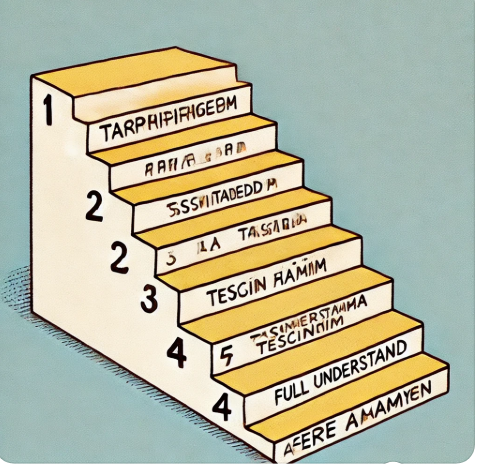
"Success Ladder"
1️⃣
I did not understand the
topic.
|
Follows Instructions |
Provides Feedback |
|
||



 raffic
Light
raffic
Light


Short-Term Lesson Plan №2
|
Name of the Educational Institution |
|
|||||
|
Subject: |
|
|||||
|
Unit: |
|
|||||
|
Teacher's Full Name: |
|
|||||
|
Date: |
|
|||||
|
Grade: |
Number of Participants: |
Number of Absentees: |
||||
|
Topic: |
Why Blog? Personal and Social Benefits |
|||||
|
Lesson Objective: |
|
|||||
|
Value education |
This lesson develops critical thinking, respect for different voices, and openness to creativity. Students reflect on how blogging can be a powerful tool for sharing positive ideas, supporting others, and building communities. |
|||||
|
Lesson Procedure |
||||||
|
Planned Lesson Stages |
Teacher's Actions |
Student's Actions |
Assessment |
Resources |
||
|
Organizational stage |
"Secret Gift" Method Objective: Encourage students and increase their interest in the lesson.
|
Follows Instructions |
Verbal Praise |
|
||
|
New lesson |
Activity 1: Pair Discussion – Why Do People Blog? The teacher introduces the lesson with a guiding question: “Why do people choose to spend their time writing blogs?” Students work in pairs to brainstorm at least five reasons why people might want to blog. They are encouraged to think of both personal motivations (e.g., expressing feelings, sharing hobbies) and broader purposes (e.g., influencing others, creating community, professional branding). Pairs then share their answers with the whole class, and the teacher lists them on the board. Sample answers
Descriptor
Activity 2: Mind Map – Benefits of Blogging The teacher asks students to create a visual mind map in their notebooks with the central word “Blogging.” Around it, students create three main branches: Personal Benefits, Social Benefits, Professional Benefits.
Under
Personal Benefits, students might write
“self-expression,” “confidence building,” or “improving writing
skills.” When finished, students present their mind maps in small groups. The teacher then leads a short discussion comparing similarities between students’ ideas. Sample mind map entries
Descriptor
Activity 3: Case Study – Analyzing Blog Posts The teacher provides two short blog extracts. For example:
Students read both extracts and answer two questions in writing:
Pairs discuss their answers before sharing with the class. Sample answers
Descriptor
Activity 4: Role Play – Convince Your Friend to Start a Blog Students are divided into pairs. One student plays the role of a friend who is hesitant to start a blog. The other plays the role of a blogger who must persuade their friend by explaining personal, social, and professional benefits. The teacher reminds them to use persuasive language (e.g., “Imagine how many people you could help,” “This will improve your future opportunities”). After 3–4 minutes, roles are switched. A few pairs then present their dialogues to the class. Sample dialogue
Descriptor
Lesson outcomes By the end of the lesson, students:
|
Completes Tasks Completes Tasks Completes Tasks Completes Tasks Completes Tasks |
Descriptor
T Verbal Praise
|
|
||
|
Lesson consolidation |
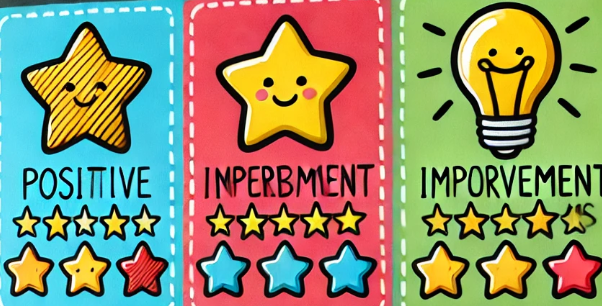
"Two Stars, One Wish"
|
Follows Instructions |
Provides Feedback |
|
||
Short-Term Lesson Plan №3
|
Name of the Educational Institution |
|
|||||||||||||||||||||
|
Subject: |
|
|||||||||||||||||||||
|
Unit: |
|
|||||||||||||||||||||
|
Teacher's Full Name: |
|
|||||||||||||||||||||
|
Date: |
|
|||||||||||||||||||||
|
Grade: |
Number of Participants: |
Number of Absentees: |
||||||||||||||||||||
|
Topic: |
Blogging Platforms Overview |
|||||||||||||||||||||
|
Lesson Objective: |
|
|||||||||||||||||||||
|
Value education |
This lesson encourages critical thinking, responsibility in digital choices, and respect for diversity of tools. Students learn that selecting the right platform is not only a technical decision but also a matter of responsibility, creativity, and effective communication with the audience. |
|||||||||||||||||||||
|
Lesson Procedure |
||||||||||||||||||||||
|
Planned Lesson Stages |
Teacher's Actions |
Student's Actions |
Assessment |
Resources |
||||||||||||||||||
|
Organizational stage |
"Magic Word" Method Objective: Spark interest in the lesson topic and encourage teamwork.
|
Follows Instructions |
Verbal Praise |
|
||||||||||||||||||
|
New lesson |
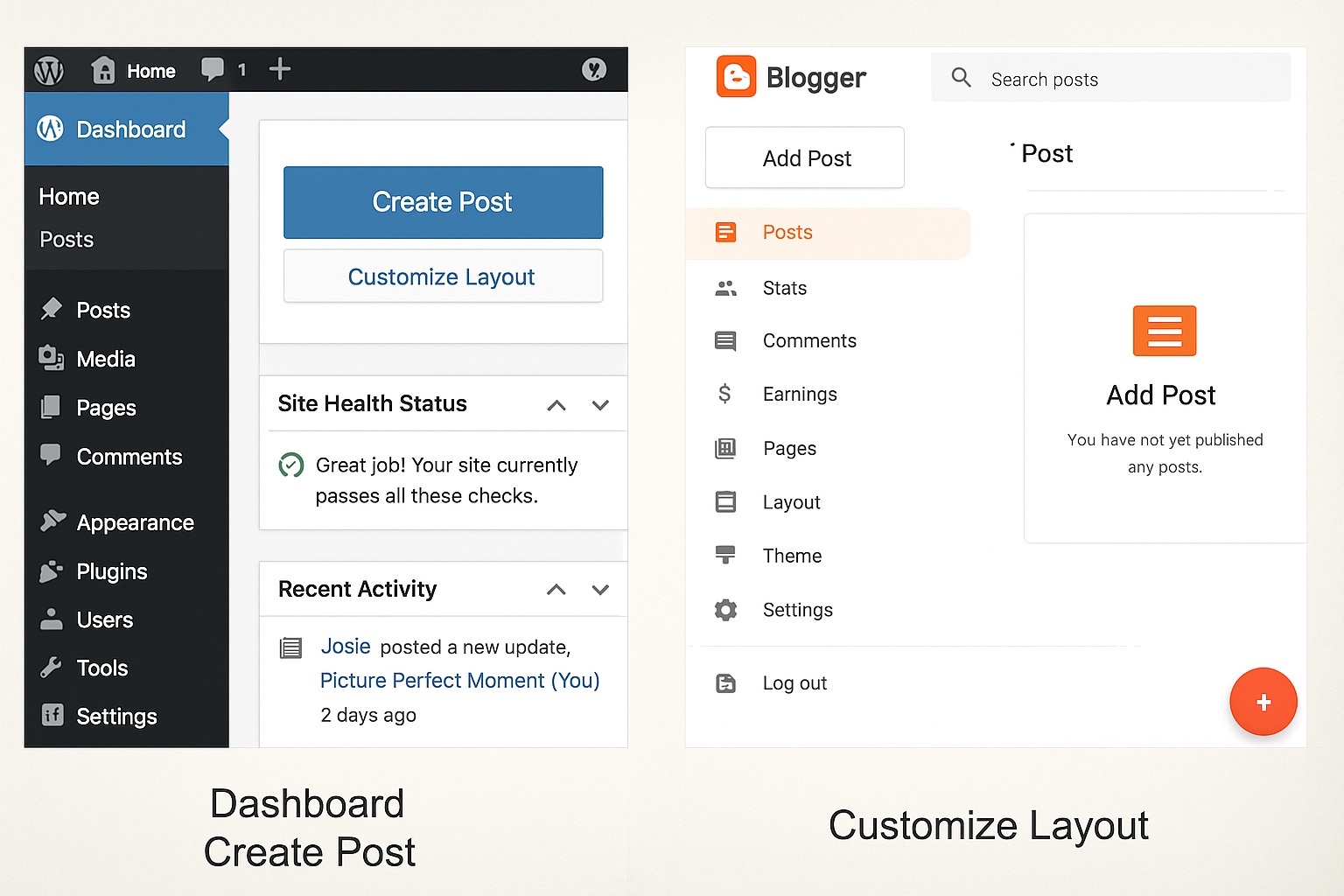
Activity 1: Teacher Demo – Exploring Blogging Platforms The teacher begins by projecting screenshots of two popular platforms: WordPress and Blogger. Students are guided through the basic interface: dashboard, post editor, and customization options. The teacher highlights differences:
The teacher also mentions other platforms like Medium (good for writers) and Wix (strong design focus). Students are asked to note down two strengths and two weaknesses for each platform while observing.
Sample notes
Descriptor
Activity 2: Pair Task – Pros and Cons Chart Students work in pairs to create a comparative chart of at least three platforms (WordPress, Blogger, Medium). They must classify features under three categories: Usability, Design, Professional Use. After completing the chart, each pair presents their findings to another pair. Sample chart
Descriptor
Activity 3: Matching Task – Icons to Blogging Tools Students are given a worksheet with images of different icons (e.g., dashboard, publish button, comment section, analytics chart, design template). They must match each icon to its function and write a short sentence explaining where it might be useful. Sample answers
Descriptor
Activity 4: Quiz Game – Which Platform Would You Choose If…? The teacher prepares situational questions. Students must choose the most suitable platform and justify their choice. This can be done as a whole-class quiz game. Quiz questions
Sample answers
Descriptor
Lesson outcomes By the end of this lesson, students:
|
Completes Tasks Completes Tasks Completes Tasks Completes Tasks Completes Tasks |
Descriptor
T Verbal Praise
|
|
||||||||||||||||||
|
Lesson consolidation |
"Traffic Light" Method
|
Follows Instructions |
Provides Feedback |
|
||||||||||||||||||

|
Name of the Educational Institution |
|
|||||
|
Subject: |
|
|||||
|
Unit: |
|
|||||
|
Teacher's Full Name: |
|
|||||
|
Date: |
|
|||||
|
Grade: |
Number of Participants: |
Number of Absentees: |
||||
|
Topic: |
Digital Safety & Netiquette |
|||||
|
Lesson Objective: |
|
|||||
|
Value education |
This lesson develops responsibility, respect, empathy, and honesty in digital spaces. Students learn that safety online is connected to personal values: protecting themselves and treating others with dignity. By reflecting on etiquette, they understand how online behavior impacts real relationships. |
|||||
|
Lesson Procedure |
||||||
|
Planned Lesson Stages |
Teacher's Actions |
Student's Actions |
Assessment |
Resources |
||
|
Organizational stage |
"Magic Box" Method Objective: Increase students' interest and motivation for the lesson.
|
Follows Instructions |
Verbal Praise |
|
||
|
New lesson |
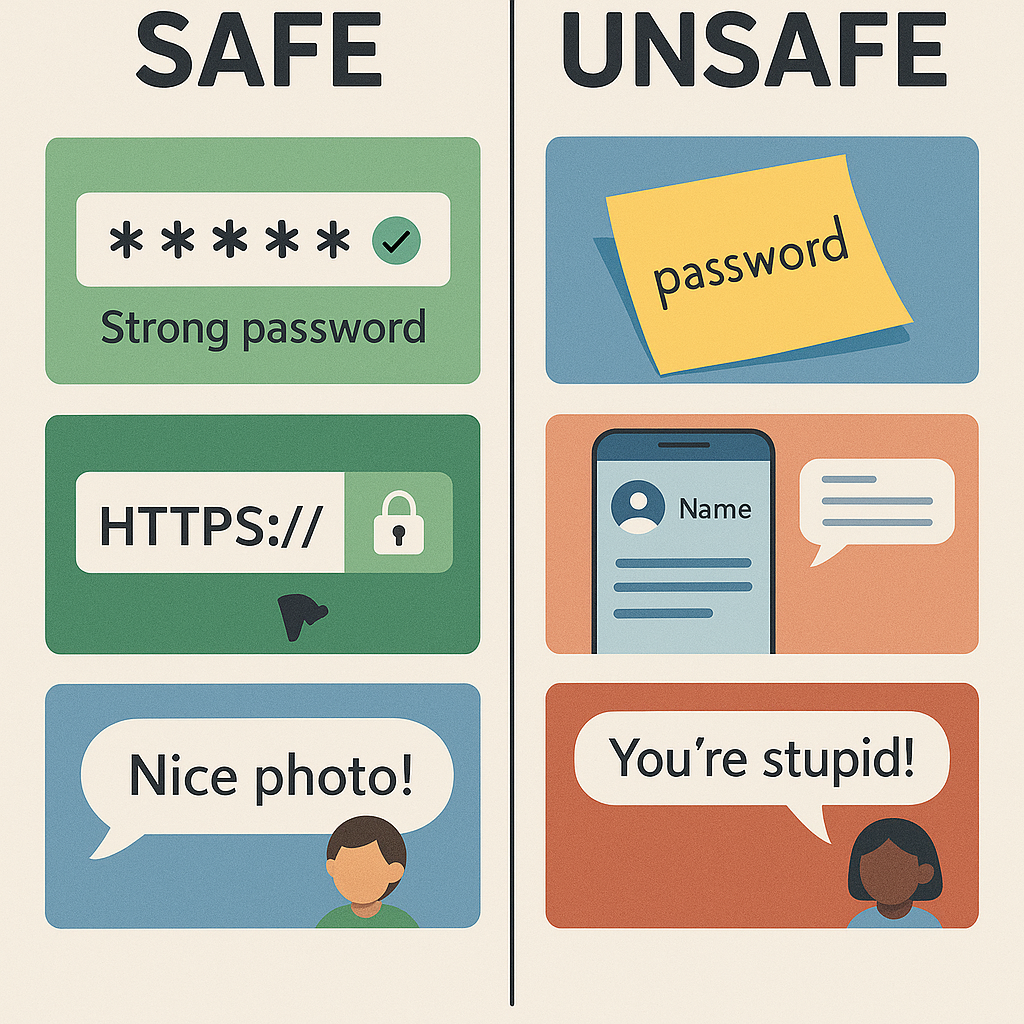
Activity 1: Brainstorm – Risks of Blogging The teacher begins by asking students: “What dangers can appear when people share information online?” Students brainstorm in groups and make a list of possible risks on a large sheet of paper. They are encouraged to think not only about technical risks but also about social and emotional risks. Sample answers
Groups present their ideas, and the teacher highlights that awareness of risks helps to prevent them. Descriptor
Activity 2: Card Sorting – Safe vs Unsafe Online Behavior Each group receives a set of cards with different behaviors written on them. For example:
Students sort the cards into two categories: Safe Behavior and Unsafe Behavior. After sorting, each group justifies one example from each category.
Sample sorting
Descriptor
Activity 3: Role-Play – Responding to a Rude Comment The teacher explains: “Imagine you write a blog post and someone comments: ‘This is stupid, you don’t know anything.’ How would you respond politely, without starting a fight?” Students in pairs role-play the situation. One student plays the rude commenter, the other practices responding politely. After one round, they switch roles. A few pairs perform their role-play in front of the class. Sample dialogue
Descriptor
Activity 4: Poster Creation – Golden Rules of Netiquette As a final task, students work in groups to design a poster titled “Golden Rules of Netiquette.” They summarize the most important rules they have learned in the lesson, such as:
Each group presents their poster to the class, and the posters can be displayed on the classroom wall. Sample poster slogans
Descriptor
Lesson outcomes By the end of the lesson, students:
|
Completes Tasks Completes Tasks Completes Tasks Completes Tasks Completes Tasks |
Descriptor
T Verbal Praise
|
|
||
|
Lesson consolidation |
"Mood Emojis" Method ? Instructions:
|
Follows Instructions |
Provides Feedback |
|
||
Short-Term Lesson Plan №5
|
Name of the Educational Institution |
|
|||||
|
Subject: |
|
|||||
|
Unit: |
|
|||||
|
Teacher's Full Name: |
|
|||||
|
Date: |
|
|||||
|
Grade: |
Number of Participants: |
Number of Absentees: |
||||
|
Topic: |
Blog Structure |
|||||
|
Lesson Objective: |
|
|||||
|
Value education |
This lesson emphasizes clarity, organization, and respect for readers. By studying blog structure, students learn that well-organized writing reflects responsibility, honesty, and respect: a writer who structures ideas clearly values the reader’s time and attention. |
|||||
|
Lesson Procedure |
||||||
|
Planned Lesson Stages |
Teacher's Actions |
Student's Actions |
Assessment |
Resources |
||
|
Organizational stage |
"Circle of Kind Words" Method Objective: Boost students' mood and foster friendly relationships.
|
Follows Instructions |
Verbal Praise |
|
||
|
New lesson |
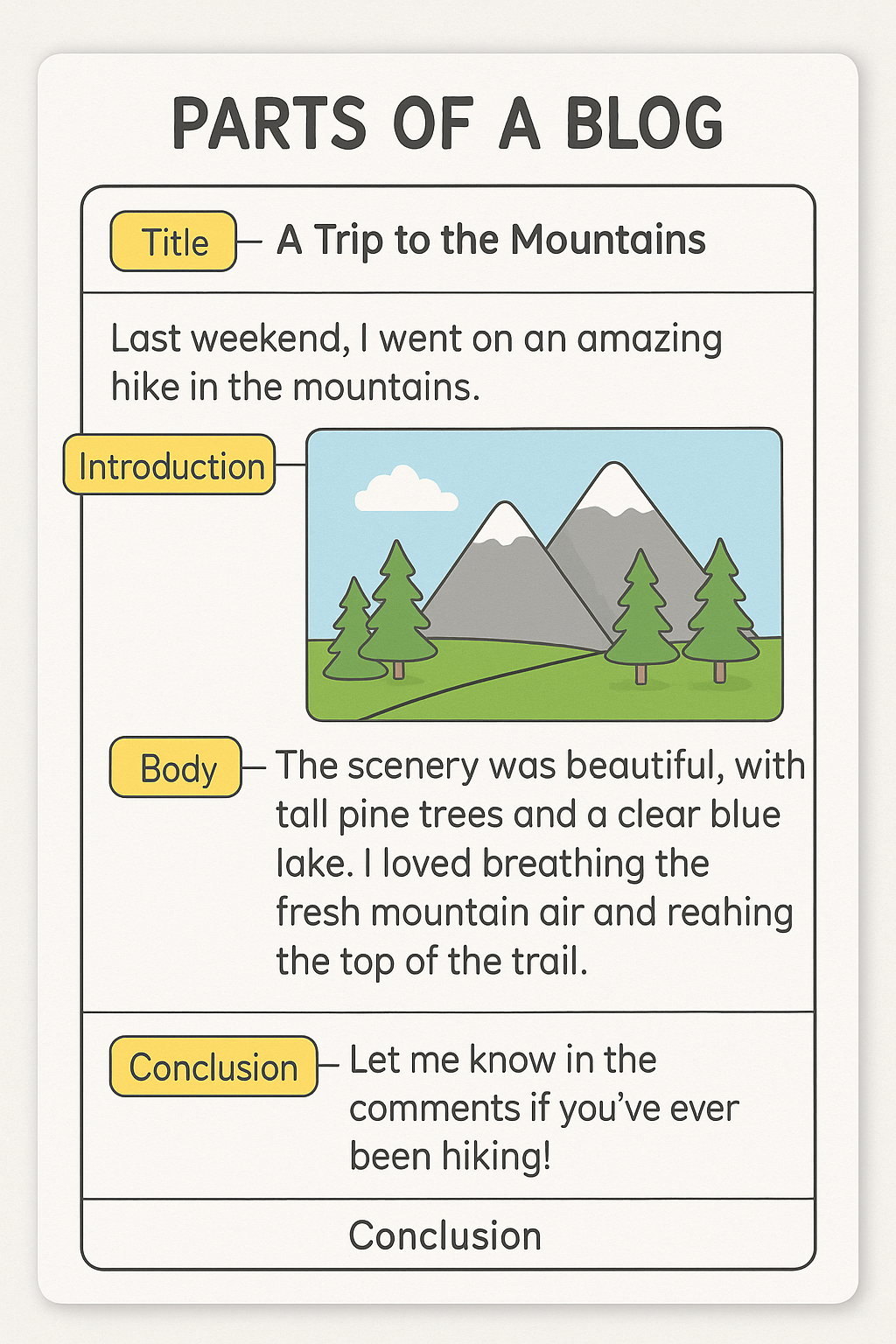
Activity 1: Jigsaw Reading – Analyzing Blog Structure The teacher divides students into groups of three. Each group receives a different short blog sample (e.g., travel blog, review blog, lifestyle blog). Each group reads their text carefully and highlights what seems to be the title, introduction, body, and conclusion. Then, students form “expert groups”: one student from each original group joins with others who had the same sample. These expert groups compare answers and agree on what the correct structure is. Finally, students return to their original group and explain their findings. Sample analysis
Descriptor
Activity 2: Group Task – Reordering Scrambled Blog Sections Students are given a blog text that has been cut into four parts and scrambled. In groups, they must read all the parts and decide on the correct order. After finishing, they justify their order to the class. Scrambled example
Correct order
Descriptor
Activity 3: Worksheet – Label Blog Parts Students are given a short blog post printed on a worksheet. They must underline the title in blue, highlight the introduction in yellow, circle the body paragraphs, and box the conclusion. After labeling, students answer one reflection question: “Why is each part important for the reader?”
Sample answer
Descriptor
Activity 4 (Game Option): Blog Structure Puzzle As a final challenge, the teacher projects a short blog text with missing labels (Title? Intro? Body? Conclusion?). In teams, students “race” to correctly label each part. Points are awarded for accuracy and speed. Sample puzzle
Descriptor
Lesson outcomes By the end of the lesson, students:
|
Completes Tasks Completes Tasks Completes Tasks Completes Tasks Completes Tasks |
Descriptor
T Verbal Praise
|
|
||
|
Lesson consolidation |
"What Did I Like? What Was Difficult? What Did I Learn?" ? Instructions:
✅
What did I
like? – What was the most
interesting part of the lesson? This method encourages reflection and helps students analyze their learning progress. |
Follows Instructions |
Provides Feedback |
|
||
Short-Term Lesson Plan №6
|
Name of the Educational Institution |
|
|||||
|
Subject: |
|
|||||
|
Unit: |
|
|||||
|
Teacher's Full Name: |
|
|||||
|
Date: |
|
|||||
|
Grade: |
Number of Participants: |
Number of Absentees: |
||||
|
Topic: |
Writing an Engaging Title |
|||||
|
Lesson Objective: |
|
|||||
|
Value education |
This lesson builds creativity, critical thinking, and respect for others’ ideas. Students learn that titles should not only attract attention but also be honest and respectful to the reader, avoiding clickbait or misleading information. |
|||||
|
Lesson Procedure |
||||||
|
Planned Lesson Stages |
Teacher's Actions |
Student's Actions |
Assessment |
Resources |
||
|
Organizational stage |
"Compliment Bridge" Method Objective: Build friendly relationships and boost students' confidence.
|
Follows Instructions |
Verbal Praise |
|
||
|
New lesson |
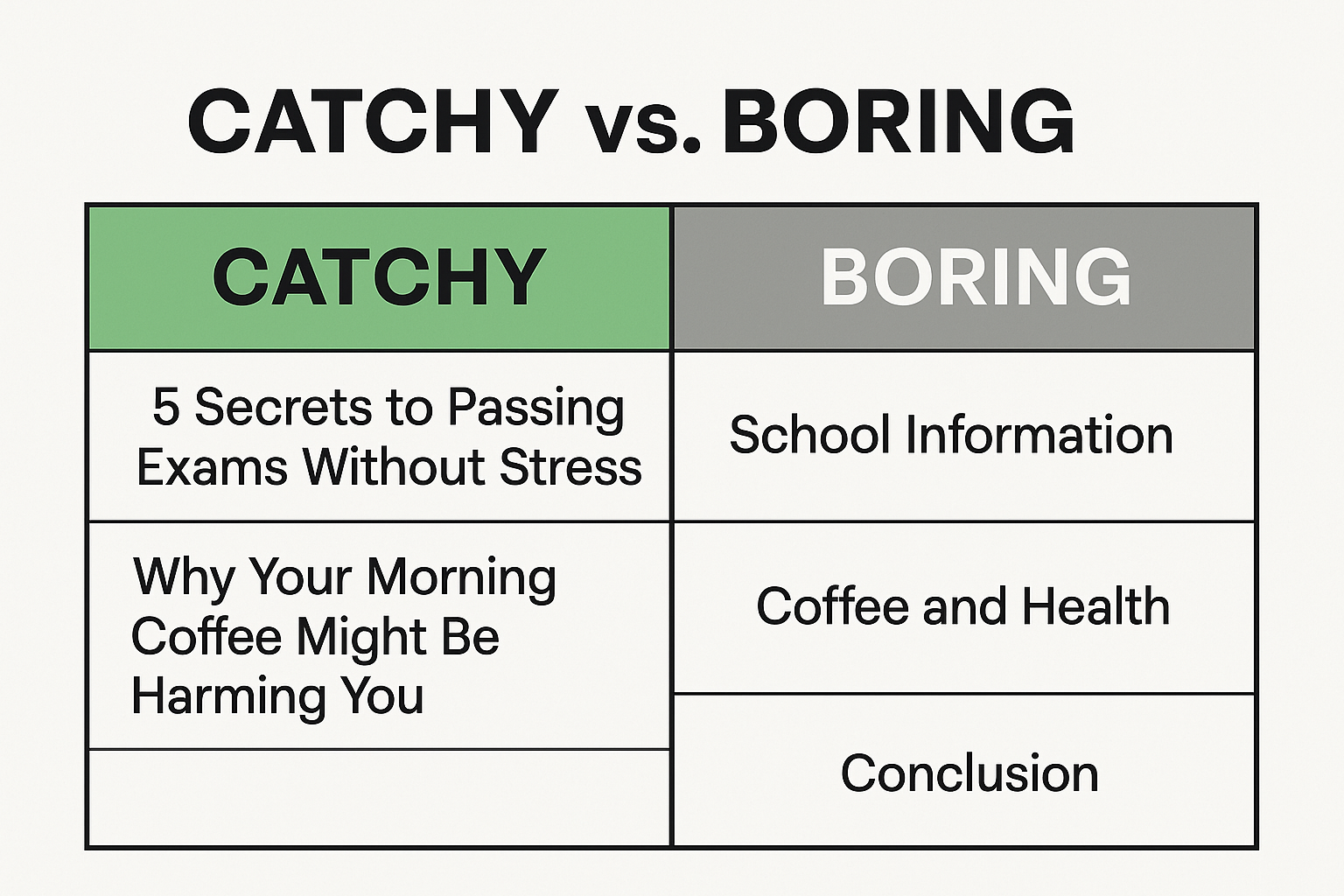
Activity 1: Group Brainstorm – Catchy vs Boring Titles The teacher writes two pairs of titles on the board and asks students: “Which one makes you want to read more?”
In groups, students discuss what makes a title catchy and what makes it boring. They must write at least three rules for creating a strong title (e.g., be specific, use numbers, ask a question, create curiosity).
Sample answers
Descriptor
Activity 2: Title Race – Create 5 Titles for Random Topics Each group is given one random topic (e.g., “Healthy Breakfast,” “A Rainy Day,” “My Favorite App,” “Traveling by Train”). Within 5 minutes, each group must create five different possible blog titles for their topic. After the race, groups exchange their lists with another group. Each group chooses the two most engaging titles from the other team’s list and explains their choice. Sample answers
Chosen by peers: “5 Quick Breakfasts to Start Your Day Right” and “Why Breakfast is the Secret to Happiness.” Descriptor
Activity 3: Peer Vote – Best Blog Title Competition Each group chooses one of their titles to enter into a class competition. The teacher writes all titles on the board. Students vote anonymously for the most engaging and effective title. The winning title is discussed: “Why is this one stronger than the others?” Students compare it to their earlier rules for good titles. Sample winning title
Descriptor
Activity 4: Matching – Title to Correct Blog Post Students receive a worksheet with four blog post excerpts and four possible titles. They must match each excerpt to the most suitable title. Example
Correct matches
Descriptor
Lesson outcomes By the end of the lesson, students:
|
Completes Tasks Completes Tasks Completes Tasks Completes Tasks Completes Tasks |
Descriptor
T Verbal Praise
|
|
||
|
Lesson consolidation |
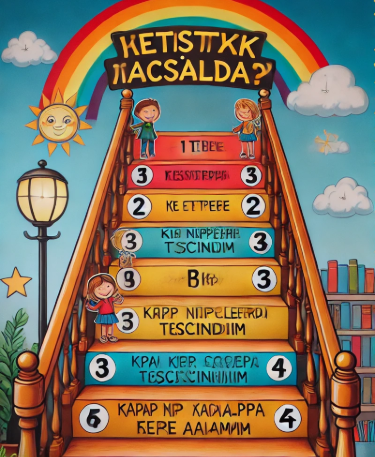
Success Ladder" Method ? Instructions:
|
Follows Instructions |
Provides Feedback |
|
||
Short-Term Lesson Plan №7
|
Name of the Educational Institution |
|
|||||||||||
|
Subject: |
|
|||||||||||
|
Unit: |
|
|||||||||||
|
Teacher's Full Name: |
|
|||||||||||
|
Date: |
|
|||||||||||
|
Grade: |
Number of Participants: |
Number of Absentees: |
||||||||||
|
Topic: |
Personal Narrative Blog |
|||||||||||
|
Lesson Objective: |
|
|||||||||||
|
Value education |
This lesson develops honesty, self-expression, and respect for others’ stories. Students learn that sharing personal experiences can build empathy and connection, while respecting privacy and sensitivity in storytelling. |
|||||||||||
|
Lesson Procedure |
||||||||||||
|
Planned Lesson Stages |
Teacher's Actions |
Student's Actions |
Assessment |
Resources |
||||||||
|
Organizational stage |
"Circle of Kind Words" Method Objective: Boost students' mood and foster friendly relationships.
|
Follows Instructions |
Verbal Praise |
|
||||||||
|
New lesson |
Activity 1: Freewrite – “A Memorable Day in My Life” The teacher asks students to think about a day that stands out in their memory: a happy event, a challenge, or something unexpected. Students spend 7–8 minutes writing continuously without stopping, focusing on capturing details, feelings, and events. The teacher encourages students not to worry about grammar or spelling during this stage—just get the story on paper. Sample answer (short extract)
Descriptor
Activity 2: Pair Share – Exchange Stories After freewriting, students exchange their writing with a partner. Each partner reads the other’s story and highlights one sentence they found powerful or memorable. Then they give one suggestion for improvement (e.g., “Add more detail about the place” or “Tell us how you felt at the end”). Sample peer feedback
Descriptor
Activity 3: Narrative Chain Game – Building a Story Together The teacher starts a story aloud: “It was a rainy morning when I opened the door and saw something unusual …” Each student in the circle adds one sentence to continue the story. The aim is to create a funny or surprising class story. The game shows how narratives grow step by step, with each person adding to the sequence. Sample chain
Descriptor
Activity 4: Drafting a Short Narrative Blog Students now return to their freewrite and begin shaping it into a short blog post. They should add:
Sample draft (outline)
Descriptor
Lesson outcomes By the end of the lesson, students:
|
Completes Tasks Completes Tasks Completes Tasks Completes Tasks Completes Tasks |
Descriptor
T Verbal Praise
|
|
||||||||
|
Lesson consolidation |
"Know – Want to Know – Learned" (KWL) Method ? Instructions:
|
Follows Instructions |
Provides Feedback |
|
||||||||
Short-Term Lesson Plan №8
|
Name of the Educational Institution |
|
|||||
|
Subject: |
|
|||||
|
Unit: |
|
|||||
|
Teacher's Full Name: |
|
|||||
|
Date: |
|
|||||
|
Grade: |
Number of Participants: |
Number of Absentees: |
||||
|
Topic: |
Peer Feedback Basics |
|||||
|
Lesson Objective: |
|
|||||
|
Value education |
This lesson strengthens respect, empathy, collaboration, and responsibility. Students learn that feedback should help others grow, not hurt them, and that honest but polite communication is a valuable skill both online and in real life. |
|||||
|
Lesson Procedure |
||||||
|
Planned Lesson Stages |
Teacher's Actions |
Student's Actions |
Assessment |
Resources |
||
|
Organizational stage |
"One Word" Method ? Objective: Determine students' emotional readiness for the lesson.
|
Follows Instructions |
Verbal Praise |
|
||
|
New lesson |
Activity 1: Watching and Discussing Sample Comments The teacher presents two example comments on the board or projector:
The class discusses why the first one is unhelpful (too negative, no suggestions) and why the second one is useful (specific praise + constructive advice). Sample analysis
Descriptor
Activity 2: Role-Play – Giving Constructive Feedback Students pair up. Each student receives a short, simple sample blog paragraph (provided by the teacher). One student reads their paragraph aloud; the other gives one positive comment and one suggestion for improvement. Then they switch roles. Sample paragraph
Sample feedback
Pairs share one example of their feedback with the class. Descriptor
Activity 3: Group Work – Two Stars and a Wish In groups of three, students exchange short drafts (about 80–100 words) they have previously written (e.g., from “Personal Narrative Blog” lesson). Each student writes feedback for their peer in this format:
Sample feedback
Descriptor
Activity 4: Peer Feedback on Classmates’ Drafts Students now exchange their drafts with a classmate (not from their group). They read carefully and write feedback following the rules of constructive commenting. The teacher reminds them to be specific, supportive, and respectful. Afterward, students return the draft and discuss the feedback with their partner. Sample exchange
Descriptor
Lesson outcomes By the end of the lesson, students:
|
Completes Tasks Completes Tasks Completes Tasks Completes Tasks Completes Tasks |
Descriptor
T Verbal Praise
|
|
||
|
Lesson consolidation |
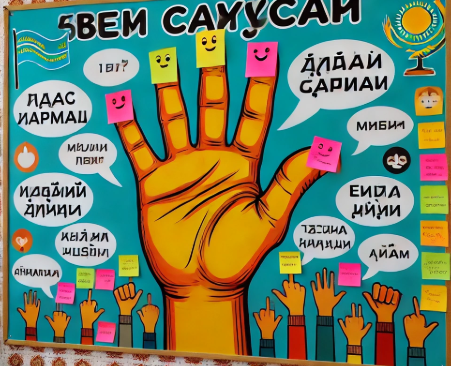
"Five Fingers" Method ? Instructions:
?
Thumb – I liked
it.
|
Follows Instructions |
Provides Feedback |
|
||
Short-Term Lesson Plan №9
|
Name of the Educational Institution |
|
|||||
|
Subject: |
|
|||||
|
Unit: |
|
|||||
|
Teacher's Full Name: |
|
|||||
|
Date: |
|
|||||
|
Grade: |
Number of Participants: |
Number of Absentees: |
||||
|
Topic: |
Vocabulary for Blogging |
|||||
|
Lesson Objective: |
|
|||||
|
Value education |
This lesson develops communication, creativity, and collaboration. Students learn that vocabulary is not only about words, but about connecting with an audience respectfully, clearly, and persuasively. Using the right words shows responsibility and respect toward readers. |
|||||
|
Lesson Procedure |
||||||
|
Planned Lesson Stages |
Teacher's Actions |
Student's Actions |
Assessment |
Resources |
||
|
Organizational stage |
"Show Your Mood" Objective: Determine students' mood and assess their readiness for the lesson.
|
Follows Instructions |
Verbal Praise |
|
||
|
New lesson |
Activity 1: Word Wall – Connectors and Expressions The teacher prepares a list of useful connectors and expressions often used in blogs:
Students, in groups, write these words/phrases on colored cards and stick them on the classroom “Word Wall.” Each group is asked to come up with one example sentence using a phrase. Sample sentences
Descriptor
Activity 2: Fill-in-the-Blank – Blog Vocabulary in Context Students receive a short blog excerpt with missing words. They must choose from a word bank (connectors and expressions) to complete the text. Sample task _____, many students struggle with time management. _____, if you make a plan, things become easier. _____, everyone has different priorities, but learning to manage time is always useful. In _____, good planning helps you feel less stressed. Word bank: first of all, however, in conclusion, for example Correct answer
Descriptor
Activity 3: Vocabulary Charades – Act It Out Students are divided into small groups. Each group gets cards with words (e.g., convince, persuade, review, describe, recommend). One student acts out the meaning silently, and others guess the word. After guessing, the group must make a blog-style sentence using that word. Sample sentence
Descriptor
Activity 4: Mini-Writing – Using 5 New Words in a Blog Sentence Each student chooses five new words from today’s Word Wall. They must write a short blog-style paragraph (4–5 sentences) that includes all five. Sample paragraph
Descriptor
Lesson outcomes By the end of the lesson, students:
|
Completes Tasks Completes Tasks Completes Tasks Completes Tasks Completes Tasks |
Descriptor
T Verbal Praise
|
|
||
|
Lesson consolidation |
"Success Ladder"
1️⃣
I did not understand the
topic.
|
Follows Instructions |
Provides Feedback |
|
||
Short-Term Lesson Plan №10
|
Name of the Educational Institution |
|
|||||
|
Subject: |
|
|||||
|
Unit: |
|
|||||
|
Teacher's Full Name: |
|
|||||
|
Date: |
|
|||||
|
Grade: |
Number of Participants: |
Number of Absentees: |
||||
|
Topic: |
Writing an Opinion Blog |
|||||
|
Lesson Objective: |
|
|||||
|
Value education |
This lesson develops critical thinking, open-mindedness, respect for different viewpoints, and honesty in argumentation. Students learn that opinions should be supported by reasons, and respectful dialogue helps people understand diverse perspectives. |
|||||
|
Lesson Procedure |
||||||
|
Planned Lesson Stages |
Teacher's Actions |
Student's Actions |
Assessment |
Resources |
||
|
Organizational stage |
"Secret Gift" Method Objective: Encourage students and increase their interest in the lesson.
|
Follows Instructions |
Verbal Praise |
|
||
|
New lesson |
Activity 1: Brainstorm – Pros and Cons of a Topic
The teacher presents a simple,
relatable issue on the board: “Should students wear
school uniforms?” Sample answers
After brainstorming, a few pairs share their charts. Descriptor
Activity 2: Class Debate – For or Against? The class is divided into two groups: For uniforms and Against uniforms. Each group prepares three main arguments and chooses one speaker to present them. After both sides speak, students can ask questions or respond respectfully. Sample arguments
The teacher reminds students to use respectful language: “I see your point, but I disagree because…” Descriptor
Activity 3: Outline Activity – Thesis, Reasons, Conclusion Individually, students choose their personal opinion (for or against). They write a short outline for a blog post:
Sample outline
Descriptor
Activity 4: Drafting a Short Opinion Blog Using their outline, students write a short opinion blog (about 120–150 words). They should include:
Sample draft (extract)
Descriptor
Lesson outcomes By the end of the lesson, students:
|
Completes Tasks Completes Tasks Completes Tasks Completes Tasks Completes Tasks |
Descriptor
T Verbal Praise
|
|
||
|
Lesson consolidation |
"Two Stars, One Wish"
|
Follows Instructions |
Provides Feedback |
|
||
Short-Term Lesson Plan №11
|
Name of the Educational Institution |
|
|||||
|
Subject: |
|
|||||
|
Unit: |
|
|||||
|
Teacher's Full Name: |
|
|||||
|
Date: |
|
|||||
|
Grade: |
Number of Participants: |
Number of Absentees: |
||||
|
Topic: |
Review Writing |
|||||
|
Lesson Objective: |
|
|||||
|
Value education |
This lesson develops honesty, fairness, and critical thinking. Students learn that a good review is not just about personal opinion, but about giving fair, respectful, and useful feedback that can help others make informed decisions. |
|||||
|
Lesson Procedure |
||||||
|
Planned Lesson Stages |
Teacher's Actions |
Student's Actions |
Assessment |
Resources |
||
|
Organizational stage |
"Magic Word" Method Objective: Spark interest in the lesson topic and encourage teamwork.
|
Follows Instructions |
Verbal Praise |
|
||
|
New lesson |
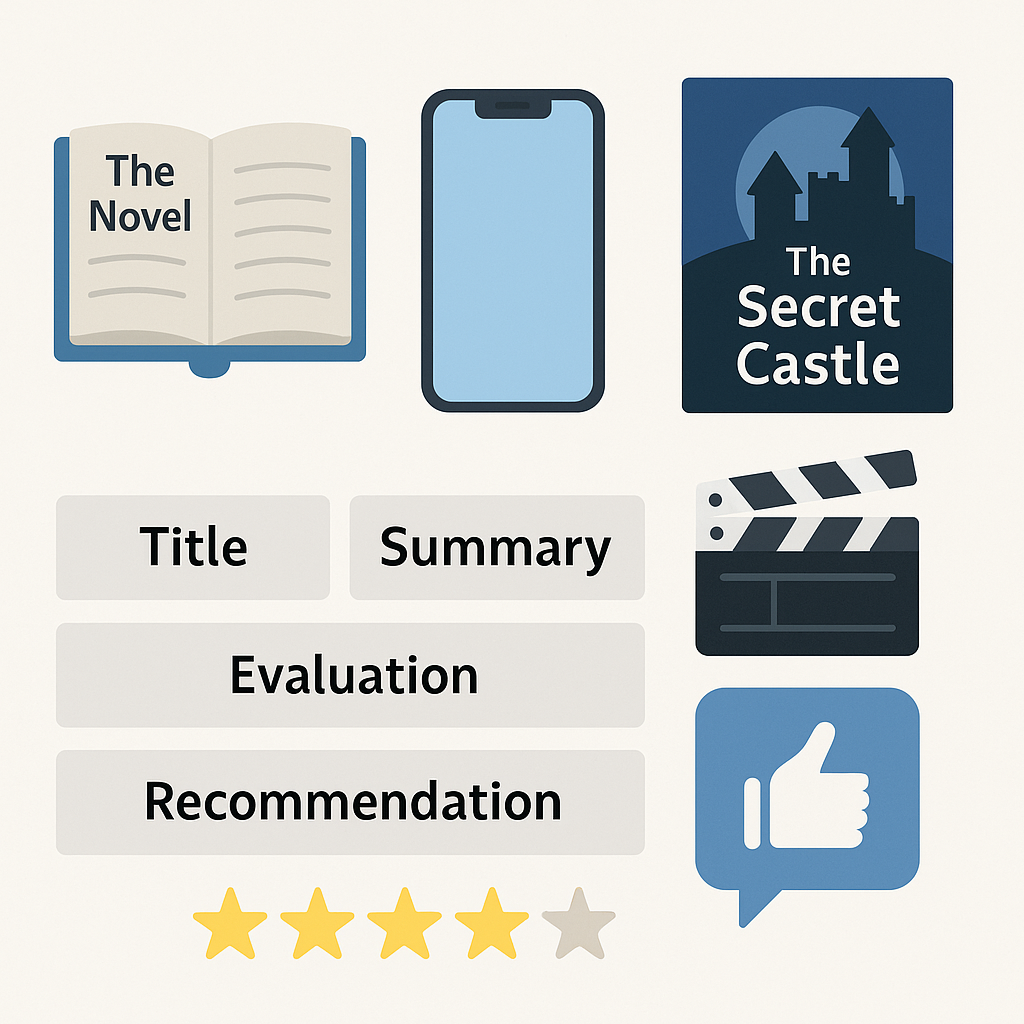
Activity 1: Analyze a Review Blog Sample The teacher presents a short review blog (e.g., of a book, film, or product). Students read it and underline key parts: introduction of the item, positive aspects, negative aspects, final evaluation/recommendation. Sample blog extract (film review)
Sample analysis
Descriptor
Activity 2: Group Work – Creating a Review Rubric In groups of 3–4, students brainstorm and agree on criteria for a good review. The teacher guides them to think about: clarity, balance (positives and negatives), details/examples, honesty, and recommendation. Groups write their rubric on poster paper. Sample rubric criteria
Descriptor
Activity 3: Mini-Review Writing – My Favorite App Individually, students choose a favorite app (e.g., Instagram, Duolingo, TikTok, Spotify). They write a short review (100–120 words) using the structure:
Sample mini-review
Descriptor
Activity 4: Peer Vote – Best Review of the Day Students post or read their mini-reviews aloud. The class listens and uses the rubric from Activity 2 to choose the “Best Review of the Day.” The winner is announced, but the teacher emphasizes that all students are reviewers and every voice is valuable. Sample outcome
Descriptor
Lesson outcomes By the end of the lesson, students:
|
Completes Tasks Completes Tasks Completes Tasks Completes Tasks Completes Tasks |
Descriptor
T Verbal Praise
|
|
||
|
Lesson consolidation |
"Traffic Light" Method
|
Follows Instructions |
Provides Feedback |
|
||
Short-Term Lesson Plan №12
|
Name of the Educational Institution |
|
|||||
|
Subject: |
|
|||||
|
Unit: |
|
|||||
|
Teacher's Full Name: |
|
|||||
|
Date: |
|
|||||
|
Grade: |
Number of Participants: |
Number of Absentees: |
||||
|
Topic: |
Integrating Multimedia |
|||||
|
Lesson Objective: |
|
|||||
|
Value education |
This lesson emphasizes responsibility, creativity, and digital literacy. Students learn that adding multimedia should respect copyright, avoid misleading visuals, and enhance—not distract from—the message. |
|||||
|
Lesson Procedure |
||||||
|
Planned Lesson Stages |
Teacher's Actions |
Student's Actions |
Assessment |
Resources |
||
|
Organizational stage |
"Magic Box" Method Objective: Increase students' interest and motivation for the lesson.
|
Follows Instructions |
Verbal Praise |
|
||
|
New lesson |
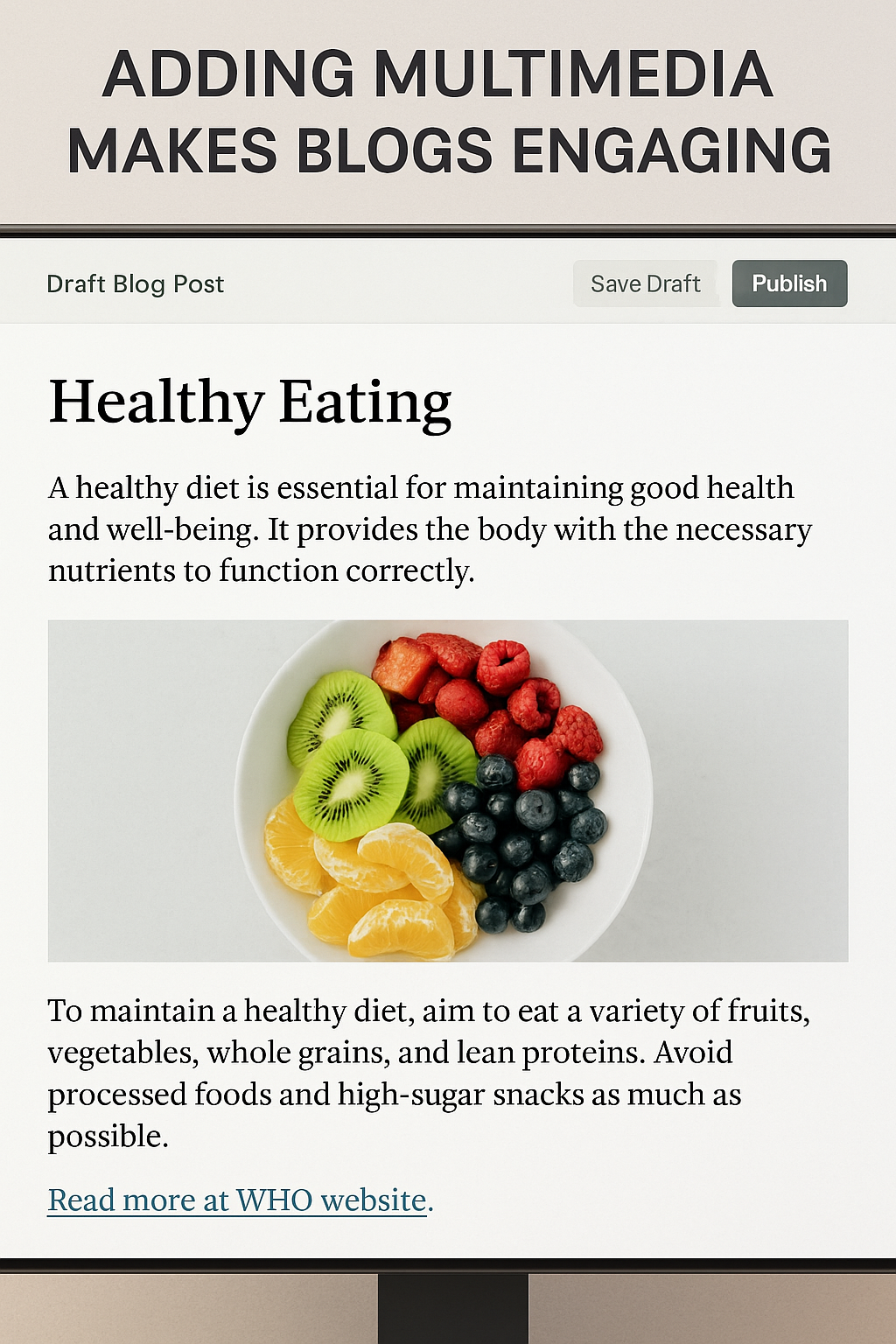
Activity 1: Teacher Demo – Inserting Images and Links The teacher shows a blog draft on the projector without images or links. Then, the teacher demonstrates how to insert:
The class discusses: “How do images and links change the reader’s experience?” Sample answers
Descriptor
Activity 2: Pair Task – Find Two Images that Fit a Topic Each pair is given a topic (e.g., healthy breakfast, study tips, travel in nature, favorite music). They must find (or choose from teacher-provided options) two images that best support the topic. Pairs then present to the class why they chose these images. Sample answers
Descriptor
Activity 3: Hands-On Practice – Adding a Hyperlink Students open their draft blog from a previous lesson (e.g., “Personal Narrative Blog” or “Opinion Blog”). Each student selects one sentence that could be linked to further information. They add a hyperlink to an appropriate source (teacher provides safe websites if needed).
Sample task
Descriptor
Activity 4: Gallery Walk – Comparing Media Use Students display their drafts (with images/links) on screens or printed copies. The class walks around, reading each other’s blogs and noting:
After the walk, students share feedback. Sample feedback
Descriptor
Lesson outcomes By the end of the lesson, students:
|
Completes Tasks Completes Tasks Completes Tasks Completes Tasks Completes Tasks |
Descriptor
T Verbal Praise
|
|
||
|
Lesson consolidation |
"Mood Emojis" Method ? Instructions:
|
Follows Instructions |
Provides Feedback |
|
||
Short-Term Lesson Plan №13
|
Name of the Educational Institution |
|
|||||
|
Subject: |
|
|||||
|
Unit: |
|
|||||
|
Teacher's Full Name: |
|
|||||
|
Date: |
|
|||||
|
Grade: |
Number of Participants: |
Number of Absentees: |
||||
|
Topic: |
Descriptive Language |
|||||
|
Lesson Objective: |
|
|||||
|
Value education |
This lesson develops creativity, expressiveness, and appreciation of detail. Students learn that good writing respects readers by painting a clear, vivid picture of an experience, helping others connect emotionally and imaginatively. |
|||||
|
Lesson Procedure |
||||||
|
Planned Lesson Stages |
Teacher's Actions |
Student's Actions |
Assessment |
Resources |
||
|
Organizational stage |
"Circle of Kind Words" Method Objective: Boost students' mood and foster friendly relationships.
|
Follows Instructions |
Verbal Praise |
|
||
|
New lesson |
Activity 1: Adjective Brainstorming Game The teacher writes one word on the board (e.g., “school cafeteria”). In groups, students brainstorm as many adjectives as possible to describe it in 3 minutes. Each correct adjective earns a point. Afterward, groups share their lists, and the teacher records unique adjectives on the board. Sample answers
Descriptor
Activity 2: Sensory Chart – Describe with Five Senses Students receive a chart with five columns: Sight – Sound – Smell – Taste – Touch. The teacher gives a prompt (e.g., “a beach day” or “a busy street market”). Students must fill in at least one detail for each sense.
Sample chart (beach day)
Descriptor
Activity 3: “Guess the Object” Game with Descriptive Clues In pairs, one student secretly chooses an object (e.g., a smartphone, an umbrella, a pizza). Instead of naming it, the student describes it with at least 3–4 descriptive clues using adjectives and sensory words. The partner must guess the object. Sample round
Descriptor
Activity 4: Writing a Descriptive Paragraph for a Blog Individually, students choose a personal topic (e.g., “my favorite place,” “a special meal,” “an unforgettable event”). They write one blog-style paragraph (6–8 sentences) using at least five descriptive words/phrases. Sample paragraph
Descriptor
Lesson outcomes By the end of the lesson, students:
|
Completes Tasks Completes Tasks Completes Tasks Completes Tasks Completes Tasks |
Descriptor
T Verbal Praise
|
|
||
|
Lesson consolidation |
"What Did I Like? What Was Difficult? What Did I Learn?" ? Instructions:
✅
What did I
like? – What was the most
interesting part of the lesson? This method encourages reflection and helps students analyze their learning progress. |
Follows Instructions |
Provides Feedback |
|
||
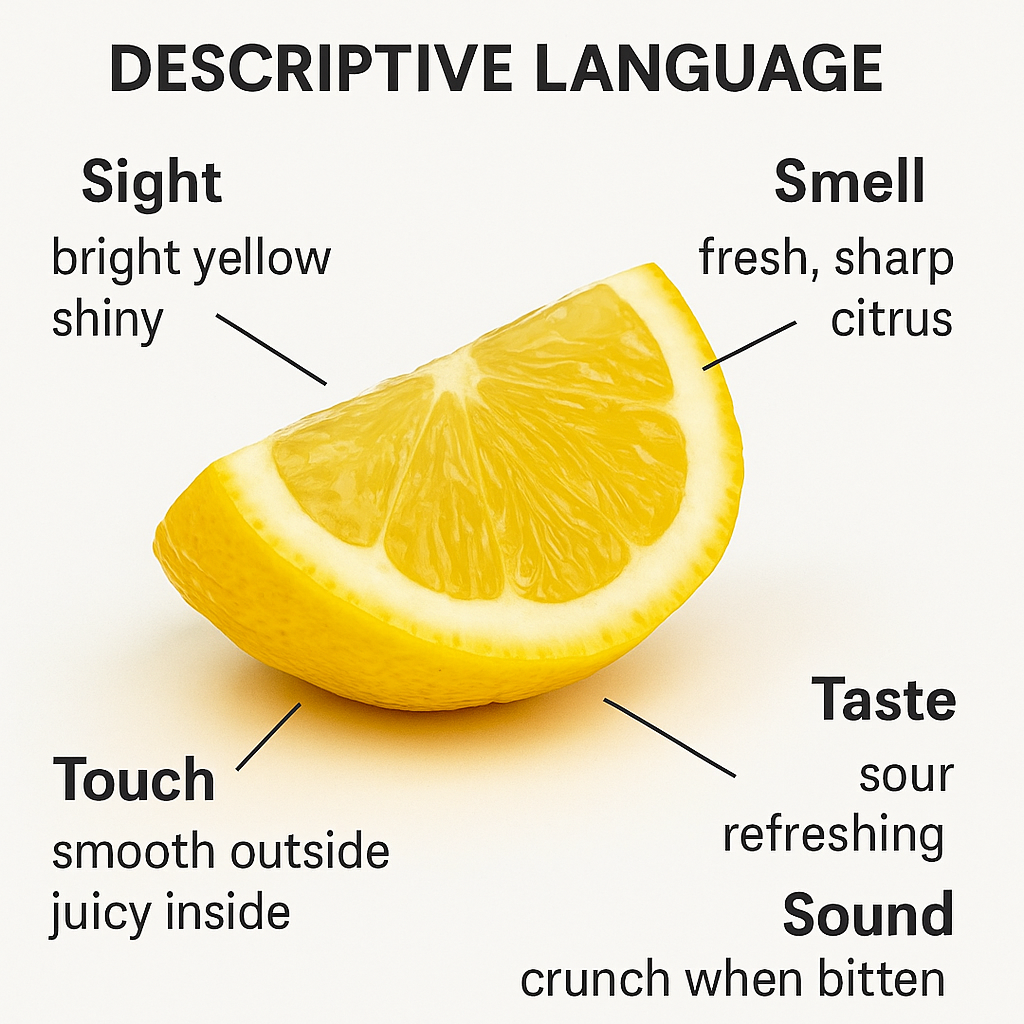
Short-Term Lesson Plan №14
|
Name of the Educational Institution |
|
|||||
|
Subject: |
|
|||||
|
Unit: |
|
|||||
|
Teacher's Full Name: |
|
|||||
|
Date: |
|
|||||
|
Grade: |
Number of Participants: |
Number of Absentees: |
||||
|
Topic: |
Drafting and Revising |
|||||
|
Lesson Objective: |
|
|||||
|
Value education |
This lesson develops responsibility, perseverance, and collaboration. Students learn that good writing takes effort, revision, and respect for feedback. They also practice humility in accepting advice and honesty in giving constructive suggestions. |
|||||
|
Lesson Procedure |
||||||
|
Planned Lesson Stages |
Teacher's Actions |
Student's Actions |
Assessment |
Resources |
||
|
Organizational stage |
"Compliment Bridge" Method Objective: Build friendly relationships and boost students' confidence.
|
Follows Instructions |
Verbal Praise |
|
||
|
New lesson |
Activity 1: Teacher Demo – First Draft vs Final Draft The teacher projects two versions of a short blog paragraph: one rough draft and one improved version. Students compare them in pairs and note the differences. Sample drafts
First
draft:
Final
draft: Sample observations
Descriptor
Activity 2: Peer Editing Checklist The teacher introduces a short checklist for editing, including:
Students practice using the checklist on a short sample paragraph before applying it to classmates’ work. Descriptor
Activity 3: Pair Exchange – Revise Each Other’s Draft Students exchange drafts of a previous blog (from “Opinion Blog,” “Personal Narrative Blog,” or other lessons). Each student reads their partner’s draft and fills in the peer editing checklist. After returning drafts, students revise their own texts, making changes based on feedback. Sample peer feedback
Descriptor
Activity 4: Reflection – What I Improved in My Draft At the end of the lesson, students write 4–5 sentences reflecting on the changes they made. They answer:
Sample reflection
Descriptor
Lesson outcomes By the end of the lesson, students:
|
Completes Tasks Completes Tasks Completes Tasks Completes Tasks Completes Tasks |
Descriptor
T Verbal Praise
|
|
||
|
Lesson consolidation |
Success Ladder" Method ? Instructions:
|
Follows Instructions |
Provides Feedback |
|
||
Short-Term Lesson Plan №15
|
Name of the Educational Institution |
|
|||||||||||
|
Subject: |
|
|||||||||||
|
Unit: |
|
|||||||||||
|
Teacher's Full Name: |
|
|||||||||||
|
Date: |
|
|||||||||||
|
Grade: |
Number of Participants: |
Number of Absentees: |
||||||||||
|
Topic: |
Writing for an Audience |
|||||||||||
|
Lesson Objective: |
|
|||||||||||
|
Value education |
This lesson builds critical thinking, fairness, respect for opinions, and responsibility in reasoning. Students learn that arguments should be supported with logic and examples, not emotion or attack, which prepares them for responsible communication online. |
|||||||||||
|
Lesson Procedure |
||||||||||||
|
Planned Lesson Stages |
Teacher's Actions |
Student's Actions |
Assessment |
Resources |
||||||||
|
Organizational stage |
"Circle of Kind Words" Method Objective: Boost students' mood and foster friendly relationships.
|
Follows Instructions |
Verbal Praise |
|
||||||||
|
New lesson |
Activity 1: Strong vs Weak Arguments (Analysis Task) The teacher gives two sample arguments about the same topic (“Should homework be reduced?”). Students, in groups, underline weaknesses/strengths and rewrite the weak one to improve it. Samples
Challenge requirement
Descriptor
Activity 2: Pair Task – Building Arguments with Connectors Pairs are given a controversial statement:
Each pair must write two arguments FOR and two AGAINST using academic connectors. Sample answers
Challenge requirement
Descriptor
Activity 3: Mini-Debate – Supporting Opinions with Evidence The class is divided into two groups. Each side defends a position (e.g., “Online classes are better than traditional classes”). Every speaker must give at least one argument and one counterargument. Challenge requirement
Sample counterargument
Descriptor
Activity 4: Writing Task – Argumentative Blog Paragraph Individually, students write a short argumentative paragraph (150–170 words) on the topic: “Should teenagers have part-time jobs while studying?” Structure:
Sample draft (extract)
Descriptor
Lesson outcomes By the end of the lesson, students:
|
Completes Tasks Completes Tasks Completes Tasks Completes Tasks Completes Tasks |
Descriptor
T Verbal Praise
|
|
||||||||
|
Lesson consolidation |
"Know – Want to Know – Learned" (KWL) Method ? Instructions:
|
Follows Instructions |
Provides Feedback |
|
||||||||
Short-Term Lesson Plan №16
|
Name of the Educational Institution |
|
|||||
|
Subject: |
|
|||||
|
Unit: |
|
|||||
|
Teacher's Full Name: |
|
|||||
|
Date: |
|
|||||
|
Grade: |
Number of Participants: |
Number of Absentees: |
||||
|
Topic: |
Argumentation Skills |
|||||
|
Lesson Objective: |
|
|||||
|
Value education |
This lesson develops critical thinking, respect for diverse opinions, fairness, and responsibility in communication. Students learn that arguments must be based on logic and evidence, not personal attack, and that respecting readers means presenting opinions in a structured, balanced way. |
|||||
|
Lesson Procedure |
||||||
|
Planned Lesson Stages |
Teacher's Actions |
Student's Actions |
Assessment |
Resources |
||
|
Organizational stage |
"One Word" Method ? Objective: Determine students' emotional readiness for the lesson.
|
Follows Instructions |
Verbal Praise |
|
||
|
New lesson |
Activity 1: Identify Claims and Evidence (Analytical Task) The teacher presents a short blog excerpt: “Teenagers should read more books outside of school. Reading improves vocabulary and develops imagination. For example, students who read regularly often write more creatively and score higher on essays. Therefore, schools should encourage independent reading.” Task for students
Sample answer
Descriptor
Activity 2: Small Group Brainstorm – Evidence for a Claim Groups receive one claim and must brainstorm at least three different types of evidence: fact, statistic, example, expert opinion, or personal experience. Sample claims
Sample brainstorm (for claim: fast food in schools)
Descriptor
Activity 3: Debate Game – Argue For or Against The class is divided into two teams. The topic is written on the board (e.g., “Should smartphones be banned during lessons?”). Each team prepares three arguments and at least one counterargument. Students then debate, with each side presenting and responding. Sample arguments
Sample counterargument
Descriptor
Activity 4: Writing Task – Claim + Two Reasons in Blog Draft Individually, students choose one of the debated topics or another issue they care about. They draft a short blog section (100–120 words) that includes:
Sample draft
Descriptor
Lesson outcomes By the end of the lesson, students:
|
Completes Tasks Completes Tasks Completes Tasks Completes Tasks Completes Tasks |
Descriptor
T Verbal Praise
|
|
||
|
Lesson consolidation |
"Five Fingers" Method ? Instructions:
?
Thumb – I liked
it.
|
Follows Instructions |
Provides Feedback |
|
||
Short-Term Lesson Plan №17
|
Name of the Educational Institution |
|
|||||
|
Subject: |
|
|||||
|
Unit: |
|
|||||
|
Teacher's Full Name: |
|
|||||
|
Date: |
|
|||||
|
Grade: |
Number of Participants: |
Number of Absentees: |
||||
|
Topic: |
Counterarguments |
|||||
|
Lesson Objective: |
|
|||||
|
Value education |
This lesson cultivates open-mindedness, fairness, and respect for multiple perspectives. Students learn that strong writing does not ignore opposing views but addresses them honestly and logically. This builds empathy and integrity in communication. |
|||||
|
Lesson Procedure |
||||||
|
Planned Lesson Stages |
Teacher's Actions |
Student's Actions |
Assessment |
Resources |
||
|
Organizational stage |
"Show Your Mood" Objective: Determine students' mood and assess their readiness for the lesson.
|
Follows Instructions |
Verbal Praise |
|
||
|
New lesson |
Activity 1: Teacher Demo – Counterargument Structure The teacher presents a model paragraph on the board: “Many people argue that video games are a waste of time. They believe games reduce students’ focus and harm their grades. However, research shows that strategy games can improve problem-solving skills, and many students play responsibly. Therefore, games should not be banned but balanced with schoolwork.” Analysis with class
Challenge requirement (10th
grade) Descriptor
Activity 2: Partner Activity – Swap Roles (Agree/Disagree) Pairs are given a statement:
Round 1: Student A agrees,
Student B disagrees. Sample exchange
Challenge
requirement Descriptor
Activity 3: Sentence Starters for Rebuttals Practice The teacher gives a list of academic sentence starters for rebuttals:
Individually, students practice rewriting weak rebuttals into stronger ones. Example task
Descriptor
Activity 4: Writing Task – Add a Counterargument to Opinion Blog Students return to their draft opinion blog (from earlier lessons). They must add:
Sample addition (topic: school uniforms)
Challenge
requirement Descriptor
Lesson outcomes By the end of the lesson, students:
|
Completes Tasks Completes Tasks Completes Tasks Completes Tasks Completes Tasks |
Descriptor
T Verbal Praise
|
|
||
|
Lesson consolidation |
"Success Ladder"
1️⃣
I did not understand the
topic.
|
Follows Instructions |
Provides Feedback |
|
||
Short-Term Lesson Plan №18
|
Name of the Educational Institution |
|
|||||
|
Subject: |
|
|||||
|
Unit: |
|
|||||
|
Teacher's Full Name: |
|
|||||
|
Date: |
|
|||||
|
Grade: |
Number of Participants: |
Number of Absentees: |
||||
|
Topic: |
Midterm Project: Blog Post 1 |
|||||
|
Lesson Objective: |
|
|||||
|
Value education |
This project encourages independence, responsibility, creativity, and respect for peer voices. By developing a full blog post, students demonstrate ownership of their learning, and through peer feedback, they practice empathy, fairness, and collaboration. |
|||||
|
Lesson Procedure |
||||||
|
Planned Lesson Stages |
Teacher's Actions |
Student's Actions |
Assessment |
Resources |
||
|
Organizational stage |
"Secret Gift" Method Objective: Encourage students and increase their interest in the lesson.
|
Follows Instructions |
Verbal Praise |
|
||
|
New lesson |
Activity 1: Brainstorm – Ideas for Project Post The teacher reminds students: “Your midterm blog post should be 250–300 words, written for a real-world audience.” Individually, students list at least three possible topics, then share in small groups to refine their choices. They are encouraged to think of topics they are passionate about. Possible student topics
Challenge
requirement Descriptor
Activity 2: Draft Outline – Plan the Blog Post Students create a detailed outline of their chosen blog topic, following structure:
Sample outline (topic: volunteering)
Descriptor
Activity 3: Writing – First Draft of Blog Post Using their outlines, students write a full blog post (250–300 words). They must apply skills learned so far:
Sample draft excerpt (eco-friendly habits)
Descriptor
Activity 4: Peer Feedback Round – Improving the Draft Students exchange drafts with a partner. Each uses the “Two Stars and a Wish” format:
After giving written feedback, partners discuss orally: “What part of the blog caught your attention most? What could be clearer?” Sample peer feedback
Descriptor
Lesson outcomes By the end of the lesson, students:
|
Completes Tasks Completes Tasks Completes Tasks Completes Tasks Completes Tasks |
Descriptor
T Verbal Praise
|
|
||
|
Lesson consolidation |
"Two Stars, One Wish"
|
Follows Instructions |
Provides Feedback |
|
||
Short-Term Lesson Plan №19
|
Name of the Educational Institution |
|
|||||
|
Subject: |
|
|||||
|
Unit: |
|
|||||
|
Teacher's Full Name: |
|
|||||
|
Date: |
|
|||||
|
Grade: |
Number of Participants: |
Number of Absentees: |
||||
|
Topic: |
Reflection on Writing Process |
|||||
|
Lesson Objective: |
|
|||||
|
Value education |
This lesson fosters honesty, self-awareness, responsibility, and growth mindset. By reflecting on their own process, students learn to value effort as much as results and to see mistakes as opportunities for improvement. Respectful listening also builds empathy for others’ learning journeys. |
|||||
|
Lesson Procedure |
||||||
|
Planned Lesson Stages |
Teacher's Actions |
Student's Actions |
Assessment |
Resources |
||
|
Organizational stage |
"Magic Word" Method Objective: Spark interest in the lesson topic and encourage teamwork.
|
Follows Instructions |
Verbal Praise |
|
||
|
New lesson |
Activity 1: Journal Writing – What Was Difficult? What Was Easy? Students spend 10 minutes writing freely in their journals about their midterm blog experience. They must answer three guiding questions:
Sample reflection excerpt
Challenge
requirement Descriptor
Activity 2: Pair Share – Lessons Learned from the Project Students form pairs and exchange their journal reflections. Each partner asks one follow-up question to encourage deeper thinking. For example:
Pairs then summarize their partner’s main lesson learned in one sentence and share it with the class. Sample report
Descriptor
Activity 3: Teacher-Led Group Discussion – What Do We Have in Common? The teacher leads a whole-class discussion around common themes:
Students contribute with specific examples from their blogs, not general comments. Sample student contribution
Descriptor
Activity 4: Self-Assessment Checklist Students complete a checklist rating themselves (1–5) on the following criteria:
At the bottom, they write one personal goal for the final project. Sample goal
Descriptor
Lesson outcomes By the end of the lesson, students:
|
Completes Tasks Completes Tasks Completes Tasks Completes Tasks Completes Tasks |
Descriptor
T Verbal Praise
|
|
||
|
Lesson consolidation |
"Traffic Light" Method
|
Follows Instructions |
Provides Feedback |
|
||
Short-Term Lesson Plan №20
|
Name of the Educational Institution |
|
|||||
|
Subject: |
|
|||||
|
Unit: |
|
|||||
|
Teacher's Full Name: |
|
|||||
|
Date: |
|
|||||
|
Grade: |
Number of Participants: |
Number of Absentees: |
||||
|
Topic: |
Explainer Blog |
|||||
|
Lesson Objective: |
|
|||||
|
Value education |
This lesson promotes helpfulness, responsibility, and clarity. Students learn that good instructions respect the reader’s time and safety, give credit where needed, and avoid misleading claims. Clear writing is an ethical act: it helps others succeed without confusion or risk. |
|||||
|
Lesson Procedure |
||||||
|
Planned Lesson Stages |
Teacher's Actions |
Student's Actions |
Assessment |
Resources |
||
|
Organizational stage |
"Magic Box" Method Objective: Increase students' interest and motivation for the lesson.
|
Follows Instructions |
Verbal Praise |
|
||
|
New lesson |
Activity 1: Analyze a “How-to” Blog Sample The class reads a short model explainer together. Students annotate the text to find the goal, audience, materials/tools, numbered steps, transitions, warnings/safety, and a brief troubleshooting note.
Model text
(excerpt)
What students should notice (spoken/written notes):
Descriptor
Activity 2: Group Task – Make Step-by-Step Instructions In groups of three, students pick one classroom-relevant task and design a 10th-grade-level instruction set with:
Suggested topics (choose one):
Sample group output
(outline)
Descriptor
Activity 3: Write a Mini “How-to” Blog Post Individually, students turn their group plan or a new topic into a 180–220-word mini explainer suitable for a public blog. Requirements:
Sample mini post
(condensed)
Descriptor
Activity 4: Peer Feedback – Clarity Check Students exchange mini posts and evaluate with a clarity checklist (tick + comment):
Partners give one concrete suggestion that would immediately improve usability (e.g., “Split step 3 into two actions,” “Add a mobile-preview check”). Writers implement the suggestion and underline the change. Sample feedback
Descriptor
Lesson outcomes By the end of the lesson, students:
|
Completes Tasks Completes Tasks Completes Tasks Completes Tasks Completes Tasks |
Descriptor
T Verbal Praise
|
|
||
|
Lesson consolidation |
"Mood Emojis" Method ? Instructions:
|
Follows Instructions |
Provides Feedback |
|
||
Short-Term Lesson Plan №21
|
Name of the Educational Institution |
|
|||||
|
Subject: |
|
|||||
|
Unit: |
|
|||||
|
Teacher's Full Name: |
|
|||||
|
Date: |
|
|||||
|
Grade: |
Number of Participants: |
Number of Absentees: |
||||
|
Topic: |
Research Basics |
|||||
|
Lesson Objective: |
|
|||||
|
Value education |
This lesson fosters academic honesty, responsibility, and critical thinking. Students learn that choosing and citing reliable sources shows respect for knowledge and readers. It also develops integrity by avoiding misinformation, plagiarism, and shallow research. |
|||||
|
Lesson Procedure |
||||||
|
Planned Lesson Stages |
Teacher's Actions |
Student's Actions |
Assessment |
Resources |
||
|
Organizational stage |
"Circle of Kind Words" Method Objective: Boost students' mood and foster friendly relationships.
|
Follows Instructions |
Verbal Praise |
|
||
|
New lesson |
Activity 1: Teacher Demo – Reliable vs Unreliable Sources The teacher presents two short website extracts on the same topic (“Effects of Energy Drinks on Students”):
Class discussion – Students identify:
Challenge requirement (Grade 10): Students must also explain the purpose (to inform, persuade, entertain, sell) and how that affects credibility. Descriptor
Activity 2: Group Task – Check 3 Websites for Credibility Each group receives 3 short website summaries (provided by teacher, on a common topic such as “Climate Change Solutions”). They apply the CRAAP test (Currency, Relevance, Authority, Accuracy, Purpose) to decide which site is reliable.
Sample website blurbs:
Group outcome
Challenge requirement: Groups must defend their choice with at least two reasons and write them in bullet form. Descriptor
Activity 3: Individual Practice – Note-Taking from a Source Students choose one reliable article (from teacher’s set). They practice structured note-taking:
Sample notes (from WHO article on sleep):
Challenge requirement: Students must summarize the main idea in one sentence of no more than 15 words. Descriptor
Activity 4: Writing Task – Short Blog Using One Source Individually, students write a short blog post (150–180 words) using information from their chosen source. They must:
Sample blog
(excerpt): Challenge requirement: Students must integrate at least one statistic or factual detail and provide their own opinion. Descriptor
Lesson outcomes By the end of the lesson, students:
|
Completes Tasks Completes Tasks Completes Tasks Completes Tasks Completes Tasks |
Descriptor
T Verbal Praise
|
|
||
|
Lesson consolidation |
"What Did I Like? What Was Difficult? What Did I Learn?" ? Instructions:
✅
What did I
like? – What was the most
interesting part of the lesson? This method encourages reflection and helps students analyze their learning progress. |
Follows Instructions |
Provides Feedback |
|
||
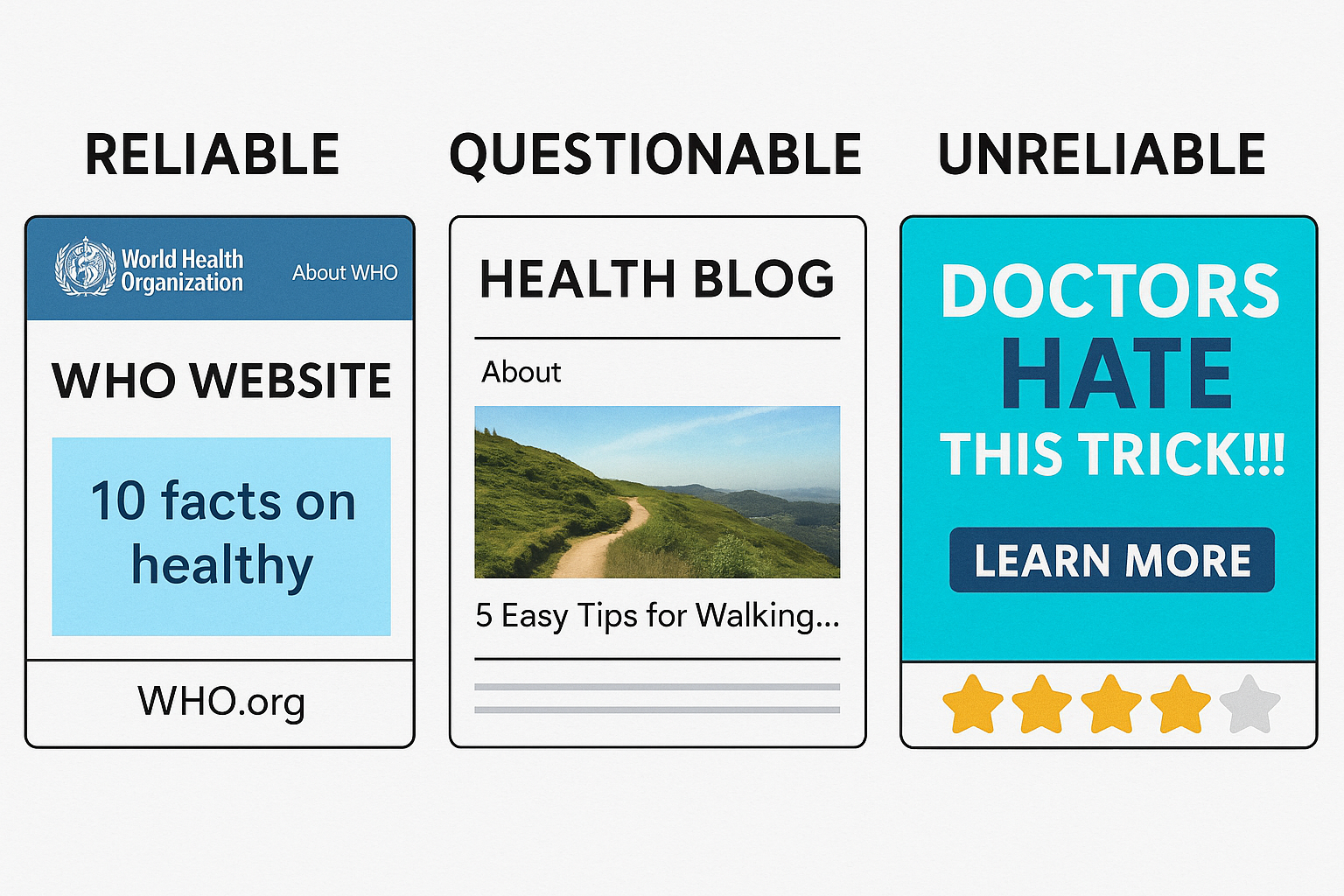
Short-Term Lesson Plan №22
|
Name of the Educational Institution |
|
|||||
|
Subject: |
|
|||||
|
Unit: |
|
|||||
|
Teacher's Full Name: |
|
|||||
|
Date: |
|
|||||
|
Grade: |
Number of Participants: |
Number of Absentees: |
||||
|
Topic: |
Plagiarism & Paraphrasing |
|||||
|
Lesson Objective: |
|
|||||
|
Value education |
This lesson develops honesty, responsibility, and respect for intellectual property. Students learn that copying without credit is unfair to authors and weakens their own credibility. Ethical writing shows integrity, independence, and respect for knowledge. |
|||||
|
Lesson Procedure |
||||||
|
Planned Lesson Stages |
Teacher's Actions |
Student's Actions |
Assessment |
Resources |
||
|
Organizational stage |
"Compliment Bridge" Method Objective: Build friendly relationships and boost students' confidence.
|
Follows Instructions |
Verbal Praise |
|
||
|
New lesson |
Activity 1: Mini-Lecture – What Is Plagiarism? The teacher explains plagiarism with examples:
Mini case study:
Challenge requirement (Grade 10): Students must also explain why paraphrasing + citing is better than quoting too often: it shows understanding, not memorization. Descriptor
Activity 2: Pair Task – Paraphrase Sample Sentences Pairs receive 4 sentences (from reliable sources). They must paraphrase each by:
Sample
task Challenge requirement: Each paraphrase must use at least one different sentence structure (e.g., turning active into passive, or joining with another idea). Descriptor
Activity 3: Quiz – Plagiarism vs Original The teacher shows 6 short passages, each either plagiarized, quoted, or paraphrased correctly. Students must decide: “Plagiarized” or “Acceptable” and justify.
Sample
item Descriptor
Activity 4: Practice – Rewrite a Source in Your Own Words Individually, students receive a short paragraph (about 60–80 words) from a source. They must rewrite it in their own words for use in a blog.
Original
paragraph:
Student rewrite
(sample): Challenge requirement: Students must also include a proper attribution in the blog style: “According to recent studies…” or “Research suggests…”.
Descriptor
Lesson outcomes By the end of the lesson, students:
|
Completes Tasks Completes Tasks Completes Tasks Completes Tasks Completes Tasks |
Descriptor
T Verbal Praise
|
|
||
|
Lesson consolidation |
Success Ladder" Method ? Instructions:
|
Follows Instructions |
Provides Feedback |
|
||
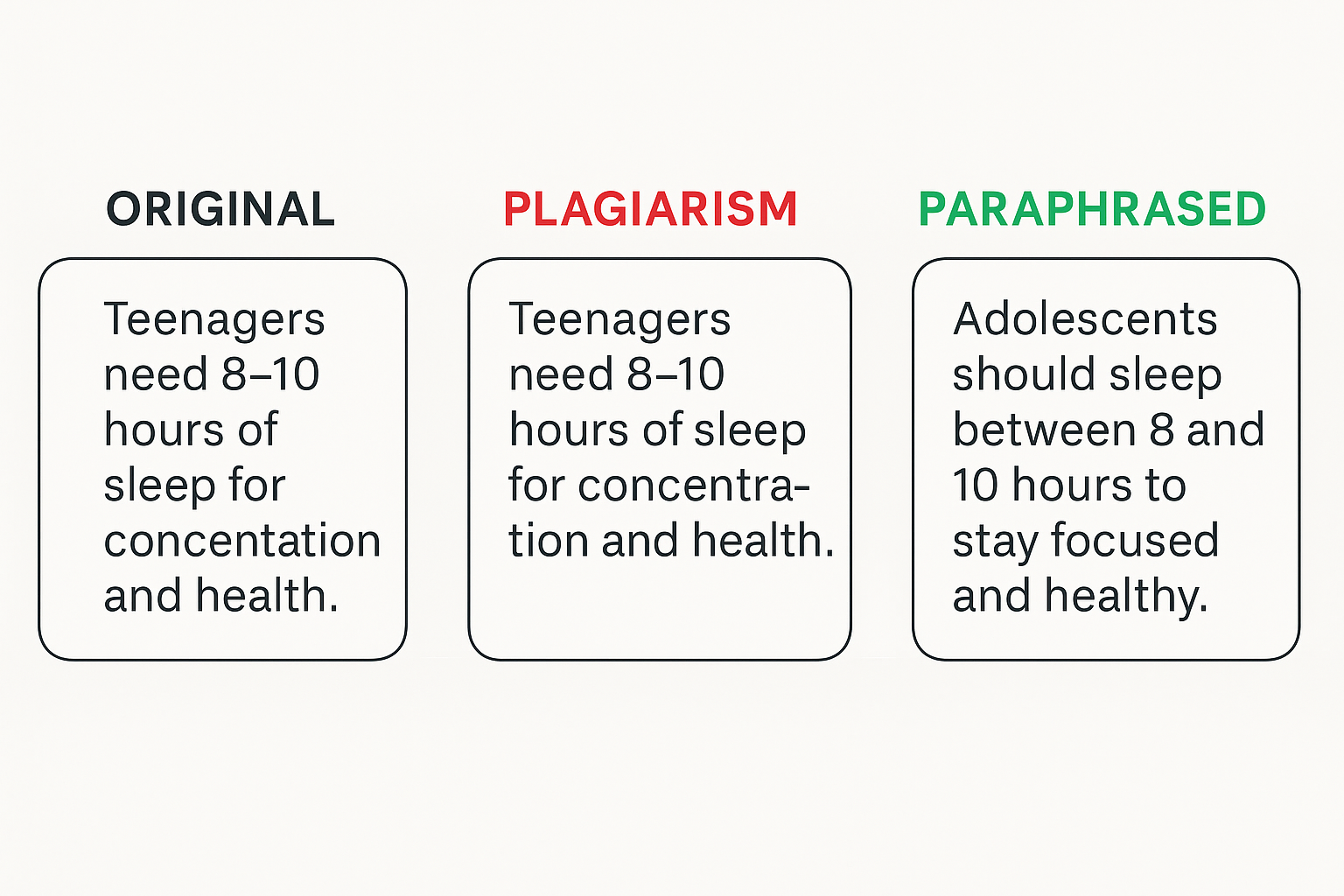
Short-Term Lesson Plan №23
|
Name of the Educational Institution |
|
|||||||||||
|
Subject: |
|
|||||||||||
|
Unit: |
|
|||||||||||
|
Teacher's Full Name: |
|
|||||||||||
|
Date: |
|
|||||||||||
|
Grade: |
Number of Participants: |
Number of Absentees: |
||||||||||
|
Topic: |
Review and Comment Practice |
|||||||||||
|
Lesson Objective: |
|
|||||||||||
|
Value education |
This lesson promotes respect, empathy, digital citizenship, and responsibility. Students learn that every online comment has an impact: it can encourage, guide, or harm. Writing thoughtful comments is part of being a responsible digital citizen. |
|||||||||||
|
Lesson Procedure |
||||||||||||
|
Planned Lesson Stages |
Teacher's Actions |
Student's Actions |
Assessment |
Resources |
||||||||
|
Organizational stage |
"Circle of Kind Words" Method Objective: Boost students' mood and foster friendly relationships.
|
Follows Instructions |
Verbal Praise |
|
||||||||
|
New lesson |
Activity 1: Role-Play – Giving Online Comments Pairs receive role cards with typical commenting situations. One student is the blog author, the other is the commenter. Scenarios:
Task: Commenter must write a 2–3 sentence comment that is constructive, polite, and specific. Author reacts by thanking and asking one follow-up question. Sample (Scenario 1):
Challenge requirement: Each comment must include 1 compliment + 1 suggestion + 1 question. Descriptor
Activity 2: Analyze Sample Comments – Good or Bad? The teacher presents six real or simulated blog comments on the board. Students, in groups, sort them into “Constructive” or “Unhelpful.” Examples:
Challenge requirement: For each “bad” comment, students rewrite it into a “good” one. Descriptor
Activity 3: Write Comments on Peers’ Posts Students exchange blog drafts (from earlier lessons). Each student writes two comments:
Sample comment:
Challenge requirement: Each comment must use at least one sentence starter:
Descriptor
Activity 4: Comment Ladder Game – Reply Chain The teacher sets up a “comment ladder” on the board (or online platform). Student A posts a short blog excerpt (2–3 sentences). Student B comments on it. Student C replies to B’s comment. Student D replies to C, etc. Rules:
Sample chain:
Challenge requirement: Each reply must be at least two full sentences and must push the discussion further. Descriptor
Lesson outcomes By the end of the lesson, students:
|
Completes Tasks Completes Tasks Completes Tasks Completes Tasks Completes Tasks |
Descriptor
T Verbal Praise
|
|
||||||||
|
Lesson consolidation |
"Know – Want to Know – Learned" (KWL) Method ? Instructions:
|
Follows Instructions |
Provides Feedback |
|
||||||||
Short-Term Lesson Plan №24
|
Name of the Educational Institution |
|
|||||
|
Subject: |
|
|||||
|
Unit: |
|
|||||
|
Teacher's Full Name: |
|
|||||
|
Date: |
|
|||||
|
Grade: |
Number of Participants: |
Number of Absentees: |
||||
|
Topic: |
Group Blog Project |
|||||
|
Lesson Objective: |
|
|||||
|
Value education |
This project develops teamwork, responsibility, time management, and leadership. Students learn to respect different roles, listen to others’ ideas, and share responsibility for the success of a joint product. They also practice fairness by dividing tasks equally. |
|||||
|
Lesson Procedure |
||||||
|
Planned Lesson Stages |
Teacher's Actions |
Student's Actions |
Assessment |
Resources |
||
|
Organizational stage |
"One Word" Method ? Objective: Determine students' emotional readiness for the lesson.
|
Follows Instructions |
Verbal Praise |
|
||
|
New lesson |
Activity 1: Brainstorm Group Blog Theme Groups of 4–5 students brainstorm possible themes for their blog. Each group lists at least 3–4 ideas, then narrows to one final theme. Sample possible themes
Challenge requirement (Grade 10): Groups must define audience (teens, parents, teachers, general public) and purpose (inform, persuade, entertain, inspire). Sample outcome
Descriptor
Activity 2: Plan Editorial Calendar The teacher introduces the concept of an editorial calendar (schedule of blog posts with deadlines). Groups design a 4-week calendar (or 4 entries) with:
Sample editorial calendar (Theme: Eco-Friendly Habits)
Challenge requirement: Calendar must balance variety (different post types: opinion, review, how-to, reflection) and include at least one multimedia element (photo, infographic, or video). Descriptor
Activity 3: Assign Roles Each group assigns formal roles to members. Roles can rotate later, but each must be responsible for one part of the workflow. Sample roles:
Challenge requirement: Each student must explain how their role contributes to group success and what skill it develops (e.g., leadership, attention to detail, creativity). Descriptor
Activity 4: Draft Group Outline Groups draft a detailed outline of their blog project. It should include:
Sample outline (Theme: Eco-Friendly Habits)
Challenge requirement: Outline must include at least one planned collaboration (two members working together on one post). Descriptor
Lesson outcomes By the end of the lesson, students:
|
Completes Tasks Completes Tasks Completes Tasks Completes Tasks Completes Tasks |
Descriptor
T Verbal Praise
|
|
||
|
Lesson consolidation |
"Five Fingers" Method ? Instructions:
?
Thumb – I liked
it.
|
Follows Instructions |
Provides Feedback |
|
||
Short-Term Lesson Plan №25
|
Name of the Educational Institution |
|
|||||
|
Subject: |
|
|||||
|
Unit: |
|
|||||
|
Teacher's Full Name: |
|
|||||
|
Date: |
|
|||||
|
Grade: |
Number of Participants: |
Number of Absentees: |
||||
|
Topic: |
Drafting Group Posts |
|||||
|
Lesson Objective: |
|
|||||
|
Value education |
This lesson strengthens collaboration, communication, responsibility, and respect for shared work. Students learn to value diverse perspectives, accept feedback, and balance individual creativity with group goals. |
|||||
|
Lesson Procedure |
||||||
|
Planned Lesson Stages |
Teacher's Actions |
Student's Actions |
Assessment |
Resources |
||
|
Organizational stage |
"Show Your Mood" Objective: Determine students' mood and assess their readiness for the lesson.
|
Follows Instructions |
Verbal Praise |
|
||
|
New lesson |
Activity 1: Co-Writing Activity – Building the First Draft Together Each group selects one post from their editorial calendar (from the previous lesson). They open a shared document or paper draft and begin co-writing. Process:
Challenge requirement
(Grade 10):
Descriptor
Activity 2: Peer Discussion – Sharing Draft Ideas Groups exchange partial drafts with another group. Each group reads and gives two comments:
Sample feedback
Challenge requirement: Feedback must include at least one suggestion with justification (why it would improve the draft). Descriptor
Activity 3: Small-Group Revision – Improving the Draft Groups take feedback from peers and revise their drafts. Focus on:
Example revision before/after
Descriptor
Activity 4: Teacher Feedback – Guided Improvement Teacher circulates, reading group drafts and giving targeted mini-feedback:
Groups highlight teacher suggestions and decide which to apply before finalizing. Sample teacher note:
Descriptor
Lesson outcomes By the end of the lesson, students:
|
Completes Tasks Completes Tasks Completes Tasks Completes Tasks Completes Tasks |
Descriptor
T Verbal Praise
|
|
||
|
Lesson consolidation |
"Success Ladder"
1️⃣
I did not understand the
topic.
|
Follows Instructions |
Provides Feedback |
|
||
Short-Term Lesson Plan №26
|
Name of the Educational Institution |
|
|||||
|
Subject: |
|
|||||
|
Unit: |
|
|||||
|
Teacher's Full Name: |
|
|||||
|
Date: |
|
|||||
|
Grade: |
Number of Participants: |
Number of Absentees: |
||||
|
Topic: |
Peer Review Workshop |
|||||
|
Lesson Objective: |
|
|||||
|
Value education |
This workshop fosters respect, fairness, collaboration, and responsibility. Students learn that honest, constructive feedback helps others grow and that receiving critique with an open mind is part of personal development. |
|||||
|
Lesson Procedure |
||||||
|
Planned Lesson Stages |
Teacher's Actions |
Student's Actions |
Assessment |
Resources |
||
|
Organizational stage |
"Secret Gift" Method Objective: Encourage students and increase their interest in the lesson.
|
Follows Instructions |
Verbal Praise |
|
||
|
New lesson |
Activity 1: Exchange Drafts Across Groups Each group exchanges their group blog draft with another group. Every group now acts as a “reviewer team.” Task: Read the entire draft once for overall impression, then again for details (structure, language, evidence, audience). Challenge requirement (Grade 10): Reviewers must identify not only weaknesses but also explain how to fix them. Descriptor
Activity 2: Use Checklist for Review The teacher provides a Peer Review Checklist. Each group completes it for the draft they received. Checklist items (Yes/No + Notes):
Challenge requirement: For every “No”, reviewers must write a concrete suggestion (e.g., “Add statistics to paragraph 2 to strengthen evidence”). Descriptor
Activity 3: Write Structured Peer Feedback Groups summarize their review in a short, structured format:
Sample feedback
Descriptor
Activity 4: Share Orally with Group Reviewer groups meet the author groups and present feedback orally. Authors listen, take notes, and may ask clarifying questions. Guidelines:
Sample oral exchange
Descriptor
Lesson outcomes By the end of the lesson, students:
|
Completes Tasks Completes Tasks Completes Tasks Completes Tasks Completes Tasks |
Descriptor
T Verbal Praise
|
|
||
|
Lesson consolidation |
"Two Stars, One Wish"
|
Follows Instructions |
Provides Feedback |
|
||
Short-Term Lesson Plan №27
|
Name of the Educational Institution |
|
|||||
|
Subject: |
|
|||||
|
Unit: |
|
|||||
|
Teacher's Full Name: |
|
|||||
|
Date: |
|
|||||
|
Grade: |
Number of Participants: |
Number of Absentees: |
||||
|
Topic: |
Editing and Proofreading |
|||||
|
Lesson Objective: |
|
|||||
|
Value education |
This lesson builds responsibility, attention to detail, and respect for quality. Students learn that careful editing respects the reader, improves credibility, and shows pride in one’s work. |
|||||
|
Lesson Procedure |
||||||
|
Planned Lesson Stages |
Teacher's Actions |
Student's Actions |
Assessment |
Resources |
||
|
Organizational stage |
"Magic Word" Method Objective: Spark interest in the lesson topic and encourage teamwork.
|
Follows Instructions |
Verbal Praise |
|
||
|
New lesson |
Activity 1: Error Hunt Game – Find Mistakes in Text The teacher provides a short “draft” blog text (150 words) that contains deliberate errors: grammar, punctuation, vocabulary, and formatting issues.
Sample text (with
errors): Task for students: In groups, identify and correct at least 8 errors (grammar, spelling, vocabulary, punctuation).
Corrected version
(excerpt): Challenge requirement (Grade 10): Students must also explain why each correction was necessary (e.g., verb tense error, subject-verb agreement, word choice, plural form). Descriptor
Activity 2: Pair Proofreading – Checking Each Other’s Drafts Students exchange their group drafts with a partner group. Each pair uses a proofreading checklist:
Sample peer feedback:
Challenge requirement: Each pair must mark at least five corrections and suggest one style improvement (e.g., “Add subheading to break long text”). Descriptor
Activity 3: Teacher Demo – Editing in Action The teacher projects a sample student paragraph and edits it live, explaining each change:
Sample teacher edit:
Challenge requirement: Students must write down three editing strategies they observed and explain how they will apply them to their own draft. Descriptor
Activity 4: Final Draft Corrections – Group Polishing Groups return to their own blog draft and make final corrections, applying what they learned from the error hunt, peer proofreading, and teacher demo. Steps:
Sample improvement (before/after):
Descriptor
Lesson outcomes By the end of the lesson, students:
|
Completes Tasks Completes Tasks Completes Tasks Completes Tasks Completes Tasks |
Descriptor
T Verbal Praise
|
|
||
|
Lesson consolidation |
"Traffic Light" Method
|
Follows Instructions |
Provides Feedback |
|
||
Short-Term Lesson Plan №28
|
Name of the Educational Institution |
|
|||||
|
Subject: |
|
|||||
|
Unit: |
|
|||||
|
Teacher's Full Name: |
|
|||||
|
Date: |
|
|||||
|
Grade: |
Number of Participants: |
Number of Absentees: |
||||
|
Topic: |
Publishing Blogs |
|||||
|
Lesson Objective: |
|
|||||
|
Value education |
This lesson encourages creativity, responsibility, digital citizenship, and appreciation of peers’ work. Students learn that online publishing requires respect for audience, ethical use of media, and pride in presenting their work publicly. |
|||||
|
Lesson Procedure |
||||||
|
Planned Lesson Stages |
Teacher's Actions |
Student's Actions |
Assessment |
Resources |
||
|
Organizational stage |
"Magic Box" Method Objective: Increase students' interest and motivation for the lesson.
|
Follows Instructions |
Verbal Praise |
|
||
|
New lesson |
Activity 1: Prepare Layout & Design – Making Blogs Reader-Friendly Groups revisit their final drafts and prepare the visual layout before publishing. Focus areas:
Sample improvement:
Challenge requirement (Grade 10): Each group must create at least two visual elements—a subheading structure and a bullet/numbered list. Descriptor
Activity 2: Add Media to Posts – Enhancing with Multimedia Groups select at least one relevant image and one hyperlink or embedded element (video, infographic, or source link). Guidelines:
Sample integration:
Challenge requirement: Each group must include one multimedia item that adds value, not just decoration (e.g., infographic summarizing statistics). Descriptor
Activity 3: Publish Group Blog – Final Upload/Presentation
Groups upload their posts to a platform (Google Docs in blog format, Padlet, or mock WordPress demo). If real publishing is not possible, they simulate posting by presenting their formatted blog on the screen. Requirements for published post:
Descriptor
Activity 4: Gallery Walk – Review Others’ Blogs Each group visits other groups’ blogs (digitally or printed screenshots). Students leave sticky-note style comments (digital or paper) based on a simple feedback prompt:
Sample comment:
Challenge requirement: Each student must leave at least three comments on three different blogs, with one suggestion and one question each. Descriptor
Lesson outcomes By the end of the lesson, students:
|
Completes Tasks Completes Tasks Completes Tasks Completes Tasks Completes Tasks |
Descriptor
T Verbal Praise
|
|
||
|
Lesson consolidation |
"Mood Emojis" Method ? Instructions:
|
Follows Instructions |
Provides Feedback |
|
||
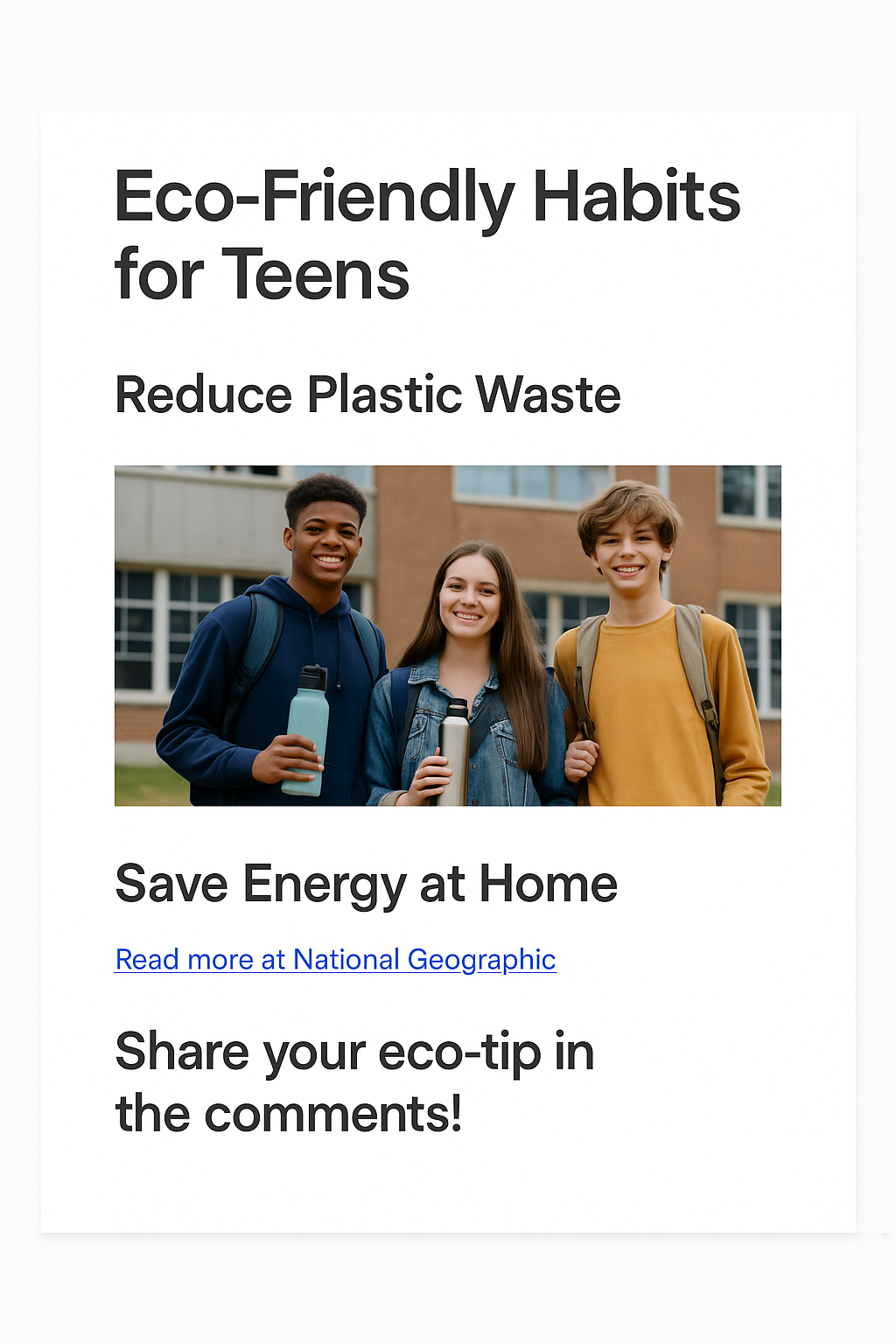
Short-Term Lesson Plan №29
|
Name of the Educational Institution |
|
|||||
|
Subject: |
|
|||||
|
Unit: |
|
|||||
|
Teacher's Full Name: |
|
|||||
|
Date: |
|
|||||
|
Grade: |
Number of Participants: |
Number of Absentees: |
||||
|
Topic: |
Intercultural Blogging |
|||||
|
Lesson Objective: |
|
|||||
|
Value education |
This lesson develops respect, tolerance, open-mindedness, and intercultural awareness. Students learn that blogging for a global audience requires sensitivity to differences in values, traditions, and communication styles. |
|||||
|
Lesson Procedure |
||||||
|
Planned Lesson Stages |
Teacher's Actions |
Student's Actions |
Assessment |
Resources |
||
|
Organizational stage |
"Circle of Kind Words" Method Objective: Boost students' mood and foster friendly relationships.
|
Follows Instructions |
Verbal Praise |
|
||
|
New lesson |
Activity 1: Compare Two Cultural Blog Samples The teacher provides two short blog excerpts on the same topic (“Food and Family Traditions”), one written from an American perspective, the other from a Japanese perspective.
Sample A
(American):
Sample B
(Japanese): Task: Students, in pairs, highlight differences in:
Challenge requirement: Students also identify at least one similarity (e.g., both are about family gathering, both express gratitude). Descriptor
Activity 2: Class Discussion – Similarities & Differences The teacher leads a whole-class discussion with guiding questions:
Sample student contributions:
Challenge requirement: Students must propose one writing strategy for intercultural clarity (e.g., explain tradition briefly, avoid slang, use universal examples). Descriptor
Activity 3: Writing Task – Intercultural Blog Entry Individually, students write a 200–220 word intercultural blog post on one of the following themes:
Requirements:
Sample
excerpt: Challenge requirement: Students must include at least one intercultural comparison and a universal theme (family, gratitude, health, friendship). Descriptor
Activity 4: Peer Feedback – Cultural Sensitivity Check Students exchange intercultural blog entries with a partner and review for:
Sample peer comment:
Challenge requirement: Each student must give one specific suggestion for making the blog more globally accessible. Descriptor
Lesson outcomes By the end of the lesson, students:
|
Completes Tasks Completes Tasks Completes Tasks Completes Tasks Completes Tasks |
Descriptor
T Verbal Praise
|
|
||
|
Lesson consolidation |
"What Did I Like? What Was Difficult? What Did I Learn?" ? Instructions:
✅
What did I
like? – What was the most
interesting part of the lesson? This method encourages reflection and helps students analyze their learning progress. |
Follows Instructions |
Provides Feedback |
|
||
Short-Term Lesson Plan №30
|
Name of the Educational Institution |
|
|||||
|
Subject: |
|
|||||
|
Unit: |
|
|||||
|
Teacher's Full Name: |
|
|||||
|
Date: |
|
|||||
|
Grade: |
Number of Participants: |
Number of Absentees: |
||||
|
Topic: |
Language for Persuasion |
|||||
|
Lesson Objective: |
|
|||||
|
Value education |
This lesson promotes critical thinking, respectful debate, and responsible influence. Students learn that persuasion is powerful and should be used ethically: not to manipulate, but to inform, inspire, and motivate responsibly. |
|||||
|
Lesson Procedure |
||||||
|
Planned Lesson Stages |
Teacher's Actions |
Student's Actions |
Assessment |
Resources |
||
|
Organizational stage |
"Compliment Bridge" Method Objective: Build friendly relationships and boost students' confidence.
|
Follows Instructions |
Verbal Praise |
|
||
|
New lesson |
Activity 1: Identify Persuasive Techniques in Samples The teacher presents two short blog excerpts, each using persuasive language.
Sample A (Emotional
appeal):
Sample B (Logical
appeal):
Sample C (Credibility
appeal): Task: Students, in pairs, label each technique: pathos (emotion), logos (logic), ethos (credibility). Challenge requirement (Grade 10): Students must explain why the appeal works and which audience it convinces most (parents, teachers, students). Descriptor
Activity 2: Group Brainstorm – Persuasive Words & Phrases In groups, students create a “Persuasion Toolbox” with words/phrases for each type of appeal:
Groups share their lists on the board to create a class-wide resource. Challenge requirement: Each group must produce at least 3 phrases for each appeal (minimum 9 in total). Descriptor
Activity 3: Debate Game – Persuade Your Audience in 2 Minutes Pairs are given short debate prompts. Each student has 2 minutes to persuade the class. Sample prompts:
Task: Each student must use at least one emotional, one logical, and one credibility-based argument in their mini-speech. Sample mini-speech (Phones in class):
Challenge requirement: Students must adapt tone to audience (e.g., persuading teachers vs persuading classmates). Descriptor
Activity 4: Writing Task – Persuasive Blog Post Individually, students write a 200–220 word persuasive blog on a school-related or teen issue. Requirements:
Sample excerpt (Topic:
School Uniforms): Challenge requirement: Students must integrate a statistic or citation (real or simulated) AND finish with a strong call-to-action. Descriptor
Lesson outcomes By the end of the lesson, students:
|
Completes Tasks Completes Tasks Completes Tasks Completes Tasks Completes Tasks |
Descriptor
T Verbal Praise
|
|
||
|
Lesson consolidation |
Success Ladder" Method ? Instructions:
|
Follows Instructions |
Provides Feedback |
|
||
Short-Term Lesson Plan №31
|
Name of the Educational Institution |
|
|||||||||||||||||||||||||
|
Subject: |
|
|||||||||||||||||||||||||
|
Unit: |
|
|||||||||||||||||||||||||
|
Teacher's Full Name: |
|
|||||||||||||||||||||||||
|
Date: |
|
|||||||||||||||||||||||||
|
Grade: |
Number of Participants: |
Number of Absentees: |
||||||||||||||||||||||||
|
Topic: |
Blog Analytics Basics |
|||||||||||||||||||||||||
|
Lesson Objective: |
|
|||||||||||||||||||||||||
|
Value education |
This lesson develops critical thinking, responsibility, and digital literacy. Students learn to look beyond “likes” and focus on meaningful engagement, while respecting readers’ time and interests. It teaches them to value quality and audience connection rather than empty popularity. |
|||||||||||||||||||||||||
|
Lesson Procedure |
||||||||||||||||||||||||||
|
Planned Lesson Stages |
Teacher's Actions |
Student's Actions |
Assessment |
Resources |
||||||||||||||||||||||
|
Organizational stage |
"Circle of Kind Words" Method Objective: Boost students' mood and foster friendly relationships.
|
Follows Instructions |
Verbal Praise |
|
||||||||||||||||||||||
|
New lesson |
Activity 1: Teacher Demo – What Are Analytics? Teacher projects a screenshot of a blog dashboard with simple analytics (sample data). Example metrics shown:
Teacher explains:
Mini-discussion: Which post is more successful?
Why? Descriptor
Activity 2: Predict – Which Blog Will Get More Views? Why? Students are shown two short blog introductions (about 60 words each).
Sample
A: Task: In groups, predict which blog will get more views and why. Students must give at least two reasons (hook, statistic, clear promise, emotional impact). Expected answer: Sample B, because it has a strong hook (statistic + image), emotional appeal, and a promise (“three steps”). Challenge requirement (Grade 10): Groups must also predict which metrics (views, likes, comments, read time) would likely be higher for Sample B. Descriptor
Activity 3: Practice – Read and Interpret Sample Analytics Students receive a worksheet with 3 blog analytics tables. Example dataset:
Task: In pairs, answer:
Challenge requirement: Students must give one recommendation for each blog (e.g., “Memes: add more depth to increase read time”; “Sleep: promote on social media for more views”). Descriptor
Activity 4: Reflection – How to Improve Blog Reach Individually, students write a short reflection (100–120 words):
Sample
reflection: Challenge requirement: Reflection must include one personal strategy and one audience-focused strategy (e.g., improve content + improve promotion). Descriptor
Lesson outcomes By the end of the lesson, students:
|
Completes Tasks Completes Tasks Completes Tasks Completes Tasks Completes Tasks |
Descriptor
T Verbal Praise
|
|
||||||||||||||||||||||
|
Lesson consolidation |
"Know – Want to Know – Learned" (KWL) Method ? Instructions:
|
Follows Instructions |
Provides Feedback |
|
||||||||||||||||||||||
Short-Term Lesson Plan №32
|
Name of the Educational Institution |
|
|||||
|
Subject: |
|
|||||
|
Unit: |
|
|||||
|
Teacher's Full Name: |
|
|||||
|
Date: |
|
|||||
|
Grade: |
Number of Participants: |
Number of Absentees: |
||||
|
Topic: |
Final Project Planning |
|||||
|
Lesson Objective: |
|
|||||
|
Value education |
This lesson nurtures responsibility, self-management, creativity, and long-term planning. Students learn to set realistic goals, organize collaborative work, and commit to deadlines—skills necessary both in school and real-world projects. |
|||||
|
Lesson Procedure |
||||||
|
Planned Lesson Stages |
Teacher's Actions |
Student's Actions |
Assessment |
Resources |
||
|
Organizational stage |
"One Word" Method ? Objective: Determine students' emotional readiness for the lesson.
|
Follows Instructions |
Verbal Praise |
|
||
|
New lesson |
Activity 1: Brainstorm Theme for Final Blog Series Groups (or individuals, depending on project format) generate 3–4 possible themes for their final blog series. They must discuss audience, purpose, and relevance for each. Sample ideas:
Task: Select one final theme and write:
Challenge requirement (Grade 10): Theme must be specific and unique, not overly broad (not “sports,” but “How teamwork in basketball teaches life skills”). Descriptor
Activity 2: Outline Planned Posts Students design an outline for 3–4 blog entries under the chosen theme. Sample outline (Theme: Teen Mental Health):
Task: For each post, students must include:
Challenge requirement: At least one post must include a multimedia plan (infographic, video, photo series). Descriptor
Activity 3: Set Timeline Groups/individuals create a mini-timeline with deadlines for:
Sample timeline (4 posts):
Challenge requirement: Timeline must include responsibilities (who drafts, who edits, who designs). Descriptor
Activity 4: Teacher Conference – Approve Plan Each group meets briefly with the teacher to present:
Teacher provides quick feedback:
Sample teacher question:
Descriptor
Lesson outcomes By the end of the lesson, students:
|
Completes Tasks Completes Tasks Completes Tasks Completes Tasks Completes Tasks |
Descriptor
T Verbal Praise
|
|
||
|
Lesson consolidation |
"Five Fingers" Method ? Instructions:
?
Thumb – I liked
it.
|
Follows Instructions |
Provides Feedback |
|
||
Short-Term Lesson Plan №33
|
Name of the Educational Institution |
|
|||||
|
Subject: |
|
|||||
|
Unit: |
|
|||||
|
Teacher's Full Name: |
|
|||||
|
Date: |
|
|||||
|
Grade: |
Number of Participants: |
Number of Absentees: |
||||
|
Topic: |
Final Project Writing |
|||||
|
Lesson Objective: |
|
|||||
|
Value education |
This lesson builds discipline, responsibility, resilience, and collaborative growth. Students learn that writing is a process of drafting, sharing, revising, and improving. Respect for peers’ opinions and openness to critique are emphasized as essential values. |
|||||
|
Lesson Procedure |
||||||
|
Planned Lesson Stages |
Teacher's Actions |
Student's Actions |
Assessment |
Resources |
||
|
Organizational stage |
"Show Your Mood" Objective: Determine students' mood and assess their readiness for the lesson.
|
Follows Instructions |
Verbal Praise |
|
||
|
New lesson |
Activity 1: Draft First Blog in Series Students use their approved final project plan to write the first blog entry. Requirements:
Sample excerpt (Theme: Teen
Mental Health – Post 1): Challenge requirement (Grade 10): Students must integrate at least one statistic or credible reference into their draft. Descriptor
Activity 2: Peer Review Session Students exchange drafts with a peer or another group and use a structured review sheet. Checklist:
Sample peer feedback:
Challenge requirement: Each reviewer must write at least two stars (positives) and two wishes (improvements). Descriptor
Activity 3: Revise Draft Students return to their drafts and revise based on peer feedback. Teacher circulates to give targeted advice on style, grammar, or structure. Example revision (before/after):
Challenge requirement: Students must highlight at least two changes they made and explain why. Descriptor
Activity 4: Continue with Series If time allows, students begin outlining or drafting their second blog post. They briefly note:
Sample continuation (Theme:
Teen Mental Health – Post 2): Descriptor
Lesson outcomes By the end of the lesson, students:
|
Completes Tasks Completes Tasks Completes Tasks Completes Tasks Completes Tasks |
Descriptor
T Verbal Praise
|
|
||
|
Lesson consolidation |
"Success Ladder"
1️⃣
I did not understand the
topic.
|
Follows Instructions |
Provides Feedback |
|
||
Short-Term Lesson Plan №34
|
Name of the Educational Institution |
|
|||||
|
Subject: |
|
|||||
|
Unit: |
|
|||||
|
Teacher's Full Name: |
|
|||||
|
Date: |
|
|||||
|
Grade: |
Number of Participants: |
Number of Absentees: |
||||
|
Topic: |
Final Presentation & Reflection |
|||||
|
Lesson Objective: |
|
|||||
|
Value education |
This lesson emphasizes confidence, respect, responsibility, and gratitude. Students learn to take pride in their achievements, to listen and evaluate others fairly, and to reflect with honesty and humility on their progress. |
|||||
|
Lesson Procedure |
||||||
|
Planned Lesson Stages |
Teacher's Actions |
Student's Actions |
Assessment |
Resources |
||
|
Organizational stage |
"Secret Gift" Method Objective: Encourage students and increase their interest in the lesson.
|
Follows Instructions |
Verbal Praise |
|
||
|
New lesson |
Activity 1: Prepare Presentation of Blog Project
Each group (or individual)
organizes a 5–7 minute
presentation.
Optional: Show screenshots of posts or highlight one blog entry in detail. Challenge requirement (Grade 10): Presenters must include one reflection on audience analytics (real or simulated: “Post 2 got more comments because it asked a direct question”). Descriptor
Activity 2: Present to Class Groups/individuals deliver their presentations. Teacher and students listen actively. Sample presentation flow:
Challenge requirement: Each group member must speak at least once. Descriptor
Activity 3: Peer Evaluation While listening, peers complete a Peer Evaluation Form for each presentation. Rubric (1–10 points each):
Sample peer comment:
Descriptor
Activity 4: Final Reflection Journal Individually, students write a 200–250 word reflection answering:
Sample reflection
excerpt: Challenge requirement: Reflection must include one specific example from their own blog work. Descriptor
Lesson outcomes By the end of the lesson, students:
|
Completes Tasks Completes Tasks Completes Tasks Completes Tasks Completes Tasks |
Descriptor
T Verbal Praise
|
|
||
|
Lesson consolidation |
"Two Stars, One Wish"
|
Follows Instructions |
Provides Feedback |
|
||
The course “Blogging in English: Writing for the Real World” has aimed to equip 10th grade students with not only the technical skills of writing but also the communicative competence required in today’s digital society. Blogging is no longer simply a hobby or personal diary—it has become a space for dialogue, critical thinking, and intercultural exchange. Throughout the 34 lessons, students were introduced step by step to the essentials of digital authorship: structure, style, argumentation, cultural sensitivity, and ethical responsibility.
One of the most important outcomes of this program is that students learn to connect their voices to real-world audiences. By exploring various genres—personal narratives, opinion blogs, reviews, and explanatory posts—they develop both creative expression and academic writing skills. The course emphasizes critical literacy: students are not just consumers of online texts but active creators who evaluate sources, avoid plagiarism, and write responsibly. The focus on multimedia integration and analytics prepares them for the realities of online publishing, where images, links, and data all contribute to credibility and impact.
Equally central is the social and ethical dimension. Lessons on digital safety, netiquette, and intercultural blogging show that communication online carries responsibility. Students are encouraged to respect cultural differences, to debate ethically, and to use persuasion as a tool for constructive change rather than manipulation. This dimension ensures that the program is not just about writing, but about building thoughtful digital citizens.
Collaboration has been at the heart of the course design. Peer review workshops, group projects, and role-play activities encourage teamwork and mutual learning. Students gain experience not only in producing content but in evaluating others’ work with fairness and respect. This builds empathy and develops the interpersonal skills needed for both academic and professional success.
From a methodological perspective, the course reflects contemporary approaches in education: task-based learning, project-based assessment, and integration of technology. The inclusion of formative feedback and reflection journals ensures that learning is ongoing and personalized. Students are asked to think critically about their own progress, thus fostering metacognitive awareness and lifelong learning habits.
In conclusion, this program goes beyond teaching English writing skills. It empowers students to become confident communicators, critical thinkers, and responsible participants in the digital world. They leave the course with tangible outcomes: published blog entries, peer-reviewed projects, and experience in presenting their ideas to a real or simulated audience. At the same time, they acquire intangible but equally vital values: resilience in revising work, respect for diverse perspectives, and the courage to express themselves with clarity and conviction. The true success of this program lies not in the number of posts written but in the transformation of students into young authors who can think globally, write ethically, and act responsibly.
References for Teachers
-
Hyland, K. (2019). Second Language Writing. Cambridge University Press.
-
Harmer, J. (2015). The Practice of English Language Teaching. Pearson.
-
Nation, I.S.P. (2013). Learning Vocabulary in Another Language. Cambridge.
-
Warschauer, M. (2010). Digital Literacies. Routledge.
-
Hedge, T. (2005). Writing. Oxford University Press.
-
Ferris, D. (2014). Response to Student Writing. Routledge.
-
Richards, J.C. & Rodgers, T.S. (2014). Approaches and Methods in Language Teaching. Cambridge.
-
Flowerdew, J. (2013). Academic Discourse. Routledge.
-
Dornyei, Z. (2007). Motivational Strategies in the Language Classroom. Cambridge.
-
Tribble, C. (2017). Writing and Teaching Writing. Routledge.
-
Hyland, K. (2004). Genre and Second Language Writing. University of Michigan Press.
-
Seidlhofer, B. (2011). Understanding English as a Lingua Franca. Oxford.
-
Godwin-Jones, R. (2018). Emerging Technologies: Blogs and Wikis in ELT. Language Learning & Technology.
-
Leki, I. (2017). Academic Writing: Exploring Processes and Strategies. Cambridge.
-
Grabe, W. & Kaplan, R. (2014). Theory and Practice of Writing. Routledge.
References for Students
-
Purdue OWL. (2023). Online Writing Lab. https://owl.purdue.edu
-
Grammarly Blog. (2023). Tips for Clear Writing. https://www.grammarly.com/blog
-
BBC Learning English. (2023). Writing Skills. https://www.bbc.co.uk/learningenglish
-
WordPress Support. (2023). Getting Started. https://wordpress.com/support
-
Blogger Help. (2023). Create and Manage Blogs. https://support.google.com/blogger
-
National Geographic. (2023). Environment Articles. https://www.nationalgeographic.com
-
Common Sense Media. (2023). Digital Citizenship. https://www.commonsense.org
-
Khan Academy. (2023). Essay Writing Basics. https://www.khanacademy.org
-
Teens Write Now. (2023). Blogging for Beginners. https://teenswritenow.org
Resources
-
TED-Ed. (2023). Talks on Digital Literacy. https://ed.ted.com
-
Edutopia. (2023). Teaching with Technology. https://www.edutopia.org
-
Coursera. (2023). English for Journalism. https://www.coursera.org
-
UNESCO. (2023). ICT Competency Standards for Teachers. https://www.unesco.org
-
QuillBot. (2023). Paraphrasing Tool. https://quillbot.com
-
Canva. (2023). Design for Blogs. https://www.canva.com
-
Pixabay. (2023). Free Blog Images. https://www.pixabay.com
-
Hemingway Editor. (2023). Writing Clarity Tool. https://hemingwayapp.com









 Бұл курс Қазақстан Республикасы Оқу-ағарту министрлігімен келісілген










