
 ЖИ көмекші


жүктеу мүмкіндігіне ие боласыз
Бұл материал сайт қолданушысы жариялаған. Материалдың ішінде жазылған барлық ақпаратқа жауапкершілікті жариялаған қолданушы жауап береді. Ұстаз тілегі тек ақпаратты таратуға қолдау көрсетеді. Егер материал сіздің авторлық құқығыңызды бұзған болса немесе басқа да себептермен сайттан өшіру керек деп ойласаңыз осында жазыңыз
 08 Желтоқсан 2025
 33
33
CLT әдісінің сөйлесу дағдысына әсері
Kazakh Ablai Khan University of International Relations and
World Languages

Specialized Professional Foreign Language
Done by: Kaliahkmet A.K., Onalbek R.
Checked by: Myrzakhanova D.S.
Almaty, 2025
THE EFFECTIVENESS OF COMMUNICATIVE LANGUAGE TEACHING
Myrzakhanova Dinara Yessengeldievna
Master of pedagogical sciences, Ablai Khan University of International Relations and World Languages,Almaty, Kazakhstan
Kaliahkmet Akniyet Kalibekkyzy
4th year student, Ablai Khan University of International Relations and World Languages, Almaty, Kazakhstan
4th year student,Ablai Khan University of International Relations and World Languages , Almaty, Kazakhstan
ABSTRACT
This study explores the effectiveness of Communicative Language Teaching (CLT) as an instructional approach for improving speaking skills among EFL learners. Many students face ongoing difficulties with oral communication, including limited fluency, low confidence, and difficulty using English in real-life contexts. CLT aims to address these challenges by emphasizing meaningful interaction, pair and group work, and tasks that require authentic communication. To investigate learners’ experiences with CLT-based activities, this research collected data through a student survey. The findings indicate that communicative tasks help students speak more fluently, participate more actively, and develop greater confidence in expressing their ideas in English. However, the study also identified challenges, including unequal participation in group activities, limited vocabulary, and occasional difficulties in maintaining communication without teacher support. Overall, the results suggest that CLT can be an effective method for enhancing communicative competence in EFL classrooms when implemented with sufficient guidance and well-planned activities. The paper offers practical recommendations for integrating CLT into teaching practices and improving its effectiveness for diverse learner groups.
KEYWORDS: Communicative Language Teaching, EFL Learners, Speaking Skills, Fluency, Classroom Interaction, Learner Confidence
INTRODUCTION
In recent decades, the field of English language teaching has witnessed a significant shift toward more interactive, student-centered methodologies. Among these, Communicative Language Teaching (CLT) has become one of the most influential and widely discussed approaches. CLT emphasizes meaningful communication, real-life interaction, and learner engagement rather than the memorization of grammar rules or teacher-dominated instruction. As language classrooms continue to evolve, understanding the effectiveness of CLT in fostering students’ communicative competence remains an essential area of research. This study aims to evaluate how CLT contributes to the development of speaking, listening, fluency, and overall communicative confidence in EFL learners.
The widespread interest in CLT stems from dissatisfaction with traditional methods, which often limit students’ opportunities for authentic language use. Many EFL learners struggle to communicate despite years of studying grammar and vocabulary, highlighting the need for approaches that prioritize interaction and meaningful language practice. CLT responds to this need by encouraging students to express ideas, negotiate meaning, and participate actively in classroom tasks. These principles are supported by modern theories of language learning, including interactionist perspectives, which emphasize the role of input, output, and feedback in acquiring communicative competence.
Despite its popularity, the implementation of CLT varies widely across educational contexts. In some classrooms, teachers may be unfamiliar with communicative strategies or may revert to teacher-centered practices due to exam pressure, classroom management concerns, or limited resources. Additionally, cultural expectations, large class sizes, and learners’ reluctance to speak can pose challenges to fully applying communicicative methods. As a result, the effectiveness of CLT in improving communication skills sometimes differs from its theoretical promise. This gap between theory and practice highlights the importance of examining how CLT functions in real classroom environments.
Traditional approaches, such as rote memorization or teacher-led explanations often fail to prepare students for spontaneous communication outside the classroom. CLT, on the other hand, provides opportunities for role-plays, group work, discussions, and problem-solving tasks that mirror real-life communication. These activities have the potential to enhance fluency, reduce speaking anxiety, and foster greater learner autonomy.
This research investigates the effectiveness of CLT as a method for improving students’ communicative performance in the EFL classroom. Specifically, it examines how communicative activities influence learners’ speaking confidence, fluency, motivation, and engagement. It also explores students’ attitudes toward CLT and identifies factors that either support or hinder its success in practical teaching conditions. The main research questions guiding this study are:
-
How effective is Communicative Language Teaching (CLT) in developing EFL learners’ communicative competence?
-
How does CLT influence students’ speaking fluency, confidence, and classroom participation?
-
What challenges and contextual factors affect the successful implementation of CLT?
METHODS
This study employed a quantitative research design to investigate the effectiveness of Communicative Language Teaching (CLT) in enhancing speaking skills among EFL learners. The main aim of the research was to determine how often students engage in communicative activities, how they perceive CLT methods, and what improvements they notice in their speaking fluency, accuracy, and confidence.
The research was conducted in a foreign language department where CLT principles are incorporated into regular speaking lessons. A total of 20 students participated in this study. All participants were EFL learners with varying proficiency levels, ranging from A2 to B2. Their ages ranged from 15 to 18, providing a comprehensive understanding of how adolescence respond to CLT.
Data were collected through a structured online questionnaire created in Google Forms. The questionnaire consisted of 15 items, including multiple-choice, Likert-scale, and short open-ended questions. Closed-ended items focused on the frequency of participation in communicative activities, perceived improvement in speaking fluency and accuracy, and overall comfort when practicing speaking in English. Open-ended questions encouraged students to describe the challenges they faced and the benefits they experienced when engaging in CLT-based tasks.
To analyze the data, descriptive statistics were used to summarize quantitative responses, including percentages and frequency counts. This approach provided a clear picture of how CLT affects speaking development in real classroom settings.
Overall, this methodology allowed the researcher to collect balanced, practical information on how students engage with CLT activities and to identify both the strengths and limitations of this teaching approach in EFL classrooms.
RESULT
Demographic and General Information
The distribution of participants by age is as follows: 15–16 years – 45%, 17 years – 35%, and 18 years – 20% (Figure 1). This age range reflects senior secondary school learners, providing insight into how students at different stages of adolescence engage with Communicative Language Teaching (CLT) activities in developing their speaking and overall communication skills.
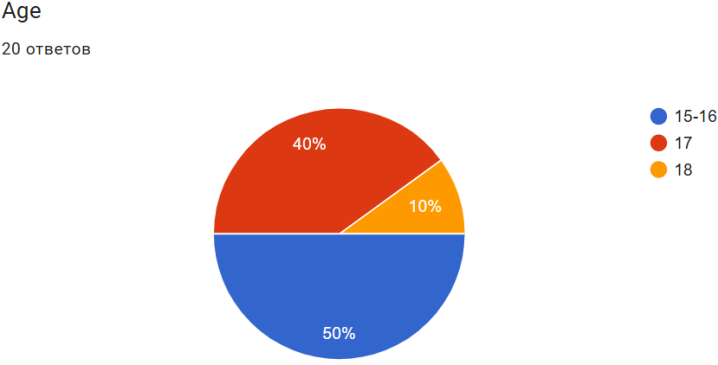
Figure 1. Age Distribution of Participants
In terms of English proficiency, the sample included students at various levels: Pre-Intermediate – 25%, Intermediate – 40%, and Upper-Intermediate – 35% (Figure 2). Such variation in proficiency helps illustrate how learners with different linguistic backgrounds respond to CLT methods and benefit from communicative tasks.
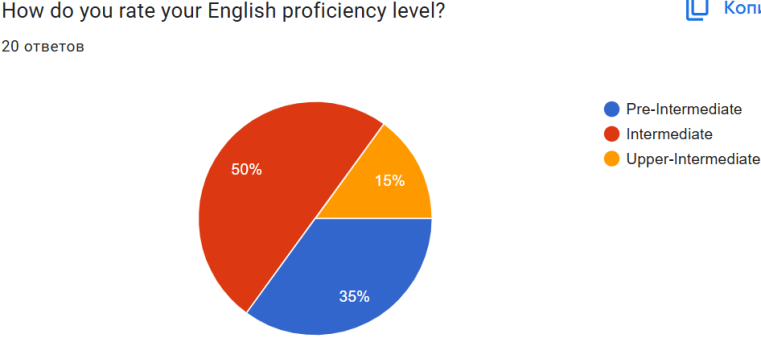
Figure 2. English proficiency level of Participants
The gender distribution was as follows: Male – 40% and Female – 60% (Figure 3), indicating a slightly higher proportion of female participants, which may influence overall participation patterns and interaction during communicative activities.
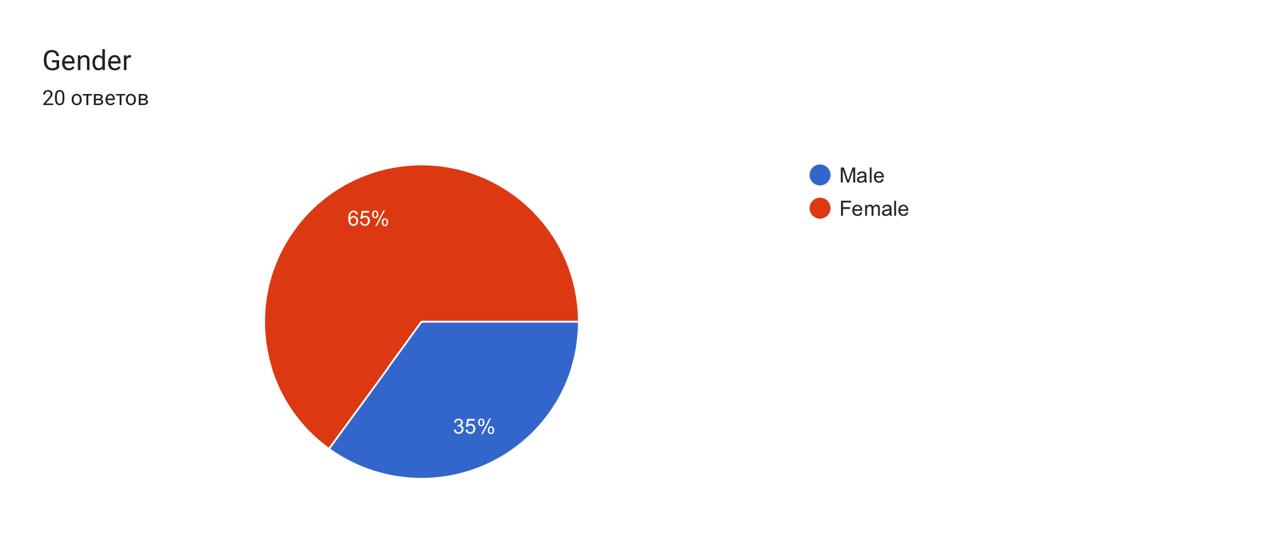
Figure 3. Gender of Participants
|
Age |
Percent % |
Engish level |
Percent % |
Gender |
Percent % |
|
15-16 years 17 years 18 years Total |
50% 40% 10% 100% |
Pre—Intermediate Intermediate Upper-Intermediate Total |
35% 50% 15% 100% |
Male Female
Total |
65% 35%
100% |
Table 1. Overview of Participants’ Characteristics
These demographic characteristics provide important context for understanding how CLT supports the development of speaking and interactive skills among senior secondary school students, highlighting differences in engagement based on age, proficiency, and gender.
Frequency and Use of Communicative Language Teaching Activities
The findings showed that 55% of students participated in CLT-based speaking activities “regularly” (3–4 times per week), 30% participated “occasionally” (1–2 times per week), and 15% engaged “rarely” (less than once per week). This indicates that the majority of students were actively involved in communicative tasks during English lessons. Regarding the types of CLT activities most often used, 45% of learners preferred role-plays, 30% pair-work discussions, 15% group problem-solving tasks, and 10% information-gap activities. This suggests that students tend to choose interactive activities that allow more natural communication and real-life language use.
Improvement in Speaking Skills
Students reported notable
progress in several aspects of speaking after engaging in CLT-based
activities. In terms of fluency, 50% of learners indicated
“significant improvement,” 35% “moderate improvement,” and 15% “no
noticeable change.” This shows that communicative tasks effectively
support smoother and more spontaneous speech production.
Regarding speaking accuracy, 40% of students noticed “significant
improvement,” 45% reported “moderate improvement,” and 15% “minimal
improvement.” This demonstrates that frequent communication
practice contributes not only to fluency but also to more accurate
language use.
Confidence levels also increased: 60% of participants felt “much
more confident,” 25% felt “somewhat more confident,” and 15%
reported “no change.” These results show that CLT activities, which
emphasize real communication, positively influence students’
willingness to speak in English.
When asked about their general perception of CLT, 70% of students described it as “very useful,” 20% as “moderately useful,” and 10% as “slightly useful.” This indicates that most learners value communicative activities and view them as helpful for improving their speaking performance. Students particularly appreciated opportunities for active participation, peer interaction, and using English for meaningful communication.
Challenges and Benefits of CLT Activities
Despite its overall
effectiveness, students identified several challenges associated
with communicative tasks. The most common difficulties were
speaking anxiety during group activities (35%), limited vocabulary
for spontaneous conversation (30%), uneven participation in group
work (20%), and difficulty maintaining accuracy when speaking
fluently (15%).
However, learners also highlighted numerous benefits. A total of
75% of participants reported increased fluency, 65% mentioned
improved confidence, and 55% noted better pronunciation and
accuracy as a result of frequent communication practice. These
findings indicate that although challenges exist, the advantages of
CLT outweigh its limitations for most
learners.
Overall, the results reveal that Communicative Language Teaching is actively used and well-received by EFL students. Most participants reported noticeable improvements in fluency, accuracy, and speaking confidence. While some challenges, such as anxiety and vocabulary limitations were reported, the majority of learners expressed positive attitudes and experienced clear benefits from CLT-based activities. These findings demonstrate that CLT is an effective instructional approach for developing oral communication skills in senior secondary school EFL classrooms.
DISCUSSION
The findings of this study indicate that Communicative Language Teaching (CLT) has a generally positive impact on the speaking development of EFL learners, particularly in terms of fluency, accuracy, and speaking confidence. These results support earlier studies that emphasize the effectiveness of CLT in promoting meaningful interaction and communicative competence (Littlewood, 2014; Richards, 2006). In this study, half of the students reported significant improvement in fluency, aligning with previous research suggesting that frequent participation in communicative tasks helps learners produce smoother and more natural speech. The strong preference for role-plays and pair-work tasks also reflects students’ desire to engage in authentic, interactive speaking activities.
The results also suggest that CLT contributes to noticeable improvements in accuracy. A total of 85% of participants reported either significant or moderate gains in their ability to use grammar and vocabulary appropriately during speaking tasks. This is consistent with findings by Savignon (2002), who argued that interaction-rich environments enhance learners’ ability to apply language knowledge in real-time communication. Furthermore, increased confidence reported by 60% of students aligns with previous studies showing that communicative practice reduces anxiety and encourages learners to speak more spontaneously (Horwitz, 2010). These outcomes indicate that CLT supports both linguistic competence and affective factors essential for successful oral communication.
The study also highlights generally positive attitudes toward CLT activities, with 70% of students describing them as very useful for improving their speaking skills. This finding corresponds with previous research indicating that communicative tasks increase motivation by giving learners more autonomy and opportunities for self-expression (Nunan, 2015). The fact that many students engaged in CLT-based tasks regularly suggests that such activities are enjoyable, accessible, and easy to incorporate into classroom routines. These results imply that CLT is not only effective but also appealing to learners, which further supports its adoption in EFL classrooms.
However, several challenges were also identified. The most frequently mentioned difficulties included speaking anxiety during group work (35%), limited vocabulary for spontaneous communication (30%), and difficulty balancing fluency with accuracy (15%). These issues are similar to challenges highlighted in earlier studies. For example, Harmer (2015) noted that learners often feel pressured when speaking in front of peers, especially during open-ended communicative tasks. The vocabulary-related challenges also reflect broader findings showing that successful communication requires sufficient lexical knowledge, which some learners may lack at lower proficiency levels. These results suggest that while CLT is effective, it requires careful support to ensure all students can participate fully and confidently.
To address these challenges, teachers may consider incorporating scaffolding techniques such as pre-task vocabulary preparation, guided practice, and structured speaking tasks before more open-ended communication. Providing sentence starters, useful expressions, or model dialogues may reduce anxiety and help students manage spontaneous language use. Additionally, balancing fluency-focused and accuracy-focused activities may help learners maintain both natural speech flow and correct language use. These strategies align with recommendations from previous research emphasizing the need for structured support in CLT-based classrooms (Richards & Rodgers, 2014).
Overall, the findings of this study are consistent with existing literature confirming that Communicative Language Teaching effectively enhances speaking development among EFL learners. At the same time, the results point to areas where additional pedagogical support is needed, particularly regarding vocabulary development and anxiety reduction. Moving forward, educators should consider integrating CLT activities more systematically into the curriculum while providing appropriate scaffolding to ensure that learners at all proficiency levels benefit from communicative approaches.
CONCLUSION
In conclusion, the findings of this study demonstrate that Communicative Language Teaching (CLT) has a highly positive effect on improving students’ speaking skills in EFL classrooms. Most participants reported that communicative activities—such as pair work, group discussions, and role-plays—helped them speak more fluently, express their ideas more clearly, and feel more confident when using English in real-life situations. These results indicate that CLT can serve as an effective and practical approach for enhancing students’ communicative competence through meaningful interaction.
The study also revealed that learners generally enjoyed CLT-based lessons and felt more motivated to participate actively. Many students mentioned that communicative tasks made the learning process more engaging, dynamic, and relevant to real communication needs. Because CLT encourages students to use language for authentic purposes, they were able to practice natural speaking patterns and develop greater confidence in expressing thoughts without fear of mistakes.
However, some challenges were identified. A number of students found it difficult to participate equally in group activities, and some struggled with limited vocabulary when trying to communicate freely. These challenges suggest that CLT is most effective when teachers provide appropriate scaffolding, such as vocabulary support, clear task instructions, and balanced group work strategies. With proper guidance, learners can manage these difficulties and participate more confidently in communicative tasks.
Overall, this study highlights the value of Communicative Language Teaching as an important method for improving speaking performance in EFL settings. Teachers are encouraged to integrate CLT activities more frequently to create interactive learning environments where students can develop fluency, confidence, and real-world communication skills. Future research may explore the long-term impact of CLT on speaking proficiency or examine how digital tools and collaborative platforms can further support communicative language learning.
REFERENCES
Richards, J. C., & Rodgers, T. S. (2014). Approaches and methods in language teaching (3rd ed.). Cambridge University Press. https://doi.org/10.1017/9781009024532
Savignon, S. J. (2017). Communicative competence. The TESOL Encyclopedia of English Language Teaching, 1–7. https://doi.org/10.1002/9781118784235.eelt0047
Salmanova, S. (2024). The communicative approach in foreign language teaching: Advantages and limitations. EGJLLE: European Journal of Language and Literature Education, 4(1), 13–22. https://doi.org/10.69760/egjlle.250009
Sotlikova, R., & Sugirin, S. (2023). Teachers’ perceptions on using communicative language teaching in the English class. LingTera, 3(2), 112–119. https://doi.org/10.21831/lt.v3i2.11137
Littlewood, W. (2013). Developing a communicative classroom. Language Learning Journal, 41(1), 1–13. https://doi.org/10.1080/09571736.2012.753998
Büyükkarci, K. (2010). The communicative approach in Turkey: Teachers’ views and classroom practices. Procedia – Social and Behavioral Sciences, 2(2), 338–342. https://doi.org/10.1016/j.sbspro.2010.03.021
Razmjoo, S. A., & Riazi, A. (2006). Do high schools or private institutes practice CLT? A case study of Shiraz teachers in Iran. Reading Matrix, 6(3), 340–363. https://doi.org/10.5555/readingmatrix.6.3.5
Nunan, D. (2004). Task-based language teaching. Cambridge University Press. https://doi.org/10.1017/CBO9780511667336

 Жүктеу


 Жүктеу
шағым қалдыра аласыз

 Бұл курс Қазақстан Республикасы Оқу-ағарту министрлігімен келісілген










