
 ЖИ көмекші


 Қауіпсіз төлем

жүктеу мүмкіндігіне ие боласыз
Бұл материал сайт қолданушысы жариялаған. Материалдың ішінде жазылған барлық ақпаратқа жауапкершілікті жариялаған қолданушы жауап береді. Ұстаз тілегі тек ақпаратты таратуға қолдау көрсетеді. Егер материал сіздің авторлық құқығыңызды бұзған болса немесе басқа да себептермен сайттан өшіру керек деп ойласаңыз осында жазыңыз
 31 Тамыз 2025
 130
130
1 жыл бойы шексіз жүктеңіз
«Оқуды үйрену: ағылшын тілі сабақтарында ойын технологиясы арқылы танымдық бастаманы дамыту»
 АВТОРЛЫҚ
БАҒДАРЛАМА
АВТОРЛЫҚ
БАҒДАРЛАМА
«Оқуды үйрену: ағылшын тілі сабақтарында ойын технологиясы арқылы танымдық бастаманы дамыту»

2025-2026 оқу жылы
Әбілжан Гүлбану
Авторлық бағдарлама
«Оқуды үйрену: ағылшын тілі сабақтарында ойын технологиясы арқылы танымдық бастаманы дамыту»
2025-2026 оқу жылы
Рецензенты:
Карюгина М.Л. - педагог-шебер, I біліктілік санаты директорының орынбасары, педагог - жаттықтырушы, "М. Горький атындағы жалпы орта мектебі» КММ, I жоғары деңгейдегі сертификатталған мұғалімі, Шардара қаласы, Түркістан облысы. «Үздік педагог 2017» республикалық байқауының жеңімпазы, «Ы.Алтынсарин, 2024 жыл», «Оқулықтар мен оқу-әдістемелік кешендердің ғылыми-педагогикалық сараптамасы бойынша сарапшылардың құзыретін арттыру» сертификаты, № 23351, 2023 жыл
ррррр
Тақырып бойынша авторлық бағдарлама: «Оқуды үйрену: ағылшын тілі сабақтарында ойын технологиясы арқылы танымдық бастаманы дамыту», /автор Г.Әбілжан/ - г.Шардара, 2026 жыл, 69 бет
«Оқуды үйрену: ағылшын тілі сабақтарында ойын технологиясы арқылы танымдық бастаманы дамыту» тақырыбындағы қолданбалы оқыту курсының авторлық бағдарламасы әдістемелік жинағында аннотация, түсіндірме жазба, оқу бағдарламасының мазмұны, курсты күнтізбелік-тақырыптық жоспарлау, сабақты сабақ жоспарлау қамтылған. Жинақ ағылшын тілі пәнінің мұғалімдеріне пайдалы болады
Аннотация
Бұл курс бағдарламасы ағылшын тілін үйрену процесінде ойын технологияларын белсенді қолдану арқылы 5-сынып оқушыларының танымдық бастамасын дамытуға бағытталған. Курс тілді саналы және ынталы игеру үшін жағдай жасауға бағытталған, мұнда оқушы тек объектіге ғана емес, сонымен бірге оқытудың белсенді субъектісіне айналады.
Курс дәстүрлі және заманауи жұмыс түрлерін біріктіреді: ауызша және үстел ойындары, рөлдік көріністер, шағын жобалар, визуалды тапсырмалар, квесттер, интерактивті платформалар және жағдайларды шығармашылық модельдеу. Негізгі назар тәуелсіз іздеу дағдыларын қалыптастыруға, ақпаратты мағыналы қабылдауға, сөйлеуді, коммуникативті дағдыларды және тілдік ойлауды дамытуға бағытталған.
Бағдарлама іс-әрекетке және тұлғаға бағытталған тәсілдер қағидаттарына негізделген, ағылшын тілін үйренуге мотивацияны дамытуды, оқу тәуелсіздігі мен өзін-өзі бағалау дағдыларын қалыптастыруды көздейді. Сабақ тақырыптарына лексика және грамматика жаттығулары, зейін мен есте сақтауға арналған ойын тапсырмалары, жобалық және сөйлеу әрекеттеріне арналған тапсырмалар кіреді.
Курстың ерекшелігі-оқушыларды қызығушылық, қозғалыс, шығармашылық және ынтымақтастық арқылы оқуға тартуға ықпал ететін ойын, зерттеу және визуалды формаларды кеңінен қолдану.
Курс қорытындысы бойынша оқушылар:
-
белсенді сөздік қорын кеңейту;
-
үйренген конструкцияларды ауызша сөйлеуде сенімді түрде қолдану;
-
оқу және сөйлеу іс-әрекетінде бастама көтеру;
-
өз жетістіктеріңізді және оқудағы қиындықтарыңызды саналы түрде көрсетіңіз.
Түсіндірме жазба
Қазіргі білім өзін-өзі оқытуға, бастамашылдыққа және тәуелсіз ойлауға қабілетті тұлғаны дамытуға бағытталған. Жаңартылған білім беру мазмұны жағдайында Мета-пәндік және жеке нәтижелерді қалыптастыруға ерекше назар аударылады, олардың арасында оқу қабілеті мен танымдық белсенділік бар.
Бағдарлама тұрақты оқу мотивациясын қалыптастыруға және оқытудың ойын, жобалау және шығармашылық нысандары негізінде өзіндік жұмыс дағдыларын дамытуға бағытталған.
Бағдарламаның өзектілігі. Бағдарлама білім беру сапасына қойылатын заманауи талаптарға жауап береді, оқушылардың негізгі құзыреттіліктерін қалыптастыруға, одан әрі оқыту мен өмірде қажетті мотивация мен дағдыларды дамытуға ықпал етеді.
Курстың негізгі педагогикалық идеясы - ойын технологияларын танымдық белсенділікті арттыру және оқушылардың ағылшын тілін үйрену процесіне қатысуына жағдай жасау құралы ретінде пайдалану. Ойын арқылы студенттер күрделі лексика-грамматикалық құрылымдарды оңай игереді, ынтымақтастықты үйренеді, бастаманы, қиялды, есте сақтауды және сөйлеуді дамытады.
Ойын және зерттеу тапсырмалары, шағын жобалар, квесттер, сахналау және жұмыстың көрнекі түрлері тілдік құзыреттілікті дамытуға ғана емес, сонымен қатар әмбебап оқу әрекеттерін қалыптастыруға да ықпал етеді:
- танымдық,
- реттеуші,
- коммуникативті,
- сондай-ақ өзін-өзі бағалау және кері байланыс дағдылары.
Бағдарламаның мақсаты: ағылшын тілін үйрену процесінде ойын және шығармашылық технологиялар арқылы оқушылардың танымдық бастамасын дамытуға жағдай жасау.
Бағдарламаның міндеттері:
-
ойын формалары арқылы ағылшын тіліне деген қызығушылықты арттыру;
-
өзіндік жұмыс және өзін-өзі бақылау дағдыларын дамыту;
-
сөздік қорын байыту және сөйлеу белсенділігін арттыру;
-
коммуникативтік және танымдық қабілеттерін дамыту;
-
табыс пен шығармашылық арқылы оң оқу тәжірибесін қалыптастыру.
Бағдарлама 34 сағатқа есептелген (оқу жылы ішінде аптасына 1 оқу сағаты). «Оқуды үйрену: Ағылшын тілі сабақтарында ойын технологиялары арқылы танымдық бастаманы дамыту» курсының бағдарламасы 5 логикалық байланысты бөлімді қамтиды, олардың әрқайсысы нақты оқу-тәрбие міндеттерін шешуге және ойын технологиялары арқылы оқушылардың танымдық белсенділігін дамытуға бағытталған.
I бөлім. Оқуды үйрену: мотивация және өзін-өзі ұйымдастыру (6 сағат). Бұл кезеңде оқу мотивациясының негіздері, ағылшын тіліне деген қызығушылық және өзін-өзі ұйымдастыру дағдылары қалыптасады. Оқу тапсырмасында зейінді, есте сақтауды және бағдарлауды тартуға, дамытуға бағытталған ойын формалары қолданылады.
II бөлім. Сөз, мәтін және мағына (8 сағат). Бөлім лексика мен мәтінмен ойын жаттығулары арқылы тілдік білімді тереңдетуге бағытталған. Көрнекі сөздіктер, рөлдік ойындар, шағын жобалар және ойын диктанттары қолданылады. Тапсырмалар семантикалық оқу мен тілдік болжамды дамытады.
III бөлім. Біз ойнаймыз, яғни үйренеміз (9 сағат). Шығармашылық және коммуникативті ойындар арқылы сөйлеу белсенділігін дамытуға баса назар аударылады: әңгімелер құрастыру, Шағын пікірталастар, театрландыру, кроссвордтар, Диалогтар және ән тапсырмалары. Оқушылар пікір білдіруді, сөз құруды, нақты жағдайларда тілді қолдануды үйренеді.
IV бөлім. Біз жобалаймыз және зерттейміз (8 сағат). Оқушылар бұрын алған білімдерін мағыналы түрде қолданатын ойын зерттеу және жобалау тапсырмаларын орындайды. Бөлім сыни ойлауды, тәуелсіздікті, топта жұмыс істеу дағдыларын және нәтижені таныстыруды дамытуға ықпал етеді.
V бөлім. Кері байланыс және қорытындылау (3 сағат). Бұл кезеңде жеке жетістіктер мен оқу жолына талдау жүргізіледі, жобаларды қорғау, фестиваль форматындағы қорытынды сабақ жүргізіледі. Өзін-өзі бағалау дағдылары қалыптасады, олардың күшті жақтары туралы хабардар болады, ағылшын тілін үйренудің оң тәжірибесі бекітіледі.
Пішіндер мен әдістер:
-
ойын технологиялары (ауызша, рөлдік, жұмыс үстелі, онлайн);
-
жұптар мен топтарда жұмыс істеу;
-
шағын жобалар, шығармашылық тапсырмалар;
-
интерактивті жаттығулар;
-
кері байланыс және өзін-өзі бағалау әдістері.
Жоспарланған нәтижелер:
-
оқушылар ағылшын тілін үйренуге қызығушылық танытады;
-
тапсырмаларды өз бетінше орындай алады, Жұмысты жоспарлай алады;
-
белсенді сөздікті кеңейтіп, оны ауызша сөйлеуде қолданыңыз;
-
диалогтарға, көріністерге, талқылауларға қатысады;
-
оқудағы жетістіктері мен қиындықтарын бағалай білу.
«Оқуды үйрену: ағылшын тілі сабақтарында ойын технологиялары арқылы танымдық бастаманы дамыту» тақырыбындағы қолданбалы оқыту курсының оқу жоспарының мазмұны.
(барлығы 34 сағат, аптасына 1 сағат)
The content of the curriculum of the applied training course on the topic «Learning to read: the development of cognitive initiative through game technologies in English lessons»
(total 34 hours, 1 hour per week)
I бөлім. Оқуды үйрену: мотивация және өзін-өзі ұйымдастыру (6 сағат)
Part I. Learning to read: motivation and self-organization (6 hours)
1 Кіріспе сабақ. «Оқуды үйрену» нені білдіреді? Курспен танысу. «Бастама», «Танымдық белсенділік», «Тәуелсіздік» ұғымдарын анықтау. Шағын командалық ойындар. Оқушылардың қызығушылықтарын анықтау. Мотивациялық парақты толтыру. Introductory lesson. What does it mean to «learn to read»? Get acquainted with the course. Definition of the concepts of «initiative», «cognitive activity», «Independence». Small team games. Identify the interests of students. Filling out a motivational sheet.
2Сөз ойындары. English is fun! Лексиканы қайталауға арналған ойындар мен викториналар: «Snowball», «Word chain», «Magic box». Ассоциация жаттығулары, сипаттама бойынша сөздерді болжау. Талқылау: ойын есте сақтауға қалай көмектеседі. Word games. English is fun! Games and quizzes for repeating vocabulary: «Snowball», «Word chain», «Magic box". Association exercises, guessing words by description. Discussion: how the game helps you remember.
3 Өз қолыңмен жасалған сөздіктер. Жеке шағын сөздікпен жұмыс: беттерді безендіру, түстерді, таңбаларды және сызбаларды пайдалану. Сөздерді жүйелеуге арналған лексикалық ойындар. «Сурет бойынша есте сақтау» қабылдауды үйрену. Do-it-yourself dictionaries. Dictionaries with your own hands work with a separate mini-dictionary: decorating pages, using colors, symbols and drawings. Lexical games for word systematization. Learning to perceive «memory by Image».
4Квесттегі ағылшын алфавиті. Алфавиттік квест: карталар, тапсырмалар, «жоғалған" әріптерді іздеу, сөздерді құрастыру. Жылдамдық пен логикаға арналған тапсырмаларды командалық орындау. Есте сақтау, зейін және ынтымақтастықты дамыту. English alphabet in quest. Alphabet quest: cards, tasks, search for «lost» letters, compilation of words. Team performance of tasks for speed and logic. Develop memory, attention and collaboration.
5Үйреніңіз-ойнаңыз-есте сақтаңыз! Есте сақтау ойындары: «Memory», «Flashcards race», «Find the pair". Өткен лексиканы қайталау, "Мектеп"тақырыбындағы жаңа сөздер. Есте сақтау стратегияларын талқылау. Learn - play - memorize! Memory games: «Memory», «Flashcards race», «Find the pair». Repetition of the vocabulary learned, new words on the topic of «School». Discussion of memorization strategies.
6 «Мен кіммін?"(лексика + логика). Сипаттама бойынша сөздерді анықтау ойыны: «I am a fruit, I ' m yellow, monkeys like me». Логикалық ойлау мен белсенді тыңдаудың ойын тренингі. Сөйлеуді болжау мен дәлелдеуді дамыту. The game "Who am I?" (vocabulary + logic) is a game to identify words based on the description: «I am a fruit, I'm yellow, monkeys like me». Game training for logical thinking and active listening. The development of speech guesswork and argumentation.
II бөлім. Сөз, мәтін және мағына (7 сағат)
Part II. Word, text and meaning (7 hours)
7«Қатені жасыру» ойын диктанты. Диктант ойын түрінде: оқушылар мәтіннен арнайы жіберілген қателерді тауып, түзетеді. Жұпта және шағын топтарда жұмыс істеу. Тілдік болжамды, зейінді және орфографиялық қырағылықты дамыту. Game dictation «Hide the mistake» Dictation in a playful way: students find and correct specially made mistakes in the text. Work in pairs and small groups. The development of linguistic guesswork, attentiveness and spelling vigilance.
8Көрнекі сөздік: сөз + сурет. «Things in my room / classroom / school» тақырыбында көрнекі сөздік жасау. Пиктограммаларды, суреттерді, стикерлерді пайдалану. «Суреттен тап» ойыны. Мнемотехника және визуализация. Visual dictionary: word + picture. Creation of a visual dictionary on the topic «Things in my room / classroom / school». The use of pictographs, drawings, and stickers. The «Guess the picture» game. Mnemonics and visualization.
9«Менің Сүйікті Заттарым» Шағын жоба. Шағын жобаны құру: қолтаңбалары мен ауызша түсініктемелері бар сүйікті нәрселер туралы презентация немесе плакат жасау. Лексика мен қарапайым грамматиканы біріктіру. Шығармашылық ойлауды дамыту. Mini-project: «My Favorite Things». Creating a mini-project: making a presentation or poster about your favorite things with captions and oral commentary. Combining vocabulary and elementary grammar. The development of creative thinking.
10Грамматикалық құбыжықтар (ойын). Грамматикалық формалар бойынша ойнау (мақалалар, етістік формалары, сөз тәртібі). «Құбыжықты дұрыс сөзбен тамақтандырыңыз» командалық карта ойыны. Грамматиканы саналы түрде қолдану дағдыларын қалыптастыру. Grammatical Monsters (game). Is a game based on grammatical forms (articles, verb forms, word order). Team card game «Conquer the monster with the right word». Formation of skills of conscious use of grammar.
11Бейне + ойын: «What' s happening?». Қысқа үнсіз / анимациялық бейнені көру. Тапсырма-не болып жатқанын сипаттау. «Find the action», «Mime and guess» ойындары. Ауызша сөйлеу, тыңдау, болжау дағдыларын дамыту. Video + game: «What's happening?». Watching a short silent/animated video. The task is to describe what is happening. Games «Find the action», «Mime and guess». Development of oral speech, listening, and guessing skills.
12Рөлдік ойын: дүкенде сатып алушы мен сатушының жағдайларын сахналау. Тауарлар мен бағалары бар карточкаларды пайдалана отырып, жұпта жұмыс істеу. «Дүкен» тақырыбындағы Лексика. Сөйлеу және қарым-қатынас дағдыларын дамыту. Role-playing game: the situations of the buyer and seller are staged in the store. Work in pairs using product and price cards. Vocabulary on the topic of «Shopping». Development of speech and communication skills.
13«Тыңшы» ойыны (сөзді табыңыз). Зейін мен мәтінді қабылдау ойыны: шифрланған сөздерді табыңыз, сөйлемдер жасаңыз. Шифрлау элементтері, мәтін бойынша іздеу. Логиканы, визуалды есте сақтауды, мәтін құрылымымен жұмысты дамыту. The Spy game (find the word). A game of mindfulness and text perception: find encrypted words, make sentences. Encryption elements, text search. Development of logic, visual memory, and working with text structure.
III бөлім. Біз ойнаймыз, яғни үйренеміз (9 сағат)
Part III. Playing means learning (9 hours)
14Мәтін қалай жұмыс істейді? Қарапайым мәтіннің құрылымын талдау (басы, ортасы, соңы). Бөліктерден мәтін құрастыруға арналған ойын тапсырмасы. Комикстермен және аралас сөз тіркестерімен жұмыс. Тұжырымның логикалық құрылу дағдыларын қалыптастыру. How does the text work? Analyzing the structure of a simple text (beginning, middle, and end). A game task for assembling text from parts. Working with comics and mixed-up phrases. Formation of skills of logical construction of utterances.
15Шығармашылық баяндаушы (story cubes). Әңгімелер жазу үшін сурет текшелерін (story cubes) пайдалану. Жұптық жаттығулар: қысқа әңгімелер құру. Қиялды, стихиялық сөйлеуді, сөйлем құру дағдыларын дамыту. Story cubes. Using picture cubes (story cubes) to create stories. Exercises in pairs: creating short stories. Developing imagination, spontaneous speech, and sentence-building skills.
16Кроссвордты өзіңіз жасаңыз. Оқушылардың өткен сөздік қорына өз сөзжұмбақтарын жасау. Сыныптастарымен кроссворд алмасу. Анықтамалармен жұмыс. Есте сақтау және шығармашылық бастаманы дамыту. Make up a crossword puzzle yourself. Students create their own vocabulary crosswords. Crossword puzzle exchange with classmates. Working with definitions. Development of memory and creative initiative.
17Шағын пікірталас: «Мысықтар иттерде ме?». Қарапайым дәлелдермен ағылшын тілінде талқылау. Пікір айту, басқа көзқарастарды құрметтеу дағдыларын үйрету. Ауызша сөйлеуді, логиканы, сенімділікті дамыту. Mini-debate: «Cats or Dogs?». The discussion is in English with simple arguments. Teaching the skills of expressing opinions and respecting other points of view. Development of oral speech, logic, and confidence.
18Қайталау-ойын әрекеті. Командалық ойындар: викториналар, лексикалық-грамматикалық эстафеталар, «Әлсіз буын» түріндегі конкурстар. Бөлім бойынша қорытынды: білімді жалпылау, бәсекелестік қызығушылықты дамыту. Repetitive play activity. Team games: quizzes, lexico-grammatical relay races, competitions such as «Weak link». Summary of the section: generalization of knowledge, development of competitive interest.
19 «Менің бөлмем» жобасы. Визуализациясы бар шағын жоба: қолтаңбасы бар бөлменің суреті / орналасуы. Презентация ауызша. «Үй» тақырыбындағы Лексика. Сипаттау және визуалды ойлау дағдыларын дамыту. The My Room project. A mini-project with visualization: drawing/layout of your room with captions. The presentation is oral. Vocabulary on the topic of «Home». Development of descriptive and visual thinking skills.
20Әнмен ағылшын тілі. Әнді ағылшын тілінде үйрену және орындау. Сөздерді енгізуге арналған тапсырмалар, мағынаны болжау. Фонетикалық дағдыларды, тыңдауды, музыкалық есте сақтауды дамыту. English with a song. Learning and performing songs in English. Tasks for inserting words and guessing the meaning. Development of phonetic skills, listening, musical memory.
21Кафедегі диалог. Жағдайды сахналау: тамақ пен сусындарға тапсырыс беру. Үлгі фразалармен, мәзір карталарымен жұмыс. Жұптағы жаттығулар. Сөйлеу әрекеттеріне деген сенімділікті арттыру. Dialogue in a cafe. Staging the situation: we order food and drinks. Working with sample phrases and menu cards. Exercises in pairs. Increase confidence in speech actions.
22Театр-суреттегі импровизация . Оқушылар сюжеттік суретті алады және оған қысқа диалог немесе сценка ойнайды. Дайындық жоқ. Стихиялық сөйлеуді, шеберлікті, тіл сезімін дамыту. Theater is an improvisation based on a picture. Students receive a story picture and act out a short dialogue or skit based on it. Without preparation. The development of spontaneous speech, artistry, and a sense of language.
IV бөлім. Жобалау және зерттеу (8 сағат)
Part IV. Designing and exploring (8 hours)
23«Грамматикалық тапсырма» үстел ойыны. Грамматикалық тапсырмалары бар командалық ойын: етістіктің, мақалалардың, есімдіктердің және т.б. дұрыс формасын таңдау. The board game «Grammar Challenge». A team game with grammatical tasks: choosing the correct verb form, articles, pronouns, etc. Development of grammar analysis and quick thinking skills.
24 «Сөзді тап-мағынаны тап» квесті. Мәтіндердегі кілт сөздер мен сөз тіркестерін іздеу, жұмбақтар мен тапсырмаларды шешу. Семантикалық оқу және ақпаратпен жұмыс істеу дағдыларын қалыптастыру. The quest «Find the word - find the meaning». Search for keywords and phrases in texts, solve riddles and tasks. Formation of semantic reading and information processing skills.
25Ағылшын тіліндегі комикстер. Ұсынылған жағдайлар бойынша ағылшын тілінде диалогтары бар қысқа комикстер жасау. Шығармашылық жазуды және диалогтік сөйлеу дағдыларын дамыту. Comics in English. Create short comics with dialogues in English on the proposed situations. Development of creative writing and dialogic speech skills.
26 «Айналамыздағы ағылшын тілі» викторинасы. Мәдениет, дәстүр және тіл туралы сұрақтары бар «қоршаған әлемдегі ағылшын тілі» тақырыбындағы интерактивті викторина. Көкжиек пен тілге деген қызығушылықты дамыту. Quiz «English around us». Is an interactive quiz on the topic «English in the world around us» with questions about culture, traditions and language. The development of horizons and interest in the language.
27Жағдайлар мен шешімдер: «Сіз не істейсіз?». Шартты сөйлемдерді қолдана отырып, жағдайларды талқылау және модельдеу. Ағылшын тілінде сөйлеу ойлау және шешім қабылдау дағдыларын дамыту. Situations and solutions: «What would you do if...?». Discussion and modeling of situations using conditional sentences. Development of speech thinking and decision-making skills in English.
28Ойын арқылы қайталау: Bingo, Lotto. Лексика мен грамматикалық құрылымдарды қайталауға арналған Bingo және Lotto ойындары. Жад пен зейінді белсендіру. Repeat through the game: Bingo, Lotto. Bingo and Lotto games for vocabulary repetition and grammatical constructions. Activation of memory and concentration of attention.
29Карточкалармен оқу тренингі. Карточкаларды қолдана отырып, әр түрлі деңгейдегі мәтіндерді оқу және түсіну. Еркін оқу және мағынаны түсіну дағдыларын дамыту. Card reading training. Reading and understanding texts of different difficulty levels using flashcards. Developing the skills of fluent reading and understanding of meaning.
30«Менің мектеп өмірім» жобасы. Мектептегі күнделікті өмір туралы презентация немесе постер жасау. Лексика мен грамматикалық құрылымдарды қосу. Ақпаратты жоспарлау және ұсыну дағдыларын дамыту. The project «My school life». Create a presentation or poster about everyday life at school. Inclusion of vocabulary and grammatical structures. Development of information planning and presentation skills.
V бөлім. Рефлексия және қорытындылау (4 сағат)
Part V. Reflection and summing up (4 hours)
31Шағын жобаларды қорғау. Оқушылардың шағын жобаларын ұсынуы (мысалы, «Менің сүйікті заттарым», «Менің бөлмем», «Менің мектеп өмірім»). Сыныптастар мен мұғалімдердің жұмысын бағалау. Көпшілік алдында сөйлеу дағдыларын қалыптастыру. Protection of mini-projects. Students present their mini-projects (for example, «My Favorite Things», «My Room», «My School Life»). Assessment of work by classmates and the teacher. Formation of public speaking skills.
32Курстың кері байланысы: менің қадамдарым мен жетістіктерім. Жеке жетістіктер мен қиындықтарды талқылау, оқу процесін талдау. Өзін-өзі бағалау карталарын және болашақ жоспарларын толтыру. Жұптар мен топтарда жұмыс істеу. Өзін-өзі бақылау және сыни ойлау дағдыларын дамыту. Course reflection: my steps and achievements. Discussion of personal successes and difficulties, analysis of the learning process. Filling out self-assessment cards and future plans. Work in pairs and groups. Development of self-control and critical thinking skills.
33Қорытынды сабақ: ағылшын фестивалі. Ағылшын тілінде байқаулар, викториналар, театрландырылған көріністер мен әндер бар ойын мерекесі. Білімді еркін атмосферада жалпылау және бекіту. Тілді одан әрі үйренуге ынталандыру. Final lesson: English Festival. A game festival with contests, quizzes, theatrical skits and songs in English. Generalization and consolidation of knowledge in a relaxed atmosphere. Motivation for further language learning.
34«Ағылшын квесті: курс бойынша саяхат» қорытынды ойыны. Курстың барлық тақырыптары бойынша тапсырмалары бар интерактивті командалық квест: ағылшын тіліндегі жұмбақтар, басқатырғыштар, мини-ойындар және викториналар. Оқушылар станцияларды аралап, тапсырмаларды шешеді, ұпай жинайды және тілді сәтті үйренудің «құпиясын» ашады. Командалық өзара әрекеттесуді дамыту, материалды бекіту, эмоционалды разряд және мотивация. The final game «English Quest: journey through the course». Interactive team quest with tasks on all topics of the course: puzzles, puzzles, mini-games and quizzes in English. Students walk around the stations, solve tasks, score points and reveal the "secret" of successful language learning. Development of team interaction, consolidation of material, emotional discharge and motivation.
«Оқуды үйрену: ағылшын тілі сабақтарында ойын технологиялары арқылы танымдық бастаманы дамыту» тақырыбында қолданбалы оқыту курсын күнтізбелік – тақырыптық жоспарлау
(барлығы 34 сағат, аптасына 1 сағат)
Calendar-thematic planning of the course of Applied training on the topic «Learning to read: the development of cognitive initiative through game technologies in English lessons» (total 34 hours, 1 hour per week)
|
№ |
Lesson topic |
Number of hours |
Lesson objectives |
Expected result |
|
Part 1. Learning to learn: motivation and self-organization (6 hours) |
||||
|
1 |
Introductory lesson. What does «learning to learn»mean? |
1 |
1. Introduce students to the course and key concepts (initiative, cognitive activity, independence) 2. Develop motivation to learn through team-building mini-games 3. Promote self-awareness of interests and learning goals through a motivation sheet |
|
|
2 |
Word games. English is fun! |
1 |
1. Repeat and activate the learned vocabulary through game forms 2. Develop teamwork skills 3. Realize how the game helps you learn |
|
|
3 |
Do-it-yourself dictionaries. |
1 |
1. Introduce students to vocabulary visualization techniques (color, image, symbol) 2. Develop the skill of creating a dictionary yourself 3. Increase interest in memorizing words through the game |
|
|
4 |
The English alphabet in the quest |
1 |
1. Repeat and fix the English alphabet in a playful way 2. Develop attention, memory, logical thinking 3. Develop the skills to work in a team |
|
|
5 |
Learn - play - memorize! |
1 |
1. Repeat and expand vocabulary on the topic of «School» 2. Develop memory and attention through game techniques 3. Introduce memorization strategies |
|
|
6 |
The game "Who am I?" (vocabulary + logic) |
1 |
1. Consolidate vocabulary through a guessing game 2. Develop logical thinking, attentive listening and verbal guessing 3. Develop argumentation skills |
|
|
Part II. Word, text and meaning (8 hours) |
||||
|
7 |
Game dictation «Hide the mistake» |
1 |
1. Develop spelling vigilance and attentiveness 2. Develop the skill of finding and correcting errors 3. Activate language guessing through game formats |
|
|
8 |
Visual dictionary: word + picture |
1 |
1. Repeat and expand vocabulary on the topic «Things in my room/classroom/school» 2. Teach how to represent a word through an image and a drawing 3. Develop visual and visual-associative memory skills |
|
|
9 |
Mini-project: My Favorite Things |
1 |
1. Repeat and apply vocabulary on topics: subjects, hobbies, food, etc. 2. Develop the skill of describing your favorite things using elementary grammar 3. Develop the ability to prepare and present a mini-project |
|
|
10 |
Grammar Monsters (game) |
1 |
1. Repeat and fix grammatical forms: articles, verb forms, word order 2. Develop the skills of conscious use of grammar in speech and writing 3. Develop the skills to work in a team through play activities |
|
|
11 |
Video + game: "What's happening?" |
1 |
1. Develop listening and speaking skills in English 2. Learn to describe actions and situations 3. Form the skills of guessing and interaction through the game |
|
|
12 |
Role-playing game: in the store |
1 |
1. Introduce vocabulary on the topic of «Shopping» 2. Develop oral and communication skills through role-playing 3. Develop the ability to work in pairs, use dialogical speech |
|
|
13 |
The Spy game (find the word) |
1 |
1. Develop the skills of careful reading and perception of the text 2. Practice searching for information in the text and logical thinking 3. Develop the ability to compose simple sentences based on found words |
|
|
Part III. Playing means learning (9 hours) |
||||
|
14 |
How does the text work? |
1 |
|
|
|
15 |
Story cube |
1 |
|
|
|
16 |
Make up a crossword puzzle yourself |
1 |
|
|
|
17 |
Mini-debate: «Cats or Dogs?» |
1 |
|
|
|
18 |
Repetitive play activity |
1 |
|
|
|
19 |
The My Room project |
1 |
|
|
|
20 |
English with a song |
1 |
|
|
|
21 |
Dialogue in a cafe |
1 |
|
|
|
22 |
Theater is an improvisation based on a picture |
1 |
|
|
|
Part IV. Designing and exploring (8 hours) |
||||
|
23 |
The board game «Grammar Challenge1 |
1 |
|
|
|
24 |
Quest: Find the word - find the meaning |
1 |
|
|
|
25 |
Comics in English |
1 |
|
|
|
26 |
Quiz «English around us» |
1 |
|
|
|
27 |
Situations and solutions: «What would you do if...?» |
1 |
|
|
|
28 |
Repeat through the game: Bingo, Lotto |
1 |
|
|
|
29 |
Card reading training |
1 |
|
|
|
30 |
«My School Life» рroject |
1 |
|
|
|
Part V. Reflection and summing up (4 hours) |
||||
|
31 |
Protection of mini-projects |
1 |
|
|
|
32 |
Course reflection: my steps and achievements |
1 |
|
|
|
33 |
Final lesson: «English Festival» |
1 |
|
|
|
34 |
The final game "English quest: a journey through the course"" |
1 |
|
|
AFTER-SCHOOL PLANNING
|
Part I |
Learning to learn: motivation and self-organization |
||||
|
Lesson № 1 |
|
||||
|
Topic of the lesson |
Introductory lesson. What does «Learning to learn» mean? |
||||
|
Objectives of the lesson |
1. Introduce students to the course and key concepts (initiative, cognitive activity, independence) 2. Develop motivation to learn through team-building mini-games 3. Promote self-awareness of interests and learning goals through a motivation sheet |
||||
|
Expected result |
|
||||
|
Lesson period |
Teacher activity |
Student Activity |
Assessment |
Resources |
|
|
Start of classes (10 min.) |
1. Greeting, setting a positive attitude 2. Questions: «What are you interested in learning?», «Why study?» 3. Mini-game «Snowball» (name + interest + why he wants to study) 4. Introduction to the topic «Learning to learn» through a discussion of the question «How do we learn?» 5. The purpose of the lesson: «Let's get to know the course and each other» |
1. Welcome teachers 2. Answer questions, discuss 3. They participate in a mini-game and get to know their classmates. 4. Share personal goals and motivation. |
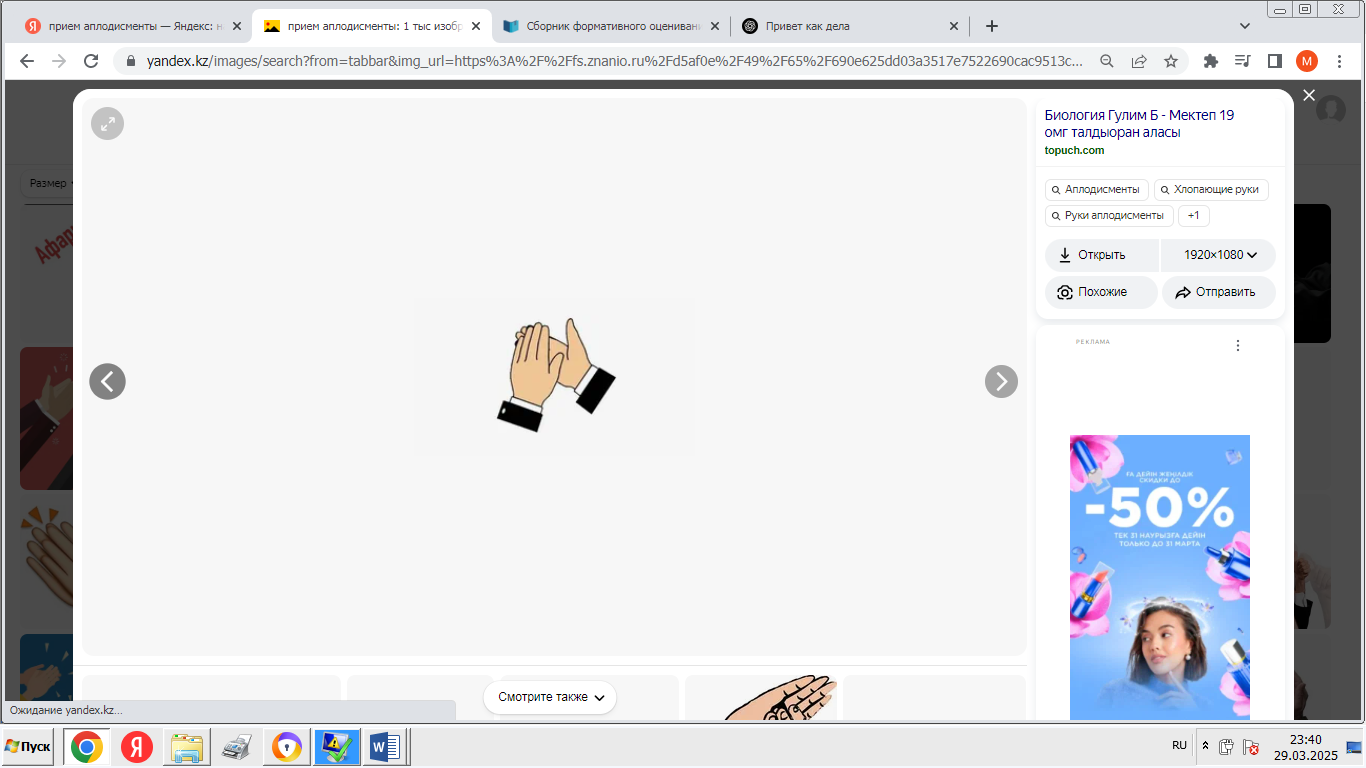
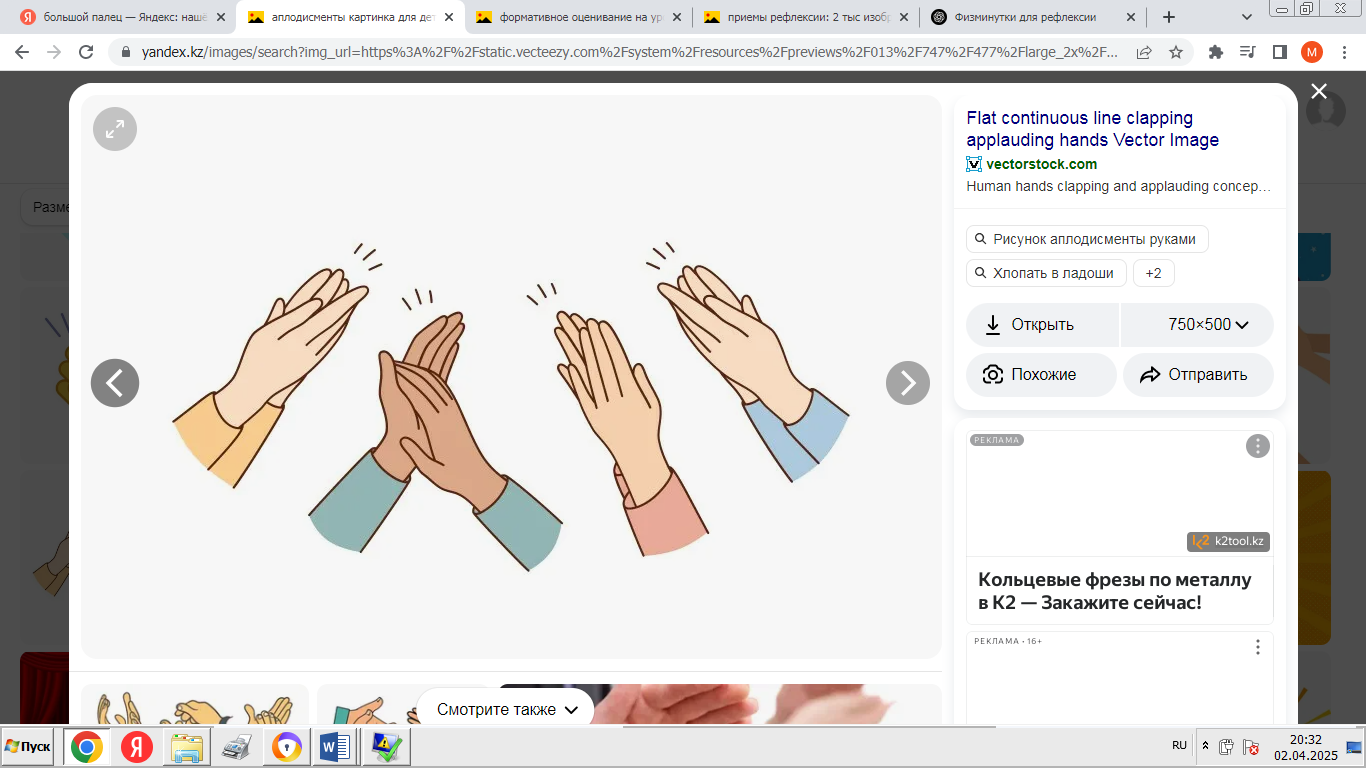
Formative assessment «Verbal praise» Formative assessment «Applause» - active listening |
Presenta tion, question cards, timer, markers, paper for the game |
|
|
Middle of the lesson (25 min.) |
1. Explanation of terms (initiative, cognitive activity, independence) with examples from life and study 2. Group work: situation analysis (case method): "What would you do?" 3. Physical training in English «Simon says» with elements on the topic (stand independently, think actively, etc.) 4. Familiarization with the motivation sheet. Explanation of why it is needed |
1. They listen to the explanation 2. Share opinions in small groups, discuss cases 3. Perform physical training 4. Fill out a motivation sheet (interests, goals, strengths) |
Formative assessment «Self-assessment» - answers in case studies Formative assessment «Mutual assessment» - for participation in group work |
Case sheets, physical training presenta tion, motivation sheets, markers |
|
|
End of the lesson (10 min.) |
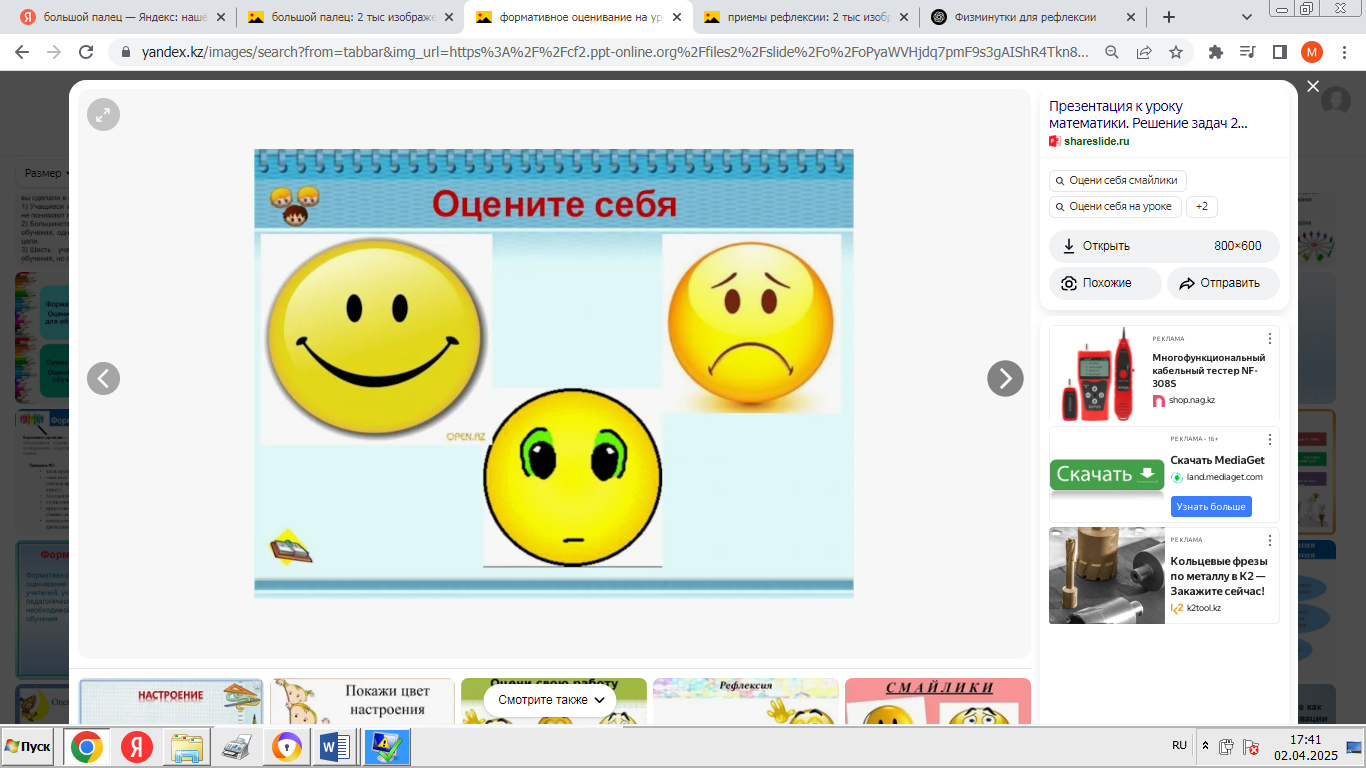
1. Summing up: «What have you learned about yourself as a student?» 2. The Motivational Ladder game (students choose the step they are currently on and write what will help them climb higher) 3. Homework: Bring one item that symbolizes their motivation to study 4. Feedback: «Smiley rating» - how I felt |
1. Reflection, discussion of the lesson 2. Participate in the game, make a choice and explain 3. Write down your homework. 4. Evaluate the emotional state using emoticons |
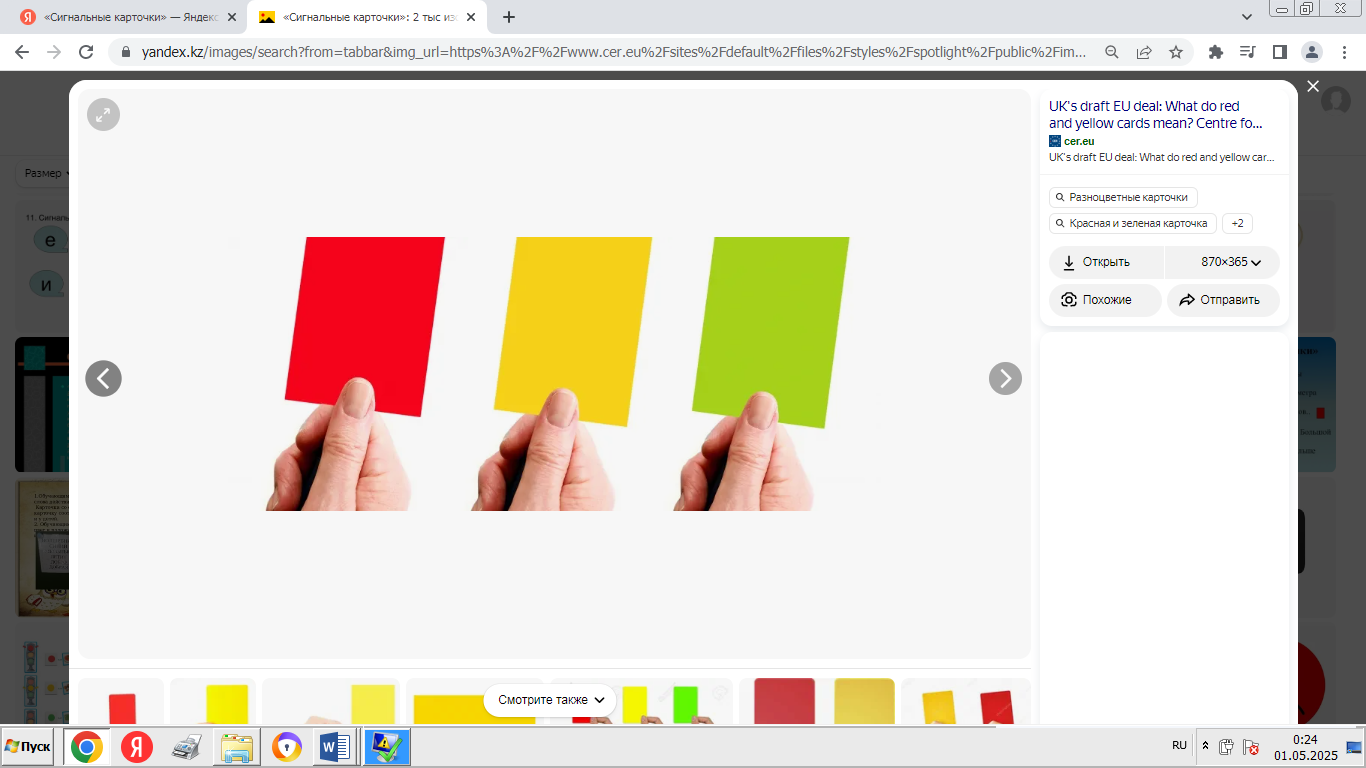
Formative scoring «Signal
cards» - activity in the game |
Ladder paper, Assessment emoticons, Diaries/ notebooks |
|
|
Part I |
Learning to learn: motivation and self-organization |
||||
|
Lesson № 2 |
|
||||
|
Topic of the lesson |
Word games. «English is fun!» |
||||
|
Objectives of the lesson |
1. Repeat and activate the learned vocabulary through game forms 2. Develop teamwork skills 3. Realize how the game helps you learn |
||||
|
Expected result |
|
||||
|
Lesson period |
Teacher activity |
Student Activity |
Assessment |
Resources |
|
|
Start of classes (10 min.) |
1. Greeting, positive communication attitude 2. Questions: «How do you usually remember words?», «What makes studying interesting?» 3. The game «Snowball»: name the word + the previous one 4. Discussion: «Why do words get forgotten?» |
1. They greet and share their thoughts 2. Answer questions 3. Participate in the game by remembering the words 4. They make assumptions about difficulties in memorizing words. |
Verbal feedback Formative
evaluation of «Star» - for activity in the
game |
Word/topic cards, timer, whiteboard or flipchart |
|
|
Middle of the lesson (25 min.) |
1. The game «Word chain» (a chain of words on a topic, for example: food, animals) 2. Association exercise: words - emotions/ colors/places 3. The Magic Box game: guess the word from the description 4. Physical training on the topic: «English charades» (pantomime of words) 5. Group discussion: how to memorize words effortlessly |
1. They work in teams, continue the chain of words 2. Create associations 3. They play «Magic box», ask questions 4. Perform physical exercises 5. Participate in the discussion |
Formative evaluation
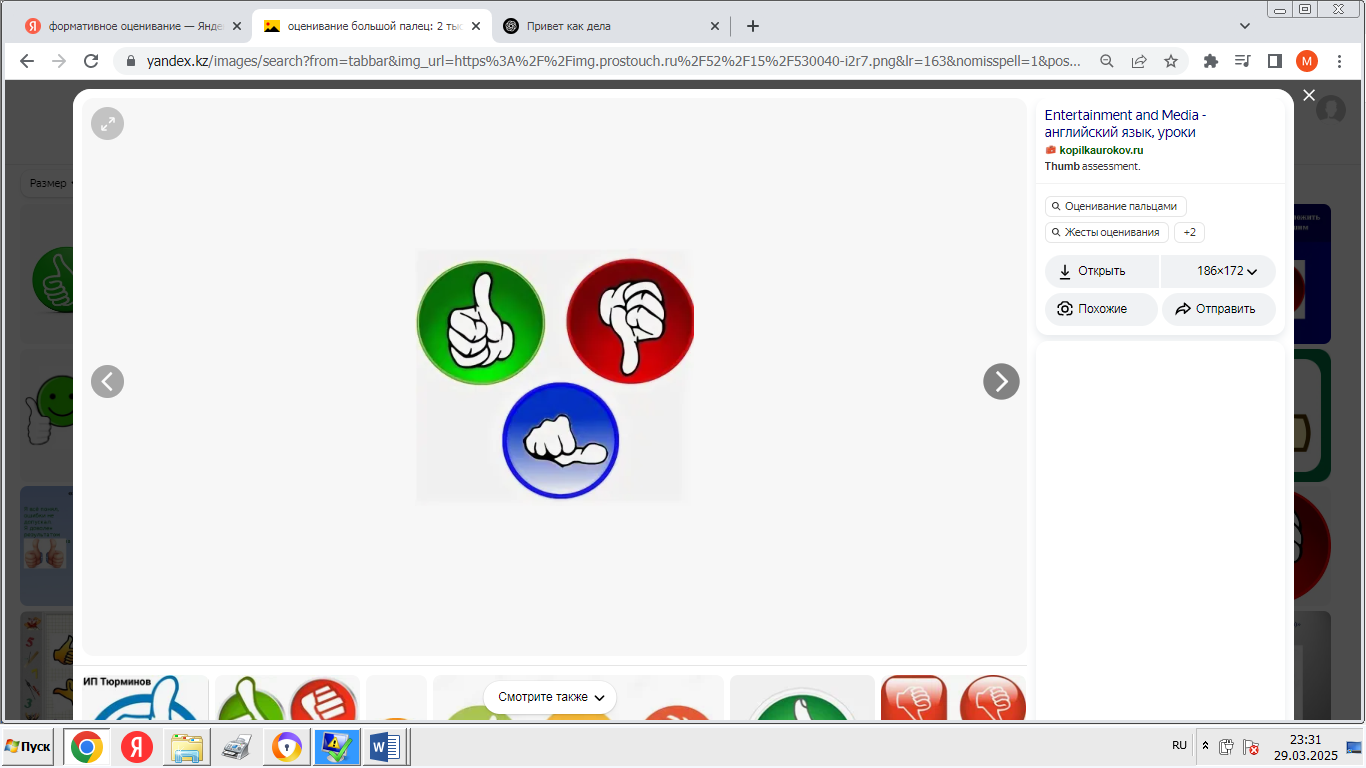
of «Smiley» - for answers in games Formative thumbs- «Up award» -
for participating in the discussion, creating
associations |
Paper cards with words, a box or a bag, images for physical training, markers, sheets for work |
|
|
End of the lesson (10 min.) |
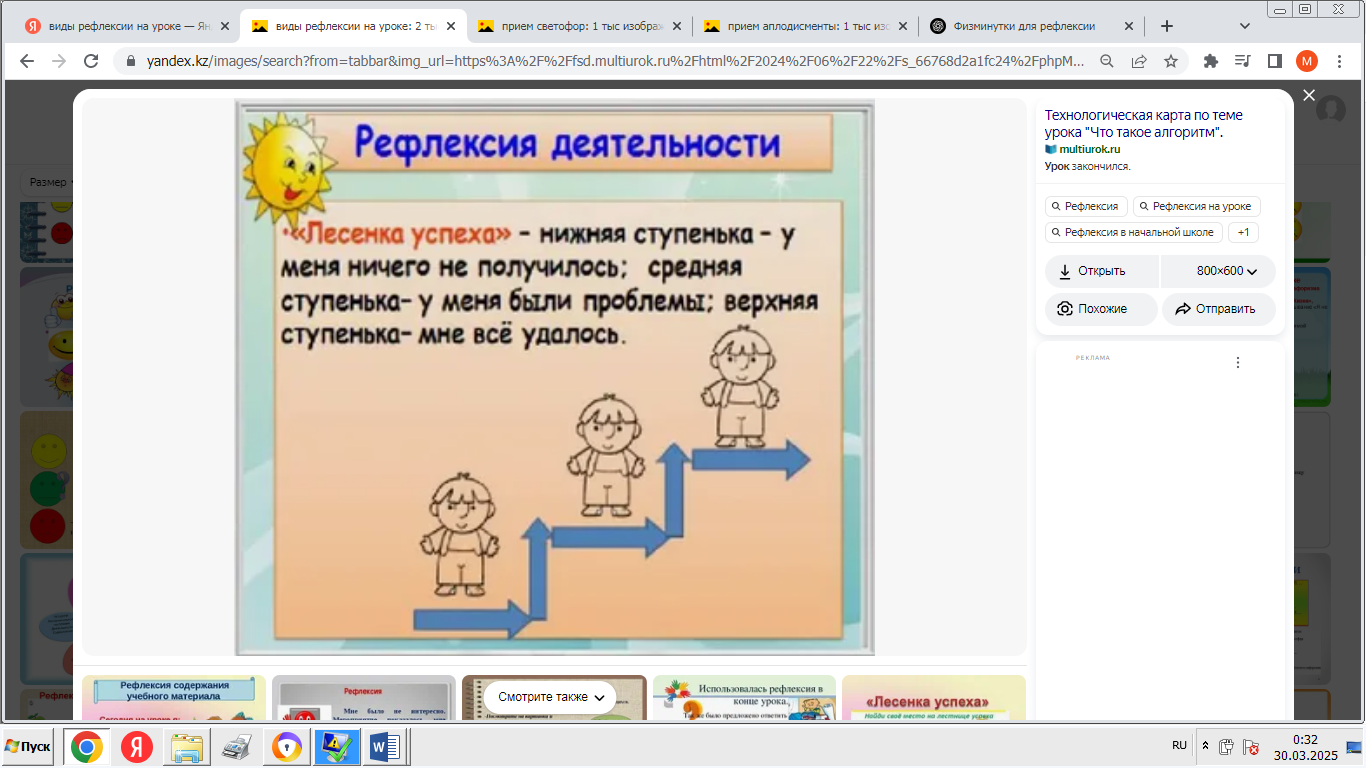
1. The game «Find the word»: find the word by the description, drawn or association 2. Final discussion: «What was remembered best and why?» 3. Reflection on the «Ladder of Success» 4. Homework: Create a mini-word repetition game |
1. They are playing the final game 2. Share their impressions 3. Reflect, evaluate their successes 4. They receive/write down their homework |
Formative assessment «Self-assessment» - for oral answers Emotional Feedback
|
Ladder of Success (template), reflective flashcards, homework assignment |
|


|
Part I |
Learning to learn: motivation and self-organization |
||||
|
Lesson № 3 |
|
||||
|
Topic of the lesson |
Do-it-yourself dictionaries. |
||||
|
Objectives of the lesson |
1. Introduce students to vocabulary visualization techniques (color, image, symbol) 2. Develop the skill of creating a dictionary yourself 3. Increase interest in memorizing words through the game |
||||
|
Expected result |
|
||||
|
Lesson period |
Teacher activity |
Student Activity |
Assessment |
Resources |
|
|
Start of classes (10 min.) |
1. Greeting, setting lesson goals 2. Questions: «How do you store words?», "What helps you memorize them?" 3. The game «Memory Match» (picture + word) 4. Discussion of memorization methods |
1. Welcome, participate in the discussion 2. They play a word-image matching game. 3. They share their own experience of storing words. |
Formative evaluation
of «Talking drawings» - for participation in the discussion and
game |
Vocabulary and picture cards, presen tation, markers, whiteboard |
|
|
Middle of the lesson (25 min.) |
1. Shows examples of mini-dictionaries: with colors, symbols, drawings 2. Explains the «remember by image» technique (visualization, association, color) 3. Working in groups: creating a dictionary page (3 words each) 4. Physical minute: «Draw and act» - represent the word with your body or facial expressions |
1. Consider examples of dictionaries 2. They do group work: they invent, draw, design 3. Participate in physical training (movement + word) 4. They discuss what they have remembered. |
Formative assessment
«Ladder of Success» - dictionary page
design Formative assessment
«Applause» - physical activity in a
minute |
Paper, colored pens, markers, dictionary samples, assign ments for groups, dictionary page templates |
|
|
End of the lesson (10 min.) |
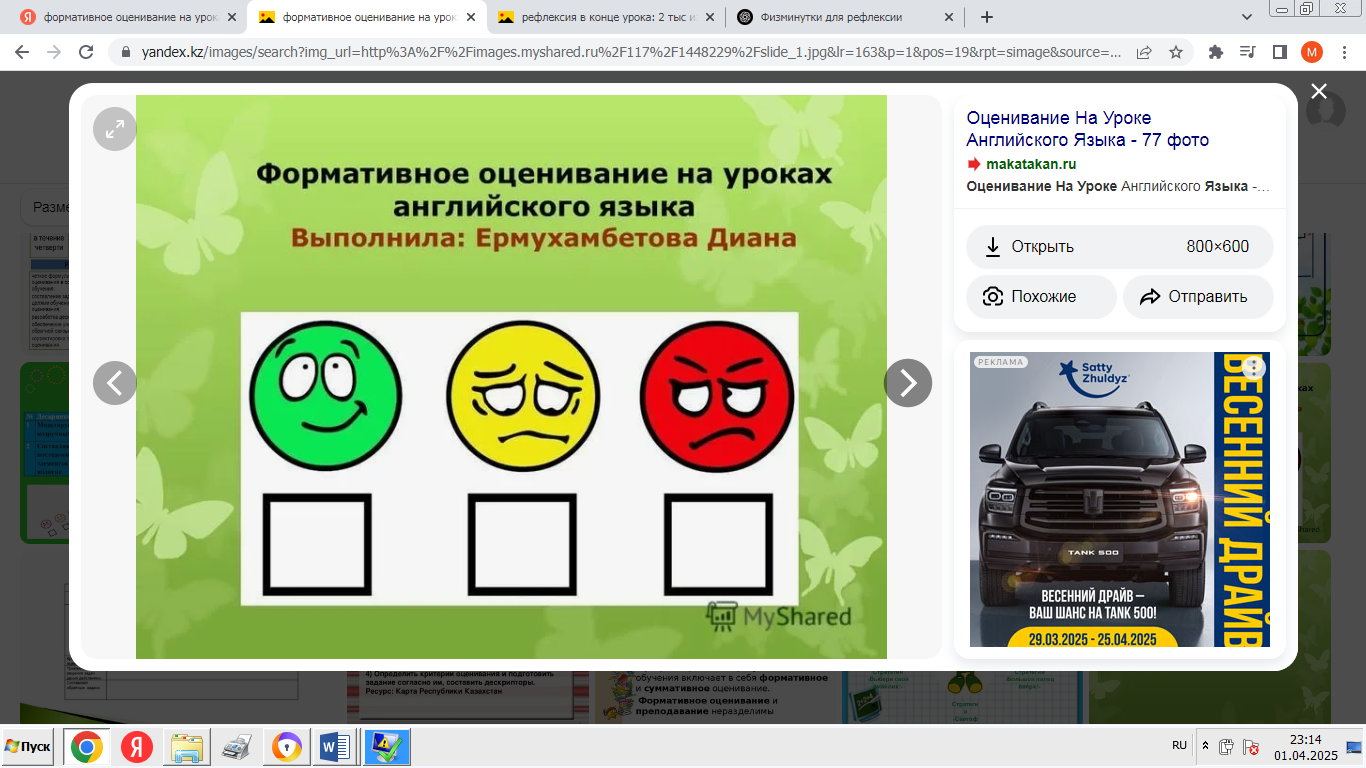
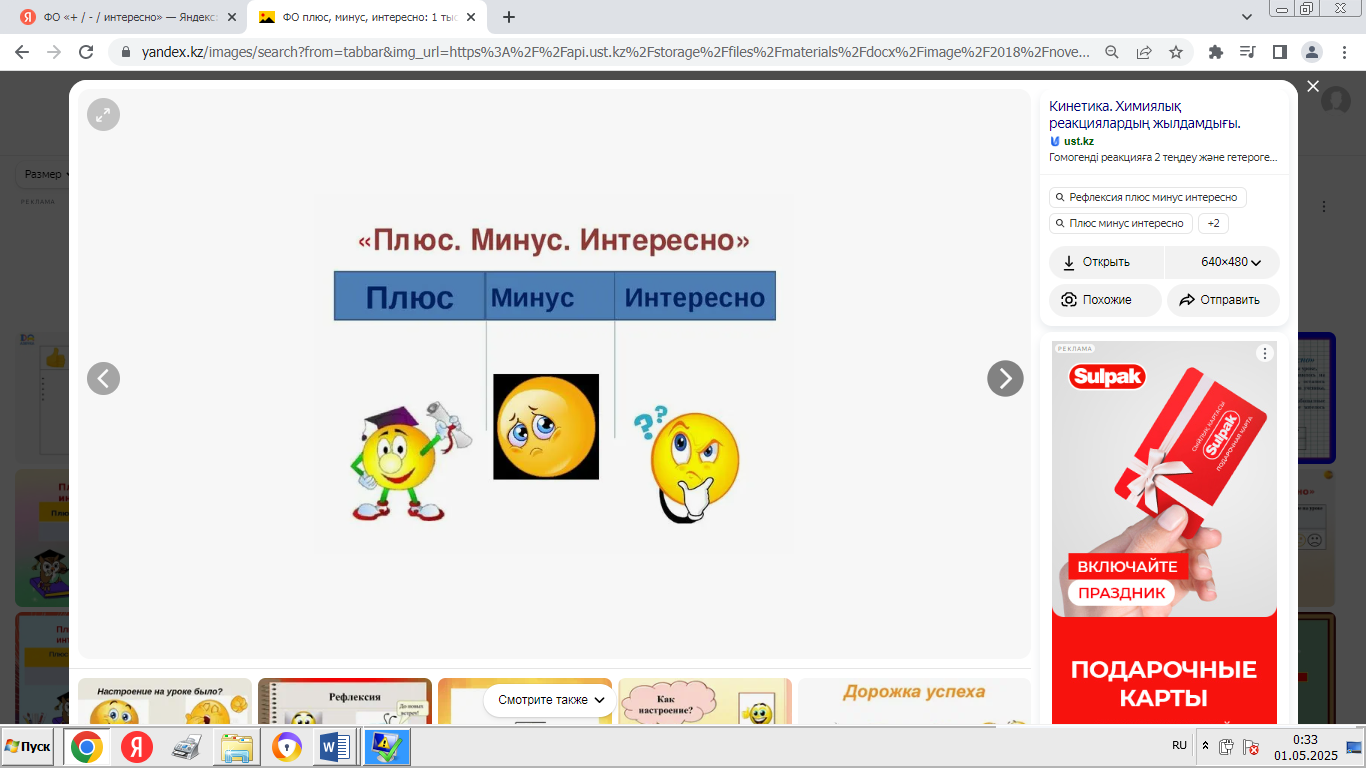
1. The Word in the Image game: the teacher shows the image – the students guess the word 2. Discussion: "What helped you remember the words today?" 3. The «+ / – / interesting» method based on the lesson results 4. Reflection «Smiley Face» 5. Homework: arrange another page of the dictionary at home |
1. They play word guessing games based on an image. 2. They reflect: they note which techniques were useful to them. 3. Write down your homework. 4. Share their impressions 5. They participate in reflection |
Assessment based on the criteria of design and understanding Formative assessment «Self-assessment» Reflection «Smiley Face»
|
Table «+ / – / interesting», flashcards with images, homework template |
|
|
Part I |
Learning to learn: motivation and self-organization |
||||
|
Lesson № 4 |
|
||||
|
Topic of the lesson |
The English alphabet in the quest |
||||
|
Objectives of the lesson |
1. Repeat and fix the English alphabet in a playful way 2. Develop attention, memory, logical thinking 3. Develop the skills to work in a team |
||||
|
Expected result |
|
||||
|
Lesson period |
Teacher activity |
Student Activity |
Assessment |
Resources |
|
|
Start of classes (10 min.) |
1. Greeting, creating a playful atmosphere 2. Questions: «What do you know about the English alphabet?» 3. Alphabet clap warm-up game - pronouncing letters with claps 4. Introduction to the quest theme: «The alphabet mission awaits us today!» |
1. Welcome, answer questions 2. Participate in the warm-up 3. They share associations with English letters. 4. They are preparing to complete the quest |
Formative assessment «Verbal praise» Formative assessment «Signal
cards» - activity in warm-up and
discussion |
Music track (optional), alphabet cards, «Alphabet Mission» presen tation |
|
|
Middle of the lesson (25 min.) |
1. Organizes an alphabetical quest: stations with tasks – Find the «missing» letters – Put the letters in order – Make a word out of letters – Alphabetic maze 2. Explains the rules of teamwork 3. Conducts physical training: «Alphabet yoga» (letters by body) |
1. They are divided into teams 2. Pass the stations, perform tasks on the alphabet, logic and attention 3. Physically represent the letters 4. Keep team records |
Formative assessment «Mutual assessment» - for participation in group work Formative assessment «Self-assessment» - the correctness of tasks, participation in physical training Formative assessment
«Applause» - physical activity in a
minute |
Letter cards, quest assign ments, timer, answer sheets, markers, station signs |
|
|
End of the lesson (10 min.) |
1. Alphabet Bingo game (find and cross out the letters according to the description) 2. Summing up: «What was interesting?», «What did you remember?» 3. The Alphabetical Success Ladder method: where are you today? 4. Homework: come up with a task for the alphabet quest |
1. They play bingo 2. Share their impressions 3. Evaluate their progress 4. Write down and discuss homework. |
Formative evaluation
of the «Star» - engagement in the
game Formative assessment «Self-assessment» Reflection on
the «Ladder of
Success» |
Bingo cards, Success Ladder template, stickers, self-reflection table |
|
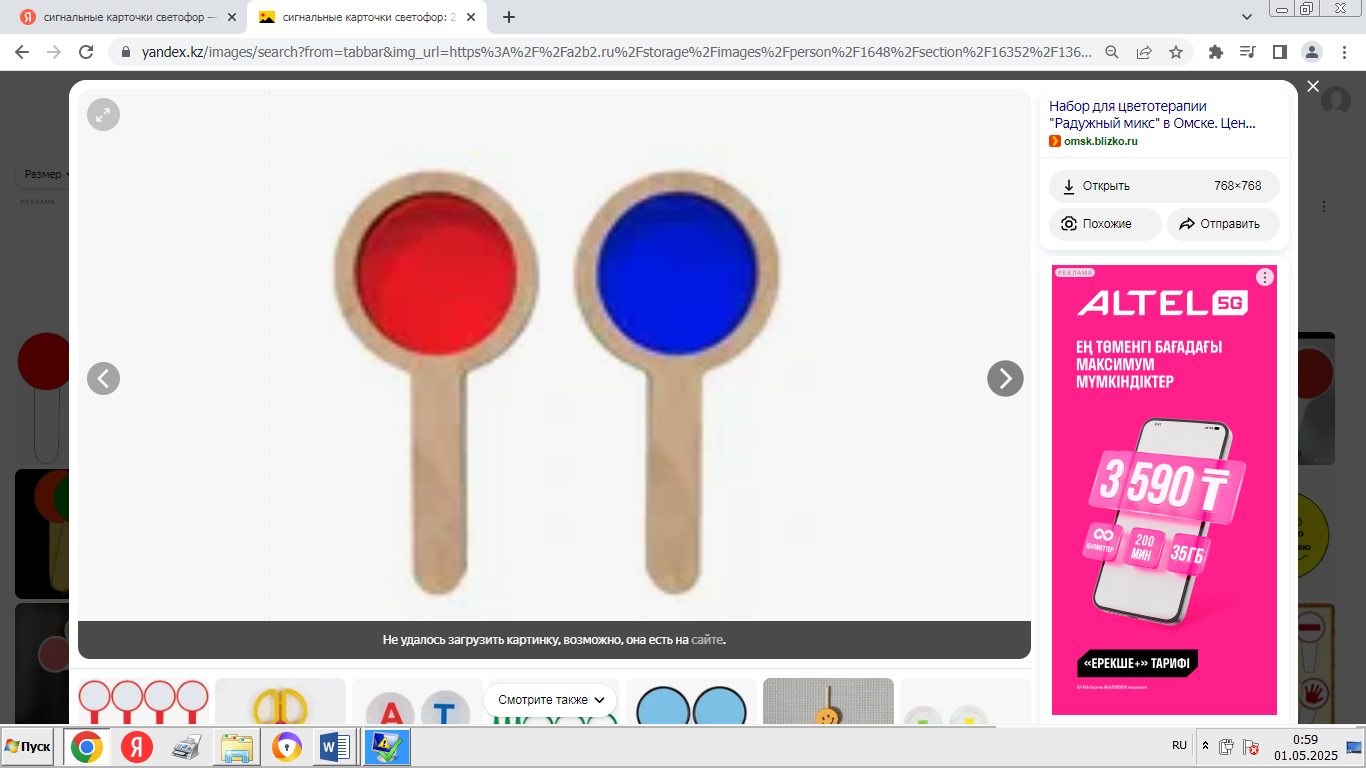
|
Part I |
Learning to learn: motivation and self-organization |
||||
|
Lesson № 5 |
|
||||
|
Topic of the lesson |
Learn - play - memorize! |
||||
|
Objectives of the lesson |
1. Repeat and expand vocabulary on the topic of «School» 2. Develop memory and attention through game techniques 3. Introduce memorization strategies |
||||
|
Expected result |
|
||||
|
Lesson period |
Teacher activity |
Student Activity |
Assessment |
Resources |
|
|
Start of classes (10 min.) |
1. Greeting, the mood for the game 2. Questions for updating knowledge: «What English words related to school do you know?» 3. The game «Flashcards race» is a speed test to show and name a word» 4. Discussion: «What helps you remember a word for a long time?» |
1. Answer questions 2. Playing a card game 3. They share their experience of memorizing words. |
Verbal feedback Formative assessment of «My
mood» - activity in the game |
Flashcards with vocabulary on the topic «School», timer, blackboard, markers |
|
|
Middle of the lesson (25 min.) |
1. Introduction of new words on the topic «School» (academic subjects, school supplies) 2. Using associations, colors, and gestures 3. Group work: Memory game (paired flashcards: word + picture) 4. Physical minute: «Find and Move» - find an object and show its movement |
1. They listen and repeat new words. 2. They play «Memory» in pairs or groups 3. Participate in physical training, actively move 4. They discuss what they remember easily. |
Formative assessment «Self-assessment» - the correctness of answers in the game, Formative assessment «Mutual assessment» - activity in group work |
Memory cards, word list, pictures, templates, physical minute presenta tion |
|
|
End of the lesson (10 min.) |
1. The game «Find the pair» (words and pictures are hidden in the classroom - you need to find and connect) 2. Mini-discussion: «Which memorization methods are most suitable for you?» 3. The «Color reflection» method is to choose the mood color based on the result. 4. Homework: Come up with a mini-word memorization game |
1. They are looking for couples, moving around the class 2. Share memorization strategies 3. They evaluate themselves through their color mood. 4. Write down your homework. |
Self-assessment, monitoring the choice of strategy and activity Reflection on the « Color reflection »
|
Paired flashcards, colored flashcards, homework template, self-assessment sheet |
|
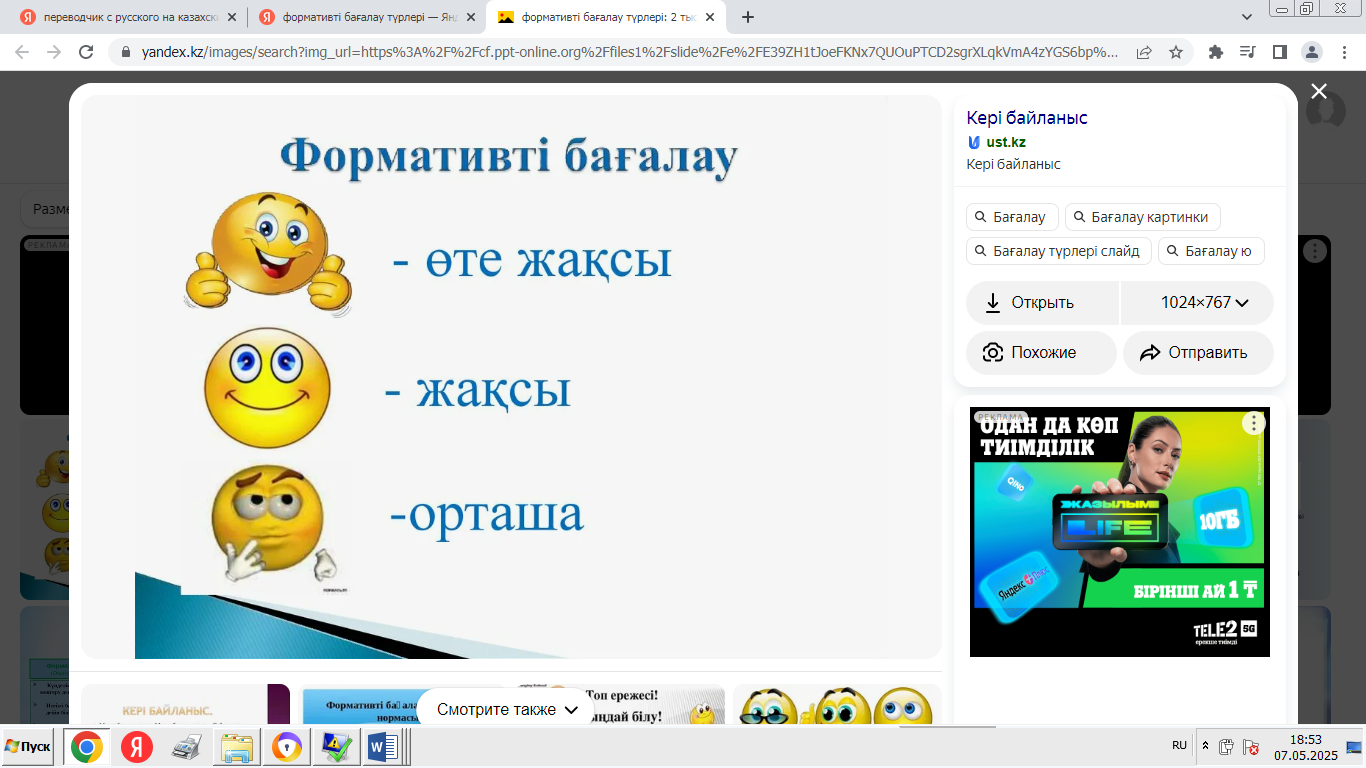
|
Part I |
Learning to learn: motivation and self-organization |
||||
|
Lesson № 6 |
|
||||
|
Topic of the lesson |
The game «Who am I?» (vocabulary + logic) |
||||
|
Objectives of the lesson |
1. Consolidate vocabulary through a guessing game 2. Develop logical thinking, attentive listening and verbal guessing 3. Develop argumentation skills |
||||
|
Expected result |
1. Students use vocabulary in logical-speech tasks 2. Actively participate in dialogues 3. Formulate descriptions and guesses in English. |
||||
|
Lesson period |
Teacher activity |
Student Activity |
Assessment |
Resources |
|
|
Start of classes (10 min.) |
1. Greeting, attitude to active participation 2. Questions: «Do you think it is possible to learn by playing?» 3. Mini-game «Yes/ No»: Guess the object on question 1 4. Introduction to the topic: «Today we are playing, thinking and talking! |
1. Welcome teachers 2. Share their opinion about the benefits of games 3. They participate in a mini-game, ask questions, and draw logical conclusions. 4. Getting ready for the main game |
Formative evaluation
«Smiley» - for answers and engagement Formative assessment
«Applause» - activity in asking
questions |
Flashcards with objects/ words, timer, phrases for stimulating questions («Am I...?», «Do I...?») |
|
|
Middle of the lesson (25 min.) |
1. Demonstration of an example: «I'm yellow, I'm a fruit, monkeys like me. Who am I?» 2. Discussion of how to describe an object (color, shape, functions) 3. Group work: Each group receives role cards and descriptions. 4. Physical minute «Guess and Move»: if you guessed it, picture it |
1. They listen and repeat examples. 2. They are divided into groups, choose a presenter 3. They play: one describes, the other guesses 4. They move and represent the guessed words |
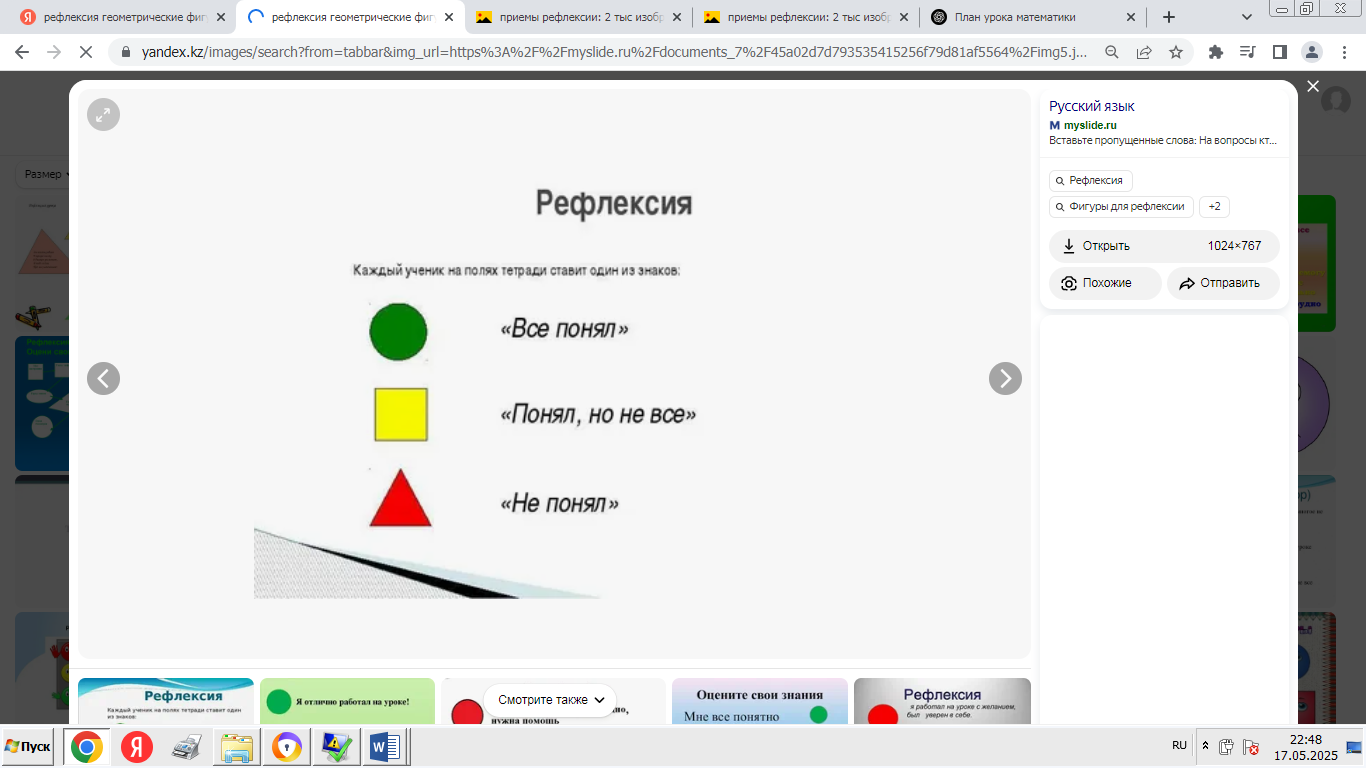
Formative evaluation of «Geometric shapes»- participation in the description
Formative assessment «Signal
cards» - guessing, correctness of logical
connections |
Role cards and hints, description templates, category cards (fruits, animals, professions, etc.) |
|
|
End of the lesson (10 min.) |
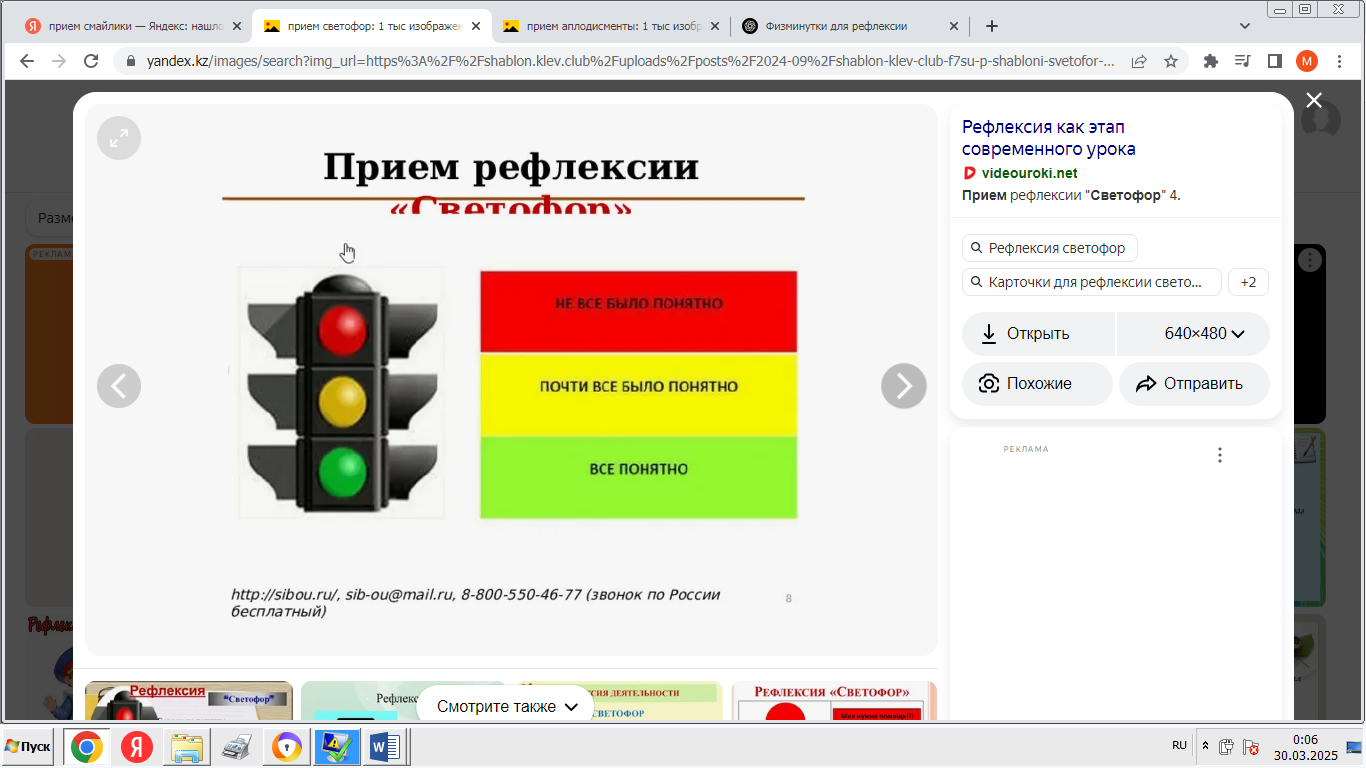
1. The final game «Who am I?»: one student comes out with a card on his forehead, the others describe the word 2. Discussion: «What words did you remember today?», «What was difficult?» 3. Reflection: the «Traffic light» method 4. Homework: come up with 3 riddles in English |
1. They play the final round 2. Participate in the discussion, share difficulties and successes 3. They reflect with the help of words. 4. They receive and write down their homework. |
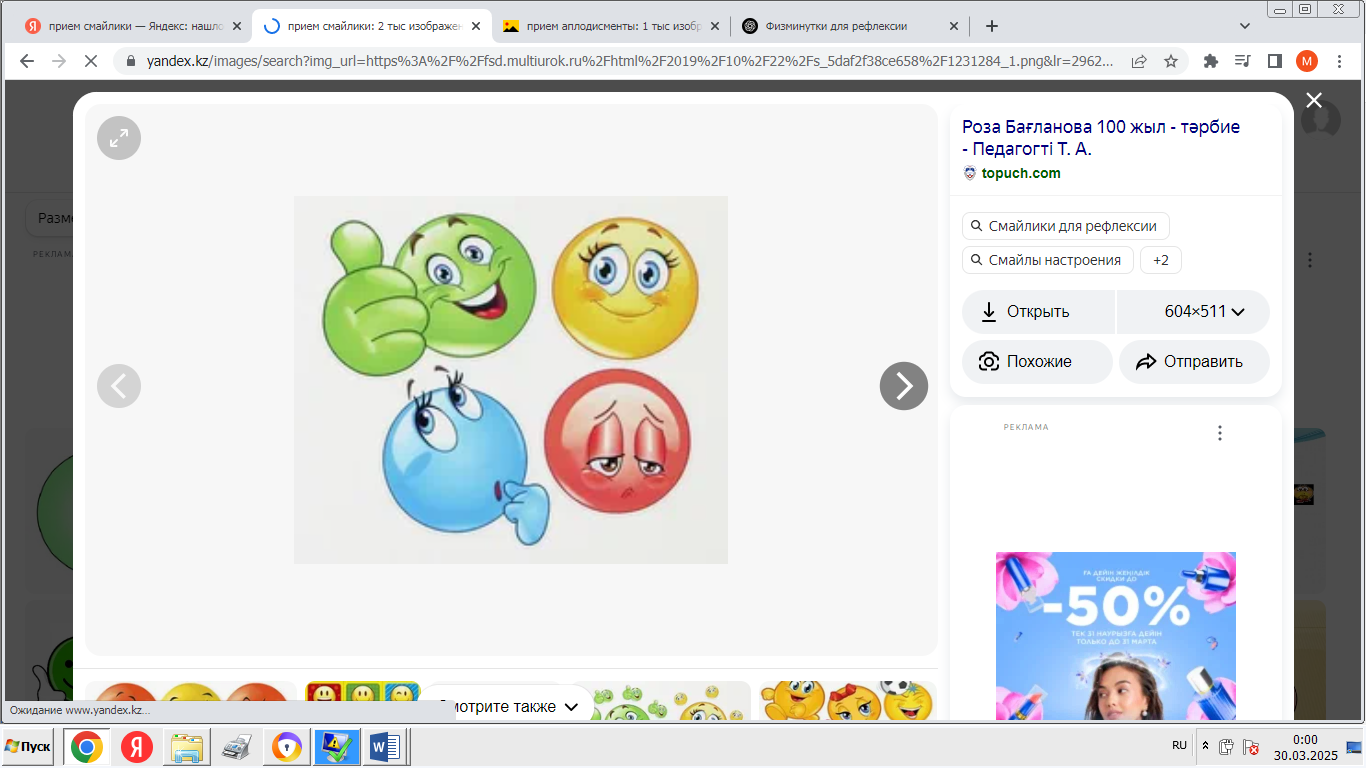
Formative assessment «Oral praise» - speech activity, involvement in the final game and discussion Reflection: the «Traffic
light» |
Forehead game cards, markers, reflection stickers, homework template |
|
|
Part II |
Word, text and meaning |
||||
|
Lesson № 7 |
|
||||
|
Topic of the lesson |
Game dictation «Hide the mistake» |
||||
|
Objectives of the lesson |
1. Develop spelling vigilance and attentiveness 2. Develop the skill of finding and correcting errors 3. Activate language guessing through game formats |
||||
|
Expected result |
1. Students find spelling and grammar errors 2. Explain and correct them 3. Use linguistic intuition and work in a group. |
||||
|
Lesson period |
Teacher activity |
Student Activity |
Assessment |
Resources |
|
|
Start of classes (10 min.) |
1. Greeting, the purpose of the lesson: «Find and catch a mistake!» 2. Questions: «Why is it important to be able to find mistakes?», «What mistakes do you often see in texts?» 3. Mini-game «Erroneous sentence»: students find an error in one phrase on the blackboard 4. Discussion: How does language guessing work? |
1. Welcome 2. They share their experience in finding bugs 3. Analyze short phrases, find and explain errors 4. Express their assumptions |
Formative evaluation of «Flower» - activity in a mini-game Formative
assessment «Oral
assessment»
- oral
answers |
A table with erroneous phrases, markers, a board, or a presentation
|
|
|
Middle of the lesson (25 min.) |
1. Presentation of dictation with errors (the text is being read or distributed) 2. Instructions: «Find and correct all errors in pairs» 3. Group work: comparison and discussion of corrections 4. Physical education lesson «Get up if it's right!» - students get up if they hear the right phrase. |
1. They listen /read dictation, identify mistakes 2. They fix mistakes on their own or in pairs. 3. Compare options in small groups 4. Actively participate in physical training |
Checklist with errors Formative evaluation «Mutual evaluation» - mutual verification in pairs Formative assessment «Verbal praise» - activity in discussion |
Printouts with texts, colored pens, phrases for physical exercises, task cards for teamwork |
|
|
End of the lesson (10 min.) |
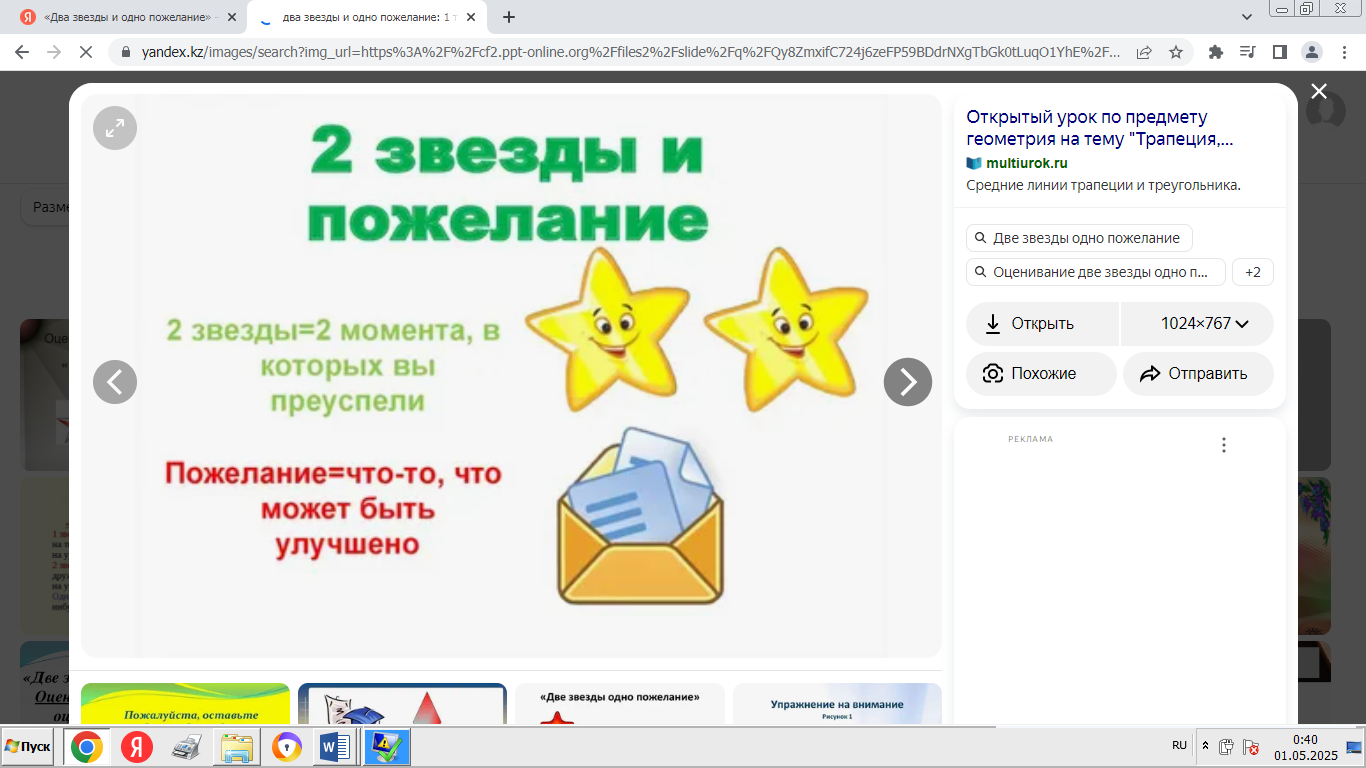
1. The «Hide the mistake» game: the students themselves insert errors into the text for another group 2. Presentation of «corrected» texts and a mini-defense 3. Reflection: «2 stars, 1 wish» 4. Homework: prepare a short text with 3 «hidden» errors |
1. Compose texts with errors and exchange them with another group 2. They correct the texts of their peers 3. Participate in reflection, share their impressions 4. Write down the task |
Formative assessment «Verbal praise» - involvement in making and correcting mistakes, quality of argumentationReflection: «2 stars, 1 wish»
|
Assign ment sheets, dictation templates, homework cards |
|
|
Part II |
Word, text and meaning |
||||
|
Lesson № 8 |
|
||||
|
Topic of the lesson |
Visual dictionary: word + picture |
||||
|
Objectives of the lesson |
1. Repeat and expand vocabulary on the topic «Things in my room/classroom/school» 2. Teach how to represent a word through an image and a drawing 3. Develop visual and visual-associative memory skills |
||||
|
Expected result |
1. Students create visual dictionaries on their own 2. Use images to memorize words 3. Participat in game tasks to consolidate |
||||
|
Lesson period |
Teacher activity |
Student Activity |
Assessment |
Resources |
|
|
Start of classes (10 min.) |
1. Greeting, motivation: «Is it possible to memorize a word without cramming?» 2. Questions: «What things do you see most often in your room or school?» 3. The Flash Picture game: guess the word from the picture 4. Introduction to the topic: «Dictionary without words - how does it work?» |
1. Answer questions, share associations 2. They play guessing games based on images 3. They discuss how a picture helps to remember a word. |
Formative assessment «Verbal praise» - activity in discussion Formative assessment «Self-assessment» - participation in the game |
Presen tation with pictures, flashcards (item/drawing), markers, blackboard
|
|
|
Middle of the lesson (25 min.) |
1. Demonstration of visual vocabulary examples (word + picture + symbol/color) 2. Explanation of mnemonics: color, symbol, association 3. Group work: creating posters/dictionary pages on the topic «Things in my room / classroom / school» 4. Physical minute «Picture the object!» |
1. They study examples and ask questions 2. 6-8 words are drawn and framed in groups: a word, a picture, an icon 3. They participate in physical training by depicting objects |
Formative
assessment «Signal
cards»
- Group presentation,
correspondence between a word and an
image |
A4/A3 paper, colored pens, stickers, vocabulary page templates, presentation on the topic |
|
|
End of the lesson (10 min.) |
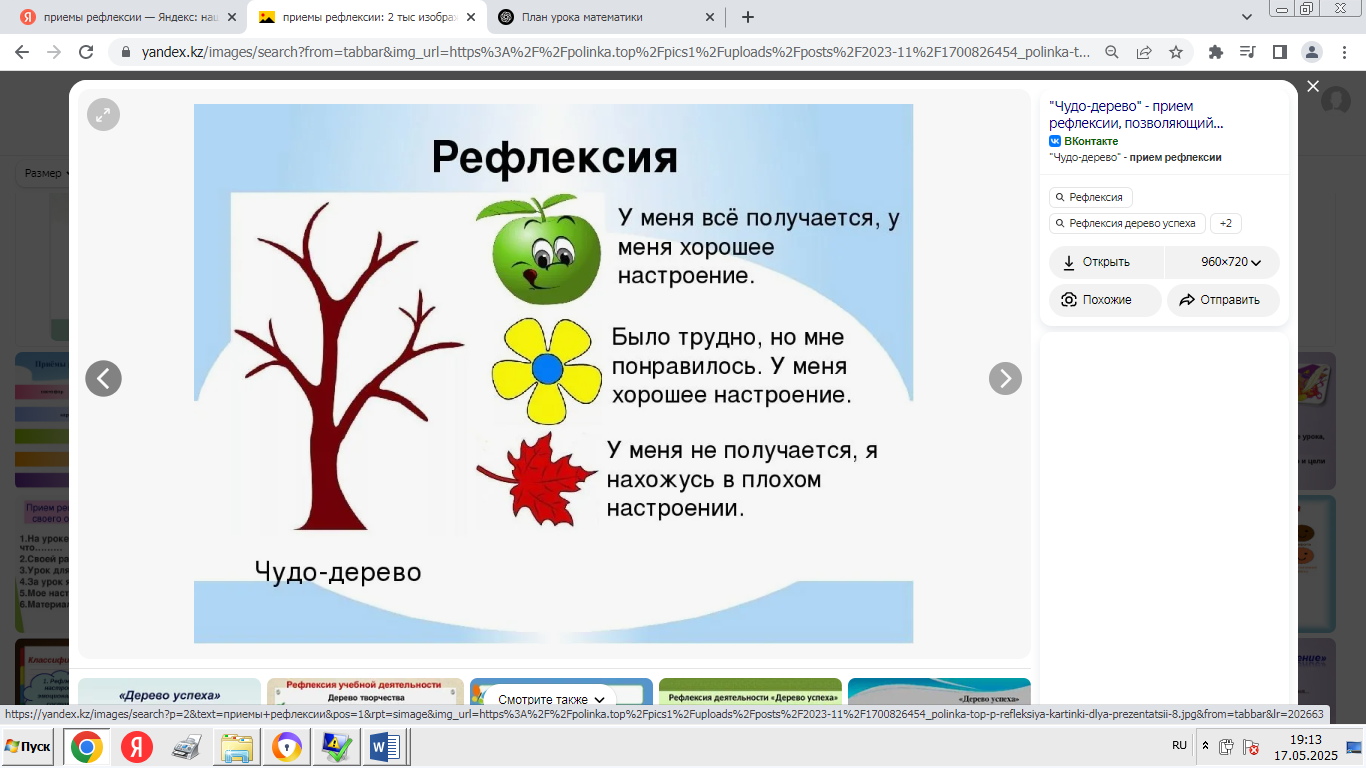
1. The «Guess the picture» game (teams take turns showing drawings, others guessing the word) 2. Mini-exhibition and presentation of their dictionaries 3. Reflection: The «Miracle Tree» 4. Homework: Create 3 flashcards for a personal visual dictionary |
1. Participate in a guessing game 2. They present their visual dictionaries 3. Conduct a reflection 4. They receive and write down their homework. |
Formative assessment «Verbal praise» - creativity, activity Reflection: The «Miracle Tree»
|
Game cards, blanks for homework |
|
|
Part II |
Word, text and meaning |
||||
|
Lesson № 9 |
|
||||
|
Topic of the lesson |
Mini-project: «My Favorite Things» |
||||
|
Objectives of the lesson |
1. Repeat and apply vocabulary on topics: subjects, hobbies, food, etc. 2. Develop the skill of describing your favorite things using elementary grammar 3. Develop the ability to prepare and present a mini-project |
||||
|
Expected result |
1. Students create a poster or slide about their favorite things with a brief description 2. Use phrases and grammatical constructions 3. Speak to the class. |
||||
|
Lesson period |
Teacher activity |
Student Activity |
Assessment |
Resources |
|
|
Start of classes (10 min.) |
1. Greeting and goal setting: «Today we are creating a project about our favorite things» 2. Blitz questions: «What do you like?», «What is your favorite...?» 3. The game «Find someone who...» (find a classmate who has the same favorite something) |
1. Answer questions 2. Participate in a survey game 3. They begin to form ideas about what they will include in the mini-project. |
Formative
assessment «Traffic
light»
- verbal activity, involvement
in the game |
A handout for the game «Find someone who...», question cards, a board, markers |
|
|
Middle of the lesson (25 min.) |
1. Demonstration of a sample mini-project (slide/poster): title, photo/drawing, caption, 2-3 sentences 2. Repeat grammar: «I like...», «My favorite ... is ... because...» 3. Group work: preparation of mini-projects 4. Physical minute «Show your favorite» (using gestures to show your favorite thing) |
1. Study the sample, ask questions 2. Create projects (posters or presentations): draw, write signatures, prepare an oral explanation 3. Perform physical training |
Formative assessment «Mutual evaluation» - checking keywords, support in the formulation, cooperation in the group |
Paper, markers, stickers, templates with phrases, sample project, presenta tion |
|
|
End of the lesson (10 min.) |
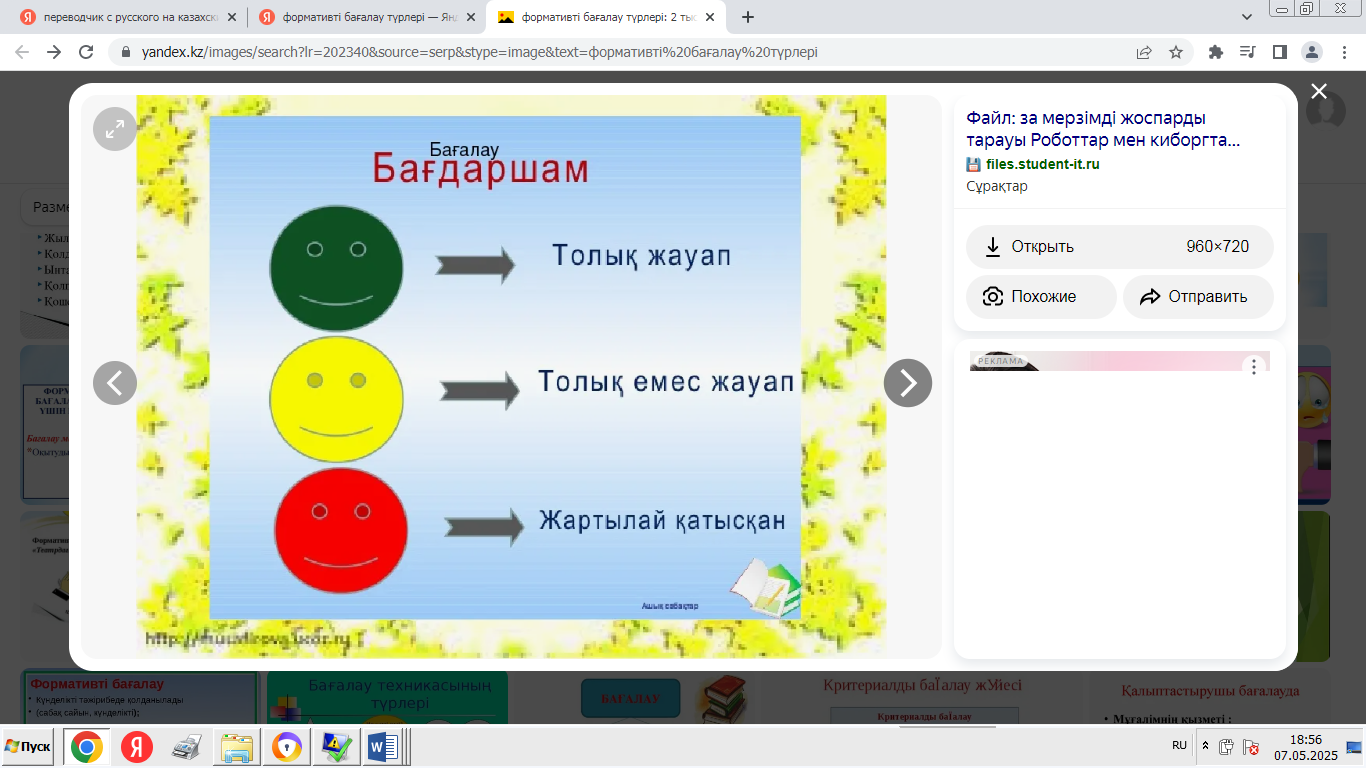
1. Presentation of projects (individually or in a group) 2. The game «Guess whose favorite thing» (according to the description) 3. Reflection: «3 words about yourself and the project» 4. Homework: complete project 1 with a new subject and take a photo with it |
1. They present their projects 2. They listen and guess who the description belongs to. 3. Share their impressions 4. Write down your homework. |
Formative assessment
«Applause» - oral presentation, understanding, participation in the
discussion. Reflection: «3 words about yourself and the project» |
Student projects, flashcards for games, reflection sheets, homework template |
|
|
Part II |
Word, text and meaning |
||||
|
Lesson № 10 |
|
||||
|
Topic of the lesson |
Grammar Monsters (game) |
||||
|
Objectives of the lesson |
1. Repeat and fix grammatical forms: articles, verb forms, word order 2. Develop the skills of conscious use of grammar in speech and writing 3. Develop the skills to work in a team through play activities |
||||
|
Expected result |
1. Students confidently apply grammar rules in game situations 2. Improve communication skills. |
||||
|
Lesson period |
Teacher activity |
Student Activity |
Assessment |
Resources |
|
|
Start of classes (10 min.) |
1. Greeting, goal setting 2. Questions for updating: «What are articles? What are the tenses of verbs?» 3. Mini-game «Grammar Quick Survey» (students quickly answer grammar questions) |
1. Answer questions 2. Actively participate in the mini-game |
Formative assessment
of «My
mood»
- Oral answers, involvement in
the discussion |
Question cards, interactive whiteboard or poster |
|
|
Middle of the lesson (25 min.) |
1. Explanation of rules on articles, verb forms and word order with examples 2. Division into teams for the game «Conquer the grammatical monster» - distribution of cards with different words and forms 3. Physical minute «The monster is moving» (movements to music related to the theme) |
1. They listen to explanations, ask questions 2. They play teams, choose the correct grammatical forms, and feed the «monster» with cards. 3. Perform physical training |
Formative assessment of «Talking drawings» - the correctness of the choice of cards, activity in the game |
Word cards (different shapes), a large poster with a «monster», music for a physical lesson |
|
|
End of the lesson (10 min.) |
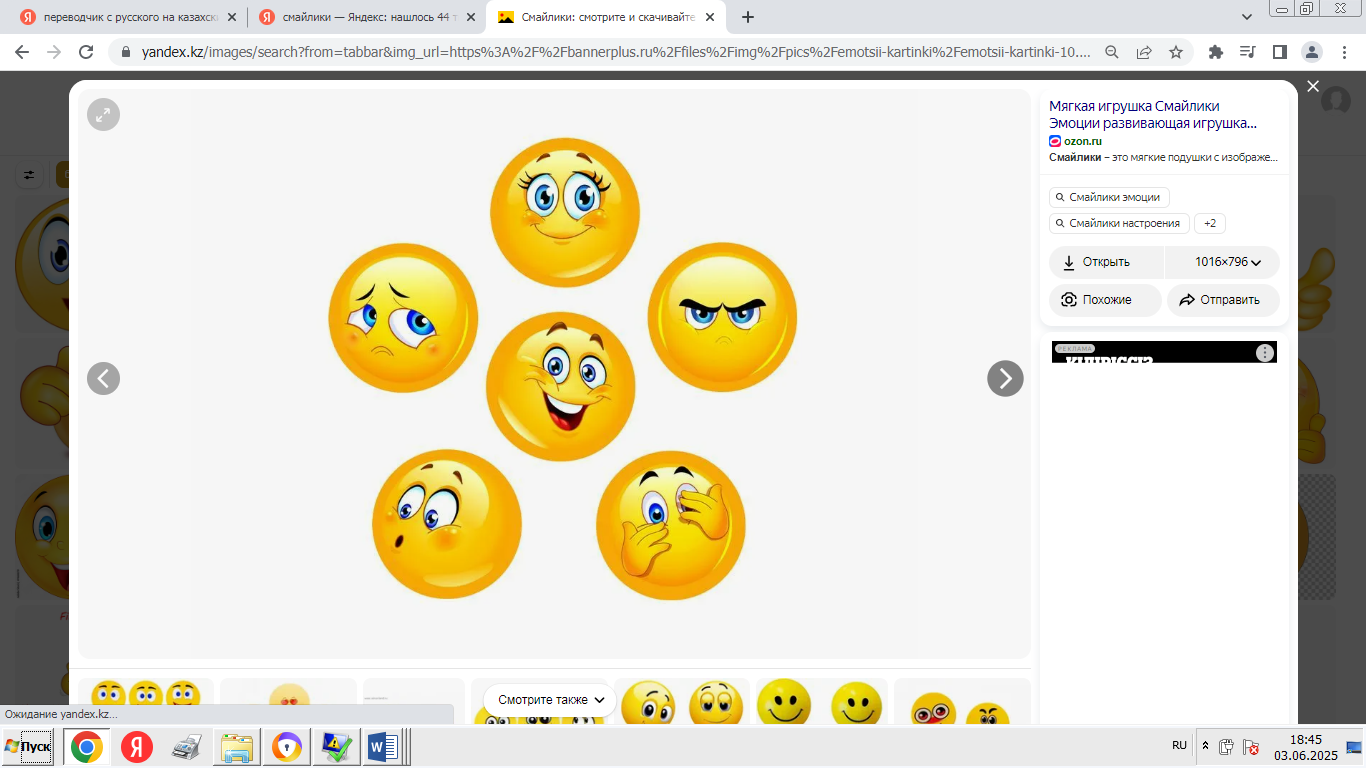
1. Game results, discussion of mistakes and correct answers 2. Fix the Monster fixing exercise - correcting sentences with mistakes 3. Reflection: «Geometric shapes» 4. Homework: make 5 sentences with different articles and verbs |
1. Participate in the discussion, correct mistakes in reflection 2. Share their discoveries 3. Write down your homework. |
Formative evaluation of the
«Star» - сorrectness of corrections
|
Work sheets with sugge stions for correction, blackboard, homework cards |
|
|
Part II |
Word, text and meaning |
||||
|
Lesson № 10 |
|
||||
|
Topic of the lesson |
Grammar Monsters (game) |
||||
|
Objectives of the lesson |
1. Repeat and fix grammatical forms: articles, verb forms, word order 2. Develop the skills of conscious use of grammar in speech and writing 3. Develop the skills to work in a team through play activities |
||||
|
Expected result |
1. Students confidently apply grammar rules in game situations 2. Improve communication skills. |
||||
|
Lesson period |
Teacher activity |
Student Activity |
Assessment |
Resources |
|
|
Start of classes (10 min.) |
1. Greeting, goal setting 2. Questions for updating: «What are articles? What are the tenses of verbs?» 3. Mini-game «Grammar Quick Survey» (students quickly answer grammar questions) |
1. Answer questions 2. Actively participate in the mini-game |
Formative
assessment «Talking
drawings»
- oral answers, involvement in
the discussion |
Question cards, interactive whiteboard or poster |
|
|
Middle of the lesson (25 min.) |
1. Explanation of rules on articles, verb forms and word order with examples 2. Division into teams for the game «Conquer the grammatical monster» - distribution of cards with different words and forms 3. Physical minute «The monster is moving» (movements to music related to the theme) |
1. They listen to explanations, ask questions 2. They play teams, choose the correct grammatical forms, and feed the «monster» with cards. 3. Perform physical training |
Formative assessment
of «Signal
cards»
- The correctness of the
choice of cards, activity in the game |
Word cards (different shapes), a large poster with a «monster», music for a physical lesson |
|
|
End of the lesson (10 min.) |
1. Game results, discussion of mistakes and correct answers 2. Fix the Monster fixing exercise - correcting sentences with mistakes 3. Reflection "Flower Meadow" 4. Homework: make 5 sentences with different articles and verbs |
1. Participate in the discussion, correct mistakes in reflection 2. Share their discoveries 3. Write down your homework. |
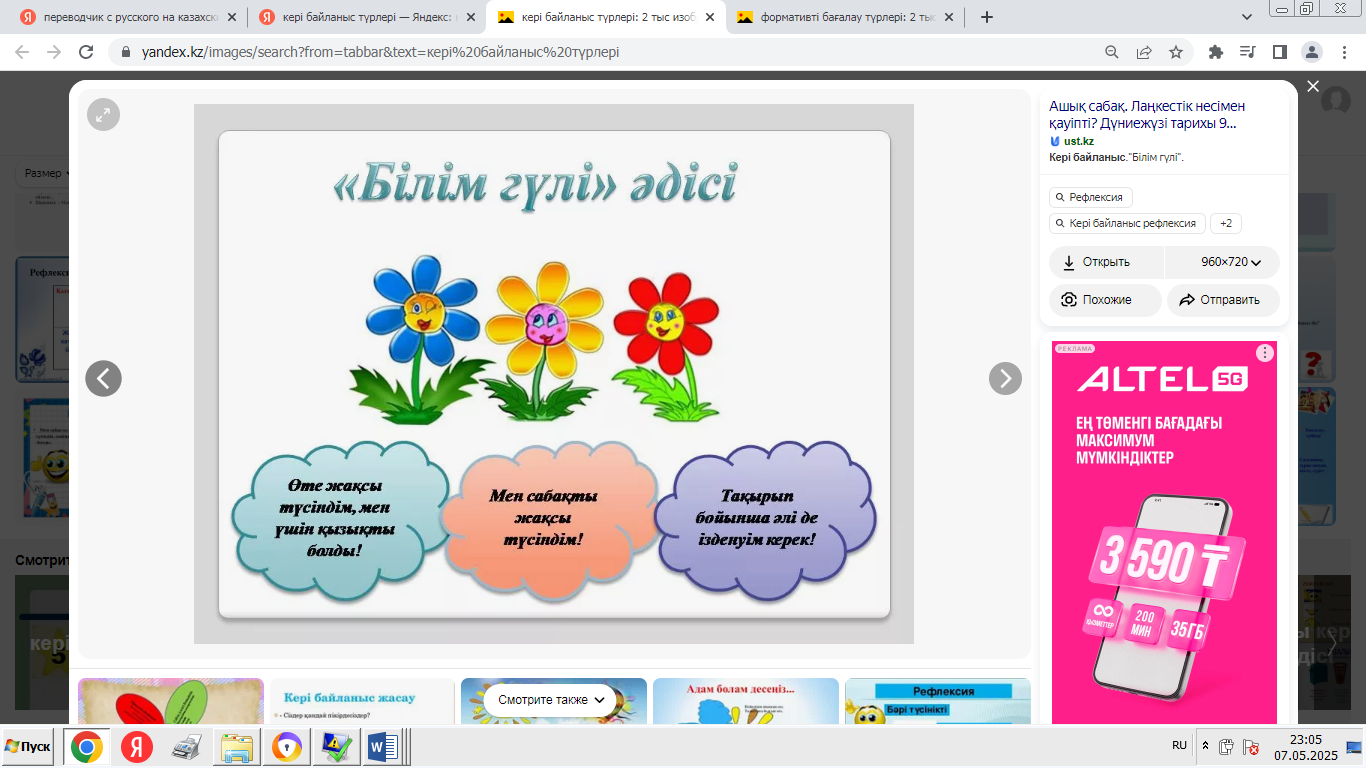
Formative assessment «Self-assessment» - correctness of corrections Reflection «Flower
Meadow» |
Work sheets with sugges tions for correction, blackboard, homework cards |
|
|
Part II |
Word, text and meaning |
||||
|
Lesson № 11 |
|
||||
|
Topic of the lesson |
Video + game: «What's happening?» |
||||
|
Objectives of the lesson |
1. Develop listening and speaking skills in English 2. Learn to describe actions and situations 3. Form the skills of guessing and interaction through the game |
||||
|
Expected result |
1. Students will be able to describe what is happening on the video in simple sentences 2. Use active vocabulary 3. Participate in games, develop attention and guesswork. |
||||
|
Lesson period |
Teacher activity |
Student Activity |
Assessment |
Resources |
|
|
Start of classes (10 min.) |
1. Greeting, motivational question: "What actions do you know?" 2. Mini-game «Act it out» - actions are shown, classmates guess 3. Discussion of the expected content of the video |
1. They answer questions and name actions. 2. They play «Act it out», show and guess the actions
|
Formative assessment «Verbal praise» - activity, correctness of guessing |
Action cards, interactive whiteboard or poster
|
|
|
Middle of the lesson (25 min.) |
1. Watching a short silent or animated video 2-3 times 2. Explanation of the task: «Describe what's happening» 3. Group work: discuss and make a description 4. Physical training with facial expressions and movements on the topic of the video |
1. Watch the video carefully 2. They discuss in a group, make suggestions about what is happening 3. Perform physical training
|
Formative assessment «Self-assessment» - participation in a discussion Formative evaluation of
the «Smiley»
- the quality of the
description |
Projector/screen for videos, question cards for groups, music for physical training |
|
|
End of the lesson (10 min.) |
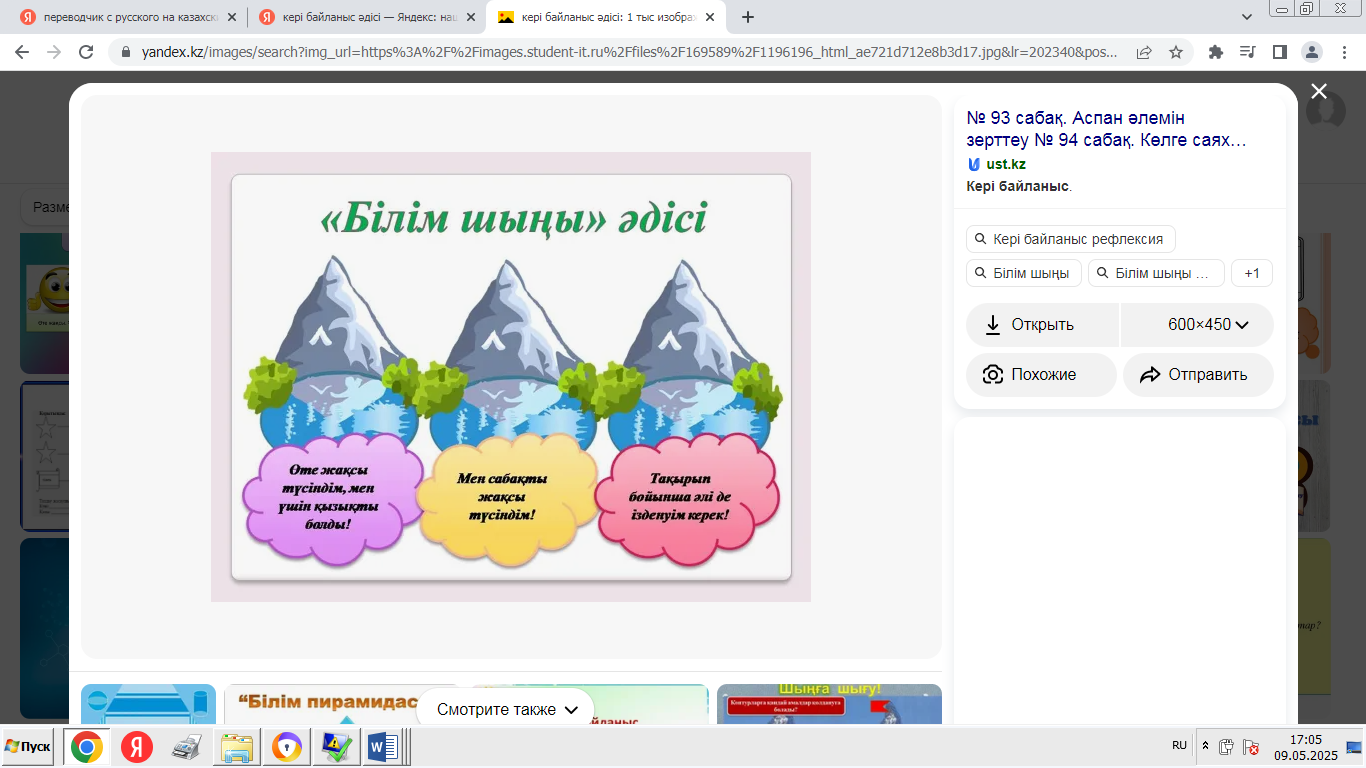
1. The «Find the action» game: the teacher calls the action, the students show or find the card 2. The game «Mime and guess»: one shows the action, the others guess 3. Final discussion: «What did you learn?», reflection «The pinnacle of knowledge» 4. Reflection "The pinnacle of knowledge" 5. Homework: describe a short video or picture |
1. They participate in games, demonstrate knowledge, and engage in reflection 2. Share their impressions, write down their homework 3. Тhey participate in reflection |
Formative assessment «Mutual assessment» - oral participation, correctness of actions and descriptions Reflection «The pinnacle of
knowledge» |
Action cards, reflection cards, videos, homework worksheets |
|
|
Part II |
Word, text and meaning |
||||
|
Lesson № 12 |
|
||||
|
Topic of the lesson |
Role-playing game: in the store |
||||
|
Objectives of the lesson |
1. Introduce vocabulary on the topic of «Shopping» 2. Develop oral and communication skills through role-playing 3. Develop the ability to work in pairs, use dialogical speech |
||||
|
Expected result |
1. Students are able to conduct simple dialogues in the store 2. Apply lexical constructions 3. Work in pairs. |
||||
|
Lesson period |
Teacher activity |
Student Activity |
Assessment |
Resources |
|
|
Start of classes (10 min.) |
1. Greeting, setting the lesson goal 2. Questions and discussion: "What can I buy in the store?" 3. The «Memory» game for memorizing words on the topic of «Shopping»
|
1. Answer questions, name famous products 2. Participate in the game, repeat vocabulary
|
Formative assessment of «Oral praise» - activity, correct use of vocabulary |
Product image cards, interactive whiteboard or poster
|
|
|
Middle of the lesson (25 min.) |
1. Explanation of new words and expressions for the buyer and seller 2. Demonstration of dialogues on the topic 3. Working in pairs with cards: playing out dialogues «In the store» 4. Physical minute «Buyer and seller» (movements, gestures)
|
1. They listen and repeat new words and expressions. 2. They play role-playing games in pairs, use flashcards 3. Perform physical training
|
Formative assessment
of «Applause»
- speech
correctness Formative assessment «Mutual assessment» - participation in a role-playing game |
Cards with goods, prices, dialogue cards, music for physical training |
|
|
End of the lesson (10 min.) |
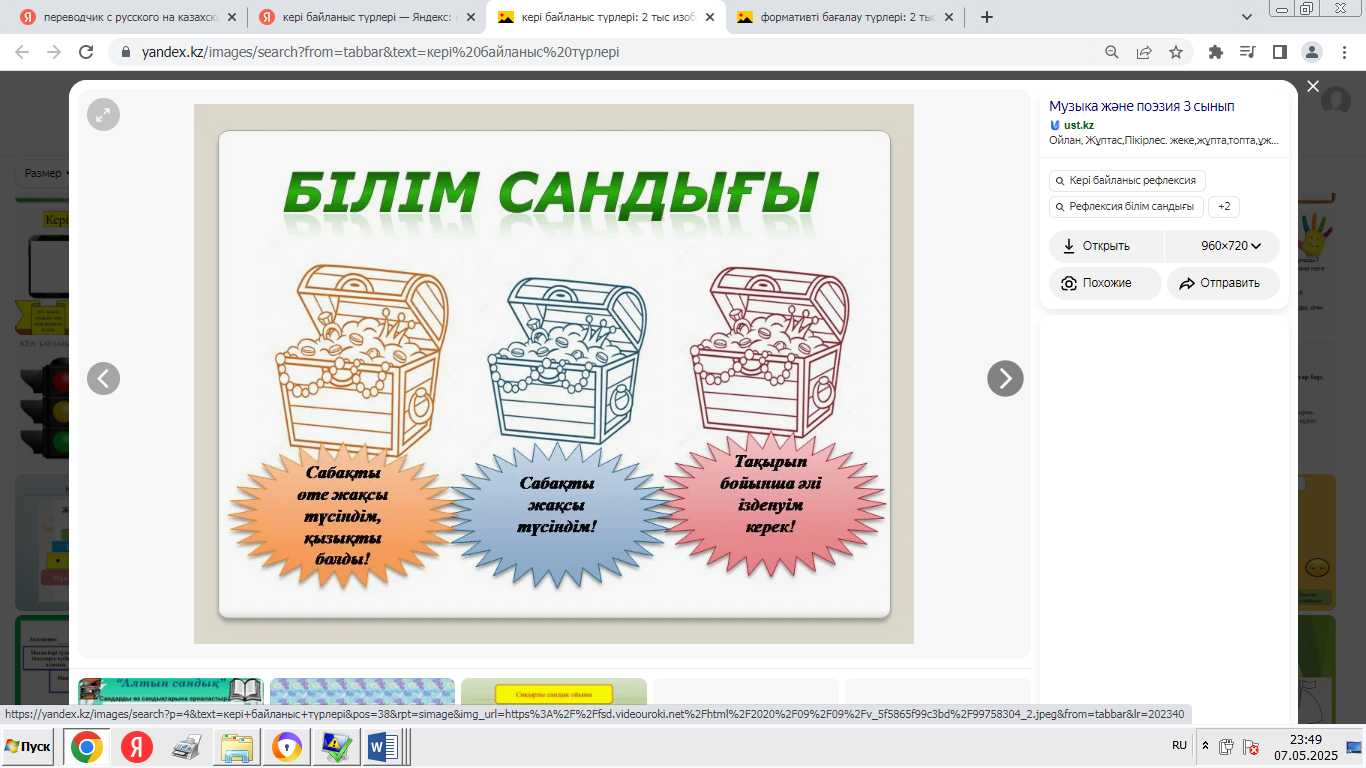
1. Final discussion: «What have you learned about shopping and stores?» 2. The game «Guess the product» from the description 3. Pinning: making mini-dialogues on sheets 4. Reflection on the «Chest of Knowledge» 4. Homework assignment: write a dialog in the store |
1. Share their impressions, participate in the game 2. They write short dialogues, participate in reflection, and write down homework. |
Formative assessment
of «Talking drawings» - oral answers, the quality of written
dialogues Reflection on the «Chest of
Knowledge» |
Work sheets for dialogues, a picture for the Russian Federation, flashcards for the game, a whiteboard for writing homework |
|
|
Part II |
Word, text and meaning |
||||
|
Lesson № 13 |
|
||||
|
Topic of the lesson |
The Spy game (find the word) |
||||
|
Objectives of the lesson |
1. Develop the skills of careful reading and perception of the text 2. Practice searching for information in the text and logical thinking 3. Develop the ability to compose simple sentences based on found words |
||||
|
Expected result |
1. Students are able to find encrypted words in the text 2. Compose sentences 3. Develop visual memory and logic. |
||||
|
Lesson period |
Teacher activity |
Student Activity |
Assessment |
Resources |
|
|
Start of classes (10 min.) |
1. Greeting, introductory questions: «How do you search for important words in the text?» 2. The game «Find the word» is a short example with simple words 3. Explanation of the rules of the Spy game |
1. Answer questions, discuss 2. Participate in the warm-up game 3. They listen to the briefing
|
Formative assessment «Smiley review» - students draw a smiley + short review- participation, understanding the rules of the game |
Short text with highlighted words, word cards
|
|
|
Middle of the lesson (25 min.) |
1. Distribution of texts with encrypted words 2. Organization of work in groups: searching for words, making sentences 3. Physical training with elements of concentration |
1. Read the text carefully 2. They search for words, make sentences in a group 3. Perform physical training
|
Formative evaluation «Mutual evaluation» - the accuracy of the words found, the quality of the sentences composed |
Texts with encrypted words, writing sheets, a timer for a physical minute |
|
|
End of the lesson (10 min.) |
1. The Spy Detective game: the teams check each other's work 2. Discussion: «What was difficult, what helped?» 3. Reflection «Traffic Light» 3. Results and homework - find and write down 5 new words from the text |
1. They exchange jobs, check 2. They share their impressions, answer questions, and participate in reflection. 3. Write down your homework. |
Formative assessment «Self-assessment» - correctness and activity at the discussion stage Reflection «Traffic Light»
|
Work sheets for checking, a blackboard for writing, homework on paper or in a notebook, a reflection poster |
|
|
Part III |
Playing means learning |
||||
|
Lesson № 14 |
|
||||
|
Topic of the lesson |
How does the text work? |
||||
|
Objectives of the lesson |
1. Introduce the main structural parts of the text: beginning, middle, end 2. Develop the skills of logical construction of utterances 3. Develop the ability to work with text and graphic materials in a playful way |
||||
|
Expected result |
1. Students understand how simple text is constructed 2. Are able to highlight and correctly place parts of the text 3. Develop teamwork and communication skills in English. |
||||
|
Lesson period |
Teacher activity |
Student Activity |
Assessment |
Resources |
|
|
Start of classes (10 min.) |
|
|
Formative assessment «Oral praise» - observation of activity, student responses |
Images with parts of the text, cards with suggestions
|
|
|
Middle of the lesson (25 min.) |
|
|
Formative
assessment «Signal
cards»
- checking the correctness of
the text assembly Formative assessment «Mutual assessment» - group work |
Comics, flashcards with parts of the text, writing sheets |
|
|
End of the lesson (10 min.) |
|
|
Formative assessment «Traffic
Light» - the quality of teamwork Formative assessment «Ladder
of Success» - oral answers Reflection «Flower of Knowledge»
|
Worksheets, reflection technique, whiteboard, homework (compose a simple text) |
|
|
Part III |
Playing means learning |
||||
|
Lesson № 15 |
|
||||
|
Topic of the lesson |
Story cube |
||||
|
Objectives of the lesson |
1. Develop creative thinking and imagination through play 2. Develop the skills of spontaneous oral speech and storytelling 3. Teach how to use visual cues (cubes) to create coherent text |
||||
|
Expected result |
1. Students are able to compose short stories using pictures 2. Develop confidence in oral speech and pair interaction skills 3. Learn improvisation and creative thinking techniques. |
||||
|
Lesson period |
Teacher activity |
Student Activity |
Assessment |
Resources |
|
|
Start of classes (10 min.) |
|
|
Formative assessment «Mutual assessment» - oral answers Formative
assessment «Applause»- activity and understanding
of the rules |
Story cubes (cubes with pictures), board |
|
|
Middle of the lesson (25 min.) |
|
|
Monitoring speech activity Formative evaluation «Mutual evaluation» - working in pairs |
Story cubes, work sheets for writing short stories |
|
|
End of the lesson (10 min.) |
|
|
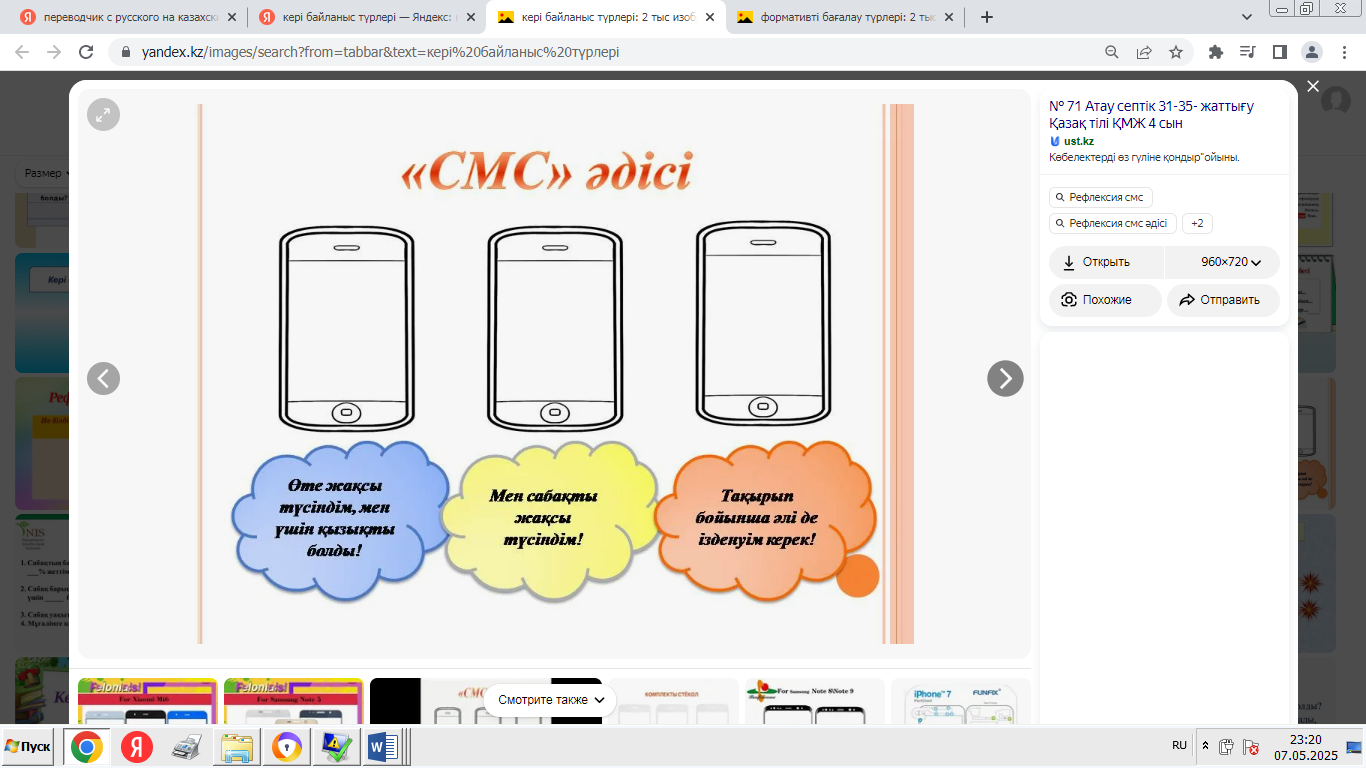
Formative assessment «Oral praise» - assessment of oral speech, the ability to express thoughts, engagement Reflection «Text me»
|
White board, writing materials, story cubes, reflection image |
|
|
Part III |
Playing means learning |
||||
|
Lesson № 16 |
|
||||
|
Topic of the lesson |
Make up a crossword puzzle yourself |
||||
|
Objectives of the lesson |
1. Teach you how to create crosswords based on the vocabulary you have learned 2. Develop creative initiative and teamwork skills 3. Increase motivation to repeat and consolidate vocabulary |
||||
|
Expected result |
1. Students independently create crosswords and define words 2. Develop cooperation and communication skills 3. Increase attentiveness and memory through play activities |
||||
|
Lesson period |
Teacher activity |
Student Activity |
Assessment |
Resources |
|
|
Start of classes (10 min.) |
|
|
Formative
assessment «Signal
cards»
- oral answers,
engagement |
Vocabulary cards, blackboard
|
|
|
Middle of the lesson (25 min.) |
|
|
Formative assessment «Mutual assessment» - group work Formative evaluation of
the «Star»
- a creative
approach |
Crossword worksheets, pens, crossword examples |
|
|
End of the lesson (10 min.) |
|
|
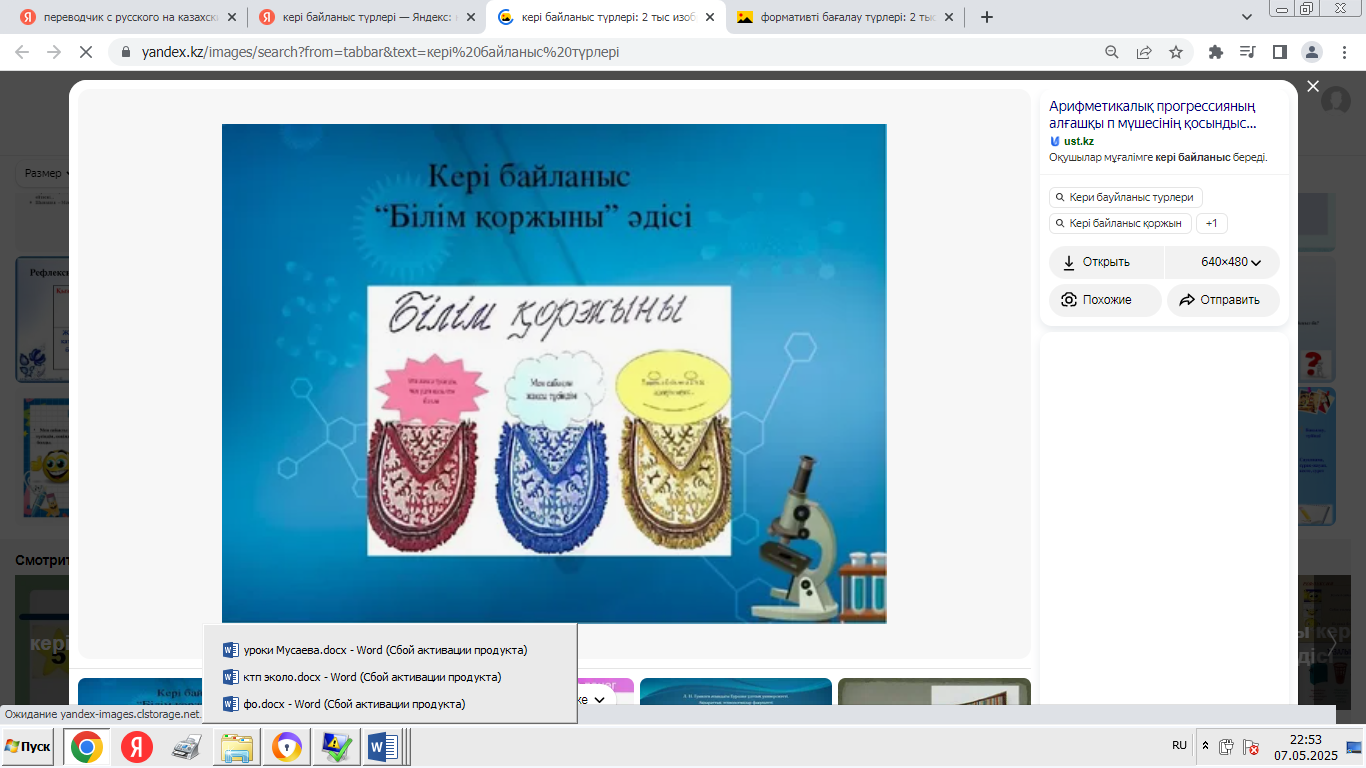
Formative assessment «Self-assessment» - verification of completed tasks Reflection on the «Bag of Knowledge»
|
Crossword puzzle worksheets, whiteboard, reflection sheet |
|
|
Part III |
Playing means learning |
||||
|
Lesson № 17 |
|
||||
|
Topic of the lesson |
Mini-debate: «Cats or Dogs?» |
||||
|
Objectives of the lesson |
1. Develop the skills of oral speech and argumentation in English 2. Teach them to express and defend their opinions, respect other people's points of view 3. Increase confidence in public speaking through gaming technology |
||||
|
Expected result |
1. Students will be able to build simple arguments and counterarguments 2. Develop logical thinking and listening skills increase motivation to actively use English. |
||||
|
Lesson period |
Teacher activity |
Student Activity |
Assessment |
Resources |
|
|
Start of classes (10 min.) |
|
|
Formative
assessment «Talking
drawings»
- oral answers, active
discussion |
Question cards, board
|
|
|
Middle of the lesson (25 min.) |
|
|
Formative
assessment «Smiley»
- observation of the ability
to formulate thoughts, interact |
Sheets with phrases for arguments, a timer |
|
|
End of the lesson (10 min.) |
|
|
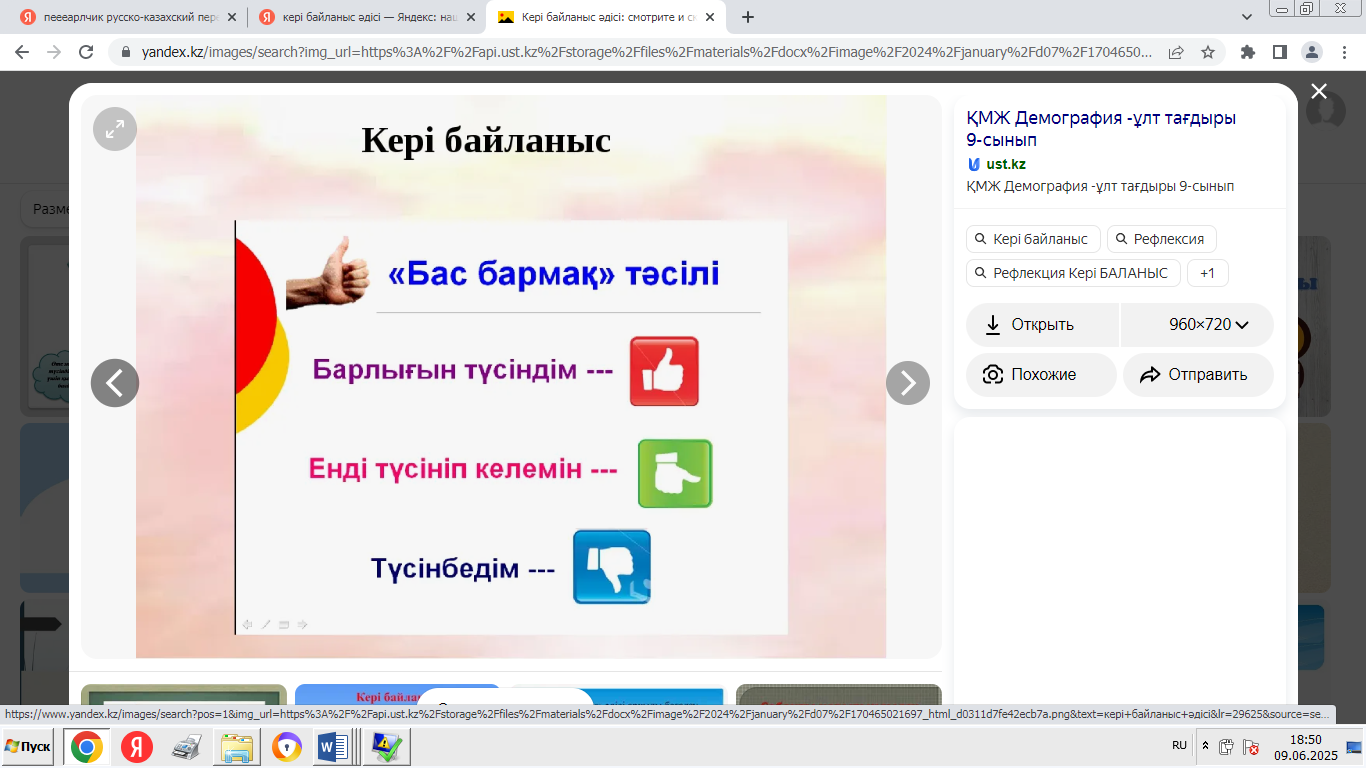
Formative assessment "Oral praise" - assessment of speech activity, listening and argumenta tion skills Thumb reflection
|
Role cards, whiteboard, voting stickers, reflection picture |
|
|
Part III |
Playing means learning |
||||
|
Lesson № 18 |
|
||||
|
Topic of the lesson |
Repetitive play activity |
||||
|
Objectives of the lesson |
1. Repeat and consolidate the studied lexico-grammatical material 2. Develop teamwork and communication skills in English 3. Increase motivation through competitive game forms of learning |
||||
|
Expected result |
1. Students confidently use the vocabulary and grammar they have learned 2. Actively interact in teams 3. Take the initiative, develop attention, memory and reaction speed through game tasks. |
||||
|
Lesson period |
Teacher activity |
Student Activity |
Assessment |
Resources |
|
|
Start of classes (10 min.) |
|
|
Formative assessment «Self-assessment» - oral answers, engagement in dialogue |
Question cards, interactive whiteboard
|
|
|
Middle of the lesson (25 min.) |
|
|
Formative assessment «Verbal praise» - observation of activity, correctness of answers |
Task cards, timer, audio accompaniment |
|
|
End of the lesson (10 min.) |
|
|
The
«Thumb»
formative assessment is an
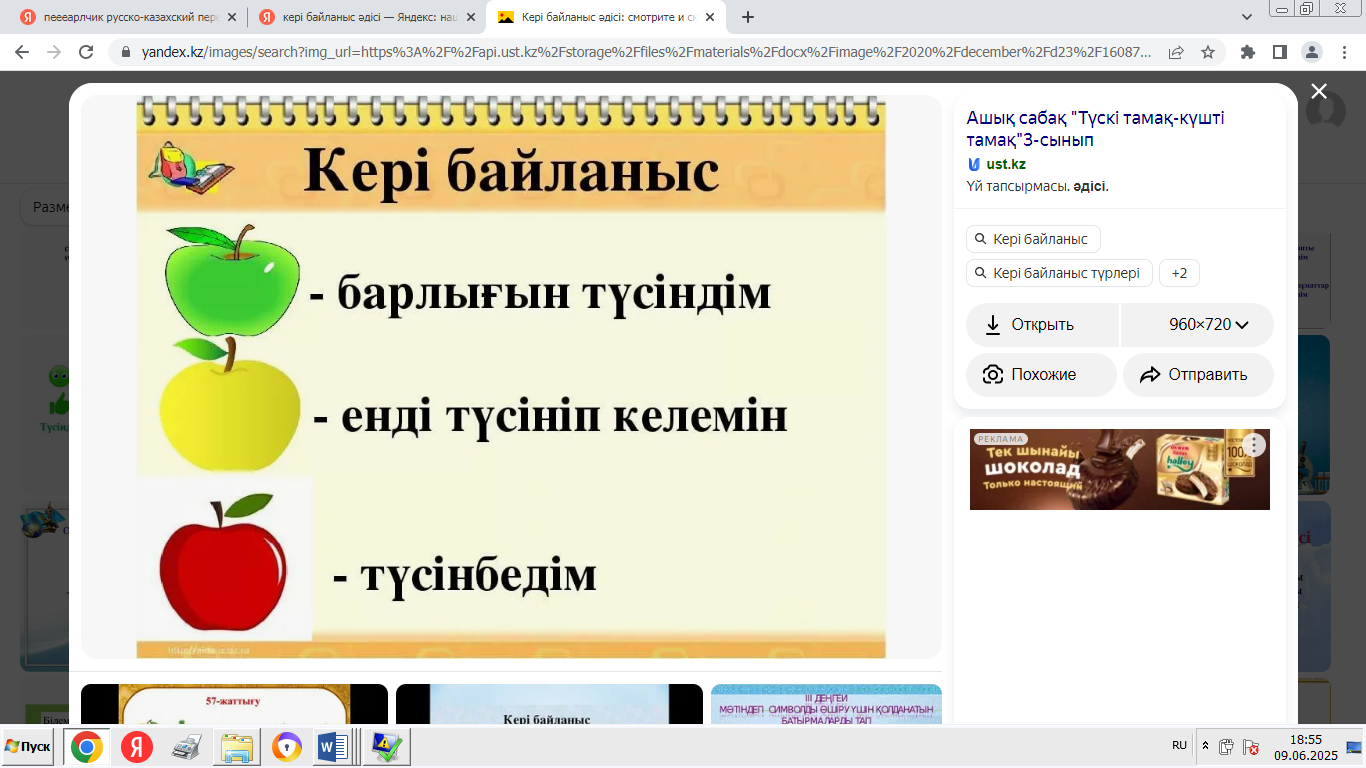
oral and written reflection of understanding
|
Black board, voting stickers, handouts, reflection cards |
|
|
Part III |
Playing means learning |
||||
|
Lesson № 19 |
|
||||
|
Topic of the lesson |
The My Room project |
||||
|
Objectives of the lesson |
1. Develop descriptive skills in English 2. Enrich vocabulary on the topic of «Home» 3. Develop the ability to create visual projects and present them verbally |
||||
|
Expected result |
1. Students compose and design mini-projects with vocabulary on the topic 2. Demonstrate the ability to describe their room verbally 3. Increase confidence in using English in creative activities. |
||||
|
Lesson period |
Teacher activity |
Student Activity |
Assessment |
Resources |
|
|
Start of classes (10 min.) |
|
|
Formative assessment «Self-assessment» - oral answers, active discussion |
Flashcards with images of room objects, interactive whiteboard
|
|
|
Middle of the lesson (25 min.) |
|
|
Oral feedback - monitoring of participation, correction of language errors |
Paper, pencils, colored markers, stickers, dictionaries |
|
|
End of the lesson (10 min.) |
|
|
Formative assessment «Signal cards» - assessment of the presentation according to the criteria: completeness, correctness of vocabulary, expressive ness Reflection on «My mood»
|
Students' projects, assessment criteria sheets, blackboard, reflection picture |
|
|
Part III |
Playing means learning |
||||
|
Lesson № 20 |
|
||||
|
Topic of the lesson |
English with a song |
||||
|
Objectives of the lesson |
1. Develop the skills of phonetics, listening and musical memory 2. Expand vocabulary on the theme of the song 3. Increase motivation through musical gaming technology |
||||
|
Expected result |
1. Students memorize and sing a song in English 2. Understand and explain the meaning of keywords and phrases 3. Actively apply new lexical units in speech. |
||||
|
Lesson period |
Teacher activity |
Student Activity |
Assessment |
Resources |
|
|
Start of classes (10 min.) |
|
|
Formative
assessment «Assessment
scale»
- oral answers, active
discussion |
Song vocabulary cards, audio player
|
|
|
Middle of the lesson (25 min.) |
|
|
Formative assessment «Verbal praise» - for participation and correctness of tasks |
The text of the song with omissions, audio recording of the song, multimedia |
|
|
End of the lesson (10 min.) |
|
|
Formative
assessment «Geometric
shapes»
- assessment of pronunciation,
participation in activity |
Audio recording, song lyrics, game cards, reflection card |
|
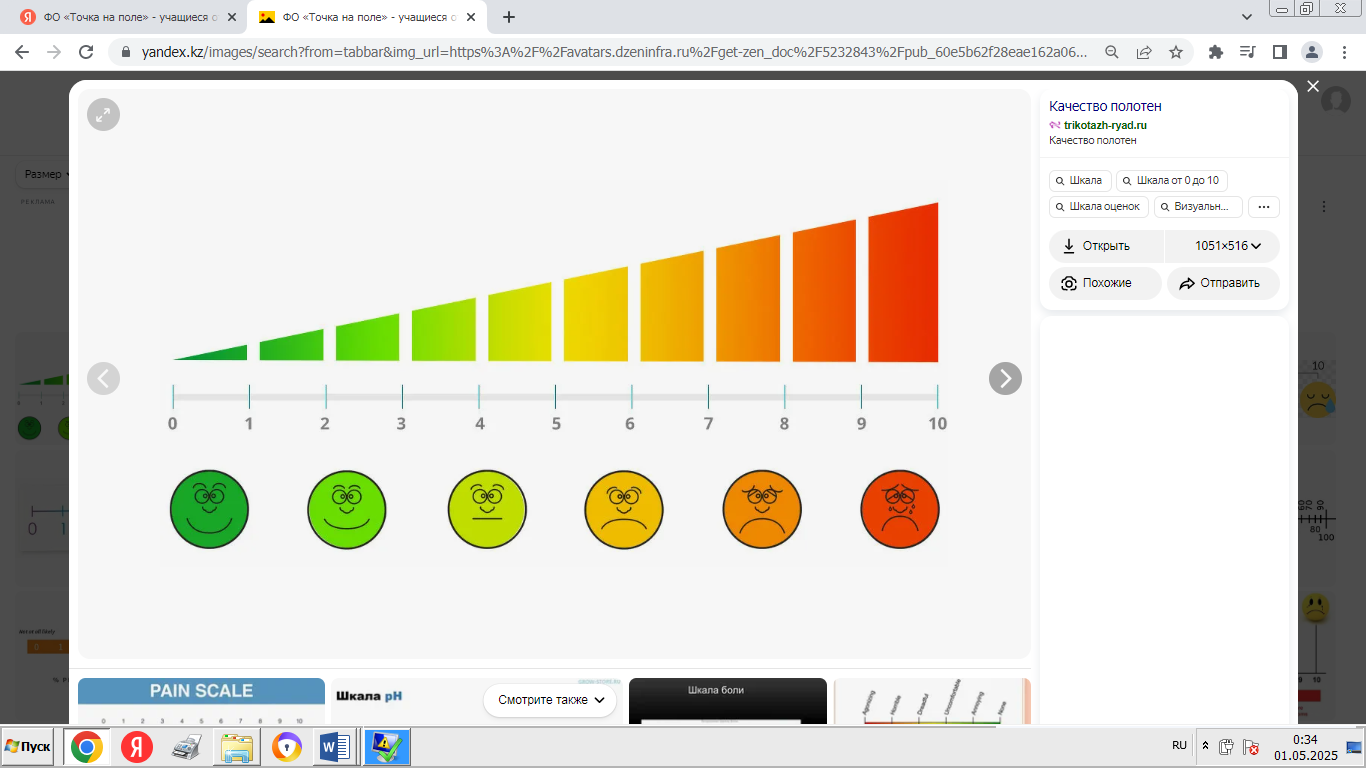
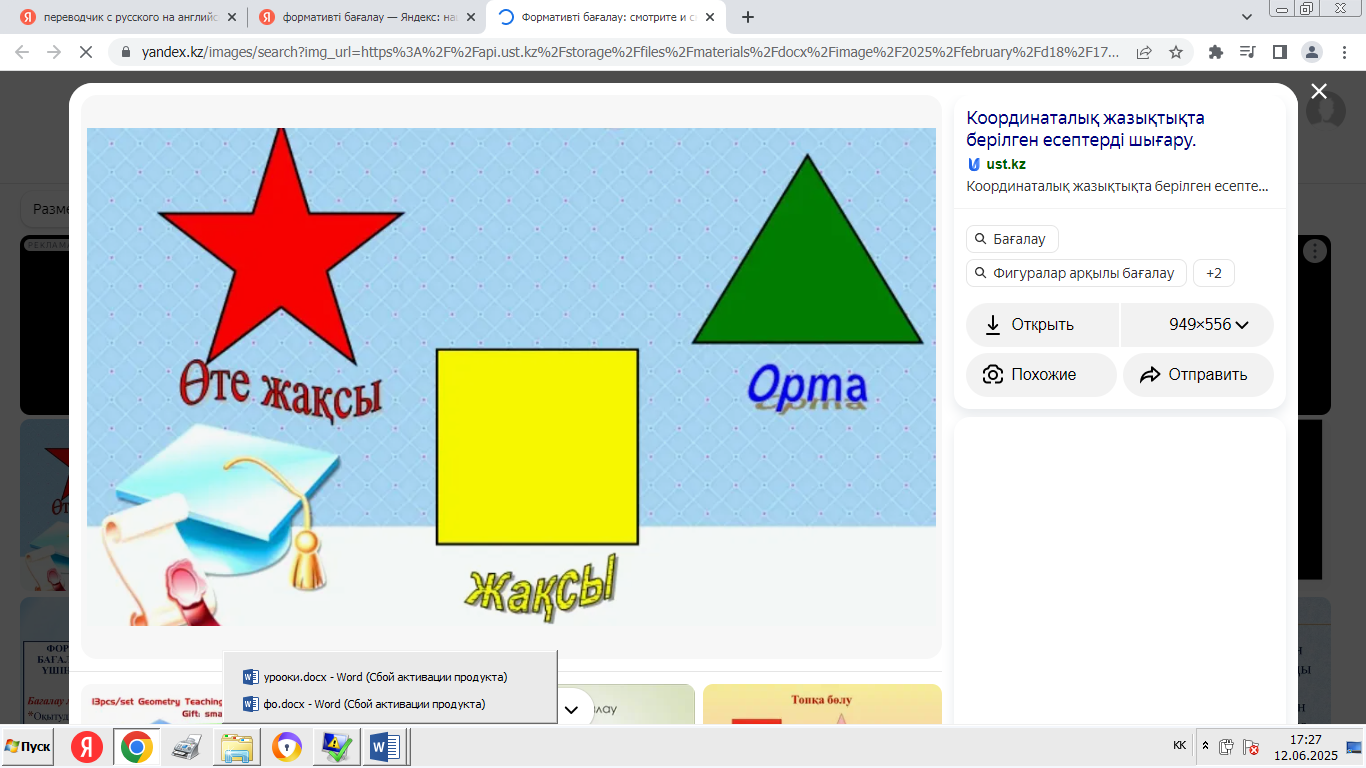
|
Part III |
Playing means learning |
||||
|
Lesson № 21 |
|
||||
|
Topic of the lesson |
Dialogue in a cafe |
||||
|
Objectives of the lesson |
1. Introduce typical phrases and vocabulary for communication in a cafe 2. Develop oral and dialogic communication skills 3. Increase confidence in using English in real-world situations |
||||
|
Expected result |
1. Students are able to build and conduct a simple dialogue in a cafe in English 2. Actively use key phrases and vocabulary on the topic 3. Show initiative and independence in speech actions. |
||||
|
Lesson period |
Teacher activity |
Student Activity |
Assessment |
Resources |
|
|
Start of classes (10 min.) |
|
|
Formative
assessment «Traffic
light»
- oral activity, participation
in the game |
Cards with images of dishes, cards with phrases, menu presenta tion
|
|
|
Middle of the lesson (25 min.) |
|
|
Formative evaluation of «Oral praise» - observation of pronunciation and correct use of phrases |
Cards with menus and phrases, audio recordings of dialogues |
|
|
End of the lesson (10 min.) |
|
|
Formative assessment «Self-assessment» is an assessment of activity and the correctness of phrasing Reflection on the «Mood
Star» |
Dialogue cards, reflection cards, game materials, homework notebooks |
|
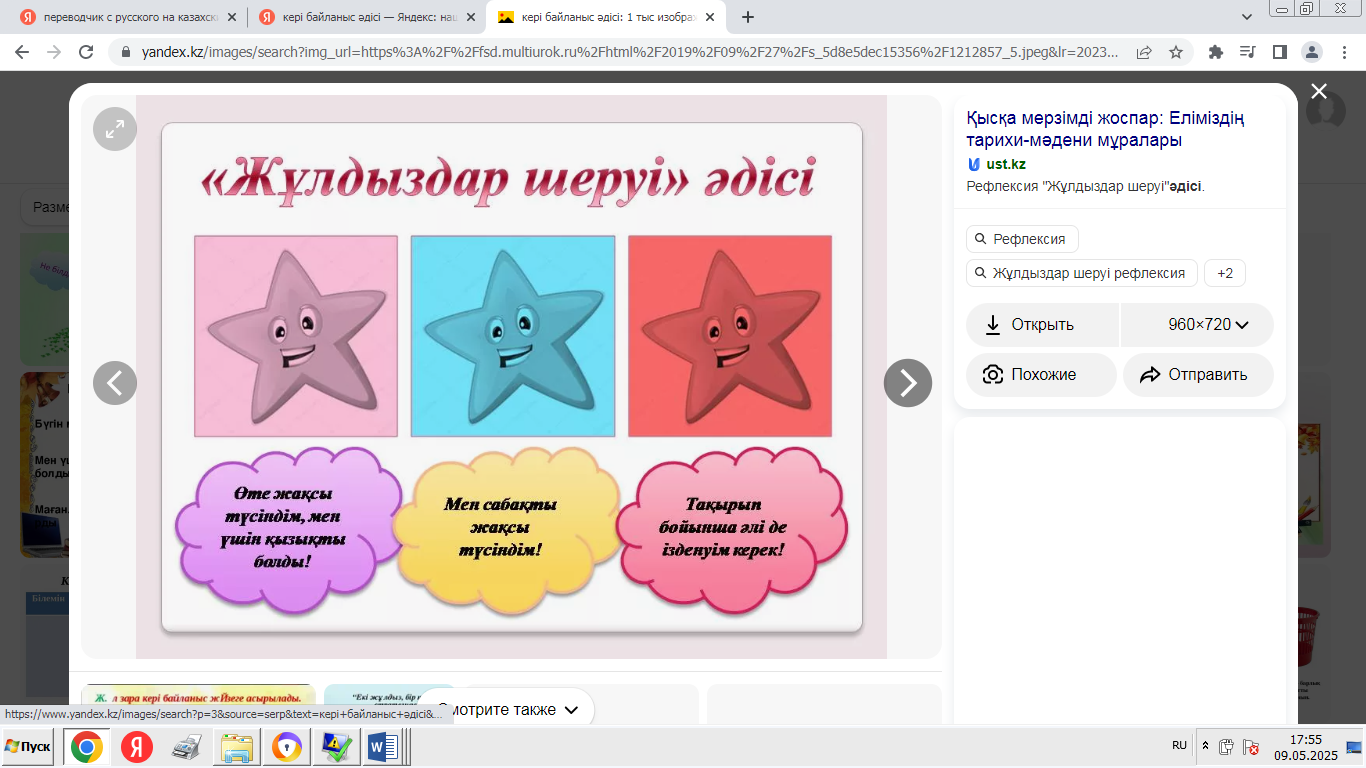
|
Part III |
Playing means learning |
||||
|
Lesson № 22 |
|
||||
|
Topic of the lesson |
Theater is an improvisation based on a picture |
||||
|
Objectives of the lesson |
1. Develop spontaneous speaking and creative thinking skills 2. Build confidence in using English in improvisational situations 3. Develop artistry and communication skills through gaming activities |
||||
|
Expected result |
1. Students freely create short dialogues or skits based on visual material 2. Actively use vocabulary and phrases, learn to maintain conversation and work in a group 3. Increase confidence and interest in learning English through creativity. |
||||
|
Lesson period |
Teacher activity |
Student Activity |
Assessment |
Resources |
|
|
Start of classes (10 min.) |
|
|
Formative assessment "Ladder of success" - oral participation, activity, understanding of the topic |
Cards with emotions, pictures with plots, a board
|
|
|
Middle of the lesson (25 min.) |
|
|
Formative evaluation «Mutual evaluation» - for activity, cooperation |
Story pictures, vocabulary cards, audio for warming up the vocal cords |
|
|
End of the lesson (10 min.) |
|
|
Formative
assessment «Applause»
- assessment of speech
activity and artistry Formative assessment «Mutual assessment» - the ability to work in a team «Five Fingers» Reflection |
Story cards, audio/ video recordings of performances (optional), notebooks, reflection cards |
|
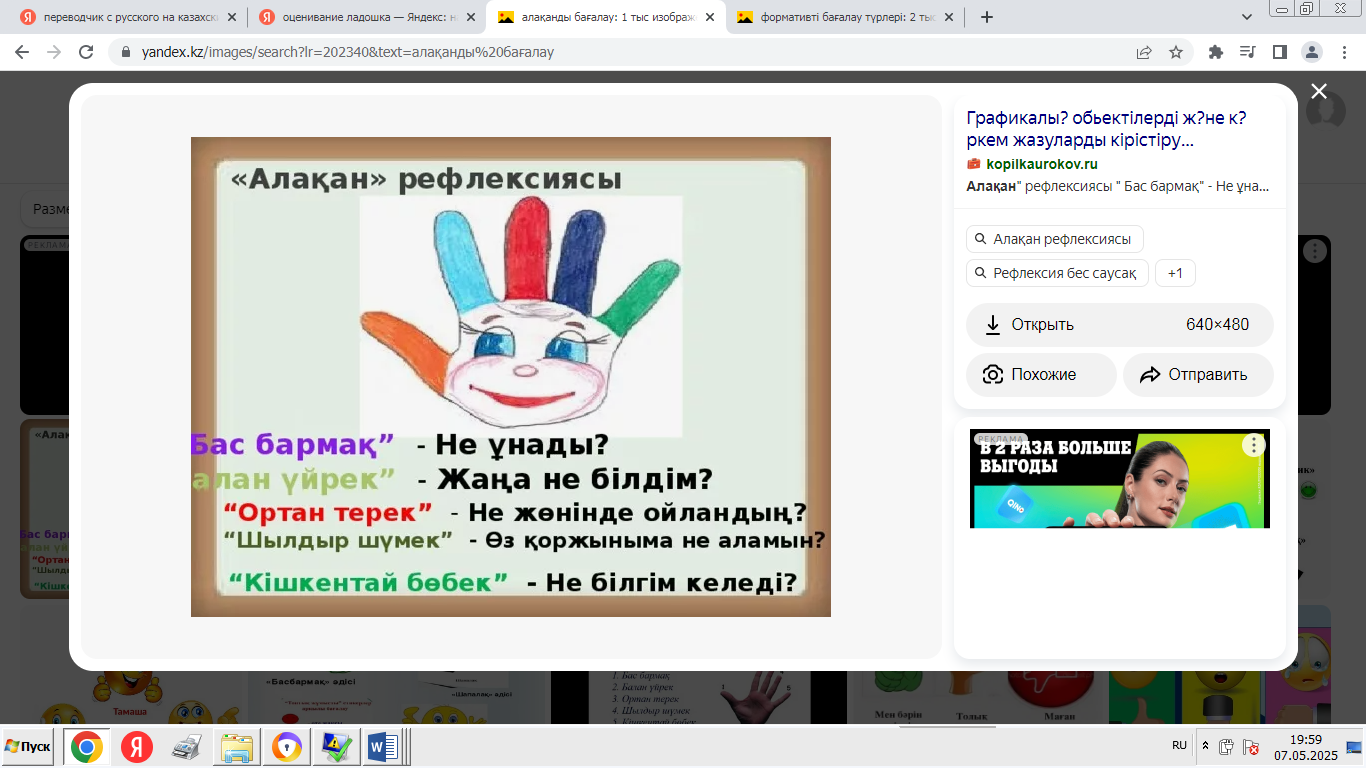
|
Part IV |
Designing and exploring |
||||
|
Lesson № 23 |
|
||||
|
Topic of the lesson |
The board game «Grammar Challenge» |
||||
|
Objectives of the lesson |
1. Formation of skills of grammatical analysis and correct use of grammatical forms 2. Developing quick thinking and teamwork through gaming activities 3. Increase motivation to learn grammar through an interactive format |
||||
|
Expected result |
1. Students confidently use the correct grammatical forms in the game context 2. Develop the skills of quick decision-making and argumentation of their answers 3. Increase interest and engagement in grammatical material through cooperative play |
||||
|
Lesson period |
Teacher activity |
Student Activity |
Assessment |
Resources |
|
|
Start of classes (10 min.) |
|
|
Formative
assessment «Signal
cards»
- activity, correctness of
answers in mini-games |
Pictures with objects/situations, question cards, blackboard
|
|
|
Middle of the lesson (25 min.) |
|
|
Formative assessment «Mutual assessment» - teamwork Formative evaluation of
the «Star»
- the correctness of the
answers |
Grammar Challenge board game (playing field, task cards), timer, picture cards |
|
|
End of the lesson (10 min.) |
|
|
Formative assessment «Geometric shapes» - assessment of oral speech, the ability to apply grammar Reflection «Smiley face» |
Question and picture cards, blackboard, handout, reflection card |
|

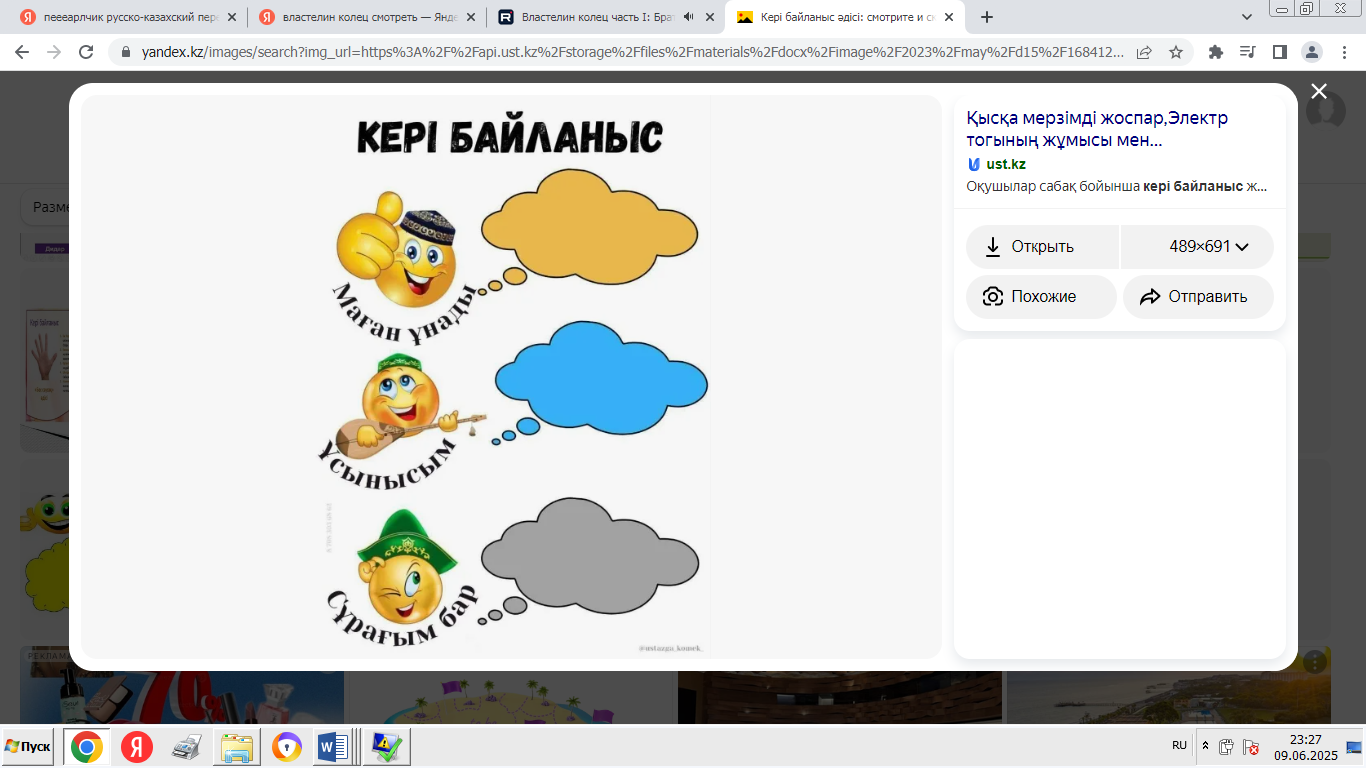
|
Part IV |
Designing and exploring |
||||
|
Lesson № 24 |
|
||||
|
Topic of the lesson |
Quest: Find the word - find the meaning |
||||
|
Objectives of the lesson |
1. Formation of semantic reading and information retrieval skills in the text 2. Development of skills to work in a group, discuss and argue their decisions 3. Increased interest in learning English through gaming technology |
||||
|
Expected result |
1. Students successfully find keywords and understand their meaning in the context of the text 2. Develop skills of cooperation and critical thinking in solving problems 3. Confidently compose simple sentences with found words |
||||
|
Lesson period |
Teacher activity |
Student Activity |
Assessment |
Resources |
|
|
Start of classes (10 min.) |
|
|
Formative assessment «Self-assessment», «Verbal praise» - activity, completeness and correctness of answers |
Question cards, whiteboard, handout with vocabulary
|
|
|
Middle of the lesson (25 min.) |
|
|
Formative assessment «Mutual assessment» - collaboration in a group Formative
assessment «Signal
cards»
- the correctness of the
search for words and answers |
Texts with tasks and riddles, a timer, flashcards with keywords |
|
|
End of the lesson (10 min.) |
|
|
Formative assessment «Verbal praise» - participation in the discussion Formative assessment «Self-assessment» is an assessment of the ability to work with text
Reflection «Traffic
light» |
Black board, vocabulary cards, handouts for the game, reflection cards |
|
|
Part IV |
Designing and exploring |
||||
|
Lesson № 25 |
|
||||
|
Topic of the lesson |
Comics in English |
||||
|
Objectives of the lesson |
1. Develop the skills of creative writing and dialogical speech in English 2. Introduce the elements of comics and the structure of the narrative 3. Encourage teamwork and creative thinking |
||||
|
Expected result |
1. Students create short comics with correct dialogues 2. Confidently use English in speech practice 3. Increase interest in language learning through creativity and play |
||||
|
Lesson period |
Teacher activity |
Student Activity |
Assessment |
Resources |
|
|
Start of classes (10 min.) |
|
|
Formative assessment «Verbal praise» - activity, completeness of responses, participation in the game |
Comic book pictures, whiteboard, question cards
|
|
|
Middle of the lesson (25 min.) |
|
|
Formative evaluation «Verbal praise»- collaboration
Formative evaluation
of the «Star»
-
creativity Formative evaluation of
the «Smiley»
correctness of
dialogues |
Paper, colored pencils/markers, comic book templates |
|
|
End of the lesson (10 min.) |
|
|
Formative
assessment «Assessment
window»
- assessment of creativity,
correctness of speech, ability to work in a
group Reflection on the «Ladder of success»
|
Demo comics, blackboard, handout, reflection cards |
|
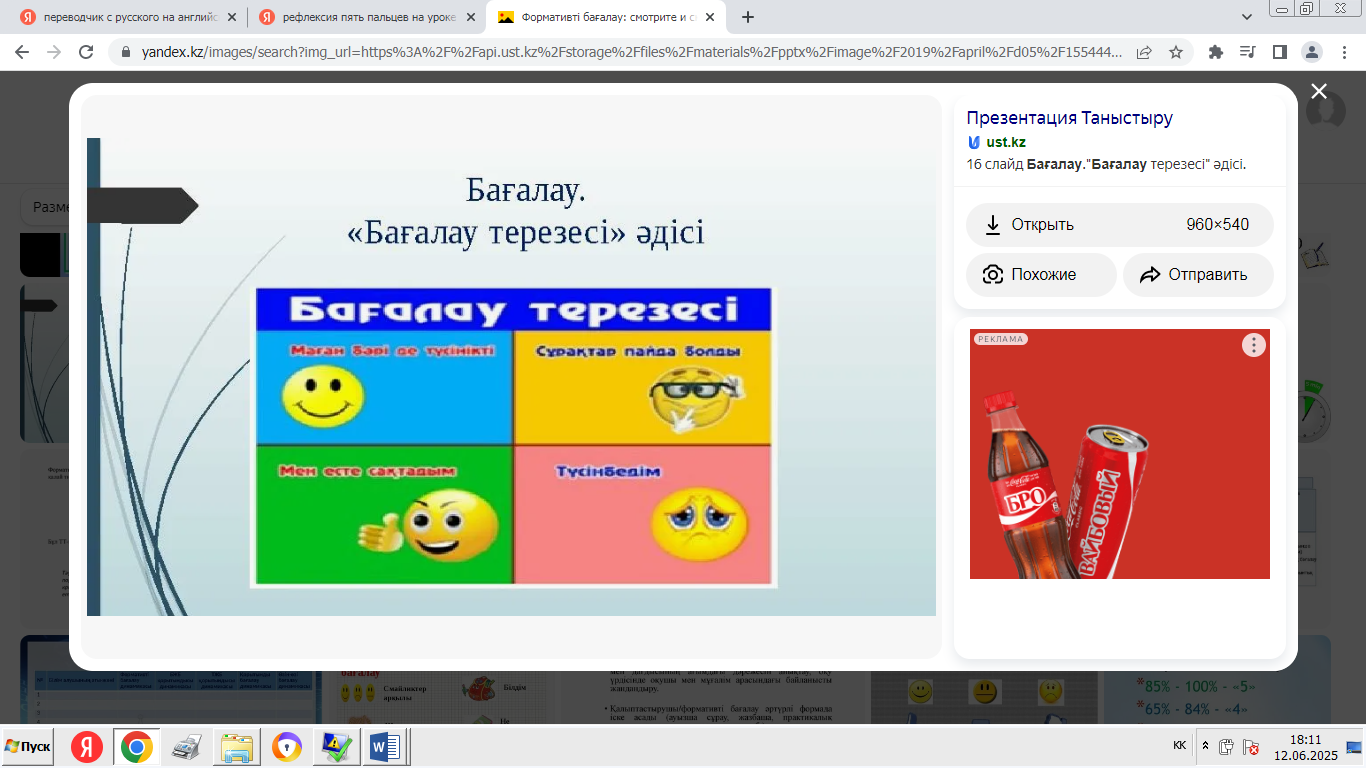
|
Part IV |
Designing and exploring |
||||
|
Lesson № 26 |
|
||||
|
Topic of the lesson |
Quiz «English around us» |
||||
|
Objectives of the lesson |
1. Expand students' knowledge of the culture, traditions, and use of English in the world 2. Develop teamwork skills, attentiveness and speed of thinking 3. Increase interest and motivation in learning English through interactive games |
||||
|
Expected result |
1. Students will be able to answer questions about cultural peculiarities and language 2. Increase confidence in using English in the game format 3. Develop communication and critical thinking skills |
||||
|
Lesson period |
Teacher activity |
Student Activity |
Assessment |
Resources |
|
|
Start of classes (10 min.) |
|
|
Formative assessment
of «Applause»
- activity, quality of
responses, engagement |
Question cards, whiteboard, multimedia
|
|
|
Middle of the lesson (25 min.) |
|
|
Formative assessment «Mutual assessment»" is teamwork
Formative evaluation
of the «Star»
-
activity Formative assessment
of «Geometric
shapes»
- correctness of
answers |
Projector, multimedia quiz, question cards |
|
|
End of the lesson (10 min.) |
|
|
Formative assessment «Verbal praise» - participation in the game, completeness and accuracy of responses Reflection «Top of knowledge»
|
Handouts, board, tokens/sti ckers for teams, reflection cards |
|
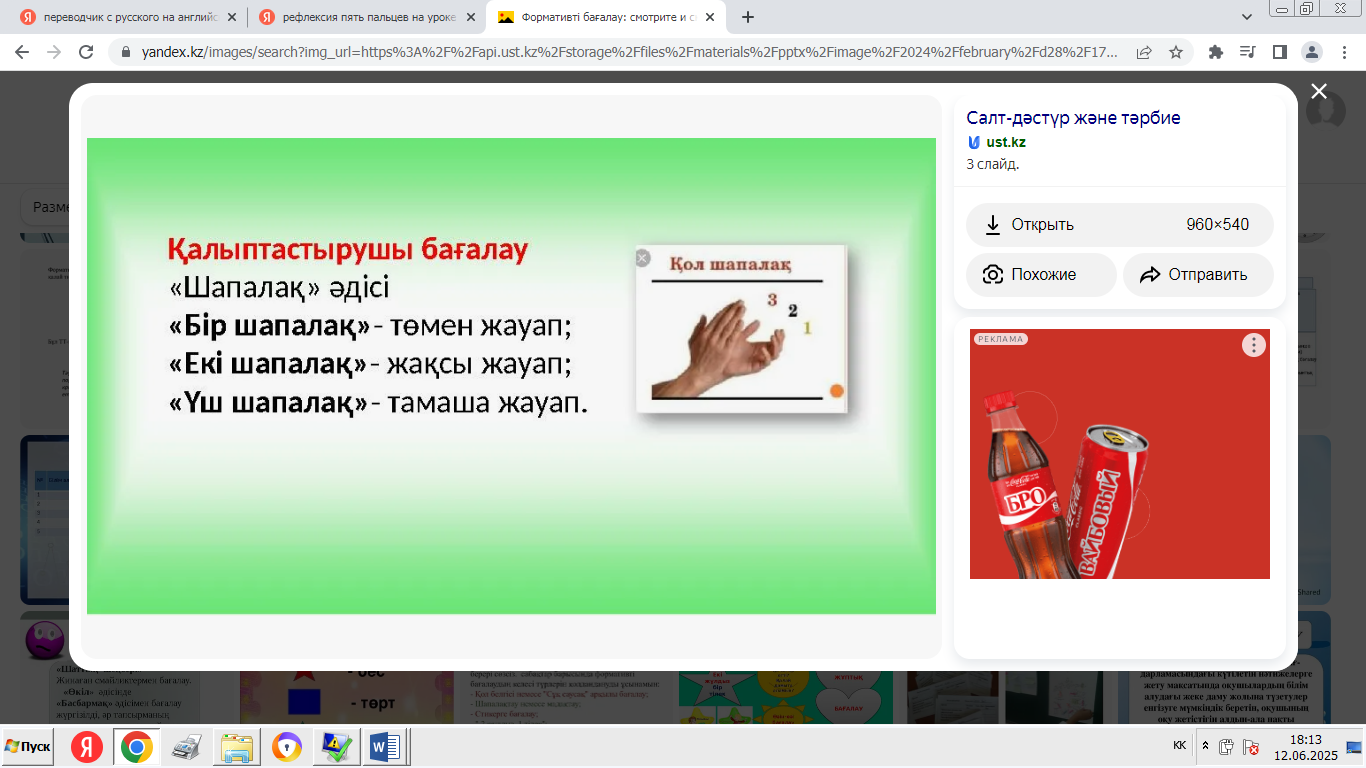
|
Part IV |
Designing and exploring |
||||
|
Lesson № 27 |
|
||||
|
Topic of the lesson |
Situations and solutions: «What would you do if...?» |
||||
|
Objectives of the lesson |
1. To introduce and consolidate the use of conditional sentences of type II in English 2. Develop the skills of verbal thinking, argumentation and decision-making in English 3. Build confidence in the use of conditional constructions in live communication |
||||
|
Expected result |
1. Students will be able to build conditional sentences and use them in modeling situations. 2. The level of speech activity and confidence in dialogues will increase 3. Develop the skills of collective discussion and reasoned speech in English |
||||
|
Lesson period |
Teacher activity |
Student Activity |
Assessment |
Resources |
|
|
Start of classes (10 min.) |
|
|
Formative assessment «Verbal praise» - the level of activity, completeness and correctness of responses |
Situation cards, whiteboard, presen tation
|
|
|
Middle of the lesson (25 min.) |
|
|
Formative assessment «Mutual assessment» - activity in groups Formative evaluation of
the «Star»
- the correctness of the
construction of sentences |
Presenta tion, sample cards, handouts |
|
|
End of the lesson (10 min.) |
|
|
Formative assessment
of «Signal
cards»
- the level of speech
activity, creativity, accuracy of using the
construction Reflection «2 stars, 1
wish» |
Situation cards, handouts, whiteboard, reflection cards |
|
|
Part IV |
Designing and exploring |
||||
|
Lesson № 28 |
|
||||
|
Topic of the lesson |
Repeat through the game: Bingo, Lotto |
||||
|
Objectives of the lesson |
1. Repeat and consolidate vocabulary and grammatical constructions through game methods 2. Develop students' memory, attention and concentration 3. Increase motivation to actively use English |
||||
|
Expected result |
1. Students confidently use repeated words and grammatical forms in oral speech 2. Improves the ability to concentrate and perceive information in a playful way 3. There is a growing interest in learning a language through gaming technology |
||||
|
Lesson period |
Teacher activity |
Student Activity |
Assessment |
Resources |
|
|
Start of classes (10 min.) |
|
|
Formative assessment of the
«Ladder of success» - the level of activity and the correctness of
the answers |
Vocabulary cards, presenta tion, whiteboard
|
|
|
Middle of the lesson (25 min.) |
|
|
Formative assessment «Self-assessment», «Verbal praise» - attentiveness, correctness of recognition of words and constructions |
Bingo and Lotto game cards, handouts |
|
|
End of the lesson (10 min.) |
|
|
Formative
assessment «Traffic
Light»- the correctness of the use
of vocabulary and grammar Formative evaluation of «Flower» - a creative approach
|
Suggestion cards, whiteboard, reflection cards |
|
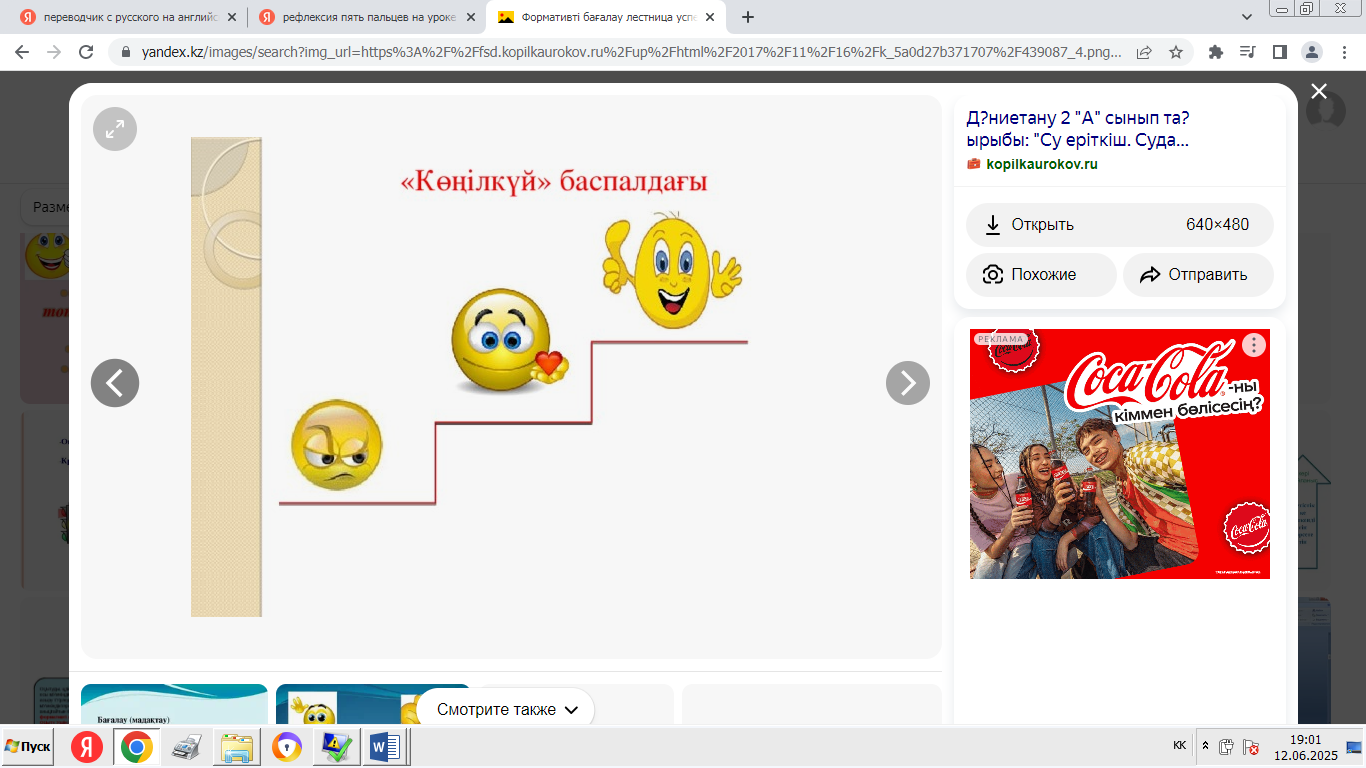
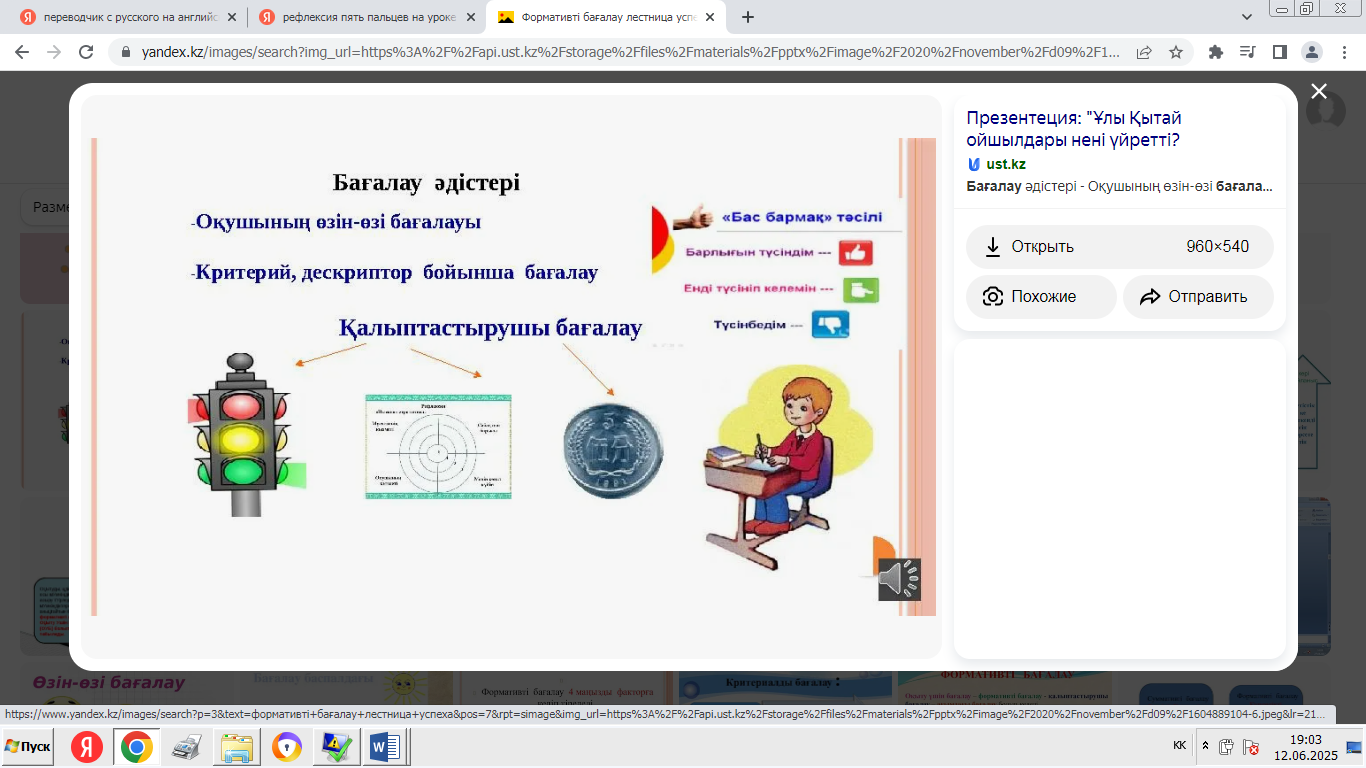
|
Part IV |
Designing and exploring |
||||
|
Lesson № 29 |
|
||||
|
Topic of the lesson |
Card reading training |
||||
|
Objectives of the lesson |
1. Develop the skills of fluent reading and understanding of the semantic content of texts in English 2. Increase interest in reading through gaming technology 3. Improve communication skills in the process of discussing what you have read |
||||
|
Expected result |
1. Students will be able to quickly read and understand texts of different difficulty levels Increase confidence in using English for reading and discussion 2. Develop critical thinking and teamwork skills |
||||
|
Lesson period |
Teacher activity |
Student Activity |
Assessment |
Resources |
|
|
Start of classes (10 min.) |
|
|
Formative
assessment «Self-assessment»,
«Applause»
- activity and involvement in
the discussion |
Flashcards with images and words, presenta tion
|
|
|
Middle of the lesson (25 min.) |
|
|
Formative assessment «Mutual assessment» - understanding of the text, active participation in the discussion Formative assessment «Verbal praise» |
Cards with texts of different levels, questions for discussion |
|
|
End of the lesson (10 min.) |
|
|
Formative evaluation of
«Geometric shapes», «Smiley face» - accuracy of retelling, creative
approach |
Playing cards, writing sheets, blackboard, reflection cards |
|
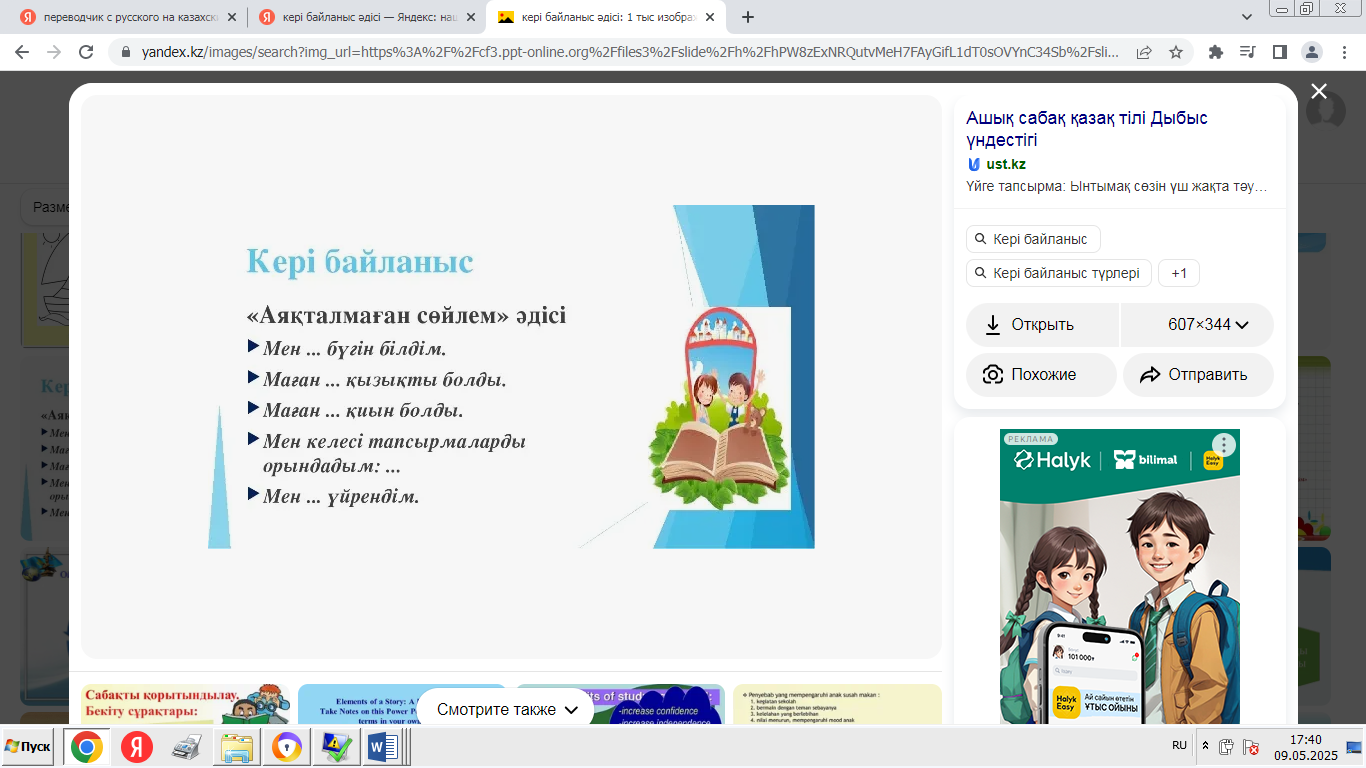
|
Part IV |
Designing and exploring |
||||
|
Lesson № 30 |
|
||||
|
Topic of the lesson |
«My School Life» рroject |
||||
|
Objectives of the lesson |
1. Develop the skills of planning and presentation of information in English 2. Consolidate vocabulary and grammatical structures on the topic of «School life» 3. Improve communication skills through group work and speaking engagements |
||||
|
Expected result |
1. Students will be able to create and submit a project about their school life 2. Increase confidence in speaking and using English in real-world situations 3. Develop the skills to work in a group and plan presentations |
||||
|
Lesson period |
Teacher activity |
Student Activity |
Assessment |
Resources |
|
|
Start of classes (10 min.) |
|
|
Formative
assessment «Signal
cards»
- activity and quality of
offers Formative assessment «Verbal praise» - involvement in the discussion |
Vocabulary cards on the topic, interactive whiteboard, pictures
|
|
|
Middle of the lesson (25 min.) |
|
|
Formative assessment «Mutual assessment» is the quality of work in a group Formative assessment
of «Talking
drawings»
- the use of vocabulary and
grammar |
Paper, markers, tablets or computers, presentation templates |
|
|
End of the lesson (10 min.) |
|
|
Formative assessment
«Smiley review» - students draw a smiley face + a short review-
assessment of the presentation, activity in discussion and
consolidationReflection «Mood Flower»
|
Student projects, blackboard, handouts, reflection cards |
|
|
Part V |
Reflection and summing up |
||||
|
Lesson № 31 |
|
||||
|
Topic of the lesson |
Protection of mini-projects |
||||
|
Objectives of the lesson |
1. Developing the skills of public speaking and presenting their projects in English 2. Developing the ability to listen and give constructive feedback 3. Summarizing and reflecting on the work done |
||||
|
Expected result |
1. Students confidently present their mini-projects in English 2. Master public speaking and communication skills 3. Develop the ability to receive and give feedback constructively |
||||
|
Lesson period |
Teacher activity |
Student Activity |
Assessment |
Resources |
|
|
Start of classes (10 min.) |
|
|
Formative
assessment «Applause»
- active in the discussion,
understanding the objectives of the
presentation |
Question cards, interactive whiteboard
|
|
|
Middle of the lesson (25 min.) |
|
|
Качество выступления (четкость, грамматика, лексика), уверенность, умение слушать |
Student projects, presen tation equipment |
|
|
End of the lesson (10 min.) |
|
|
Feedback on content and presentation, formative assessment «Self-assessment», formative assessment «Mutual assessment» Reflection on the «Chest of
Knowledge» |
Feedback cards, flipchart, markers, reflection cards |
|
|
Part V |
Reflection and summing up |
||||
|
Lesson № 32 |
|
||||
|
Topic of the lesson |
Course reflection: my steps and achievements |
||||
|
Objectives of the lesson |
1. Develop students' self-reflection and critical thinking skills 2. Analyze personal success and learning difficulties 3. Make plans for further development and training |
||||
|
Expected result |
1. Students are aware of their achievements and areas for improvement 2. They learn to independently assess their progress and set learning goals. 3. Motivation for further learning increases through game methods and discussions |
||||
|
Lesson period |
Teacher activity |
Student Activity |
Assessment |
Resources |
|
|
Start of classes (10 min.) |
|
|
Formative
assessment «Verbal
praise», formative
assessment «Star»
- the level of engagement,
completeness of responses, activity |
Question cards, whiteboard, markers
|
|
|
Middle of the lesson (25 min.) |
|
|
Formative
assessment «Geometric
shapes»
- the quality of
self-assessment, the ability to formulate
goals |
Self-assessment cards, plan sheets, pens |
|
|
End of the lesson (10 min.) |
|
|
Formative
assessment «Applause»
- activity in the
discussion Reflection
«Apple» |
Game cards, flipchart, audio recordings (optional), reflection cards |
|
|
Part V |
Reflection and summing up |
||||
|
Lesson № 33 |
|
||||
|
Topic of the lesson |
Final lesson: «English Festival» |
||||
|
Objectives of the lesson |
1. Summarize the course results in a playful and creative way 2.Consolidate the acquired knowledge and skills through a variety of game activities 3. Increase motivation to further study English |
||||
|
Expected result |
1. Students are active and interested in game contests 2. Develop the skills of oral speech, creativity and teamwork 3. Form a positive attitude towards language learning and reflect on their own progress |
||||
|
Lesson period |
Teacher activity |
Student Activity |
Assessment |
Resources |
|
|
Start of classes (10 min.) |
|
|
Formative assessment «Verbal praise» - activity, attitude to the lesson Formative
assessment «Assessment
window»
- completeness of
responses |
Quiz questions, presenta tion, flashcards, music
|
|
|
Middle of the lesson (25 min.) |
|
|
Formative evaluation
of «Star»
-
creativity Formative assessment «Mutual assessment» - participation in group work, communication skills |
Props for skits, musical accompaniment, task cards |
|
|
End of the lesson (10 min.) |
|
|
Formative
assessment «Ladder of
Success»
- assessment of performances
according to criteria
Formative
assessment «Signal
cards»
- engagement, emotional
responsiveness |
Awards, certificates, props, music, task cards, reflection cards |
|
|
Part V |
Reflection and summing up |
||||
|
Lesson № 34 |
|
||||
|
Topic of the lesson |
The final game «English quest: a journey through the course» |
||||
|
Objectives of the lesson |
1. Summarize the studied material in the form of an exciting quest 2. Consolidate the skills and knowledge acquired during the course through game tasks 3. Develop teamwork, logical thinking and speech skills in English |
||||
|
Expected result |
1. Students are active and interested in completing the quest 2. Increase confidence in using English in different situations 3. Develop cooperation and critical thinking skills |
||||
|
Lesson period |
Teacher activity |
Student Activity |
Assessment |
Resources |
|
|
Start of classes (10 min.) |
|
|
Formative assessment «Verbal praise» - observation of attention and understanding of the rules |
Timer, nameplates with team names
|
|
|
Middle of the lesson (25 min.) |
|
|
Formative evaluation
of «Geometric
shapes»
- assessment of the
correctness of answers Formative assessment «Verbal praise» - assessment of engagement Formative assessment «Mutual assessment» is an assessment of teamwork |
Task cards, score chips, tablets or a scoring board |
|
|
End of the lesson (10 min.) |
|
|
Self-assessment, verbal
feedback «Thumb» reflection |
Awards (stickers, certificates), summary board, reflection cards |
|
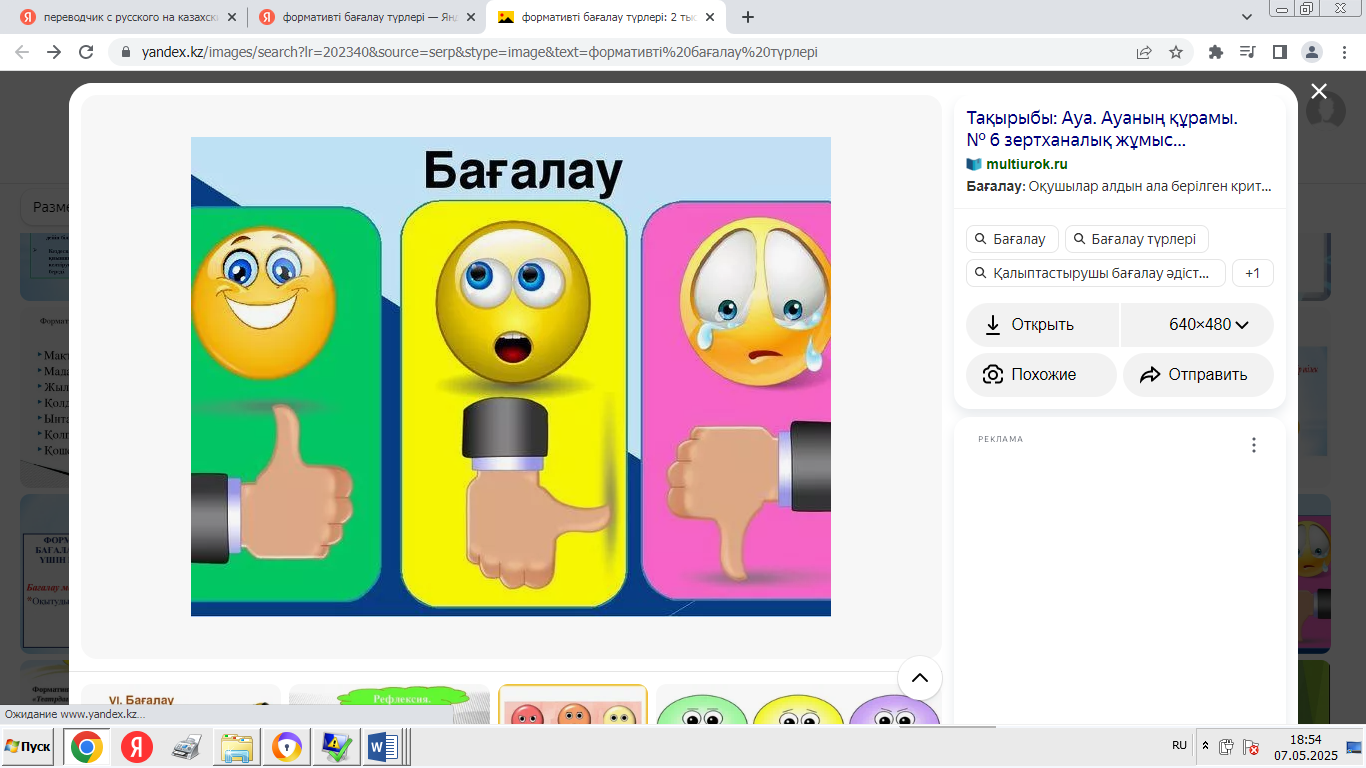
|
|
Интернет көздерінің тізімі
https://multiurok.ru/files/ag-ylshyn-tili-sabag-ynda-oiyn-tiekhnologhiialary-.html «Ағылшын тілі сабағында ойын технологиялары негізінде оқушылардың оқу - танымдық іс- әрекетін белсендіру».
https://stud.kz/referat/show/72130 Ағылшын тілі сабағында ойын технологиясы негізінде оқушылардың оқу-танымдық іс-әрекетін белсендіру
https://infolesson.kz/ailshin-tili-sabainda-oyin-tehnologiyasin-oldanu-1831638.html Ағылшын тілі сабағында ойын технологиясын қолдану
https://translated.turbopages.org/proxy_u/ru-kk.ru.74af2ff7-684af4f6-668d43ad-74722d776562/https/infourok.ru/razvitie-poznavatelnogo-interesa-u-obuchayushihsya-na-urokah-anglijskogo-yazyka-posredstvom-primeneniya-igrovyh-tehnologij-6289815.html Ойын технологияларын қолдану арқылы ағылшын тілі сабағында оқушылардың танымдық қызығушылығын дамыту.
https://martebe.kz/a-ylshyn-tili-saba-ynda-ojyn-jelementterin-tiimdi-pajdalanu/ Ағылшын тілі сабағында ойын элементтерін тиімді пайдалану
https://ustaz.kz/materials/word/agylsyn_tili_sabagynda_oiyn_tehnologiyasy_arqyly_oqysylardyng_belsendiligin_arttyry-91837.html Ағылшын тілі сабағында ойын технологиясы арқылы оқушылардың белсенділігін арттыру
Рецензия
на авторскую программу
Автор: Әбілжан Гүлбану, учитель английского языка
Тема: «Обучение чтению: развитие познавательной инициативы через игровые технологии на уроках английского языка»
1. Актуальность работы (методическое пособие). Актуальность данной работы обусловлена необходимостью повышения интереса учащихся к чтению на английском языке и развития их познавательной инициативы. Использование игровых технологий делает процесс обучения более увлекательным и мотивирующим, способствует активному включению учеников в работу с текстом и формированию устойчивого интереса к изучению языка. Это соответствует современным образовательным требованиям и способствует развитию ключевых компетенций учащихся.
2. Научно-методический уровень работы: модификационный, комбинаторный, радикальный. Научно-методический уровень работы — комбинаторный, так как в исследовании интегрируются различные методические подходы: обучение чтению, игровые технологии и приёмы развития познавательной инициативы. Их сочетание позволяет создать эффективную педагогическую модель, направленную на повышение мотивации и активности учащихся на уроках английского языка.
3. Степень новизны работы, наличие или отсутствие аналогов в системе образования (города (района), области, республики, за рубежом): Степень новизны работы заключается в практико-ориентированном подходе к интеграции игровых технологий в процесс обучения чтению на английском языке с целью развития познавательной инициативы учащихся. Предложенная методическая система отличается гибкостью и доступностью внедрения в условиях общеобразовательной школы. На уровне района и области аналогичные разработки представлены ограниченно и, как правило, не направлены конкретно на развитие познавательной инициативы через чтение. В зарубежной практике игровые подходы широко применяются, однако адаптированные к отечественной системе образования методики подобного рода встречаются редко, что подчёркивает практическую значимость и относительную новизну представленного опыта.
4. Научно-методическое обеспечение содержания работы. Научно-методическое обеспечение содержания работы основано на современных подходах к обучению иностранным языкам, а также на методических принципах развития познавательной активности и применения игровых технологий в образовательном процессе. В работе учитываются требования современных образовательных стандартов, а также реализуются идеи деятельностного и личностно-ориентированного подходов. Методические материалы и приёмы адаптированы к условиям общеобразовательной школы и направлены на повышение эффективности обучения чтению на английском языке.
5. Оценка внутреннего единства и характеристика методологической основы работы (логичность, взаимосвязь результатов с общей стратегией организации образования). Работа отличается внутренним единством и логичностью построения: цели, задачи, содержание и методы находятся во взаимной связи и направлены на решение общей педагогической проблемы - развитие познавательной инициативы учащихся через обучение чтению с использованием игровых технологий. Методологическая основа работы согласуется с современной стратегией образования, ориентированной на личностное развитие, формирование метапредметных умений и активное включение учащихся в учебный процесс.
6. Степень обоснованности и достоверности каждого результата, научного положения, выводов и заключений в работы. Результаты, представленные в работе, отличаются высокой степенью обоснованности и достоверности. Все научные положения и выводы подтверждены анализом педагогической литературы, соответствуют целям и задачам исследования, а также подкреплены результатами практической апробации. Применённые методы исследования адекватны поставленным задачам, а полученные данные логично вытекают из проведённой работы и находятся в соответствии с актуальными требованиями образовательной практики.
7. Практическая значимость работы. Работа обладает высокой практической значимостью, так как предложенные методы и приёмы могут быть непосредственно применены в учебном процессе на уроках английского языка. Разработанные игровые технологии способствуют повышению интереса учащихся к чтению, развитию познавательной инициативы и активному участию в учебной деятельности. Материалы работы могут быть использованы учителями, методистами и педагогами дополнительного образования для повышения эффективности преподавания иностранного языка в начальной и основной школе.
8. Формы и способы представления промежуточных и итоговых результатов работы: выступления на заседании методического объдения, участие в обучающем семинаре, публикации в научно-методических журналах, участие в вебинарах и научно-практических конференциях.
9. Соответствие требованиям к оформлению. Недостатки и замечания по содержанию работы: Работа в целом соответствует требованиям к оформлению: структура логичная, разделы четко выделены, использованы ссылки на нормативные документы и научные источники. Текст оформлен согласно установленным стандартам, присутствуют таблицы и схемы для наглядности.
10. Выводы и рекомендации по использованию работы: Программа направлена на формирование у школьников активной позиции в процессе обучения, развивает умение самостоятельно искать информацию, делать выводы и участвовать в учебном взаимодействии. Использование игровых технологий в процессе обучения чтению на английском языке способствует повышению учебной мотивации учащихся. Интерактивные методы вовлекают обучающихся, делают процесс познания интересным и доступным. Внедрение игровых элементов показало положительную динамику в уровне понимания прочитанного, расширении словарного запаса и формировании навыков смыслового чтения. Программа учитывает разные уровни подготовки учащихся и позволяет адаптировать задания в соответствии с индивидуальными особенностями и интересами обучающихся. Интеграция игровых форматов в процесс обучения чтению способствует формированию устойчивого интереса к английскому языку как средству общения и познания мира.
Рекомендации по использованию:
-
Внедрять программу в образовательный процесс начальной школы для формирования устойчивых навыков чтения на английском языке и развития познавательной инициативы.
-
Использовать предлагаемые игровые методики и технологии как основу для создания увлекательной и продуктивной учебной среды.
-
Адаптировать задания и формы работы с учетом индивидуальных особенностей учащихся и уровня их языковой подготовки.
-
Применять элементы программы в рамках внеурочной деятельности и кружков по английскому языку для расширения языковой практики учащихся.
Рецензент:
Педагог – мастер, заместитель директора I КК , педагог – тренер, сертифицированный учитель I продвинутого уровня ГКУ «Общая средняя школа имени М.Горького», г. Шардара, Туркестанская область. Победитель Республиканского конкурса «Лучший педагог 2017», обладатель Государственной награды «Ы.Алтынсарина, 2024 год», сертификата «Повышение компетенции экспертов по научно-педагогической экспертизе учебников и учебно-методических комплексов», № 23351, 2023 год
Карюгина Марина Леонидовна, 26.05.2025 год
1









 Бұл курс Қазақстан Республикасы Оқу-ағарту министрлігімен келісілген










