ЖИ көмекші


 Қауіпсіз төлем

жүктеу мүмкіндігіне ие боласыз
Бұл материал сайт қолданушысы жариялаған. Материалдың ішінде жазылған барлық ақпаратқа жауапкершілікті жариялаған қолданушы жауап береді. Ұстаз тілегі тек ақпаратты таратуға қолдау көрсетеді. Егер материал сіздің авторлық құқығыңызды бұзған болса немесе басқа да себептермен сайттан өшіру керек деп ойласаңыз осында жазыңыз
 01 Сәуір 2025
 54
54
1 жыл бойы шексіз жүктеңіз
ҚМЖ Excel 5 term 4
Short term plan: term 4
|
Unit 8: Sports |
Lesson 81 |
||
|
Teacher name: |
|
||
|
Date: |
|
||
|
Grade: 5 |
Number present: |
absent: |
|
|
Lesson title |
Sport activities |
||
|
Learning objectives |
5.2.2.1 understand an increasing range of unsupported basic questions which ask for personal information; 5.3.4.1 respond with limited flexibility at sentence level to unexpected comments on an increasing range of general and curricular topics; |
||
|
Lesson objectives |
Learners will be able to: - present vocabulary about sports - present adverbs of frequency |
||
|
Value links |
Hospitality: Traditionally a nomadic culture, hospitality has always been an important part of Kazakh culture. |
||
|
Plan |
|||
|
Stages / Time |
Teachers actions |
Students actions |
Assessment criteria |
Resources |
|
Beginning of the lesson Warming-up
3 min. Pre-learning «Brainstorming» method 7 min. |
Organization moment : 1.Greeting. Ask about the weather. The teacher sets the lesson objectives, letting students know what to anticipate from the lesson. Warming up Where are you from? How old are you? What color is it? How many students are there in class? What day of the week today? Lead – In
|
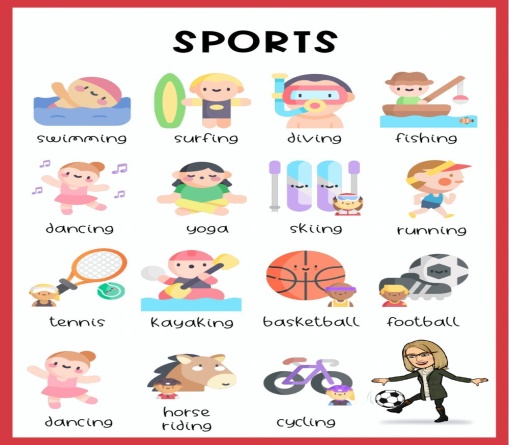
The aim: To develop pupils speaking skills and create friendly atmosphere Efficiency: By wishing each other they feel better and feel the support of others Students of the class are listed. Students' attention is drawn to the lesson. Students say different words from the picture •Learners remember previous lesson vocabulary •Learners answer the questions |
The teacher to assess learners for their ability. “Good job! Well done!” Formative Assessment
Good job! Assessment criteria make basic statements related to personal information, people and objects on familiar topics |
Pictures worksheet Picture |
|
Middle of the lesson Presentation part. 30 min |
Ex:1 P: 97 • Play the recording with pauses for Ss to repeat chorally and/or individually. Check Ss' pronunciation and intonation. Explain to students that with some sports we use play (I play tennis, you play football, etc.). With other sports we use go (I go swimming, you go cycling, etc). Students say the names of the sports in Kazakhstani and say if the words are similar to English. Ex: 2 P: 97 • Explain how the percentages on the graph represent how often a thing happens or is done. Read the example to the class. Explain that this means that around 25% of your sporting activity is football. Ask Ss to get into pairs and make similar statements. Monitor the activity. Elicit answers from around the class. Conclusion during the lesson some tasks differentiated by outcomes of the students and by their abilities. |
• Learners listen and repeat. Answer the question. ANSWERS Students’ own answer • Learners tell your partner. Use adverb of frequency. ANSWERS I never go swimming. I usually play cricket. I always go cycling. I often play basketball, etc |
Descriptor: - repeat chorally and/or individually - answer the question Total: 2 point
self assessment Differentiation: «Verbal support» method is used to help Ss use new words in the sentences. Descriptor: - read the example - use adverb of frequency Total: 3 point -Make CCQ questions Yes / No |
Card Worksheet Students book |
|
End of the lesson 5 min |
FEEDBACK Learners provide feedback on what they have learned at the lesson. Ex: P: Home task: Write the days |
|
Poster Success
|
|




Short term plan: term 4
|
Unit 8: Sports |
Lesson 82 |
||
|
Teacher name: |
|
||
|
Date: |
|
||
|
Grade: 5 |
Number present: |
absent: |
|
|
Lesson title |
Reading: Glasgow school of sport |
||
|
Learning objectives |
5.2.4.1 understand the main points of supported extended talk on a range of general and curricular topics 5.4.1.1 understand the main points in a limited range of short simple texts on general and curricular topics 5.3.2.1 ask simple questions to get information about a limited range of general topics |
||
|
Lesson objectives |
Learners will be able to: - present a school of sport; predicting the content of a text - read for specific information; comprehension - consolidate information learned from a text |
||
|
Value links |
Tradition: Kazakh traditions and culture have been passed on from one generation to another through oral histories told by traditional Kazakh tribal leaders and elders. |
||
|
Plan |
|||
|
Stages / Time |
Teachers actions |
Students actions |
Assessment criteria |
Resources |
|
Beginning of the lesson Warming-up
3 min. Pre-learning «Brainstorming» method 7 min. |
Organization moment : 1.Greeting. Ask about the weather. The teacher sets the lesson objectives, letting students know what to anticipate from the lesson. Warming up Where are you from? How old are you? What color is it? How many students are there in class? What day of the week today? Lead – In
|
The aim: To develop pupils speaking skills and create friendly atmosphere Efficiency: By wishing each other they feel better and feel the support of others Students of the class are listed. Students' attention is drawn to the lesson. Students say different words from the picture •Learners remember previous lesson vocabulary •Learners answer the questions |
The teacher to assess learners for their ability. “Good job! Well done!” Formative Assessment
Good job! Assessment criteria make basic statements related to personal information, people and objects on familiar topics |
Pictures worksheet Picture |
|
Middle of the lesson Presentation part. 30 min |
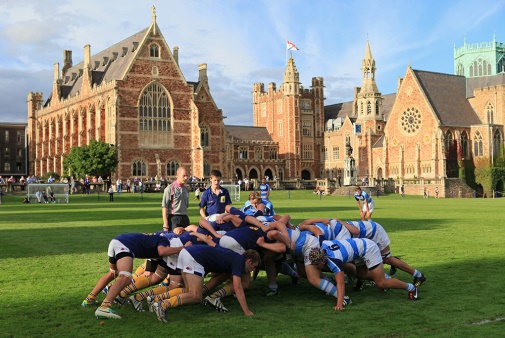
Ex:1 P: 98 • Read the Study Skills box to the class. Ask Ss to read the title and the subheadings. Direct their attention to the picture. Elicit suggestions as to the content of the text. Play the recording and read the text. Ex: 2a P: 98 • Ask Ss to read the questions. Ss read the text again to find the answers. Give Ss time to complete the exercise. • Elicit answers from around the class. Ex: 2b P: 98 • Ask Ss to identify sports and subjects within the text. Refer them to the answers to Ex 2a. Check answers around the class. Differentiation: «Verbal support» method is used to help Ss use new words in the sentences. Ex: 3 P: 98 •Explain the task to the Ss. Give Ss time to complete the exercise. Check answers around the class. Ex: 4 P: 98 • Read out the questions to the Ss. Elicit answers from around the class. Conclusion during the lesson some tasks differentiated by outcomes of the students and by their abilities. |
• Learners read the title and the subheading, and look at the picture. Answer the question. ANSWERS I think the text is about a school where pupils play a lot of sports. One of the sports is swimming. • Learners read again and answer the question. ANSWERS 1 The Glasgow School of Sport is in Glasgow, Scotland. 2 The subjects are Maths, English, Science and Geography. 3 The sports students can do are badminton, hockey,swimming, athletics and gymnastics. 4 There are 1,100 students in the school. 5 The students win competitions for their school and for Scotland. 6 They become athletes. 7 They take part in the Commonwealth Games, the Youth Olympics, and the Olympics. 8 Michael Jamieson • Learners find four school subjects and five sports in the text. Answer the question. ANSWERS four school subjects: Maths, English, Science and Geography five sports: badminton, hockey, swimming, athletics and gymnastics. I can see swimming in the picture. • Learners write three things you remember about the Glasgow School of sport. ANSWERS The Glasgow School of Sport has normal school subjects. The students also do many sports, including badminton. One student won a silver medal at the 2012 Olympics in London. • Learners answer the question. ANSWERS 1 Yes, there are a lot. They're in Shymkent. 2 My favourite sport is swimming. 3 My favourite school subjects are Maths and Science. |
Descriptor: - read the title - answer the question Total: 2 point
self assessment Descriptor: - read the again - answer the question Total: 2 point Descriptor: - find four school subjects - five sports in the text - answer the question Total: 3 point Descriptor: - write three things - to complete the exercise. Total: 2 point Descriptor: - answer the question. Total: 2 point -Make CCQ questions Yes / No |
Card Worksheet Students book |
|
End of the lesson 5 min |
FEEDBACK Learners provide feedback on what they have learned at the lesson. |
|
Poster Success
|
|
Short term plan: term 4
|
Unit 8: Sports |
Lesson 83 |
||
|
Teacher name: |
|
||
|
Date: |
|
||
|
Grade: 5 |
Number present: |
absent: |
|
|
Lesson title |
Vocabulary: sports and equipment |
||
|
Learning objectives |
5.4.1.1 understand the main points in a limited range of short simple texts on general and curricular topics 5.5.1.1 plan, write, edit and proofread work at text level with support on a limited range of general and curricular topics |
||
|
Lesson objectives |
Learners will be able to: - personalise the topic; to think about a school of sport - introduce use of go, play and do with sports - present adjectives; to express likes and dislikes |
||
|
Value links |
Freedom: Freedom is the major value of the civil society being formed in Kazakhstan. This must provide everyone with the possibility of creative self-realization. |
||
|
Plan |
|||
|
Stages / Time |
Teachers actions |
Students actions |
Assessment criteria |
Resources |
|
Beginning of the lesson Warming-up
3 min. Pre-learning «Brainstorming» method 7 min. |
Organization moment : 1.Greeting. Ask about the weather. The teacher sets the lesson objectives, letting students know what to anticipate from the lesson. Warming up Where are you from? How old are you? What color is it? How many students are there in class? What day of the week today? Lead – In
|
The aim: To develop pupils speaking skills and create friendly atmosphere Efficiency: By wishing each other they feel better and feel the support of others Students of the class are listed. Students' attention is drawn to the lesson. Students say different words from the picture •Learners remember previous lesson vocabulary •Learners answer the questions |
The teacher to assess learners for their ability. “Good job! Well done!” Formative Assessment
Good job! Assessment criteria make basic statements related to personal information, people and objects on familiar topics |
Pictures worksheet Picture |
|
Middle of the lesson Presentation part. 30 min |
Ex:5 P: 99 • Ask Ss to think about the idea of going to a school of sport. Are they sporty? Or are there other things they would rather do? Ss get into pairs and discuss with each other. Monitor the activity. Elicit answers from around the class. Ex: 6 P: 99 •Remind Ss of the first page of the module, that some sports take the word play and others go. Explain that some also take do. Read the box aloud. Remind Ss that the rules are true for most sports but not all. Ask Ss to get into pairs. Give Ss time to complete the exercise. Check answers around the class. Ex: 7 P: 99 • Ask Ss to get into pairs. • Read out the adjectives, and then the example. Ss tell each other the sports they like and don't like, giving reasons using the adjectives in the box. • Monitor the activity. Differentiation: «Verbal support» method is used to help Ss use new words in the sentences. Ex: 8 P: 99 • Ask Ss to get into pairs. Direct their attention to the pictures. Ask a S to read out the example. Ss tell their partners what equipment is needed for each sport. Monitor the activity and elicit answers from around the class. Conclusion during the lesson some tasks differentiated by outcomes of the students and by their abilities. |
• Learners tell your partner. Answer the question. ANSWERS Yes, I would like to attend this school. I love swimming and I would like to compete in international competitions / No, I would not like to attend the Glasgow School of Sport. I don't like sport and don't want to have to do it, etc • Learners read the theory box, then in pairs complete the gaps. Do, play or go? ANSWERS 1 do 2 play 3 go 4 play 5 do 6 go • Learners in pairs discuss which of the sports in ex 6 you like/ don’t like. Use these adjectives. ANSWERS A: I think playing golf is boring. I like playing baseball. It's exciting. B: Yes, it is. I like it too. What about doing karate? I like it because it's fast and fun. A: I don't agree. I think doing karate is dangerous. I prefer doing wrestling. B: I don't think so. It's difficult. I like going bowling. It's relaxing. • Learners look at the pictures. Answer the question. ANSWERS B: To go skiing, we need skis, poles and goggles. A: We need a racquet (and a ball) to play tennis. B: To play basketball we need a hoop (and a ball). A: To play cricket we need a helmet and a bat (and a ball) . |
Descriptor: - tell your partner - answer the question Total: 2 point
self assessment Descriptor: - read the theory box - complete the gaps Total: 2 point Descriptor: - work in pairs - discuss which of the sports you like/ don’t like - use these adjectives. Total: 3 point Descriptor: - look at the pictures. - answer the question. Total: 2 point -Make CCQ questions Yes / No |
Card Worksheet Students book |
|
End of the lesson 5 min |
FEEDBACK Learners provide feedback on what they have learned at the lesson. |
|
Poster Success
|
|

Short term plan: term 4
|
Unit 8: Sports |
Lesson 84 |
||
|
Teacher name: |
|
||
|
Date: |
|
||
|
Grade: 5 |
Number present: |
absent: |
|
|
Lesson title |
Use of English: a /an – some / any |
||
|
Learning objectives |
5.4.1.1 understand the main points in a limited range of short simple texts on general and curricular topics5.5.1.1 plan , write, edit and proofread work at text level with support on a limited range of general 5.6.8.1 use a verb to be to talk about favourite things on a limited range of familiar general and curricular topics |
||
|
Lesson objectives |
Learners will be able to: - present the indefinite article a/an and some/any - present and practise (how) much/(how) many a lot of - complete sentences with (how) much or (how) many |
||
|
Value links |
Patriotism: The formation of civil society institutions is impossible without the development of a patriotism shared by the entire Kazakhstan, and with deep roots in the culture, psychology, and historical past of the Kazakhs. |
||
|
Plan |
|||
|
Stages / Time |
Teachers actions |
Students actions |
Assessment criteria |
Resources |
|
Beginning of the lesson Warming-up
3 min. Pre-learning «Brainstorming» method 7 min. |
Organization moment : 1.Greeting. Ask about the weather. The teacher sets the lesson objectives, letting students know what to anticipate from the lesson. Warming up Where are you from? How old are you? What color is it? How many students are there in class? What day of the week today? Lead – In
|
The aim: To develop pupils speaking skills and create friendly atmosphere Efficiency: By wishing each other they feel better and feel the support of others Students of the class are listed. Students' attention is drawn to the lesson. Students say different words from the picture •Learners remember previous lesson vocabulary •Learners answer the questions |
The teacher to assess learners for their ability. “Good job! Well done!” Formative Assessment
Good job! Assessment criteria make basic statements related to personal information, people and objects on familiar topics |
Pictures worksheet Picture |
|
Middle of the lesson Presentation part. 30 min |
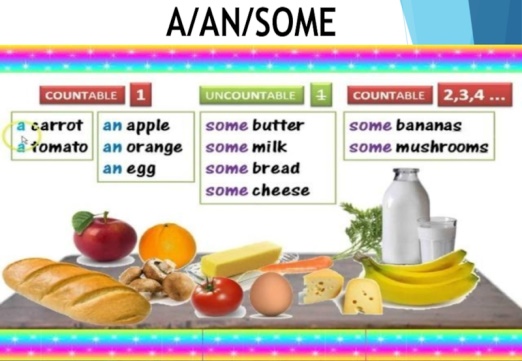
Ex:1 P: 100 • Read the theory box. Remind Ss of the difference between countable and uncountable nouns. Ensure Ss understand that any is only used in interrogative and negative contexts. • Ask them to say the examples in their language Ex: 2 P: 100 • Explain the task. Allow Ss time to complete the task. Check answers. Ex: 3 P: 100 • Explain the task. Give Ss time to complete the task. Check answers around the class. Differentiation: «Verbal support» method is used to help Ss use new words in the sentences. Ex: 4 P: 100 • Read the examples to the Ss. Explain that they have to work out the theory from the examples. Give Ss time to complete the task. Check answers around the class. Ss say the examples in Kazakhstani. Ex: 5 P: 100 • Explain the task to the Ss. Give Ss time to complete the task. Check answers around the class. Conclusion during the lesson some tasks differentiated by outcomes of the students and by their abilities. |
• Learners read the theory. Say the examples in your language. ANSWERS Student’s own answer. • Learners fill in a or an ANSWERS 1a 2 an 3 a 4 an 5 a • Learners fill some or any. ANSWERS 1 some 2 any. 3 any 4 some 5 some 6 any • Learners read the examples and complete the rules. Use how much, how many, a lot of. Say the examples in your language. ANSWERS 1 How many 2 How much 3. A lot of • Learners complete the sentences with (how) much or (how) many ANSWERS 2 How many, many 3 How many, many 4 How many, many 5 How much, much |
Descriptor: - read the theory - identify difference between countable and uncountable nouns Total: 2 point
self assessment Descriptor: - fill in a or an - complete the task Total: 2 point Descriptor: - fill some or any - complete the task Total: 3 point Descriptor: - read the examples - complete the rules Total: 2 point Descriptor: - complete the sentences with Total: 2 point -Make CCQ questions Yes / No |
Card Worksheet Students book |
|
End of the lesson 5 min |
FEEDBACK Learners provide feedback on what they have learned at the lesson. |
|
Poster Success
|
|
Short term plan: term 4
|
Unit 8: Sports |
Lesson 85 |
||
|
Teacher name: |
|
||
|
Date: |
|
||
|
Grade: 5 |
Number present: |
absent: |
|
|
Lesson title |
Use of English: can (ability) |
||
|
Learning objectives |
5.4.1.1 understand the main points in a limited range of short simple texts on general and curricular topics5.5.1.1 plan , write, edit and proofread work at text level with support on a limited range of general 5.6.8.1 use a verb to be to talk about favourite things on a limited range of familiar general and curricular topics |
||
|
Lesson objectives |
Learners will be able to: - practise the -ing form - present the definite article the and zero article, practise a, an, the and zero article - present can (ability), practise using can (ability) |
||
|
Value links |
Respect: Respect of elders and of the spiritual freedom of other nations are principal values. It is important to develop a productive dialogue between confessions and to acknowledge religion as an element of civil society. |
||
|
Plan |
|||
|
Stages / Time |
Teachers actions |
Students actions |
Assessment criteria |
Resources |
|
Beginning of the lesson Warming-up
3 min. Pre-learning «Brainstorming» method 7 min. |
Organization moment : 1.Greeting. Ask about the weather. The teacher sets the lesson objectives, letting students know what to anticipate from the lesson. Warming up Where are you from? How old are you? What color is it? How many students are there in class? What day of the week today? Lead – In
|
The aim: To develop pupils speaking skills and create friendly atmosphere Efficiency: By wishing each other they feel better and feel the support of others Students of the class are listed. Students' attention is drawn to the lesson. Students say different words from the picture •Learners remember previous lesson vocabulary •Learners answer the questions |
The teacher to assess learners for their ability. “Good job! Well done!” Formative Assessment
Good job! Assessment criteria make basic statements related to personal information, people and objects on familiar topics |
Pictures worksheet Picture |
|
Middle of the lesson Presentation part. 30 min |
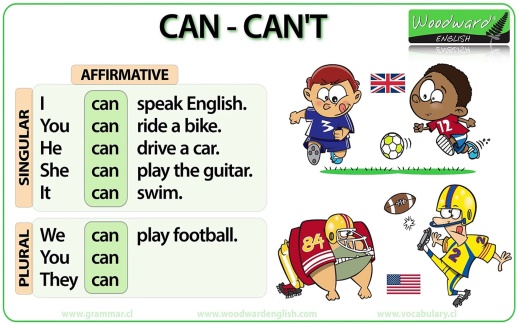
Ex:7 P: 101 • Explain the task to the Ss. Suggest they find if there is a subject in the sentence (I, you, a name). If there is not, the verb is probably in the -ing form, and is itself the noun/subject of the sentence. Give Ss time to complete the task. • Check answers around the class. Ex: 8 P: 101 • Read the theory box with the Ss. • Ask Ss if it is the same in their language. Ex: 9 P: 101 • Explain the task. • Give Ss time to complete the task. • Check answers around the class. Ask Ss to justify their answers. Differentiation: «Verbal support» method is used to help Ss use new words in the sentences. Ex: 10 P: 101 • Read the grammar box with Ss. Explain that ability can mean you know how to do something or that you are physically able to do it immediately Ex: 11 P: 101 • Ask Ss to get into pairs. Have Ss read the phrases in the pictures and explain any unknown words. • Explain the task and read the example. Ss ask and answer each other questions, based on the pictures. Monitor the activity around the class. Conclusion during the lesson some tasks differentiated by outcomes of the students and by their abilities. |
• Learners choose the correct item ANSWERS 1 Swimming 2 dance 3 Diving 4 Climbing 5 sail 6 play • Learners read the theory box. ANSWERS Student’e own answer • Learners fill a, an, the or zero article. ANSWERS 1 an, - 2- 3 the,, 4 a, the, an • Learners read the grammar box. ANSWERS Student’e own answer • Learners ask and answer as in the example ANSWERS A: can you drive a car? B: No, I can't. Can you jump? A: Yes, I can. Can you play the guitar? B: No, I can't. Can you ski? A: Yes, I can. Can you run fast? B: Yes, I can. Can you fly a plane? A: No, I can't. Can you dive? B: No, I can't. Can you swim? A: Yes, I can. Can you balance on a ball? B: No, I can't. Can you spin a ball? A: No, I can't. Can you climb a mountain? B: Yes, I can. |
Descriptor: - find if there is a subject in the sentence - choose the correct item Total: 2 point
self assessment Descriptor: - read the theory box. Total: 1 point Descriptor: - fill the gaps - complete the task Total: 2 point Descriptor: - read the grammar box Total: 1 point Descriptor: - read the example. - ask and answer each other questions Total: 2 point -Make CCQ questions Yes / No |
Card Worksheet Students book |
|
End of the lesson 5 min |
FEEDBACK Learners provide feedback on what they have learned at the lesson. |
|
Poster Success
|
|
Short term plan: term 4
|
Unit 8: Sports |
Lesson 86 |
||
|
Teacher name: |
|
||
|
Date: |
|
||
|
Grade: 5 |
Number present: |
absent: |
|
|
Lesson title |
Reading: Sports in Kazakhstan |
||
|
Learning objectives |
5.4.1.1 understand the main points in a limited range of short simple texts on general and curricular topics 5.5.1.1 plan, write, edit and proofread work at text level with support on a limited range of general and curricular topics |
||
|
Lesson objectives |
Learners will be able to: - personalise the topic; to elicit various sports - identify sports; to personalise the topic - read for specific information; comprehension |
||
|
Value links |
Respect - treating people with respect, value and courtesy. Especially apologising to them where the situation calls for it. |
||
|
Plan |
|||
|
Stages / Time |
Teachers actions |
Students actions |
Assessment criteria |
Resources |
|
Beginning of the lesson Warming-up
3 min. Pre-learning «Brainstorming» method 7 min. |
Organization moment : 1.Greeting. Ask about the weather. The teacher sets the lesson objectives, letting students know what to anticipate from the lesson. Warming up Where are you from? How old are you? What color is it? How many students are there in class? What day of the week today? Lead – In
|
The aim: To develop pupils speaking skills and create friendly atmosphere Efficiency: By wishing each other they feel better and feel the support of others Students of the class are listed. Students' attention is drawn to the lesson. Students say different words from the picture •Learners remember previous lesson vocabulary •Learners answer the questions |
The teacher to assess learners for their ability. “Good job! Well done!” Formative Assessment
Good job! Assessment criteria make basic statements related to personal information, people and objects on familiar topics |
Pictures worksheet Picture |
|
Middle of the lesson Presentation part. 30 min |
Ex:1 P: 102 • Read out the questions to the Ss. • Elicit answers from around the class. Ex: 2 P: 102 • Ask Ss to get into pairs. Ss look at the pictures. Ss discuss what sports are represented and if they play/do them. • Monitor the activity around the class. Ex: 3 P: 102 • Explain how a sport can make a nation famous (people from that country winning Olympic medals, international championships, etc.) Play the recording. Ss listen and read the text. Elicit answers from Ss. Differentiation: «Verbal support» method is used to help Ss use new words in the sentences. Ex: 4 P: 102 • Explain the task to the Ss. Ask Ss to read the text again and write answers. Give Ss time to complete the task. Check their answers. Conclusion during the lesson some tasks differentiated by outcomes of the students and by their abilities. |
• Learners answer the question. ANSWERS Yes, I play sport. Basketball is my favourite. / No, I don't play much sport, etc. • Learners look at the pictures in the text. Answer the question ANSWERS The pictures show cycling (a bike and a helmet), boxing (a pair of boxing gloves) and football (a ball). I play football and go cycling. • Learners listen to and read the text to find out. ANSWERS The sport that makes Kazakhstan world famous is boxing. • Learners read the text and complete the sentences. ANSWERS 1 Petropavi, Kazakhstan. 2 a wolf 3 Bauyrzhan Islamkhan 4 They are the colours of the flag of Kazakhstan. 5 Because he is a great boxer and never loses a fight. |
Descriptor: - read out the questions - answer the question. Total: 2 point
self assessment Descriptor: - look at the pictures - answer the question. Total: 1 point Descriptor: - listen to and read the text - complete the task Total: 2 point Descriptor: - read the text - complete the sentences Total: 1 point -Make CCQ questions Yes / No |
Card Worksheet Students book |
|
End of the lesson 5 min |
FEEDBACK Learners provide feedback on what they have learned at the lesson. |
|
Poster Success
|
|










 Бұл курс Қазақстан Республикасы Оқу-ағарту министрлігімен келісілген