ЖИ көмекші


 Қауіпсіз төлем

жүктеу мүмкіндігіне ие боласыз
Бұл материал сайт қолданушысы жариялаған. Материалдың ішінде жазылған барлық ақпаратқа жауапкершілікті жариялаған қолданушы жауап береді. Ұстаз тілегі тек ақпаратты таратуға қолдау көрсетеді. Егер материал сіздің авторлық құқығыңызды бұзған болса немесе басқа да себептермен сайттан өшіру керек деп ойласаңыз осында жазыңыз
 01 Сәуір 2025
 96
96
1 жыл бойы шексіз жүктеңіз
ҚМЖ Excel 6 term 4
Short term plan: term 4
|
Unit 8: Our neighbourhood |
Lesson 81 |
||
|
Teacher name: |
|
||
|
Date: |
|
||
|
Grade: 6 |
Number present: |
absent: |
|
|
Lesson title |
Vocabulary: shops |
||
|
Learning objectives |
6.2.5.1 understand most specific information and detail of short, supported talk on a wide range of familiar topics curricular topics. 6.6.14.1 use prepositions to talk about time and location use prepositions like to describe things and about to denote topic use prepositions of direction to, into, out of, from, towards on a limited range of familiar general and curricular topics familiar general and curricular topics |
||
|
Lesson objectives |
Learners will be able to: - present shops - revise/practise prepositions of place |
||
|
Value links |
Hospitality: Traditionally a nomadic culture, hospitality has always been an important part of Kazakh culture. |
||
|
Plan |
|||
|
Stages / Time |
Teachers actions |
Students actions |
Assessment criteria |
Resources |
|
Beginning of the lesson Warming-up
3 min. Pre-learning «Brainstorming» method 7 min. |
Organization moment : 1.Greeting. Ask about the weather. The teacher sets the lesson objectives, letting students know what to anticipate from the lesson. Warming up Where are you from? How old are you? What color is it? How many students are there in class? What day of the week today? Lead – In
|
The aim: To develop pupils speaking skills and create friendly atmosphere Efficiency: By wishing each other they feel better and feel the support of others Students of the class are listed. Students' attention is drawn to the lesson. Students say different words from the picture •Learners remember previous lesson vocabulary •Learners answer the questions |
The teacher to assess learners for their ability. “Good job! Well done!” Formative Assessment
Good job! Assessment criteria make basic statements related to personal information, match places to continents |
Pictures worksheet Picture |
|
Middle of the lesson Presentation part. 30 min |
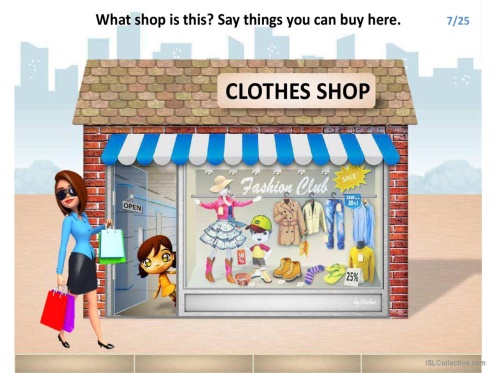
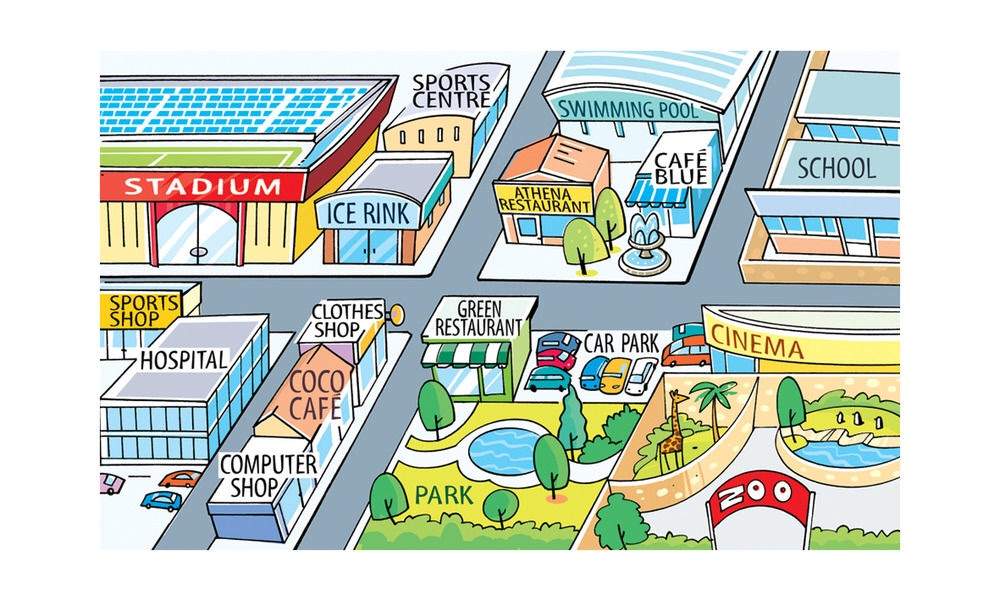
Ex:1 P:87 •Draw Ss' attention to the street map and the names of the shops in it. Play the recording. Ss listen and repeat chorally eat chora or individually. Ask various Ss to give the L1 equivalents. (Ss' own answers) Elicit what sort of things we can buy/do in each shop and then ask various Ss around the class to say one thing for each shop. Encourage Ss to say different things and continue until all ideas have been exhausted. Ex: 2 P: 87 • Revise prepositions of place with Ss and explain/ elicit the meanings of the ones presented through translation into Ss' L1 or by demonstrating them with objects in the classroom. Explain the task and read out the example. Then, Ss ask and answer in pairs. Monitor the activity around the class and then ask some pairs to ask and answer in front of the class. Conclusion during the lesson some tasks differentiated by outcomes of the students and by their abilities. |
• Learners listen and repeat. Answer the question. Name one thing you can buy/do in each shop. ANSWERS You can buy bread at a bakery. You can buy flowers at a florist's. You can buy stamps at a post office. You can buy foreign currency at a bank. You can buy trousers at a clothes shop. You can buy football shoes at a sports shop. You can buy glasses at an optician's. You can buy books at a bookshop. You can buy magazines at a newsagent's. You can buy musical instruments at a music shop. You can buy food at a supermarket. You can buy a (gold) ring at a jeweller's. • Learners use these prepositions to ask for and give directions, as in the example. ANSWERS A: Excuse me. Where is the clothes shop? B: It's on Apple Street next to the jeweller's. A: Excuse me. Where is the optician's? B: It's on Milton Street in front of the sports shop. A: Excuse me. Where is the newsagent's? B: It's on Apple Street behind the music shop. A: Excuse me. Where is the music shop? B: It's on Apple Street between the supermarket and the newsagent's. Excuse me. Where's the bank? B: It's on AFT Harper Street opposite the jeweller's. etc . |
Descriptor: - listen and repeat. - answer the question Total: 2 point
Differentiation: «Verbal support» method is used to help Ss use new words in the sentences. Descriptor: - use these prepositions - ask and answer in pairs Total: 6 point -Make CCQ questions Yes / No |
Card Worksheet Students book |
|
End of the lesson 5 min |
FEEDBACK Learners provide feedback on what they have learned at the lesson. |
|
Poster Success
|
|




Short term plan: term 4
|
Unit 8: Our neighbourhood |
Lesson 82 |
||
|
Teacher name: |
|
||
|
Date: |
|
||
|
Grade: 6 |
Number present: |
absent: |
|
|
Lesson title |
Reading: the Twins cities |
||
|
Learning objectives |
6.3.7.1 use appropriate subject-specific vocabulary and syntax to talk about a limited range of general topics general and curricular topics 6.4.5.1 deduce meaning from context in short texts on a limited range of familiar general and curricular topics |
||
|
Lesson objectives |
Learners will be able to: - predict the content of the text - read for specific information - consolidate new vocabulary |
||
|
Value links |
Tradition: Kazakh traditions and culture have been passed on from one generation to another through oral histories told by traditional Kazakh tribal leaders and elders. |
||
|
Plan |
|||
|
Stages / Time |
Teachers actions |
Students actions |
Assessment criteria |
Resources |
|
Beginning of the lesson Warming-up
3 min. Pre-learning «Brainstorming» method 7 min. |
Organization moment : 1.Greeting. Ask about the weather. The teacher sets the lesson objectives, letting students know what to anticipate from the lesson. Warming up Where are you from? How old are you? What color is it? How many students are there in class? What day of the week today? Lead – In
|
The aim: To develop pupils speaking skills and create friendly atmosphere Efficiency: By wishing each other they feel better and feel the support of others Students of the class are listed. Students' attention is drawn to the lesson. Students say different words from the picture •Learners remember previous lesson vocabulary •Learners answer the questions |
The teacher to assess learners for their ability. “Good job! Well done!” Formative Assessment
Good job! Assessment criteria make basic statements related to personal information, match places to continents |
Pictures worksheet Picture |
|
Middle of the lesson Presentation part. 30 min |
Ex:1 P:88 • Direct Ss' attention to the pictures and the title and allow them one minute to read the introduction. Elicit Ss' guesses in answer to the questions in the rubric. Play the recording. Ss listen and follow the text in their books and check their guesses. Ex: 2a P: 88 • Allow Ss some time to read the text and mark the statements. Ask Ss to use the Word List to look up the meanings of the words in the Check these words box. Check Ss' answers. As an extension Ss can correct the false statements. Differentiation: «Verbal support» method is used to help Ss use new words in the sentences. Ex: 2b P: 88 • Explain the task. Give Ss time to complete it, then check Ss' answers. Conclusion during the lesson some tasks differentiated by outcomes of the students and by their abilities. |
• Learners look at the pictures and read the title and the introduction. Answer the question. Discuss in pairs. ANSWERS Verona, USA is small and quiet. Verona, Italy is large and cosmopolitan • Learners mark the statements. ANSWERS 1 F It is a small city in the USA. 2T 3T 4 DS ST 6 F Thousands of tourists visit every summer. 7F Restaurants serve local and international dishes. 8 F The nightlife there is exciting • Learners fill the gaps. ANSWERS 1 tree-lined 2 clothes 3 local 4 cosy 5 cosmopolitan 6 ancient 7 nature |
Descriptor: - look at the pictures - read the introduction. - discuss in pairs. Total: 2 point
Descriptor: - read the text - mark the statements. Total: 6 point Descriptor: - fill the gaps - complete the task Total: 6 point -Make CCQ questions Yes / No |
Card Worksheet Students book |
|
End of the lesson 5 min |
FEEDBACK Learners provide feedback on what they have learned at the lesson. |
|
Poster Success
|
|

Short term plan: term 4
|
Unit 8: Our neighbourhood |
Lesson 83 |
||
|
Teacher name: |
|
||
|
Date: |
|
||
|
Grade: 6 |
Number present: |
absent: |
|
|
Lesson title |
Vocabulary: places in a city |
||
|
Learning objectives |
6.2.1.1 understand a sequence of supported classroom instructions 6.3.2.1 ask simple questions to get information about a limited range of general topics 6.6.14.1 use prepositions to talk about time and location use prepositions like to describe things and about to denote topic use prepositions of direction to, into, out of, from, towards and there is / there are on a limited range of familiar general and curricular topics familiar general and curricular topics |
||
|
Lesson objectives |
Learners will be able to: - read for gist - listen for specific information |
||
|
Value links |
Freedom: Freedom is the major value of the civil society being formed in Kazakhstan. This must provide everyone with the possibility of creative self-realization. |
||
|
Plan |
|||
|
Stages / Time |
Teachers actions |
Students actions |
Assessment criteria |
Resources |
|
Beginning of the lesson Warming-up
3 min. Pre-learning «Brainstorming» method 7 min. |
Organization moment : 1.Greeting. Ask about the weather. The teacher sets the lesson objectives, letting students know what to anticipate from the lesson. Warming up Where are you from? How old are you? What color is it? How many students are there in class? What day of the week today? Lead – In
|
The aim: To develop pupils speaking skills and create friendly atmosphere Efficiency: By wishing each other they feel better and feel the support of others Students of the class are listed. Students' attention is drawn to the lesson. Students say different words from the picture •Learners remember previous lesson vocabulary •Learners answer the questions |
The teacher to assess learners for their ability. “Good job! Well done!” Formative Assessment
Good job! Assessment criteria make basic statements related to personal information, match places to continents |
Pictures worksheet Picture |
|
Middle of the lesson Presentation part. 30 min |
Ex:3 P:89 • Ss read the signs and match them to the places they can be seen. Check Ss' answers. Ask Ss to say which words helped them decide Ex: 4 P: 89 • Explain the task and allow Ss some time to read the sentences and match them to the shops. Check Ss' answers. Differentiation: «Verbal support» method is used to help Ss use new words in the sentences. Ex: 5 P: 89 • Explain the task. Ask Ss to identify the places in the photographs. Play the recording. Ss listen and complete the task. Check Ss' answers. Ex: 6 P: 89 • Explain the task and allow Ss some time to think of DR another shop and what they will say. Ss then act out their dialogues in closed pairs. Monitor the activity around the class and then ask some pairs to act out their dialogues in front of the class. Conclusion during the lesson some tasks differentiated by outcomes of the students and by their abilities. |
• Learners match the places to the sings. ANSWERS 1 C 2 A 3 D 4 E 5 B • Learners read the sentences and match them to the shops. ANSWERS 1 g 2 f 3 d 4 c 5 h 6 e 7 a 8 b • Learners name the places in the pictures. ANSWERS A butcher's B clothes shop C chemist's • Learners work in pairs, act out a similar dialogue for another shop. ANSWERS A: How can I help you? B: Do you have these shoes in a size 6? A: Yes, here you are |
Descriptor: - read the signs - match the places Total: 2 point
Descriptor: - read the sentences - match them to the shops Total: 2 point Descriptor: - identify the places - name the places in the pictures Total: 2 point Descriptor: - work in pairs - act out a similar dialogue Total: 2 point -Make CCQ questions Yes / No |
Card Worksheet Students book |
|
End of the lesson 5 min |
FEEDBACK Learners provide feedback on what they have learned at the lesson. |
|
Poster Success
|
|
Short term plan: term 4
|
Unit 8: Our neighbourhood |
Lesson 84 |
||
|
Teacher name: |
|
||
|
Date: |
|
||
|
Grade: 6 |
Number present: |
absent: |
|
|
Lesson title |
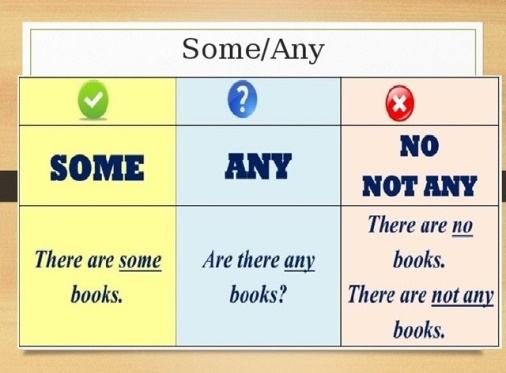
Use of English; a / an some / any |
||
|
Learning objectives |
6.1.1.1 use speaking and listening skills to solve problems creatively and cooperatively in groups 6.2.1.1 understand a sequence of supported classroom instructions 6.3.1.1 provide basic information about themselves and others at sentence level on an increasing range of general topics |
||
|
Lesson objectives |
Learners will be able to: -present a/an, and some/any/every/no and their compounds -practise a/an and some/any/no -practise some/every/any and their compounds |
||
|
Value links |
Patriotism: The formation of civil society institutions is impossible without the development of a patriotism shared by the entire Kazakhstan, and with deep roots in the culture, psychology, and historical past of the Kazakhs. |
||
|
Plan |
|||
|
Stages / Time |
Teachers actions |
Students actions |
Assessment criteria |
Resources |
|
Beginning of the lesson Warming-up
3 min. Pre-learning «Brainstorming» method 7 min. |
Organization moment : 1.Greeting. Ask about the weather. The teacher sets the lesson objectives, letting students know what to anticipate from the lesson. Warming up Where are you from? How old are you? What color is it? How many students are there in class? What day of the week today? Lead – In
|
The aim: To develop pupils speaking skills and create friendly atmosphere Efficiency: By wishing each other they feel better and feel the support of others Students of the class are listed. Students' attention is drawn to the lesson. Students say different words from the picture •Learners remember previous lesson vocabulary •Learners answer the questions |
The teacher to assess learners for their ability. “Good job! Well done!” Formative Assessment
Good job! Assessment criteria make basic statements related to personal information, match places to continents |
Pictures worksheet Picture |
|
Middle of the lesson Presentation part. 30 min |
Ex:1 P:90 • Go through the table with Ss and elicit the L1 equivalents for the examples. Ex: 2 P: 90 • Explain the task. Ss do the task in closed pairs. Check Ss' answers. Differentiation: «Verbal support» method is used to help Ss use new words in the sentences. Ex: 3 P: 90 • Explain the task. Ss complete the task. Check S answers. Ex: 4 P: 90 • Present the passive. Explain that we use the passive to talk about an action when we don't know who performed it or when it is obvious who performed it from the context or when the action is more important than the person who performed it. Read out the theory box and explain/elicit that we form the passive tense with the verb to be + the past participle. Conclusion during the lesson some tasks differentiated by outcomes of the students and by their abilities. |
• Learners read the table. Say the examples in your language. ANSWERS Student’s own answer. • Learners use some, every any and their compound to complete the postcard. ANSWERS A 1 some 2 a 3 any B1 a 2 some 3 an C1 any 2 any 3 some D 1 no 2 some 3 any • Learners choose the correct word. ANSWERS 1 Everything 2 something 3 every 4 everyone • Learners read the theory. Answer the question. ANSWERS Student’s own answer. |
Descriptor: - read the table - Say the examples in your language Total: 2 point
Descriptor: - use some, every any and their compound - complete the postcard. Total: 2 point Descriptor: - choose the correct word. Total: 2 point Descriptor: - read the theory - answer the question. Total: 2 point -Make CCQ questions Yes / No |
Card Worksheet Students book |
|
End of the lesson 5 min |
FEEDBACK Learners provide feedback on what they have learned at the lesson. |
|
Poster Success
|
|
Short term plan: term 4
|
Unit 8: Our neighbourhood |
Lesson 85 |
||
|
Teacher name: |
|
||
|
Date: |
|
||
|
Grade: 6 |
Number present: |
absent: |
|
|
Lesson title |
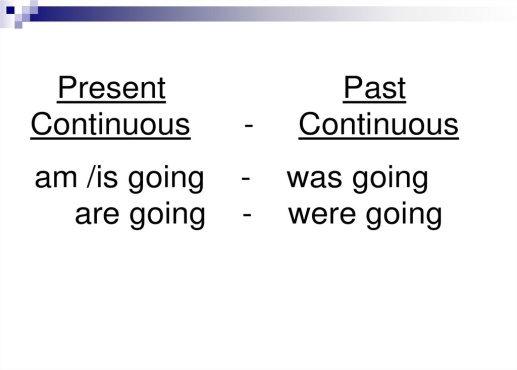
Use of English: Present or past continuous |
||
|
Learning objectives |
6.3.7.1 use appropriate subject-specific vocabulary and syntax to talk about a limited range of general topics general and curricular topics 6.6.2.1 use quantifiers many, much , a lot of ,a few on a limited range of familiar general and curricular topics |
||
|
Lesson objectives |
Learners will be able to: -practise the passive -practise the passive with an agent - practise changing active sentences to passive sentences |
||
|
Value links |
Respect: Respect of elders and of the spiritual freedom of other nations are principal values. It is important to develop a productive dialogue between confessions and to acknowledge religion as an element of civil society. |
||
|
Plan |
|||
|
Stages / Time |
Teachers actions |
Students actions |
Assessment criteria |
Resources |
|
Beginning of the lesson Warming-up
3 min. Pre-learning «Brainstorming» method 7 min. |
Organization moment : 1.Greeting. Ask about the weather. The teacher sets the lesson objectives, letting students know what to anticipate from the lesson. Warming up Where are you from? How old are you? What color is it? How many students are there in class? What day of the week today? Lead – In
|
The aim: To develop pupils speaking skills and create friendly atmosphere Efficiency: By wishing each other they feel better and feel the support of others Students of the class are listed. Students' attention is drawn to the lesson. Students say different words from the picture •Learners remember previous lesson vocabulary •Learners answer the questions |
The teacher to assess learners for their ability. “Good job! Well done!” Formative Assessment
Good job! Assessment criteria make basic statements related to personal information, match places to continents |
Pictures worksheet Picture |
|
Middle of the lesson Presentation part. 30 min |
Ex5 P:91 • Explain the task and give Ss time to complete it. Check Ss' answers around the class. . Ex: 6 P: 91 • Explain the task and give Ss time to complete it. Check Ss' answers around the class. Remind Ss that if the agent is a person we use by and if the agent is an object we use with. Differentiation: «Verbal support» method is used to help Ss use new words in the sentences. Ex: 7 P: 91 • Explain that to change an active sentence to a passive sentence the object of the active verb becomes the subject of the passive verb and the active form changes to a passive form while the subject becomes the agent. Do the first item with the class as an example and the give Ss time to complete the task alone. Check Ss' answers Ex: 8 P: 91 • Explain the task and give Ss time to complete it and then check their answers around the class. Ex: 9 P: 91 Explain the task and give Ss time to complete it. Check Ss' answers around the class. Conclusion during the lesson some tasks differentiated by outcomes of the students and by their abilities. |
• Learners fill the gaps: is, are, was or were ANSWERS 1 is 2 were 3 were 4 was 5 are • Learners fill in by or with ANSWERS 1 by 2 with 3 with 4 by 5 by 6 by • Learners rewrite the sentences in the present simple passive. ANSWERS 1 Astana is visited by millions of tourists every year. 2 The Saryarka Velodrome is used mainly for track cycling events. 3 The President's Cup tennis tournament is held at the Daulet National Tennis Centre every year. 4 30,000 spectators are held by the Astana Arena stadium • Learners put the verb in bracket into the correct form of the present or past continuous. ANSWERS 1 The Astana Arena was designed by Populous and Tabanlioglu Architects. 2 The masterplan of Astana was made by Kisho Kurokawa. 3 Astana's new university was opened in 2010. 4 Khan Satyr was named one of the world's top 10 eco- buildings by Forbes style magazine • Learners write the sentences in the passive. ANSWERS 1 It was made with white marble in 190 ВС. 2 It was discovered on the island of Samothrace in 1863 by a French archaeologist. 3 It was sent to Paris in 1863. 4 It is kept in the Louvre. 5 It is admired by thousands of tourists every day. |
Descriptor: - fill the gaps - complete the task Total: 2 point
Descriptor: - fill the gaps - complete the task Total: 2 point Descriptor: - rewrite the sentences - complete the task alone Total: 2 point Descriptor: - put the verb in bracket into the correct form - complete the task alone Total: 2 point Descriptor: - write the sentences in the passive. - complete the task alone Total: 2 point -Make CCQ questions Yes / No |
Card Worksheet Students book |
|
End of the lesson 5 min |
FEEDBACK Learners provide feedback on what they have learned at the lesson. |
|
Poster Success
|
|
Short term plan: term 4
|
Stages / Time |
Teachers actions |
Students actions |
Assessment criteria |
Resources |
|
Beginning of the lesson Warming-up
3 min. Pre-learning «Brainstorming» method 7 min. |
Organization moment : 1.Greeting. Ask about the weather. The teacher sets the lesson objectives, letting students know what to anticipate from the lesson. Warming up Where are you from? How old are you? What color is it? How many students are there in class? What day of the week today? Lead – In
|
The aim: To develop pupils speaking skills and create friendly atmosphere Efficiency: By wishing each other they feel better and feel the support of others Students of the class are listed. Students' attention is drawn to the lesson. Students say different words from the picture •Learners remember previous lesson vocabulary •Learners answer the questions |
The teacher to assess learners for their ability. “Good job! Well done!” Formative Assessment
Good job! Assessment criteria make basic statements related to personal information, match places to continents |
Pictures worksheet Picture |
|
Middle of the lesson Presentation part. 30 min |
Ex1 P:92 • Play the recording and tell Ss to imagine they are in one of the tall buildings in the pictures. Ask various Ss around the class to say how they feel. Ex: 2 P: 92 • Elicit what, if anything, Ss know about skyscrapers, and where the term came from. Play the recording. Ss listen and follow the text in their books and find out Differentiation: «Verbal support» method is used to help Ss use new words in the sentences. Ex: 3 P: 92 •Ask Ss to use the Word List to look up the meanings of the words in the Check these words box, then allow Ss some time to read the text and answer the questions. Read out the Did you know? box. Check Ss' answers around the class. Conclusion during the lesson some tasks differentiated by outcomes of the students and by their abilities. |
• Learners listen to music. Answer the question. ANSWERS I can see other tall buildings below me, but all around I can see only the sky and some cloud I feel scared to be so high up./I feel excited. It's like I'm on top of the world • Learners listen to find out. Answer the question. ANSWERS Skyscrapers are tall buildings made from steel. The word 'skyscraper' comes from the name sailors gave to the tallest mast on a ship. • Learners read the text answer the question. ANSWERS 1 Bricks weren't strong enough and they didn't have steel or elevators. 2 From the 1880s. 3 People could build tall buildings without worrying how to get to the top. 4 They needed living space and offices for business. 5 Because many ex-sailors worked on them and it is their word for the tallest mast on a ship. 6 One floor a day. 7 You can find shops, offices, apartments and a hotel |
Descriptor: - listen to music. - answer the question Total: 2 point
Descriptor: - listen to find out - answer the question Total: 2 point Descriptor: - read the text - answer the question Total: 2 point -Make CCQ questions Yes / No |
Card Worksheet Students book |
|
End of the lesson 5 min |
FEEDBACK Learners provide feedback on what they have learned at the lesson. |
|
Poster Success
|
|










 Бұл курс Қазақстан Республикасы Оқу-ағарту министрлігімен келісілген