ЖИ көмекші


 Қауіпсіз төлем

жүктеу мүмкіндігіне ие боласыз
Бұл материал сайт қолданушысы жариялаған. Материалдың ішінде жазылған барлық ақпаратқа жауапкершілікті жариялаған қолданушы жауап береді. Ұстаз тілегі тек ақпаратты таратуға қолдау көрсетеді. Егер материал сіздің авторлық құқығыңызды бұзған болса немесе басқа да себептермен сайттан өшіру керек деп ойласаңыз осында жазыңыз
 01 Сәуір 2025
 78
78
1 жыл бойы шексіз жүктеңіз
қмж Eyes Open-6, 4-тоқс
Short term plan: term 4
|
Unit 8: Our neighbourhood |
Lesson 81 |
||
|
Teacher name: |
|
||
|
Date: |
|
||
|
Grade: 6 |
Number present: |
absent: |
|
|
Lesson title |
Vocabulary |
||
|
Learning objectives |
6.2.5.1 understand most specific information and detail of short, supported talk on a wide range of familiar topics curricular topics. 6.1.8.1 develop intercultural awareness through reading and discussion 6.6.14.1 use prepositions to talk about time and location use prepositions like to describe things and about to denote topic use prepositions of direction to, into, out of, from, towards on a limited range of familiar |
||
|
Lesson objectives |
Learners will be able to: - learn vocabulary for shops. - talk about shops I go to |
||
|
Value links |
Hospitality: Traditionally a nomadic culture, hospitality has always been an important part of Kazakh culture. |
||
|
Plan |
|||
|
Stages / Time |
Teachers actions |
Students actions |
Assessment criteria |
Resources |
|
Beginning of the lesson Warming-up
3 min. Pre-learning «Brainstorming» method 7 min.
|
Organization moment : 1.Greeting. Ask about the weather. The teacher sets the lesson objectives, letting students know what to anticipate from the lesson. Warming up Where are you from? How old are you? What color is it? How many students are there in class? What day of the week today? Lead – In
|
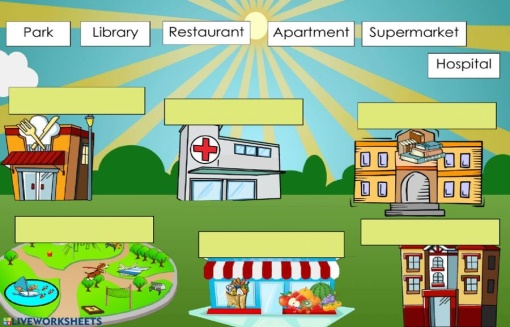
The aim: To develop pupils speaking skills and create friendly atmosphere Students of the class are listed. Students' attention is drawn to the lesson. Students say different words from the picture •Learners remember previous lesson vocabulary •Learners answer the questions
|
The teacher to assess learners for their ability. “Good job! Well done!” Formative Assessment
Good job! Descriptor: - remembers the lesson passed Point 1 Assessment criteria make basic statements related to personal information, match places to continents |
Pictures worksheet Picture |
|
Middle of the lesson Presentation part. 30 min
|
Ex:1 P:87 •Ask students to open their books at page 87. Put students into pairs to do the matching exercise. Weaker students can look up the meanings of the words in a dictionary. Play the recording for students to check their answers and repeat the words. Ex: 2 P: 87 • Read out the questions. Put students into pairs to answer the questions. When checking answers, ask students to name a local example for each of the shops in question. Ex: 3 P: 87 •Ask one student to read out the four questions and another student to read out the example answer. Ask students to work alone to answer the questions. Stronger students need only write notes to the questions. Weaker students should write full answers to the questions as it will help them in the speaking exercise which follows. Monitor while students do this. Help as necessary Conclusion during the lesson some tasks differentiated by outcomes of the students and by their abilities. |
• Learners match the pictures with the words in the box. Then listen, check and repeat. ANSWERS a department store b bookshop c newsagent d supermarket e music shop f chemist g shoe shop h electronics shop i clothes shop j sports shop • Learners read out the questions. Answer the question. Discuss in pairs. ANSWERS 1 supermarket, newsagent, department store 2 bookshop, newsagent, supermarket 3 clothes shop, department store, shoes shop, sports sports shop 4 electronics shop, department store 5 music shop 6 chemist • Learners write your answers to the questions. ANSWERS Students own answer |
Descriptor: - match the pictures with - listen, check and repeat. Total: 2point
Self assessment Differentiation: «Verbal support» method is used to help Ss use new words in the sentences. Descriptor: - read out the questions. - answer the question Total: 2 point Descriptor: - write your answers Total: 2 point -Make CCQ questions Yes / No Total: 1 point Total: 10 point |
Card Worksheet Students book |
|
End of the lesson 5 min |
FEEDBACK Learners provide feedback on what they have learned at the lesson. Ex: P: Home task: Write the days |
|
Poster Success
|
|




Short term plan: term 4
|
Unit 8: Our neighbourhood |
Lesson 82 |
||
|
Teacher name: |
|
||
|
Date: |
|
||
|
Grade: 6 |
Number present: |
absent: |
|
|
Lesson title |
Reading: A blog |
||
|
Learning objectives |
6.1.1.1 use speaking and listening skills to solve problems creatively and cooperatively in groups 6.2.5.1 understand most specific information and detail of short, supported talk on a wide range of familiar topics 6.3.7.1 use appropriate subject-specific vocabulary and syntax to talk about a limited range of general topics |
||
|
Lesson objectives |
Learners will be able to: - read a blog post about a day at the Dubai Mall. - learn extreme adjectives. - talk about shopping centres. |
||
|
Value links |
Hospitality: Traditionally a nomadic culture, hospitality has always been an important part of Kazakh culture. |
||
|
Plan |
|||
|
Stages / Time |
Teachers actions |
Students actions |
Assessment criteria |
Resources |
|
Beginning of the lesson Warming-up
3 min. Pre-learning «Brainstorming» method 7 min.
|
Organization moment : 1.Greeting. Ask about the weather. The teacher sets the lesson objectives, letting students know what to anticipate from the lesson. Warming up Books closed. Elicit examples of famous shopping centres in the students' countries. (Students will talk about shopping centres where they live in Exercise 6, so don't go into details at this point. Lead – In
|
The aim: To develop pupils speaking skills and create friendly atmosphere Students of the class are listed. Students' attention is drawn to the lesson. Students say different words from the picture •Learners remember previous lesson vocabulary •Learners answer the questions
|
The teacher to assess learners for their ability. “Good job! Well done!” Formative Assessment
Good job! Descriptor: - remembers the lesson passed Point 1 Assessment criteria make basic statements related to personal information, match places to continents |
Pictures worksheet Picture |
|
Middle of the lesson Presentation part. 30 min
|
Ex:1 P:88 • Ask students to look at the photos of the Dubai Mall. Help weaker students answer the question by eliciting or teaching the following vocabulary: theme park, aquarium, ice rink and skating. Ex: 2 P: 88 • Ask students to work alone to read Liam's blog. Put students into pairs to check their ideas to Exercise 1 and to match the photos with the places in bold in the blog. Check answers and then refer students to the information in the FACT! box. Ask: Which do you prefer: a small shop or an enormous shopping centre? Ex: 3 P: 88 • Refer students to the numbers in the box. Check students are able to say the larger numbers: 120 is read one hundred and twenty, 1,200 is read one thousand two hundred; million is pronounced/miljǝn/. Put students into pairs and ask them to find out what the numbers refer to in the text. Check answers. Ex: 4 P: 88 • Teach the meaning of extreme by writing excellent on the board. Explain that the word means very good and that it is an example of an 'extreme' adjective, i.e. an adjective that intensifies the meaning of a 'normal' adjective such as good. Read out the adjectives in the box. Check students are able to pronounce them. Put students into pairs. Ask them to look at the adjectives in context to decide whether they mean very good or very bad. Conclusion during the lesson some tasks differentiated by outcomes of the students and by their abilities. |
• Learners look at the photos of a shopping centre in Dubai. What can you do there? ANSWERS You can go to a theme park, go skating, see a beautiful fountain or go to an aquarium/underwater zoo. • Learners read Liam’s blog and check your ideas to Exercise 1. Then match the photos to the places in bold. ANSWERS b Olympic-size ice rink c Dancing Fountain d Underwater Zoo • Learners read Liam’s blog again. What are the numbers about? ANSWERS The Dubai Mall has got about 1,200 shops, 22 cinemas and 120 cafés and restaurants. More than 50 million people visit it every year. The Sega Republic has got 150 games and rides • Learners look at the adjectives from Liam’s blog. Do they mean very good or very bad? ANSWERS very good: great, wonderful, brilliant, amazing very bad: awful |
Descriptor: - look at the photos of a shopping centre in Dubai -answer the question. Total: 2point
Self assessment Differentiation: «Verbal support» method is used to help Ss use new words in the sentences. Descriptor: - read Liam’s blog - match the photos to the places Total: 2 point Descriptor: - read Liam’s blog again. - answer the question. Total: 2 point -Make CCQ questions Yes / No Total: 1 point Total: 10 point |
Card Worksheet Students book |
|
End of the lesson 5 min |
FEEDBACK Learners provide feedback on what they have learned at the lesson. Ex: P: Home task: Write the days |
|
Poster Success
|
|

Short term plan: term 4
|
Unit 8: Our neighbourhood |
Lesson 83 |
||
|
Teacher name: |
|
||
|
Date: |
|
||
|
Grade: 6 |
Number present: |
absent: |
|
|
Lesson title |
Language focus 1 Indefinite pronouns |
||
|
Learning objectives |
6.3.7.1 use appropriate subject-specific vocabulary and syntax to talk about a limited range of general topics general and curricular topics 6.6.14.1 use prepositions to talk about time and location use prepositions like to describe things and about to denote topic use prepositions of direction to, into, out of, from, towards and there is / there are on a limited range of familiar general and curricular topics familiar general and curricular topics |
||
|
Lesson objectives |
Learners will be able to: - learn how to use indefinite pronouns. - talk about my neighbourhood |
||
|
Value links |
Hospitality: Traditionally a nomadic culture, hospitality has always been an important part of Kazakh culture. |
||
|
Plan |
|||
|
Stages / Time |
Teachers actions |
Students actions |
Assessment criteria |
Resources |
|
Beginning of the lesson Warming-up
3 min. Pre-learning «Brainstorming» method 7 min.
|
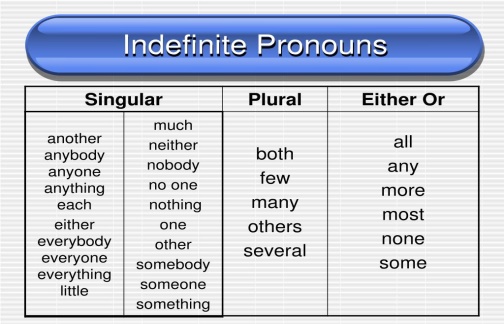
Organization moment : 1.Greeting. Ask about the weather. The teacher sets the lesson objectives, letting students know what to anticipate from the lesson. Warming up Books closed. Write the following on the board: Someone sent me a letter. Refer students to the underlined word. Explain that it is an example of an indefinite pronoun. Elicit that indefinite pronouns are used to refer to people or things without saying exactly who or what they are. Lead – In
|
The aim: To develop pupils speaking skills and create friendly atmosphere Students of the class are listed. Students' attention is drawn to the lesson. Students say different words from the picture •Learners remember previous lesson vocabulary •Learners answer the questions
|
The teacher to assess learners for their ability. “Good job! Well done!” Formative Assessment
Good job! Descriptor: - remembers the lesson passed Point 1 Assessment criteria make basic statements related to personal information, match places to continents |
Pictures worksheet Picture |
|
Middle of the lesson Presentation part. 30 min
|
Ex:1 P:89 • Ask students to open their books at page 89. Tell them that the sentences in Exercise 1 are from the text on page 88. Ask students to look back at the text and then copy and complete the sentences. Check answers For further information and additional exercises, students can turn to page 120 of the Grammar reference section. Encourage students to think of the difference in grammatical forms between their language and English. Ex: 2 P: 89 •Refer students to the information in the Get it right! box about the use of any in the affirmative. Put students into pairs to choose the correct word. Check answers. Ex: 3 P: 89 • Have students read the dialogue and the words in the box. Ask students to look at the photograph and then work alone to complete the exercise. Play the recording for students to listen and check their answers. To extend the work on this exercise, ask students to read the complete dialogue in pairs. Ex: 4 P: 89 • Ask students to work alone to think about examples and make notes. Encourage weaker students to look for the indefinite pronouns and think if they need to write about a person or a place, e.g. somebody, somewhere Conclusion during the lesson some tasks differentiated by outcomes of the students and by their abilities. |
• Learners complete the examples from the text on page 88. Then complete the rules with some-, no and any-. ANSWERS 1 somewhere 2 anything 3 everyone 4 no one • Learners choose the correct word ANSWERS 1 anything 2 somewhere 3 no one 4 something 5 Everyone 6 anywhere • Learners complete the conversation with the indefinite pronouns in the box. Then listen and check. ANSWERS 1 someone 2 nowhere 3 something 4 anywhere 5 nobody 6 nothing 7 everyone 8 anybody • Learners think about your neighbourhood and write down examples. ANSWERS Students own answer. |
Descriptor: - complete the examples from the text - complete the rules Total: 2point
Self assessment Differentiation: «Verbal support» method is used to help Ss use new words in the sentences. Descriptor: - choose the correct word Total: 2 point Descriptor: - complete the conversation - listen and check. Total: 2 point Descriptor: - write about a person or a place Total: 2 point -Make CCQ questions Yes / No Total: 1 point Total: 10 point |
Card Worksheet Students book |
|
End of the lesson 5 min |
FEEDBACK Learners provide feedback on what they have learned at the lesson. Ex: P: Home task: Write the days |
|
Poster Success
|
|
Short term plan: term 4
|
Unit 8: Our neighbourhood |
Lesson 84 |
||
|
Teacher name: |
|
||
|
Date: |
|
||
|
Grade: 6 |
Number present: |
absent: |
|
|
Lesson title |
Listening A radio programme |
||
|
Learning objectives |
6.1.1.1 use speaking and listening skills to solve problems creatively and cooperatively in groups 6.6.14.1 use prepositions to talk about time and location use prepositions like to describe things and about to denote topic use prepositions of direction to, into, out of, from, towards and there is / there are on a limited range of familiar general and curricular topics familiar general and curricular topics |
||
|
Lesson objectives |
Learners will be able to: - listen to a radio programme. - learn how to talk about places in my neighbourhood. - talk about my neighbourhood |
||
|
Value links |
Hospitality: Traditionally a nomadic culture, hospitality has always been an important part of Kazakh culture. |
||
|
Plan |
|||
|
Stages / Time |
Teachers actions |
Students actions |
Assessment criteria |
Resources |
|
Beginning of the lesson Warming-up
3 min. Pre-learning «Brainstorming» method 7 min.
|
Organization moment : 1.Greeting. Ask about the weather. The teacher sets the lesson objectives, letting students know what to anticipate from the lesson. Warming up Books closed. Put students into pairs and ask them to tell each other what things they buy regularly. Ask some students to report back to the class on their partner Lead – In
|
The aim: To develop pupils speaking skills and create friendly atmosphere Students of the class are listed. Students' attention is drawn to the lesson. Students say different words from the picture •Learners remember previous lesson vocabulary •Learners answer the questions
|
The teacher to assess learners for their ability. “Good job! Well done!” Formative Assessment
Good job! Descriptor: - remembers the lesson passed Point 1 Assessment criteria make basic statements related to personal information, match places to continents |
Pictures worksheet Picture |
|
Middle of the lesson Presentation part. 30 min
|
Ex:1 P:90 • Tell students they are going to listen to a radio programme. Play the recording. Students check their ideas from Exercise 1. Ex: 2 P: 90 • Play the recording again. Students write the correct speaker. Encourage stronger students to note down as much information as they can about what Angela, Ben or Lucy say for the new shopping centre. Check answers Ex: 3 P: 90 • Tell students they are going to listen to a radio programme. Ex: 4 P: 90 • Explain the meaning of each word in the box. Put students into pairs and ask them to match the words to the pictures. Play the recording for students to listen, check their answers and repeat the sentences. Conclusion during the lesson some tasks differentiated by outcomes of the students and by their abilities. |
• Learners complete the examples from the text on page 88. Then complete the rules with some-, no and any-. ANSWERS Students own answer. • Learners hoose the correct word. ANSWERS It's popular with some people who love shopping, and not with others, who are worried about the other shops and want to use the land for something else. • Learners complete the conversation with the indefinite pronouns in the box. Then listen and check. complete the conversation with the ANSWERS 1 Ben 2 Lucy 3 Angela 4 Lucy 5 Ben 6 Angela • Learners complete the conversation with the indefinite pronouns in the box. Then listen and check. ANSWERS Students own answer. |
Descriptor: - complete the examples from the text - complete the rules Total: 2point
Self assessment Differentiation: «Verbal support» method is used to help Ss use new words in the sentences. Descriptor: - hoose the correct word. Total: 2 point Descriptor: - complete the conversation with the indefinite pronouns - listen and check. Total: 2 point -Make CCQ questions Yes / No Total: 1 point Total: 10 point |
Card Worksheet Students book |
|
End of the lesson 5 min |
FEEDBACK Learners provide feedback on what they have learned at the lesson. Ex: P: Home task: Write the days |
|
Poster Success
|
|

Short term plan: term 4
|
Unit 8: Our neighbourhood |
Lesson 84 |
||
|
Teacher name: |
|
||
|
Date: |
|
||
|
Grade: 6 |
Number present: |
absent: |
|
|
Lesson title |
Listening A radio programme |
||
|
Learning objectives |
6.1.1.1 use speaking and listening skills to solve problems creatively and cooperatively in groups 6.6.14.1 use prepositions to talk about time and location use prepositions like to describe things and about to denote topic use prepositions of direction to, into, out of, from, towards and there is / there are on a limited range of familiar general and curricular topics familiar general and curricular topics |
||
|
Lesson objectives |
Learners will be able to: - listen to a radio programme. - learn how to talk about places in my neighbourhood. - talk about my neighbourhood |
||
|
Value links |
Hospitality: Traditionally a nomadic culture, hospitality has always been an important part of Kazakh culture. |
||
|
Plan |
|||
|
Stages / Time |
Teachers actions |
Students actions |
Assessment criteria |
Resources |
|
Beginning of the lesson Warming-up
3 min. Pre-learning «Brainstorming» method 7 min.
|
Organization moment : 1.Greeting. Ask about the weather. The teacher sets the lesson objectives, letting students know what to anticipate from the lesson. Warming up Books closed. Put students into pairs and ask them to tell each other what things they buy regularly. Ask some students to report back to the class on their partner Lead – In
|
The aim: To develop pupils speaking skills and create friendly atmosphere Students of the class are listed. Students' attention is drawn to the lesson. Students say different words from the picture •Learners remember previous lesson vocabulary •Learners answer the questions
|
The teacher to assess learners for their ability. “Good job! Well done!” Formative Assessment
Good job! Descriptor: - remembers the lesson passed Point 1 Assessment criteria make basic statements related to personal information, match places to continents |
Pictures worksheet Picture |
|
Middle of the lesson Presentation part. 30 min
|
Ex:1 P:90 • Tell students they are going to listen to a radio programme. Play the recording. Students check their ideas from Exercise 1. Ex: 2 P: 90 • Play the recording again. Students write the correct speaker. Encourage stronger students to note down as much information as they can about what Angela, Ben or Lucy say for the new shopping centre. Check answers Ex: 3 P: 90 • Tell students they are going to listen to a radio programme. Ex: 4 P: 90 • Explain the meaning of each word in the box. Put students into pairs and ask them to match the words to the pictures. Play the recording for students to listen, check their answers and repeat the sentences. Conclusion during the lesson some tasks differentiated by outcomes of the students and by their abilities. |
• Learners complete the examples from the text on page 88. Then complete the rules with some-, no and any-. ANSWERS Students own answer. • Learners hoose the correct word. ANSWERS It's popular with some people who love shopping, and not with others, who are worried about the other shops and want to use the land for something else. • Learners complete the conversation with the indefinite pronouns in the box. Then listen and check. complete the conversation with the ANSWERS 1 Ben 2 Lucy 3 Angela 4 Lucy 5 Ben 6 Angela • Learners complete the conversation with the indefinite pronouns in the box. Then listen and check. ANSWERS Students own answer. |
Descriptor: - complete the examples from the text - complete the rules Total: 2point
Self assessment Differentiation: «Verbal support» method is used to help Ss use new words in the sentences. Descriptor: - hoose the correct word. Total: 2 point Descriptor: - complete the conversation with the indefinite pronouns - listen and check. Total: 2 point -Make CCQ questions Yes / No Total: 1 point Total: 10 point |
Card Worksheet Students book |
|
End of the lesson 5 min |
FEEDBACK Learners provide feedback on what they have learned at the lesson. Ex: P: Home task: Write the days |
|
Poster Success
|
|
Short term plan: term 4
|
Unit 8: Our neighbourhood |
Lesson 85 |
||
|
Teacher name: |
|
||
|
Date: |
|
||
|
Grade: 6 |
Number present: |
absent: |
|
|
Lesson title |
Language focus 2 (don’t) want to, would(n’t) like to, would prefer to |
||
|
Learning objectives |
6.1.1.1 use speaking and listening skills to solve problems creatively and cooperatively in groups 6.2.1.1 understand a sequence of supported classroom instructions 6.3.1.1 provide basic information about themselves and others at sentence level on an increasing range of general topics |
||
|
Lesson objectives |
Learners will be able to: - learn (don't) want to, would(n't) like to, would prefer to. -learn (not) enough + noun. - rewrite conversations using the new language. |
||
|
Value links |
Hospitality: Traditionally a nomadic culture, hospitality has always been an important part of Kazakh culture. |
||
|
Plan |
|||
|
Stages / Time |
Teachers actions |
Students actions |
Assessment criteria |
Resources |
|
Beginning of the lesson Warming-up
3 min. Pre-learning «Brainstorming» method 7 min.
|
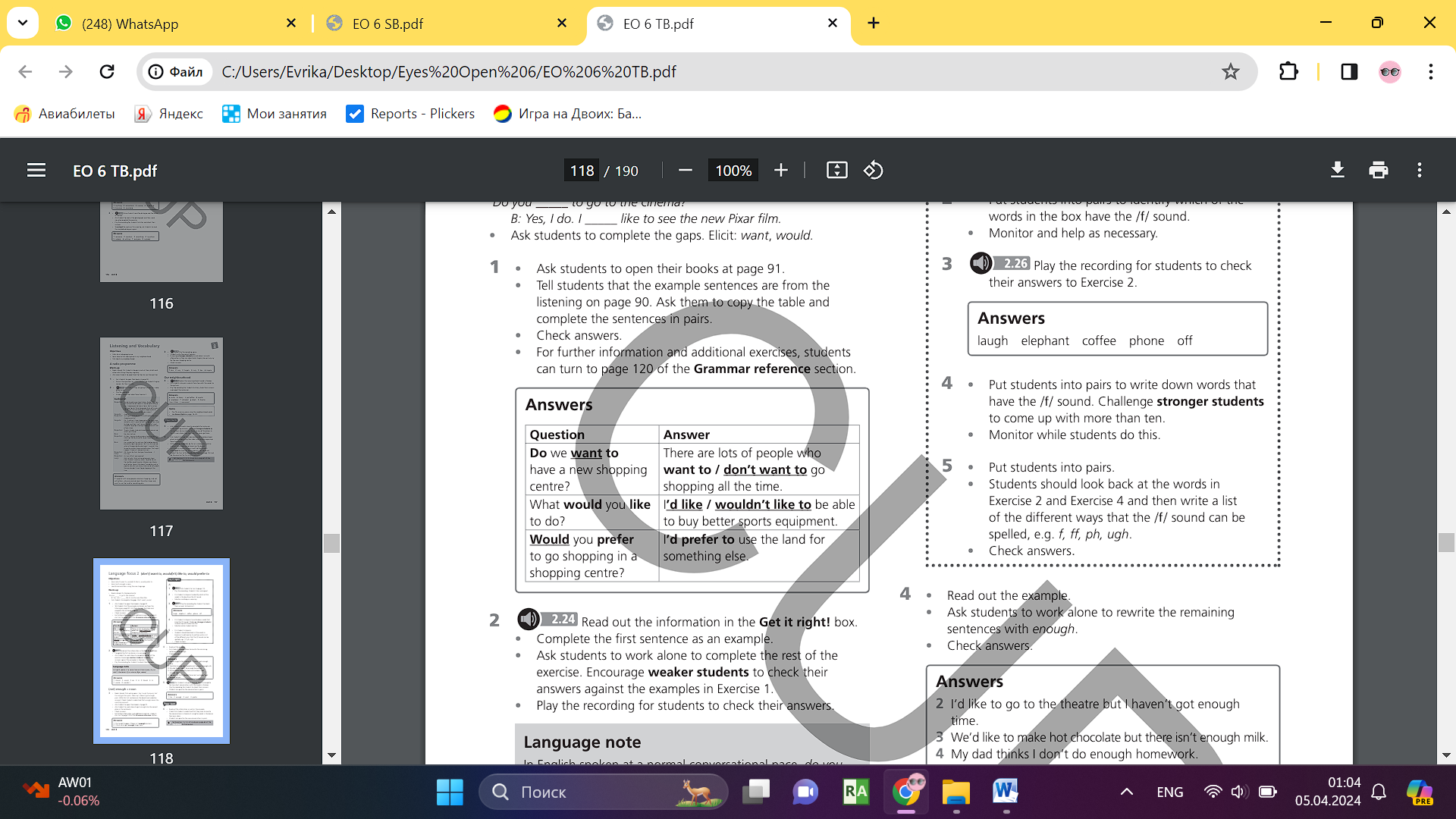
Organization moment : 1.Greeting. Ask about the weather. The teacher sets the lesson objectives, letting students know what to anticipate from the lesson. Warming up Books closed. On the board write: Do you to go to the cinema? B: Yes, I do. I like to see the new Pixar film. Ask students to complete the gaps. Elicit: want, would Lead – In
|
The aim: To develop pupils speaking skills and create friendly atmosphere Students of the class are listed. Students' attention is drawn to the lesson. Students say different words from the picture •Learners remember previous lesson vocabulary •Learners answer the questions
|
The teacher to assess learners for their ability. “Good job! Well done!” Formative Assessment
Good job! Descriptor: - remembers the lesson passed Point 1 Assessment criteria make basic statements related to personal information, match places to continents |
Pictures worksheet Picture |
|
Middle of the lesson Presentation part. 30 min
|
Ex:1 P:91 • Ask students to open their books at page 91. Tell students that the example sentences are from the listening on page 90. Ask them to copy the table and complete the sentences in pairs. Check answers. Ex: 2 P: 91 • Read out the information in the Get it right! box. Complete the first sentence as an example. Ask students to work alone to complete the rest of the exercise. Encourage weaker students to check their answers against the examples in Exercise 1. Play the recording for students to check their answers. Ex: 3 P: 91 • Books closed. Pick up two pens. Say: I need four pens, but I've only got two pens. Then say: I haven't got enough pens. Write this last sentence on the board and underline enough. Check students understand that enough means the necessary amount. Ask students to open their books at page 91. Ask students to work alone to put enough into the correct place in the sentences. Check answers. Ex: 4 P: 91 • Read out the example. Ask students to work alone to rewrite the remaining sentences with enough. Check answers. Conclusion during the lesson some tasks differentiated by outcomes of the students and by their abilities. |
• Learners complete the examples from the listening ANSWERS • Learners complete the conversations with do (n’t) or would (n’t). Then listen and check. ANSWERS 1 Would 2 would 3 do 4 'd 5 Would 6 'd 7 would 8 wouldn't • Learners look at the examples from the listening on page 90. Write enough in the correct place. ANSWERS 1 That might happen if there isn't enough business. 2 I think we've got enough shops here. • Learners rewrite the sentences with enough. ANSWERS 2 I'd like to go to the theatre but I haven't got enough time. 3 We'd like to make hot chocolate but there isn't enough milk. 4 My dad thinks I don't do enough homework. 5 My brother is unhealthy because he doesn't do enough sport. 6 We want to start a football team but we haven't got enough players |
Descriptor: - complete the examples - complete the sentences Total: 2point
Self assessment Differentiation: «Verbal support» method is used to help Ss use new words in the sentences. Descriptor: - complete the conversations - listen and check. Total: 2 point Descriptor: - complete the conversation with the indefinite pronouns - listen and check. Total: 2 point Descriptor: - rewrite the sentences with enough Total: 2 point -Make CCQ questions Yes / No Total: 1 point Total: 10 point |
Card Worksheet Students book |
|
End of the lesson 5 min |
FEEDBACK Learners provide feedback on what they have learned at the lesson. Ex: P: Home task: Write the days |
|
Poster Success
|
|
Short term plan: term 4
|
Unit 8: Our neighbourhood |
Lesson 86 |
||
|
Teacher name: |
|
||
|
Date: |
|
||
|
Grade: 6 |
Number present: |
absent: |
|
|
Lesson title |
Discover Culture |
||
|
Learning objectives |
6.1.1.1 use speaking and listening skills to solve problems creatively and cooperatively in groups 6.3.7.1 use appropriate subject-specific vocabulary and syntax to talk about a limited range of general topics general and curricular topics 6.6.2.1 use quantifiers many, much , a lot of ,a few on a limited range of familiar general and curricular topics |
||
|
Lesson objectives |
Learners will be able to: - watch a video about a tiger sanctuary in Thailand. - talk about how people help animals in my country. |
||
|
Value links |
Hospitality: Traditionally a nomadic culture, hospitality has always been an important part of Kazakh culture. |
||
|
Plan |
|||
|
Stages / Time |
Teachers actions |
Students actions |
Assessment criteria |
Resources |
|
Beginning of the lesson Warming-up
3 min. Pre-learning «Brainstorming» method 7 min.
|
Organization moment : 1.Greeting. Ask about the weather. The teacher sets the lesson objectives, letting students know what to anticipate from the lesson. Warming up Books closed. Write the noun sanctuary on the board. Check that students understand the meaning of this word. (An animal sanctuary is a place where injured or unwanted animals are taken care of). Use L1 if necessary to explain its meaning Lead – In
|
The aim: To develop pupils speaking skills and create friendly atmosphere Students of the class are listed. Students' attention is drawn to the lesson. Students say different words from the picture •Learners remember previous lesson vocabulary •Learners answer the questions
|
The teacher to assess learners for their ability. “Good job! Well done!” Formative Assessment
Good job! Descriptor: - remembers the lesson passed Point 1 Assessment criteria make basic statements related to personal information, match places to continents |
Pictures worksheet Picture |
|
Middle of the lesson Presentation part. 30 min
|
Ex:1 P:92 • Ask students to open their books at page 92 and look at the images. Ask the questions and elicit answers from the class Ex: 2 P: 92 •Ask a student to read out the three questions. Play the video for students to answer the questions. Students can compare answers in pairs before you check answers with the class. Ex: 3 P: 92 • Refer students to the animals listed in the box. Ask students to write down which of the animals in the box are seen in the video. Encourage stronger students to note down as much as they can about the animals that feature in the video. With weaker groups, revise the words in the box first. Students can compare their answers in pairs before you check answers with the class. Ex: 4 P: 92 • Put students into pairs to complete the sentences about the tigers in the video with the correct words. Check answers. Conclusion during the lesson some tasks differentiated by outcomes of the students and by their abilities. |
• Learners are going to watch a video about a tiger charity. How do you think it helps tigers? Why is it important to help them? ANSWERS Students own answer • Learners watch the video and answer the questions. ANSWERS 1 They are volunteers. 2 People give money to the sanctuary. 3 They have ten tigers now • Learners test your memory. Which animals do you see in the video? ANSWERS Monkey elephant owl snake bat deer buffalo • Learners watch the video again. Check your answers to Exercise 3 and choose the correct words. ANSWERS 1 ill 2 hunting 3 can't 4 are not 5 eat |
Descriptor: - watch a video about a tiger charity - answer the questions. Total: 2point
Self assessment Differentiation: «Verbal support» method is used to help Ss use new words in the sentences. Descriptor: - watch the video - answer the questions. Total: 2 point Descriptor: - test your memory. - answer the questions Total: 2 point Descriptor: - answer the questions - choose the correct words Total: 2 point -Make CCQ questions Yes / No Total: 1 point Total: 10 point |
Card Worksheet Students book |
|
End of the lesson 5 min |
FEEDBACK Learners provide feedback on what they have learned at the lesson. Ex: P: Home task: Write the days |
|
Poster Success
|
|

Short term plan: term 4
|
Unit 8: Our neighbourhood |
Lesson 87 |
||
|
Teacher name: |
|
||
|
Date: |
|
||
|
Grade: 6 |
Number present: |
absent: |
|
|
Lesson title |
Reading An article |
||
|
Learning objectives |
6.3.1.1 provide basic information about themselves and others at sentence level on an increasing range of general topics 6.2.4.1 understand the main points of supported extended talk on a range of general and curricular topics 6.5.1.1 plan, write, edit and proofread work at text level with support on a limited range of general and curricular topics |
||
|
Lesson objectives |
Learners will be able to: - read an article about the Red Nose Day charity event in the UK. - learn adjective prefixes. - talk about charity events |
||
|
Value links |
Hospitality: Traditionally a nomadic culture, hospitality has always been an important part of Kazakh culture. |
||
|
Plan |
|||
|
Stages / Time |
Teachers actions |
Students actions |
Assessment criteria |
Resources |
|
Beginning of the lesson Warming-up
3 min. Pre-learning «Brainstorming» method 7 min.
|
Organization moment : 1.Greeting. Ask about the weather. The teacher sets the lesson objectives, letting students know what to anticipate from the lesson. Warming up Books closed. Write the noun charity on the board. Check students understand the meaning of the word (A charity is an organisation established to offer financial and other help to people in need.) Use L1 to explain this concept if necessary and give local examples of charities if possible Lead – In
|
The aim: To develop pupils speaking skills and create friendly atmosphere Students of the class are listed. Students' attention is drawn to the lesson. Students say different words from the picture •Learners remember previous lesson vocabulary •Learners answer the questions
|
The teacher to assess learners for their ability. “Good job! Well done!” Formative Assessment
Good job! Descriptor: - remembers the lesson passed Point 1 Assessment criteria make basic statements related to personal information, match places to continents |
Pictures worksheet Picture |
|
Middle of the lesson Presentation part. 30 min
|
Ex:1 P:93 • Ask students to read the text to check their answers to Exercise 1. Suggested answer It's a charity day when people in the UK wear a red nose and do something funny to raise money. Ex: 2 P: 93 Ask students to read the text to check their answers to Exercise 1. Ex: 3 P: 93 • Give students time to read through the text again. Students then work alone to decide whether the sentences are true or false. They correct the sentences they think are false. Encourage students to highlight the words in the exercise which help them find the information in the text. In the first statement in this exercise, students should highlight every year and then look for that phrase, or at least the word every, in the text. Ask students to compare Ex: 4 P: 93 • Tell students that a prefix is a something that goes before a word and which changes that word's meaning, e.g. unhappy, with un- being the prefix that we put before some positive adjectives to make them negative. Ask students what the opposite of usual is, elicit the answer, then ask them to find the word in the text. Ex: 5 P: 93 Ask students to work in pairs to complete the sentences with the negative forms of the adjectives in the box. Check answers. Conclusion during the lesson some tasks differentiated by outcomes of the students and by their abilities. |
• Learners look at the title of the article and the photos. What happens on Red Nose Day? ANSWERS Students own answer • Learners read the article and check your ideas to Exercise 1. ANSWERS It's a charity day when people in the UK wear a red nose and do something funny to raise money. • Learners read the article again. Mark the sentences true (T) or false (F). ANSWERS 2 F (People decide how much money they want to give.) 3T 4T 5T 6 F (It's over 25 years old.) I • Learners find the opposite of usual in the text. How do we make it? ANSWERS unusual We add un- at the beginning of the word. |
Descriptor: - look at the title Total: 2point
Self assessment Differentiation: «Verbal support» method is used to help Ss use new words in the sentences. Descriptor: - read the article and check your ideas to Exercise 1. - answer the questions. Total: 2 point Descriptor: - test your memory. - answer the questions Total: 2 point Total: 10 point |
Card Worksheet Students book |
|
End of the lesson 5 min |
FEEDBACK Learners provide feedback on what they have learned at the lesson. Ex: P: Home task: Write the days |
|
Poster Success
|
|

Short term plan: term 4
|
Unit 8: Our neighbourhood |
Lesson 88 |
||
|
Teacher name: |
|
||
|
Date: |
|
||
|
Grade: 6 |
Number present: |
absent: |
|
|
Lesson title |
Speaking Shopping |
||
|
Learning objectives |
6.1.1.1 use speaking and listening skills to solve problems creatively and cooperatively in groups 6.2.1.1 understand a sequence of supported classroom instructions 6.3.2.1 ask simple questions to get information about a limited range of general topics |
||
|
Lesson objectives |
Learners will be able to: - watch teenagers taking about how they spend their money. - listen to a teenager talking to a shop assistant. - practise giving my opinion |
||
|
Value links |
Hospitality: Traditionally a nomadic culture, hospitality has always been an important part of Kazakh culture. |
||
|
Plan |
|||
|
Stages / Time |
Teachers actions |
Students actions |
Assessment criteria |
Resources |
|
Beginning of the lesson Warming-up
3 min. Pre-learning «Brainstorming» method 7 min.
|
Organization moment : 1.Greeting. Ask about the weather. The teacher sets the lesson objectives, letting students know what to anticipate from the lesson. Warming up Books closed. Write the noun charity on the board. Check students understand the meaning of the word (A charity is an organisation established to offer financial and other help to people in need.) Use L1 to explain this concept if necessary and give local examples of charities if possible Lead – In
|
The aim: To develop pupils speaking skills and create friendly atmosphere Students of the class are listed. Students' attention is drawn to the lesson. Students say different words from the picture •Learners remember previous lesson vocabulary •Learners answer the questions
|
The teacher to assess learners for their ability. “Good job! Well done!” Formative Assessment
Good job! Descriptor: - remembers the lesson passed Point 1 Assessment criteria make basic statements related to personal information |
Pictures worksheet Picture |
|
Middle of the lesson Presentation part. 30 min
|
Ex:1 P:94 • Ask students to open their books at page 94. Tell students they are going to watch some teenagers answering the following question: How do you spend your money? Refer students to the speakers as well as the words in the box Tell students that they are going to match the words with the speakers 1-6. Ex: 2 P: 94 Put students into pairs to ask and answer the question. Encourage them to ask additional questions, e.g. Do you spend a lot of money on clothes? Ask some students to report back to the class on what their partner said. Ex: 3 P: 94 • Tell students they are going to listen to Matt talking to a shop assistant. Read out the question. Check that students understand that trainers are sports shoes that are worn casually. Ex: 4 P: 94 •Refer students to the phrases in the Useful language box. Check students' understanding of the language, particularly the phrasal verb try on (which means putting an item of clothing on to see if it is the right size) and the phrase I'll take them (which means I'll buy them). Students can work alone to complete the conversation using the phrases in the Useful language box. Conclusion during the lesson some tasks differentiated by outcomes of the students and by their abilities. |
• Learners watch the teenagers in the video. How do they spend their money? Use these words ANSWERS 2 clothes 3 phone 4 going out with friends 5 comic books, video games 6 music, concert tickets • Learners ask and answer with your partner. Answer the question. ANSWERS Student’s own answer • Learners listen to Matt talking to a shop assistant. What colour trainers would he like? ANSWERS Blue • Learners complete the conversation with the useful language. Then listen and check your answers ANSWERS 1 I'd like to buy 2 I'd prefer 3 How much are they? 4 Can I try them on? 5 What size are you? 6 I'll take them. |
Descriptor: - watch the teenagers in the video - use these words Total: 2point
Self assessment Differentiation: «Verbal support» method is used to help Ss use new words in the sentences. Descriptor: - ask and answer with your partner - answer the questions. Total: 2 point Descriptor: - complete the conversation - answer the questions Total: 2 point Total: 10 point |
Card Worksheet Students book |
|
End of the lesson 5 min |
FEEDBACK Learners provide feedback on what they have learned at the lesson. Ex: P: Home task: Write the days |
|
Poster Success
|
|

Short term plan: term 4
|
Unit 8: Our neighbourhood |
Lesson 89 |
||
|
Teacher name: |
|
||
|
Date: |
|
||
|
Grade: 6 |
Number present: |
absent: |
|
|
Lesson title |
Writing An email |
||
|
Learning objectives |
6.3.1.1 provide basic information about themselves and others at sentence level on an increasing range of general topics 6.4.7.1 recognise typical features at word, sentence and text level in a limited range of written genres 6.5.1.1 plan, write, edit and proofread work at text level with support on a limited range of general and curricular topics |
||
|
Lesson objectives |
Learners will be able to: - read an email in which one friend asks another for help Corganising an event. - learn the use of countable and uncountable nouns. - write an email in which I ask someone to help organise an event |
||
|
Value links |
Hospitality: Traditionally a nomadic culture, hospitality has always been an important part of Kazakh culture. |
||
|
Plan |
|||
|
Stages / Time |
Teachers actions |
Students actions |
Assessment criteria |
Resources |
|
Beginning of the lesson Warming-up
3 min. Pre-learning «Brainstorming» method 7 min.
|
Organization moment : 1.Greeting. Ask about the weather. The teacher sets the lesson objectives, letting students know what to anticipate from the lesson. Warming up Books closed. Write the noun charity on the board. Check students understand the meaning of the word (A charity is an organisation established to offer financial and other help to people in need.) Use L1 to explain this concept if necessary and give local examples of charities if possible Lead – In
|
The aim: To develop pupils speaking skills and create friendly atmosphere Students of the class are listed. Students' attention is drawn to the lesson. Students say different words from the picture •Learners remember previous lesson vocabulary •Learners answer the questions
|
The teacher to assess learners for their ability. “Good job! Well done!” Formative Assessment
Good job! Descriptor: - remembers the lesson passed Point 1 Assessment criteria make basic statements related to personal information |
Pictures worksheet Picture |
|
Middle of the lesson Presentation part. 30 min
|
Ex:1 P:95 •Ask students to open their books at page 95. Ask students to look at the photo, read Joey's response to Annie's question, and say what Joey is asking Annie to do. Check the answer. Ex: 2 P: 95 Give students time to read Joey's email again. Ask students to work in pairs to order the information in the list in Exercise 2 according to how it appears in Joey's email. Check answers. Ex: 3 P: 95 • Put students into pairs to find the words Joey uses to do the things in Exercise 2. Check answers Ex: 4 P: 95 • Read out the information in the Useful language box. Ask students to work alone to find examples of countable and uncountable nouns in the text in Exercise 1. Check answers. Ex: 5 P: 95 Students add some, any, a or an in the right place. Check answers. Conclusion during the lesson some tasks differentiated by outcomes of the students and by their abilities. |
• Learners read the emails. What is Joey organising? ANSWERS Joey is organising an event at the village centre • Learners order the things Joey does in his email. ANSWERS a make a suggestion 3 b begin the email 1 c give some information 4 d end the email 5 e respond to Annie's email 2 f ask for a reply 6 • Learners find the words Joey uses to do the things in Exercise 2. ANSWERS 2 Great to hear from you! 3 Would you like to bring some food 4 We're going to open the centre on Saturday mornings from 10.00 to 11.30 and anyone in the village can come. 5 See you soon, • Learners find five more examples of countable and uncountable nouns in Joey’s email ANSWERS Countable: cake, biscuits Uncountable: tea, coffee, fruit, juice, money, furniture, rubbish • Learners rewrite the sentences. Add some, any, a or an in the right place ANSWERS 1 I'll need some money to pay for the biscuits. 2 Are there any plates in that cupboard? 3 We haven't got any fruit juice in the fridge. 4 There's an insect in my coffee! 5 Can you find a plate for the sandwiches |
Descriptor: - read the emails. - answer the question Total: 2point
Self assessment Differentiation: «Verbal support» method is used to help Ss use new words in the sentences. Descriptor: - read Joey's email again. - order the things Joey does in his email. . Total: 2 point Descriptor: - find the words Joey uses to do the things Total: 2 point Descriptor: - find five more examples of countable and Total: 2 point Total: 10 point |
Card Worksheet Students book |
|
End of the lesson 5 min |
FEEDBACK Learners provide feedback on what they have learned at the lesson. Ex: P: Home task: Write the days |
|
Poster Success
|
|
Short term plan: term 4
|
Unit 8: Our neighbourhood |
Lesson 90 |
||
|
Teacher name: |
|
||
|
Date: |
|
||
|
Grade: 6 |
Number present: |
absent: |
|
|
Lesson title |
CLIL: Math Percentages |
||
|
Learning objectives |
6.2.2.1 understand with little or no support most specific information in extended talk on a wide range of general and curricular topics 6.3.7.1 use appropriate subject-specific vocabulary and syntax to talk about a range of general topics, and some curricular topics |
||
|
Lesson objectives |
Learners will be able to: - learn about percentages. - calculate the percentage of chocolates that different people eat |
||
|
Value links |
Hospitality: Traditionally a nomadic culture, hospitality has always been an important part of Kazakh culture. |
||
|
Plan |
|||
|
Stages / Time |
Teachers actions |
Students actions |
Assessment criteria |
Resources |
|
Beginning of the lesson Warming-up
3 min. Pre-learning «Brainstorming» method 7 min.
|
Organization moment : 1.Greeting. Ask about the weather. The teacher sets the lesson objectives, letting students know what to anticipate from the lesson. Warming up Books closed. Write the noun charity on the board. Check students understand the meaning of the word (A charity is an organisation established to offer financial and other help to people in need.) Use L1 to explain this concept if necessary and give local examples of charities if possible Lead – In
|
The aim: To develop pupils speaking skills and create friendly atmosphere Students of the class are listed. Students' attention is drawn to the lesson. Students say different words from the picture •Learners remember previous lesson vocabulary •Learners answer the questions
|
The teacher to assess learners for their ability. “Good job! Well done!” Formative Assessment
Good job! Descriptor: - remembers the lesson passed Point 1 Assessment criteria make basic statements related to personal information |
Pictures worksheet Picture |
|
Middle of the lesson Presentation part. 30 min
|
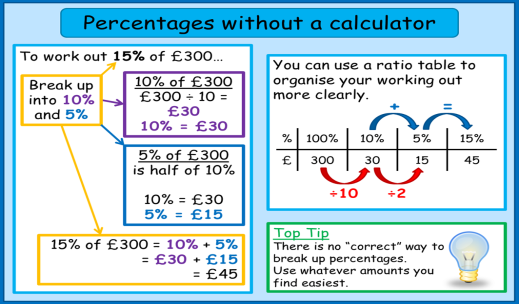
Ex:1 P:96 • Read out the words from the first box and check that students are able to pronounce them: minus /'maınǝs/, divide /dr'vard/, plus /plas/, per cent /pə 'sent/, equals i:kw(ə)ls/, multiply /'maltıplar/. /' Ask students to copy the second box into their notebooks. Students then complete it with the correct mathematical name for each of the symbols. Ex: 2 P: 96 Tell students they are going to read a text about percentages. Ask students to read the text and then make a note of which mathematical symbols are used to calculate a percentage. Ex: 3 P: 96 • Before students read the text again, check their understanding of fraction /'frak)(ə)n/, which means a numerical quantity that is not a whole number, e.g. 2. Use L1 if necessary. Give students time to read the six questions. Ask students to read the text again. Ex: 4 P: 96 • Read out the information. With weaker students, do the first one as an example, slowly taking students through the steps described in the text for the calculating of percentages. Put students into pairs to complete the exercise. Students can use the calculators on their smartphones to work out the percentages. Conclusion during the lesson some tasks differentiated by outcomes of the students and by their abilities. |
• Learners work with a partner. Match the symbols in the table with the words in the box. ANSWERS 1 plus 2 minus 3 multiply (by)/times 4 divide (by) 5 per cent 6 equals • Learn read and listen to the text. Which symbols from Exercise 1 do you use to calculate a percentage? ANSWERS +, =, x, % • Learners read the text again and answer the questions. ANSWERS 1 It comes from Latin. 2 They come from the ancient Arab world. 3 We use them to calculate how much a part of a whole is. 4 It's equal to 100%, 5 The whole is 12 cakes. 6 We multiply it by 100. • Learners work with a partner. Calculate the percentage of chocolates that each person eats. Use the text to help you. The box has 60 chocolates. ANSWERS 1 20% 2 10% 4 33.3% 3 25% |
Descriptor: - work with a partner - match the symbols in the table Total: 2point
Self assessment Differentiation: «Verbal support» method is used to help Ss use new words in the sentences. Descriptor: - read and listen to the text - use to calculate a percentage Total: 2 point Descriptor: - read the text - answer the questions. Total: 2 point Descriptor: - work with a partner. - use the text to help you Total: 2 point Total: 10 point |
Card Worksheet Students book |
|
End of the lesson 5 min |
FEEDBACK Learners provide feedback on what they have learned at the lesson. Ex: P: Home task: Write the days |
|
Poster Success
|
|
Short term plan: term 4
|
Unit 8: Our neighbourhood |
Lesson 91 |
||
|
Teacher name: |
|
||
|
Date: |
|
||
|
Grade: 6 |
Number present: |
absent: |
|
|
Lesson title |
Extra reading Summative Control work 7 for Unit 8. |
||
|
Learning objectives |
6.1.5.1 use feedback to set personal learning objectives 6.5.6.1 link, with some support, sentences into a coherent paragraph using basic connectors on a limited range of familiar general topics |
||
|
Lesson objectives |
Learners will be able to: - read an article about the capital of Kazakhstan, Astana. - match questions and answers about the text. - plan an afternoon/evening out in Astana |
||
|
Value links |
Hospitality: Traditionally a nomadic culture, hospitality has always been an important part of Kazakh culture. |
||
|
Plan |
|||
|
Stages / Time |
Teachers actions |
Students actions |
Assessment criteria |
Resources |
|
Beginning of the lesson Warming-up
3 min. Pre-learning «Brainstorming» method 7 min.
|
Organization moment : 1.Greeting. Ask about the weather. The teacher sets the lesson objectives, letting students know what to anticipate from the lesson. Warming up Books closed. Write the noun charity on the board. Check students understand the meaning of the word (A charity is an organisation established to offer financial and other help to people in need.) Use L1 to explain this concept if necessary and give local examples of charities if possible Lead – In
|
The aim: To develop pupils speaking skills and create friendly atmosphere Students of the class are listed. Students' attention is drawn to the lesson. Students say different words from the picture •Learners remember previous lesson vocabulary •Learners answer the questions
|
The teacher to assess learners for their ability. “Good job! Well done!” Formative Assessment
Good job! Descriptor: - remembers the lesson passed Point 1 Assessment criteria make basic statements related to personal information |
Pictures worksheet Picture |
|
Middle of the lesson Presentation part. 30 min
|
Ex:1 P:97 • Ask students to read the text once and check the ideas they brainstormed on the board. Check students' understanding of the following vocabulary: population, reconciliation, religious, base, hall, attractive. Point out the questions and answers. Give students a three- minute time limit to do the task referring back to the text. Students can compare answers in pairs before you check answers with the class. Ex: 2 P: 97 Students scan the text to find the numbers listed. They note what the numbers refer to. Draw students' attention to the fact that the numbers are not given in the order that they are mentioned in the text. Summative Control work 7 for Unit 8. Conclusion during the lesson some tasks differentiated by outcomes of the students and by their abilities. |
• Learners read the text, then match the questions and answers. ANSWERS 1 b 2 c 3 a • Learn read the text again to find the numbers below. What does each number refer to? ANSWERS 1 the number of people living in Astana 2 the height (in metres) of the Bayterek Tower 3 the height and width (in metres) of the Palace of Peace and Reconciliation 4 the number of seats in the Palace of Peace and Reconciliation opera house. 5 the year in which the city of Akmola changed its name to Astana 6 the number of seats in the Central Concert Hall 7 The year in which Astana became the capital of Kazakhstan |
Descriptor: - read the text - match the questions and answers Total: 2point
Self assessment Differentiation: «Verbal support» method is used to help Ss use new words in the sentences. Descriptor: - read the text - find the numbers below Total: 2 point Total: 10 point |
Card Worksheet Students book |
|
End of the lesson 5 min |
FEEDBACK Learners provide feedback on what they have learned at the lesson. Ex: P: Home task: Write the days |
|
Poster Success
|
|

Short term plan: term 4
|
Unit 9: Transport |
Lesson 92 |
||
|
Teacher name: |
|
||
|
Date: |
|
||
|
Grade: 6 |
Number present: |
absent: |
|
|
Lesson title |
Vocabulary: transport |
||
|
Learning objectives |
6.3.1.1 provide basic information about themselves and others at sentence level on an increasing range of general topics 6.4.5.1 deduce meaning from context in short texts on a limited range of familiar general and curricular topics 6.5.1.1 plan, write, edit and proofread work at text level with support on a limited range of general and curricular topics |
||
|
Lesson objectives |
Learners will be able to: - learn vocabulary for transport. - listen to people talking about means of transport. - talk about means of transport I use often |
||
|
Value links |
Hospitality: Traditionally a nomadic culture, hospitality has always been an important part of Kazakh culture. |
||
|
Plan |
|||
|
Stages / Time |
Teachers actions |
Students actions |
Assessment criteria |
Resources |
|
Beginning of the lesson Warming-up
3 min. Pre-learning «Brainstorming» method 7 min.
|
Organization moment : 1.Greeting. Ask about the weather. The teacher sets the lesson objectives, letting students know what to anticipate from the lesson. Warming up Books closed. Ask: Can you name some means of transport you use every day? Put students into small groups and give them one minute to write a list of means of transport. You could make this competitive by telling students that the group which comes up with the most means of transport (and which has written them down correctly in English) wins. Ask a member of each group to read their list out to the class Lead – In
|
The aim: To develop pupils speaking skills and create friendly atmosphere Students of the class are listed. Students' attention is drawn to the lesson. Students say different words from the picture •Learners remember previous lesson vocabulary •Learners answer the questions
|
The teacher to assess learners for their ability. “Good job! Well done!” Formative Assessment
Good job! Descriptor: - remembers the lesson passed Point 1 Assessment criteria make basic statements related to personal information |
Pictures worksheet Picture |
|
Middle of the lesson Presentation part. 30 min
|
Ex:1 P:99 • Ask students to open their books at page 99. Refer students to the photos and the word box. Put students into pairs to match the words with the photos. Play the recording for students to listen, check their answers and repeat the words. Encourage students to learn, as a part of their homework, each new set of vocabulary introduced in the Student's Book. They can do this by writing translations and definitions of the words, covering up the word in English, and testing themselves to see what they can remember Ex: 2 P: 99 Tell students that they are going to complete the sentences with the words in the box in Exercise 1. Encourage students to underline words in the sentences that can help them make their choice. Check answers with the class. Ex: 3 P: 99 Give students a few minutes to write two true sentences and two false sentences with words from Exercise 1. These sentences can be about a friend or a family member. If students can include means of transport that aren't in Exercise 1, they can add those things to their list. Conclusion during the lesson some tasks differentiated by outcomes of the students and by their abilities. |
• Learners match the photos above with the words in the box. Then listen, check and repeat. ANSWERS a ferry b cyclist c petrol station d traffic lights roundabout e motorway f coach i helicopter j airport qcruise • Learn complete the sentences with words from Exercise 1. ANSWERS 1 coach 2 ferry 3 motorway 4 cruise 5 roundabout 6 petrol station • Learn write two true sentences and two false sentences with words from Exercise 1. The sentences can be about you or someone you know. ANSWERS Student/s own aanswer. |
Descriptor: - match the photos above - listen, check and repeat Total: 2point
Self assessment Differentiation: «Verbal support» method is used to help Ss use new words in the sentences. Descriptor: - complete the sentences - complete the sentences Total: 2 point Descriptor: - write two true sentences Total: 2 point Total: 10 point |
Card Worksheet Students book |
|
End of the lesson 5 min |
FEEDBACK Learners provide feedback on what they have learned at the lesson. Ex: P: Home task: Write the days |
|
Poster Success
|
|
Short term plan: term 4
|
Unit 9: Transport |
Lesson 93 |
||
|
Teacher name: |
|
||
|
Date: |
|
||
|
Grade: 6 |
Number present: |
absent: |
|
|
Lesson title |
Reading: An article |
||
|
Learning objectives |
6.3.1.1 provide basic information about themselves and others at sentence level on an increasing range of general topics 6.4.5.1 deduce meaning from context in short texts on a limited range of familiar general and curricular topics 6.5.1.1 plan, write, edit and proofread work at text level with support on a limited range of general and curricular topics |
||
|
Lesson objectives |
Learners will be able to: - read an article about Amsterdam. - learn nouns with the suffix -ist. - talk about similarities and differences of my town compared to other towns. |
||
|
Value links |
Hospitality: Traditionally a nomadic culture, hospitality has always been an important part of Kazakh culture. |
||
|
Plan |
|||
|
Stages / Time |
Teachers actions |
Students actions |
Assessment criteria |
Resources |
|
Beginning of the lesson Warming-up
3 min. Pre-learning «Brainstorming» method 7 min.
|
Organization moment : 1.Greeting. Ask about the weather. The teacher sets the lesson objectives, letting students know what to anticipate from the lesson. Warming up Books closed. Ask: Can you name some means of transport you use every day? Put students into small groups and give them one minute to write a list of means of transport. You could make this competitive by telling students that the group which comes up with the most means of transport (and which has written them down correctly in English) wins. Ask a member of each group to read their list out to the class Lead – In
|
The aim: To develop pupils speaking skills and create friendly atmosphere Students of the class are listed. Students' attention is drawn to the lesson. Students say different words from the picture •Learners remember previous lesson vocabulary •Learners answer the questions
|
The teacher to assess learners for their ability. “Good job! Well done!” Formative Assessment
Good job! Descriptor: - remembers the lesson passed Point 1 Assessment criteria make basic statements related to personal information |
Pictures worksheet Picture |
|
Middle of the lesson Presentation part. 30 min
|
Ex:1 P:100 •Ask students to open their books at page 100. Students look at the photos and say which city they think this is and what is unusual about it. Ex: 2 P: 100 Ask students to read the article to check their answers to Exercise 1. Find out if any students in the class ride a bike to school. Ex: 3 P: 100 Give students time to read through sentences 1-5. Help weaker students by guiding them to the part of the text where they will find the information they need to choose the correct answers. Ask students to work alone to read the text again and choose the correct answers. Check answers. Ex: 4 P: 100 Refer students to the nouns in the text with the suffix -ist. Ask students to work alone to find two other nouns with the suffix -ist. Check answers.. Ex: 5 P: 100 Ask students to read the underlined words in each sentence. Put students into pairs to make nouns using the suffix -ist. Check answers. Conclusion during the lesson some tasks differentiated by outcomes of the students and by their abilities. |
• Learners look at the photos. What city do you think this is? Why is it unusual? ANSWERS Student’s own answer • Learn read the article and check your answers to Exercise 1. ANSWERS The city is Amsterdam. It is unusual because there are so many bicycles. • Learn read the text again and choose the correct answers ANSWERS 1a 2b 3a 5c 4b • Learn look at the example. Then find two other nouns in the text with the suffi x -ist. ANSWERS tourists, motorists • Learn use words with the suffi x -ist to complete the sentences. Use the underlined words to help you. Check the spelling in your dictionary! ANSWERS 1 guitarist 2 artist 3 tourists 4 biologist 5 pianist |
Descriptor: - look at the photos. - answer the question Total: 2point
Self assessment Differentiation: «Verbal support» method is used to help Ss use new words in the sentences. Descriptor: - read the text - choose the correct answers Total: 2 point Descriptor: - look at the example. - find two other nouns in the text Total: 2 point Total: 10 point |
Card Worksheet Students book |
|
End of the lesson 5 min |
FEEDBACK Learners provide feedback on what they have learned at the lesson. Ex: P: Home task: Write the days |
|
Poster Success
|
|
Short term plan: term 4
|
Unit 9: Transport |
Lesson 94 |
||
|
Teacher name: |
|
||
|
Date: |
|
||
|
Grade: 6 |
Number present: |
absent: |
|
|
Lesson title |
Language focus 1 Present simple passive |
||
|
Learning objectives |
6.2.3.1 understand an increasing range of unsupported basic questions on general and curricular topics 6.3.2.1 ask simple questions to get information about a limited range of general and curricular topics 6.4.4.1 read and understand with some support a limited range of short fiction and non-fiction texts understanding of general topics |
||
|
Lesson objectives |
Learners will be able to: - learn the present simple passive. - learn past simple passive question forms. - practise using the present simple passive to talk about holidays |
||
|
Value links |
Hospitality: Traditionally a nomadic culture, hospitality has always been an important part of Kazakh culture. |
||
|
Plan |
|||
|
Stages / Time |
Teachers actions |
Students actions |
Assessment criteria |
Resources |
|
Beginning of the lesson Warming-up
3 min. Pre-learning «Brainstorming» method 7 min.
|
Organization moment : 1.Greeting. Ask about the weather. The teacher sets the lesson objectives, letting students know what to anticipate from the lesson. Warming up Books closed. Ask: Can you name some means of transport you use every day? Put students into small groups and give them one minute to write a list of means of transport. You could make this competitive by telling students that the group which comes up with the most means of transport (and which has written them down correctly in English) wins. Ask a member of each group to read their list out to the class Lead – In
|
The aim: To develop pupils speaking skills and create friendly atmosphere Students of the class are listed. Students' attention is drawn to the lesson. Students say different words from the picture •Learners remember previous lesson vocabulary •Learners answer the questions
|
The teacher to assess learners for their ability. “Good job! Well done!” Formative Assessment
Good job! Descriptor: - remembers the lesson passed Point 1 Assessment criteria make basic statements related to personal information |
Pictures worksheet Picture |
|
Middle of the lesson Presentation part. 30 min
|
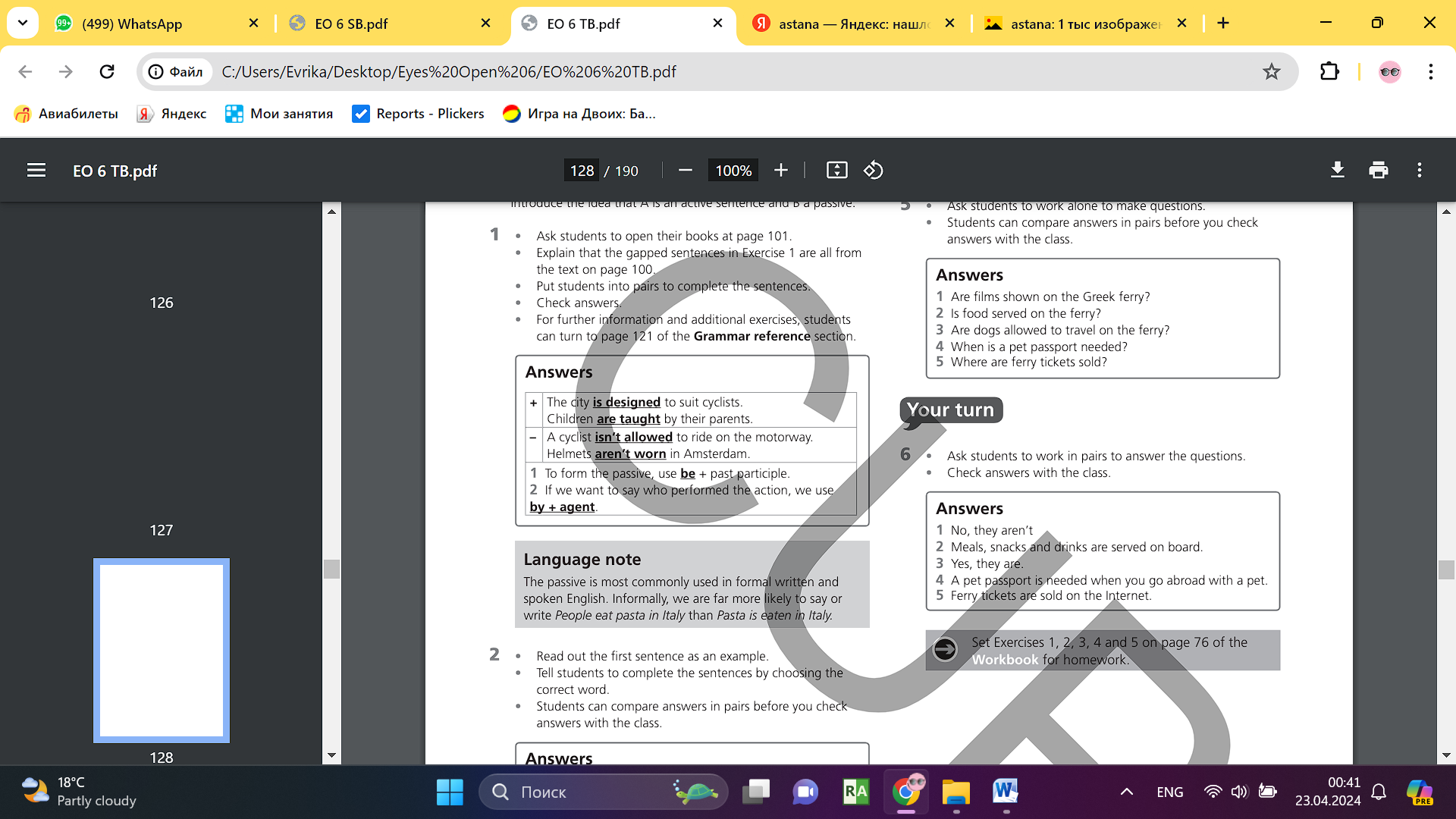
Ex:1 P:101 • Ask students to open their books at page 101. Explain that the gapped sentences in Exercise 1 are all from the text on page 100. Put students into pairs to complete the sentences. Check answers Ex: 2 P: 101 Read out the first sentence as an example. Tell students to complete the sentences by choosing the correct word. Students can compare answers in pairs before you check answers with the class Ex: 3 P: 101 Check that students understand that sentences 2 and 3 are in the passive because neither the cars nor the door do the actions of driving or closing. Ask students to read the text and work in pairs to complete it with the correct words. Play the recording for students to check their answers. Ex: 4 P: 101 Put students into pairs to read the questions and complete the rule. Check the answer. Ex: 5 P: 101 . Ask students to work alone to make questions. Students can compare answers in pairs before you check answers with the class. Conclusion during the lesson some tasks differentiated by outcomes of the students and by their abilities. |
• Learners complete the examples from the text on page 100. Then complete the rules. ANSWERS • Learn choose the correct words. ANSWERS 1 is 2 aren't 3 are 4 made 5 built 6 by • Learn complete the text with the passive form of the verbs. Then listen and check. ANSWERS 1 are driven 2 is closed 3 are served 4 aren't shown 5 aren't allowed 6 isn't provided 7 is needed 8 are sold • Learn look at the questions about the reading on page 100 and complete the rules ANSWERS To form questions we use be + subject + past participle • Learn make questions with the passive form of the verbs ANSWERS 1 Are films shown on the Greek ferry? 2 Is food served on the ferry? 3 Are dogs allowed to travel on the ferry? 4 When is a pet passport needed? 5 Where are ferry tickets sold |
Descriptor: - complete the examples - complete the rules Total: 2point
Self assessment Differentiation: «Verbal support» method is used to help Ss use new words in the sentences. Descriptor: - choose the correct words Total: 2 point Descriptor: - complete the text with the passive - listen and check Total: 2 point Descriptor: - look at the questions - complete the rules Total: 2 point Total: 10 point |
Card Worksheet Students book |
|
End of the lesson 5 min |
FEEDBACK Learners provide feedback on what they have learned at the lesson. Ex: P: Home task: Write the days |
|
Poster Success
|
|
Short term plan: term 4
|
Unit 9: Transport |
Lesson 95 |
||
|
Teacher name: |
|
||
|
Date: |
|
||
|
Grade: 6 |
Number present: |
absent: |
|
|
Lesson title |
Listening A conversation |
||
|
Learning objectives |
6.2.1.1 understand a sequence of supported classroom instructions 6.6.9.1 use simple present and simple past regular and irregular forms to describe routines, habits and states on a limited range of familiar general and curricular topics 6.1.1.1 use speaking and listening skills to solve problems creatively and cooperatively in groups |
||
|
Lesson objectives |
Learners will be able to: - listen to a conversation about a photo. - learn some prepositional verbs and phrasal verbs. - talk about the things I am interested in, excited about or worried about. |
||
|
Value links |
Hospitality: Traditionally a nomadic culture, hospitality has always been an important part of Kazakh culture. |
||
|
Plan |
|||
|
Stages / Time |
Teachers actions |
Students actions |
Assessment criteria |
Resources |
|
Beginning of the lesson Warming-up
3 min. Pre-learning «Brainstorming» method 7 min.
|
Organization moment : 1.Greeting. Ask about the weather. The teacher sets the lesson objectives, letting students know what to anticipate from the lesson. Warming up Books closed. Ask: Can you name some means of transport you use every day? Put students into small groups and give them one minute to write a list of means of transport. You could make this competitive by telling students that the group which comes up with the most means of transport (and which has written them down correctly in English) wins. Ask a member of each group to read their list out to the class Lead – In
|
The aim: To develop pupils speaking skills and create friendly atmosphere Students of the class are listed. Students' attention is drawn to the lesson. Students say different words from the picture •Learners remember previous lesson vocabulary •Learners answer the questions
|
The teacher to assess learners for their ability. “Good job! Well done!” Formative Assessment
Good job! Descriptor: - remembers the lesson passed Point 1 Assessment criteria make basic statements related to personal information |
Pictures worksheet Picture |
|
Middle of the lesson Presentation part. 30 min
|
Ex:1 P:102 • Ask students to open their books at page 102. Put students into pairs to ask and answer the question. Discuss the answers with the class Ex: 2 P: 102 Tell students they are going to listen to a conversation Play the recording for students to listen and answer the question in Exercise 1. Check answers Ex: 3 P: 102 Play the recording again. Students listen and complete the sentences. Check answers. Ex: 4 P: 102 Read out the information in the Get it right! box. Test students' understanding of prepositional verbs and phrasal verbs and how they are inseparable Put students into pairs to match the verbs in bold with their meanings. Play the recording. Students listen, check their answers and repeat. Ex: 5 P: 101 Refer students to the verbs in Exercise 4 and their meanings. Ask students to work alone to replace the underlined words. Check answers. Conclusion during the lesson some tasks differentiated by outcomes of the students and by their abilities. |
• Learners Olivia is showing Lisa a photo of her brother Matt. What do you think he’s doing? ANSWERS Student’s own answer • Learn listen to Lisa and Olivia talking about the photo. Check your ideas to Exercise 1. ANSWERS Matt is taking a year out before he goes to university • Learn listen again. Complete the sentences. ANSWERS 2 train 3 his/Olivia's cousins 4 beach bar 5 Europe 6 travel abroad • Learn match the verbs in bold with their meanings (a–f). Then listen, check and repeat. ANSWERS 1 f 2 c 3 d 4 a 5 b 6 e • Learn replace the underlined words with verbs from Exercise 4. ANSWERS 1 Quick! Get in the taxi - it's raining. 2 Our plane is taking off at 10:30 tomorrow. 3 We got off the ferry at Cherbourg. 4 My brother is going away to Poland next month. 5 Maria was in Italy for a week. She got back last Sunday |
Descriptor: - work in pairs - answer the question Total: 2point
Self assessment Differentiation: «Verbal support» method is used to help Ss use new words in the sentences. Descriptor: - listen to Lisa and Olivia talking - answer the question Total: 2 point Descriptor: - listen again - complete the sentences. Total: 2 point Descriptor: - match the verbs in bold - listen, check and repeat Total: 2 point Total: 10 point |
Card Worksheet Students book |
|
End of the lesson 5 min |
FEEDBACK Learners provide feedback on what they have learned at the lesson. Ex: P: Home task: Write the days |
|
Poster Success
|
|
Short term plan: term 4
|
Unit 9: Transport |
Lesson 96 |
||
|
Teacher name: |
|
||
|
Date: |
|
||
|
Grade: 6 |
Number present: |
absent: |
|
|
Lesson title |
Language focus 2 Present continuous for future |
||
|
Learning objectives |
6.3.1.1 provide basic information about themselves and others at sentence level on an increasing range of general topics 6.2.4.1 understand the main points of supported extended talk on a range of general and curricular topics 6.4.5.1 deduce meaning from context in short texts on a limited range of familiar general and curricular topics |
||
|
Lesson objectives |
Learners will be able to: - learn the present continuous for future arrangements. complete a diary and talk about future arrangements |
||
|
Value links |
Hospitality: Traditionally a nomadic culture, hospitality has always been an important part of Kazakh culture. |
||
|
Plan |
|||
|
Stages / Time |
Teachers actions |
Students actions |
Assessment criteria |
Resources |
|
Beginning of the lesson Warming-up
3 min. Pre-learning «Brainstorming» method 7 min.
|
Organization moment : 1.Greeting. Ask about the weather. The teacher sets the lesson objectives, letting students know what to anticipate from the lesson. Warming up Books closed. Write the following on the board: I'm playing tennis tomorrow. Elicit the tense used in sentence (Answer: the present continuous) and then ask students whether the sentence refers to the present or the future. Elicit the fact that it refers to the future. Lead – In
|
The aim: To develop pupils speaking skills and create friendly atmosphere Students of the class are listed. Students' attention is drawn to the lesson. Students say different words from the picture •Learners remember previous lesson vocabulary •Learners answer the questions
|
The teacher to assess learners for their ability. “Good job! Well done!” Formative Assessment
Good job! Descriptor: - remembers the lesson passed Point 1 Assessment criteria make basic statements related to personal information |
Pictures worksheet Picture |
|
Middle of the lesson Presentation part. 30 min
|
Ex:1 P:103 • Tell students that the example sentences are from the listening on page 102, in order for the students to complete the sentences, you could either play the listening again or write the words that they will need to fill the gaps on the board. Once students have completed the sentences, ask them to answer the question. Check answers. Ex: 2 P: 103 Ask a student to read out the example. Ask students to work alone to complete the conversations with the present continuous Ex: 3 P: 103 Read out the two questions and elicit the correct answers from the class. Guide weaker students to the correct answers by asking them to look for time phrases such as next week, which will indicate which sentences refer to the future. Ex: 5 P: 103 Ask students to read the text to check their ideas to Exercise 4. Check answer, Ex: 6 P: 103 Put students into pairs and ask them to complete the text in Exercise 5 with the present continuous form of the verbs in brackets. Check answers. Conclusion during the lesson some tasks differentiated by outcomes of the students and by their abilities. |
• Learners complete the examples from the listening on page 102. Then answer the question below. ANSWERS 1 He's flying to South Africa. 2 We've got family there, he's staying with our cousins. 1 These sentences talk about the future • Learn complete the conversations with the present continuous. Then listen and check. ANSWERS 1 she's asking 2 Are you going, I'm staying 3 Is Jonathan working, he isn't working, He's studying 4 is Mel starting 5 are they leaving, They're flying 6 are you saving, I'm going • Learn which sentences in Exercise 2 talk about the present? Which talk about the future? ANSWERS Conversations 1, 3 and 6 (question) talk about the present. Conversations 2, 4, 5 and 6 (answer) talk about the future. • Learn read the text and check your ideas to Exercise 4. ANSWERS She's a journalist • Learn with the present continuous form of the verbs in brackets. ANSWERS 1 is working 2 is asking 3 is flying 4 is speaking 5 are going 6 is meeting 7 are flying 8 isn't staying 9 is coming |
Descriptor: - complete the examples - answer the question below. Total: 2point
Self assessment Differentiation: «Verbal support» method is used to help Ss use new words in the sentences. Descriptor: - complete the conversations with the present continuous - listen and check Total: 2 point Descriptor: - listen and check - check your ideas Total: 2 point Descriptor: - complete the text - listen, check and repeat Total: 2 point Total: 10 point |
Card Worksheet Students book |
|
End of the lesson 5 min |
FEEDBACK Learners provide feedback on what they have learned at the lesson. Ex: P: Home task: Write the days |
|
Poster Success
|
|
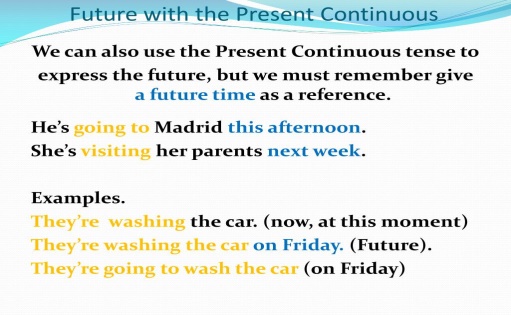
Short term plan: term 4
|
Unit 9: Transport |
Lesson 97 |
||
|
Teacher name: |
|
||
|
Date: |
|
||
|
Grade: 6 |
Number present: |
absent: |
|
|
Lesson title |
Discover Culture |
||
|
Learning objectives |
6.2.1.1 understand a sequence of supported classroom instructions 6.6.9.1 use simple present and simple past regular and irregular forms to describe routines, habits and states on a limited range of familiar general and curricular topic 6.3.1.1 provide basic information about themselves and others at sentence level on an increasing range of general topics |
||
|
Lesson objectives |
Learners will be able to: - watch a video about the calendar system used by the ancient Mayan people of Mexico. - talk about good days and bad days and whether it is possible to predict either |
||
|
Value links |
Hospitality: Traditionally a nomadic culture, hospitality has always been an important part of Kazakh culture. |
||
|
Plan |
|||
|
Stages / Time |
Teachers actions |
Students actions |
Assessment criteria |
Resources |
|
Beginning of the lesson Warming-up
3 min. Pre-learning «Brainstorming» method 7 min.
|
Organization moment : 1.Greeting. Ask about the weather. The teacher sets the lesson objectives, letting students know what to anticipate from the lesson. Warming up Books closed. Ask: Do you have a favourite and least day of the week? favourite Put students into pairs to ask and answer the question. Encourage students to give reasons for their answers, e.g. Sunday is my least favourite day of the week because it is such a quiet day Lead – In
|
The aim: To develop pupils speaking skills and create friendly atmosphere Students of the class are listed. Students' attention is drawn to the lesson. Students say different words from the picture •Learners remember previous lesson vocabulary •Learners answer the questions
|
The teacher to assess learners for their ability. “Good job! Well done!” Formative Assessment
Good job! Descriptor: - remembers the lesson passed Point 1 Assessment criteria make basic statements related to personal information |
Pictures worksheet Picture |
|
Middle of the lesson Presentation part. 30 min
|
Ex:1 P:104 • Ask students to open their books at page 104 and look at the photos. Read out the four questions and then put students into pairs to answer them. Ex: 2 P: 104 •Play the first part of the video for students to check their answers to Exercise 1 Ex: 3 P: 104 •Play the first part of the video again and then put students into pairs to answer the two questions. Check answers. Ex: 4 P: 104 •Give students time to read through the gapped text. Help weaker students by eliciting or suggesting the sort of words or numbers that you would expect to put in each gap. Play the next part of the video. Students watch and complete the text. Students can compare answers in pairs before you check answers with the class. Ex: 5 P: 104 Read out the four sentences. Tell students that the sentences describe images seen in the video. Ask students to put the images in the order in appear in the video. n which they Students can compare their answers in pairs. Conclusion during the lesson some tasks differentiated by outcomes of the students and by their abilities. |
• Learners work with a partner. Look at the photos and answer the questions. ANSWERS Student’s own answer • Learn watch the first part of the video (to 1.14) and check your answers. ANSWERS 1 in Mexico 2 the Maya 3 a calendar 4 Their knowledge of the sun and moon helped the Maya make their calendar. • Learn watch the first part of the video again and answer the questions. ANSWERS 1 Is today going to be a good or a bad day? 2 To understand their mysterious culture. • Learn watch the next part of the video and complete the text. ANSWERS 1 months 2 360 3 bad 4 365 5 steps 6 year • Learn test your visual memory. Put these images in the correct order ANSWERS Student’s own answer |
Descriptor: - work with a partner - work with a partner Total: 2point
Self assessment Descriptor: - watch the first part of the video - check your answers. Total: 2 point Descriptor: - watch the first part of the video again - answer the questions Total: 2 point Descriptor: - watch the next part of the video - complete the text Total: 2 point Descriptor: - test your visual memory - Put these images in the correct order Total: 2 point Total: 10 point |
Card Worksheet Students book |
|
End of the lesson 5 min |
FEEDBACK Learners provide feedback on what they have learned at the lesson. Ex: P: Home task: Write the days |
|
Poster Success
|
|

Short term plan: term 4
|
Unit 9: Transport |
Lesson 98 |
||
|
Teacher name: |
|
||
|
Date: |
|
||
|
Grade: 6 |
Number present: |
absent: |
|
|
Lesson title |
Reading An article Summative Control work 8 for unit 9. |
||
|
Learning objectives |
6.3.1.1 provide basic information about themselves and others at sentence level on an increasing range of general topics 6.2.4.1 understand the main points of supported extended talk on a range of general and curricular topics 6.4.5.1 deduce meaning from context in short texts on a limited range of familiar general and curricular topics |
||
|
Lesson objectives |
Learners will be able to: - read an article about superstitions. - learn adjective opposites. - talk about superstitions in my country |
||
|
Value links |
Hospitality: Traditionally a nomadic culture, hospitality has always been an important part of Kazakh culture. |
||
|
Plan |
|||
|
Stages / Time |
Teachers actions |
Students actions |
Assessment criteria |
Resources |
|
Beginning of the lesson Warming-up
3 min. Pre-learning «Brainstorming» method 7 min.
|
Organization moment : 1.Greeting. Ask about the weather. The teacher sets the lesson objectives, letting students know what to anticipate from the lesson. Warming up Books closed. Ask: Do you have a favourite and least day of the week? favourite Put students into pairs to ask and answer the question. Encourage students to give reasons for their answers, e.g. Sunday is my least favourite day of the week because it is such a quiet day Lead – In
|
The aim: To develop pupils speaking skills and create friendly atmosphere Students of the class are listed. Students' attention is drawn to the lesson. Students say different words from the picture •Learners remember previous lesson vocabulary •Learners answer the questions
|
The teacher to assess learners for their ability. “Good job! Well done!” Formative Assessment
Good job! Descriptor: - remembers the lesson passed Point 1 Assessment criteria make basic statements related to personal information |
Pictures worksheet Picture |
|
Middle of the lesson Presentation part. 30 min
|
Ex:1 P:105 • Ask students to open their books at page 105. Focus attention on the pictures. Put students into pairs and ask them to identify the superstitions pictured Ex: 2 P: 105 •Check understanding of the following: ladder (noun): a piece of equipment used for climbing up and down something, consisting of steps between two long lengths of wood, rope or metal.magpie (noun): a bird with a long tail and a noisy call. Ask students listen to read the text to check their answers to Exercise 1 With the whole class, discuss the question of whether any of the superstitions referred to in the article are a feature of life in the students' country. Ex: 3 P: 105 • Ask students to read the text again and work alone to decide whether the sentences are true or false. Tell students to correct the false sentences. Check answers with the class. Read out the information in the FACT! box. Go through the pronunciation of the word triskaidekaphobia /trisknıdıkələbiə/ with the class. Tell students that the word comes from the Greek for thirteen, which is treiskaideka. Summative Control work 8 for unit 9. |
• Learners work with a partner. Look at the photos showing superstitions. What do you think the superstitions are? ANSWERS Student’s own answer • Learn read the article and check your answers. Have you got the same superstitions in your country? ANSWERS not changing one's socks and entering the pitch with your right foot, opening an umbrella inside a house, one magpie, walking under a ladder, putting a horseshoe outside your house, breaking a mirror, a black cat • Learn read the article again. Are the sentences true or false? Correct the false ones. 2T 3 F (Some footballers don't change their socks.) 4 F (They are for people who don't believe in superstitions.) 5T 6 F (They love these parties.) |
Descriptor: - work with a partner - look at the photos showing superstitions Total: 2point
Self assessment Descriptor: - read the article - answer the Total: 2 point Descriptor: - read the article again. - mark the statements Total: 2 point Total: 10 point |
Card Worksheet Students book |
|
End of the lesson 5 min |
FEEDBACK Learners provide feedback on what they have learned at the lesson. Ex: P: Home task: Write the days |
|
Poster Success
|
|
Short term plan: term 4
|
Unit 9: Transport |
Lesson 99 |
||
|
Teacher name: |
|
||
|
Date: |
|
||
|
Grade: 6 |
Number present: |
absent: |
|
|
Lesson title |
Speaking Expressing surprise Not for Sale! |
||
|
Learning objectives |
6.3.1.1 provide basic information about themselves and others at sentence level on an increasing range of general topics 6.5.5.1 link without support sentences using basic coordinating connectors |
||
|
Lesson objectives |
Learners will be able to: - watch teenagers talking about what they are afraid of. - listen to two friends talking about a friend who doesn't like sailing. - practise expressing surprise |
||
|
Value links |
Hospitality: Traditionally a nomadic culture, hospitality has always been an important part of Kazakh culture. |
||
|
Plan |
|||
|
Stages / Time |
Teachers actions |
Students actions |
Assessment criteria |
Resources |
|
Beginning of the lesson Warming-up
3 min. Pre-learning «Brainstorming» method 7 min.
|
Organization moment : 1.Greeting. Ask about the weather. The teacher sets the lesson objectives, letting students know what to anticipate from the lesson. Warming up Books closed. Ask: Do you have a favourite and least day of the week? favourite Put students into pairs to ask and answer the question. Encourage students to give reasons for their answers, e.g. Sunday is my least favourite day of the week because it is such a quiet day Lead – In
|
The aim: To develop pupils speaking skills and create friendly atmosphere Students of the class are listed. Students' attention is drawn to the lesson. Students say different words from the picture •Learners remember previous lesson vocabulary •Learners answer the questions
|
The teacher to assess learners for their ability. “Good job! Well done!” Formative Assessment
Good job! Descriptor: - remembers the lesson passed Point 1 Assessment criteria make basic statements related to personal information |
Pictures worksheet Picture |
|
Middle of the lesson Presentation part. 30 min
|
Ex:1 P:106 •Ask students to open their books at page 106 Tell students they are going to watch some teenagers answering the following question: What are you afraid of? Give students some time to look at the three questions and then play the video. Students work alone to answer the question. Students can compare answers in pairs before you check answers with the class Ex: 2 P: 106 • Put students into pairs to ask and answer the question. Ask some students to report back to the class on what their partner said. Ex: 3 P: 106 Tell students they are going to listen to Jack and Rosa talking about their friend Mike. Play the recording for students to listen and answer the question. Ex: 4 P: 106 •Give students time to look through the conversation. Ask students to work alone to complete the conversation with the words in the Useful language box. Stronger students can try to complete the conversation without looking at the phrases in the box. Students can compare answers in pairs. Ex: 5 P: 106 Play the recording for students to check their answers to Exercise 4. Ask students to pay particular attention to the intonation used by the speakers on the recording. |
• Learners watch the teenagers in the videos. How many teenagers … ANSWERS a 2 b 2 c 2 • Learn answer the question. What are you afraid of? ANSWERS Student’s own answer • Learn Jack and Rosa are talking about a friend called Mike. What is he afraid of? ANSWERS deep water • Learn complete the conversation with the useful language. ANSWERS Student’s own answer • Learn listen again and check your answers ANSWERS 2 What 3 impossible 4 can't be 5 Are you 6 joking 7 believe |
Descriptor: - watch the teenagers in the videos - answer the question. Total: 2point
Self assessment Descriptor: - answer the question Total: 2 point Descriptor: - listen to Jack and Rosa talking - answer the question Total: 2 point Descriptor: - look through the conversation - complete the conversation without looking at the phrases Total: 2 point Total: 10 point |
Card Worksheet Students book |
|
End of the lesson 5 min |
FEEDBACK Learners provide feedback on what they have learned at the lesson. Ex: P: Home task: Write the days |
|
Poster Success
|
|
Short term plan: term 4
|
Unit 9: Transport |
Lesson 100 |
||
|
Teacher name: |
|
||
|
Date: |
|
||
|
Grade: 6 |
Number present: |
absent: |
|
|
Lesson title |
Writing An email to a friend |
||
|
Learning objectives |
6.2.2.1 understand with little or no support most specific information in extended talk on a wide range of general and curricular topics 6.3.7.1 use appropriate subject-specific vocabulary and syntax to talk about a range of general topics, and some curricular topics 6.5.1.1 plan, write, edit and proofread work at text level with support on a limited range of general and curricular topics |
||
|
Lesson objectives |
Learners will be able to: - read an email about a plans and a problem. - learn ways of introducing news and explaining things. - write an email to a friend |
||
|
Value links |
Hospitality: Traditionally a nomadic culture, hospitality has always been an important part of Kazakh culture. |
||
|
Plan |
|||
|
Stages / Time |
Teachers actions |
Students actions |
Assessment criteria |
Resources |
|
Beginning of the lesson Warming-up
3 min. Pre-learning «Brainstorming» method 7 min.
|
Organization moment : 1.Greeting. Ask about the weather. The teacher sets the lesson objectives, letting students know what to anticipate from the lesson. Warming up Books closed. Ask: Do you ever look for advice online? Put students into pairs to ask and answer the question. Ask some students to report back to the class on what their partner said. Lead – In
|
The aim: To develop pupils speaking skills and create friendly atmosphere Students of the class are listed. Students' attention is drawn to the lesson. Students say different words from the picture •Learners remember previous lesson vocabulary •Learners answer the questions
|
The teacher to assess learners for their ability. “Good job! Well done!” Formative Assessment
Good job! Descriptor: - remembers the lesson passed Point 1 Assessment criteria make basic statements related to personal information |
Pictures worksheet Picture |
|
Middle of the lesson Presentation part. 30 min
|
Ex:1 P:107 • Ask students to open their books at page 107. Ask students to read Stefani's email and say what she is worried about. Check the answer with the class. Ex: 2 P: 107 • Ask students to work in pairs to put the information in Stefani's email in the correct order. Check answers. Ex: 3 P: 107 • Refer students to the Useful language box. Ask students to work alone to find two other examples of introducing something in Stefani's email. Students can compare answers in pairs before you check answers with the class. Ex: 4 P: 107 Ask students to work alone rewrite the remaining sentences using the phrases in brackets. Help weaker students by showing that the phrase in brackets goes at the beginning of the sentence and that it is always followed by is that. Check answers with the class. |
• Learners look at the photo and read Stefani’s email. What is she worried about? ANSWERS flying • Learn read Stefani’s email again. Put the information she writes about in order. ANSWERS explain the problem 3 open email and say thanks for Pete's news 1 write about who she has spoken to about it 5 describe how she feels and why 4 ask for advice and close email 6 give news and explain her plans 2 • Learn look at the Useful language box. Find two other examples of introducing something in the email. ANSWERS my problem is the truth is • Learn complete the sentences using the words in brackets ANSWERS 2 The idea is that we stay there for two years. 3 The truth is that she doesn't want to go. 4 The fact is that a lot of people have this phobia. 5 The idea is that they visit me next year. 6 My big news is that I've got a dog |
Descriptor: - look at the photo - read Stefani’s email. Total: 2point
Self assessment Descriptor: - read Stefani’s email again - Put the information in the correct order Total: 2 point Descriptor: - look at the Useful language box - find two other examples Total: 2 point Descriptor: - rewrite the remaining sentences - complete the sentences using the words Total: 2 point Total: 10 point |
Card Worksheet Students book |
|
End of the lesson 5 min |
FEEDBACK Learners provide feedback on what they have learned at the lesson. Ex: P: Home task: Write the days |
|
Poster Success
|
|

Short term plan: term 4
|
Unit 9: Transport |
Lesson 101 |
||
|
Teacher name: |
|
||
|
Date: |
|
||
|
Grade: 6 |
Number present: |
absent: |
|
|
Lesson title |
CLIL: Geography Living in a global city |
||
|
Learning objectives |
6.2.2.1 understand with little or no support most specific information in extended talk on a wide range of general and curricular topics 6.3.1.1 provide basic information about themselves and others at sentence level on an increasing range of general topics 6.4.7.1 recognize typical features at word, sentence and text level in a limited range of written genres |
||
|
Lesson objectives |
Learners will be able to: - listen to and read about life in global cities. - talk about the advantages and disadvantages of living in different places |
||
|
Value links |
Hospitality: Traditionally a nomadic culture, hospitality has always been an important part of Kazakh culture. |
||
|
Plan |
|||
|
Stages / Time |
Teachers actions |
Students actions |
Assessment criteria |
Resources |
|
Beginning of the lesson Warming-up
3 min. Pre-learning «Brainstorming» method 7 min.
|
Organization moment : 1.Greeting. Ask about the weather. The teacher sets the lesson objectives, letting students know what to anticipate from the lesson. Warming up Books closed. Put students into small groups and give them one minute to write down as many capital cities as they can Make this competitive by telling students that the group with the most cities on their list wins Lead – In
|
The aim: To develop pupils speaking skills and create friendly atmosphere Students of the class are listed. Students' attention is drawn to the lesson. Students say different words from the picture •Learners remember previous lesson vocabulary •Learners answer the questions
|
The teacher to assess learners for their ability. “Good job! Well done!” Formative Assessment
Good job! Descriptor: - remembers the lesson passed Point 1 Assessment criteria make basic statements related to personal information |
Pictures worksheet Picture |
|
Middle of the lesson Presentation part. 30 min
|
Ex:1 P:108 • Ask students to open their books at page 108. Focus on the photos of the cities. Ask students to work in pairs to identify the cities as well as write a list of the advantages of living in places like this. Check answers with the class. Ask students if they can identify the famous park and monument in the photos. Ex: 2 P: 108 • Tell students they are going to read about how a city can be defined and classified. Ask students to read the text to find out if any of their ideas from Exercise 1 are mentioned Ex: 3 P: 108 • Focus attention on the incomplete summary of the text. Read out the example and then ask students to complete the notes using the information in Exercise 2 to help them. With weaker students, write all the words on the board that are needed to complete the text. Students can compare answers in pairs Ex: 4 P: 108 • Play the recording for students to check their answers to Exercise |
• Learners work with a partner. Look at the photos. Which cities are they? Make a list of the advantages of living in a city. ANSWERS The photos show New York (Central Park) and Berlin (the Brandenburg Gate) • Learn read the information about cities. Are any of your ideas from Exercise 1 mentioned? ANSWERS Student’s own answer • Learn read the information again and complete the following summary ANSWERS Student’s own answer • Learn listen and check. ANSWERS 2 services 3 transport 4 entertainment 5 economic 6 cosmopolitan 7Multinational companies 8 museums 9 universities |
Descriptor: - work with a partner - look at the photos. Total: 2point
Self assessment Descriptor: - read the information about cities Total: 2 point Descriptor: - read the information again - complete the following summary Total: 2 point Descriptor: - listen and check Total: 2 point Total: 10 point |
Card Worksheet Students book |
|
End of the lesson 5 min |
FEEDBACK Learners provide feedback on what they have learned at the lesson. Ex: P: Home task: Write the days |
|
Poster Success
|
|
Short term plan: term 4
|
|
|||
|
Teacher’s name: |
|
||
|
Date: |
|
||
|
Grade: 6 |
Number present: |
absent: |
|
|
Lesson title |
Summative Control work for the 4th term. |
||
|
Learning objectives |
6.2.4.1 Understand with limited support the main points of extended talk on a range of general and curricular topics 6.4.2.1 Understand independently specific information and detail in short, simple texts on a limited range of general and curricular topics 6.5.3.1 Write with some support about personal feelings and opinions on a limited range of familiar general and curricular topics 6.3.7.1 Use appropriate subject-specific vocabulary and syntax to talk about a limited range of general topics, and some curricular topics |
||
|
Lesson objectives |
Learners will be able to: -follow the direction of the talk by tracking the key words - pronounce words and phrases correctly - identify specific information |
||
|
Plan |
|||
|
Stages / Time |
Teachers’ actions |
Students’ actions |
Assessment criteria |
Resources |
|
Beginning of the lesson 5 min |
Organization moment 1.Greeting. Ask about the weather. The teacher sets the lesson objectives, letting students know what to anticipate from the lesson. Warm-up Method speaking phone was used to develop speaking skills.
Lead – In |
Students' attention is drawn to the lesson. Students discuss the pictures in pairs. Determines the topic and aim of the lesson Students say different words from the picture |
Formative Assessment
Good job! Assessment criteria -Identify detailed information in extended conversation with support |
Pictures Student’s book |
|
Middle of the lesson Presentation part. 35 min |
Listening Task. Listen to the talk twice. CD3. Tapescript 3. And transcript for listening task can be found after the mark scheme Mark sentences as True or False. Fill in the gaps. Write no more than ONE WORD OR A NUMBER for each answer. Reading Task. Read the dialogue about transportation Choose the right option. Answer the questions. Write NO MORE THAN THREE WORDS OR A NUMBER for each answer Answer the questions. Write NO MORE THAN THREE WORDS OR A NUMBER for each answer Writing Task. Choose ONE of the topics below. Speaking Task. Choose one of the cards and make up an individual talk. Use subject related vocabulary while talking on a given topic. You have 1 minute to prepare and 1-2 minutes to talk Conclusion during the lesson some tasks differentiated by outcomes of the students and by their abilities. |
Students listen to the talk twice Answers: Student’s own answer Differentiation: «Verbal support» method is used to help Students use new words in the text. Students read the dialogue about transportation Answers: Students choose ONE of the topics below. Answers: Students choose one of the cards and make up an individual talk |
Descriptor: - listen to the talk twice - Mark sentences as True or False. Total: 5 point Descriptor: -can read the dialogue about transportation Total: 5 point Descriptor: - answer the questions. -can choose ONE of the topics below. Total: 6 point Descriptor: - choose one of the cards - make up an individual talk Total: 6 point Answers: |
Worksheets |
|
End of the lesson 5 min |
FEEDBACK Learners provide feedback on what they have learned at the lesson. |
|
Students evaluate each other and encourage classmate with phrases like: Well done! Brilliant! |
Poster
|
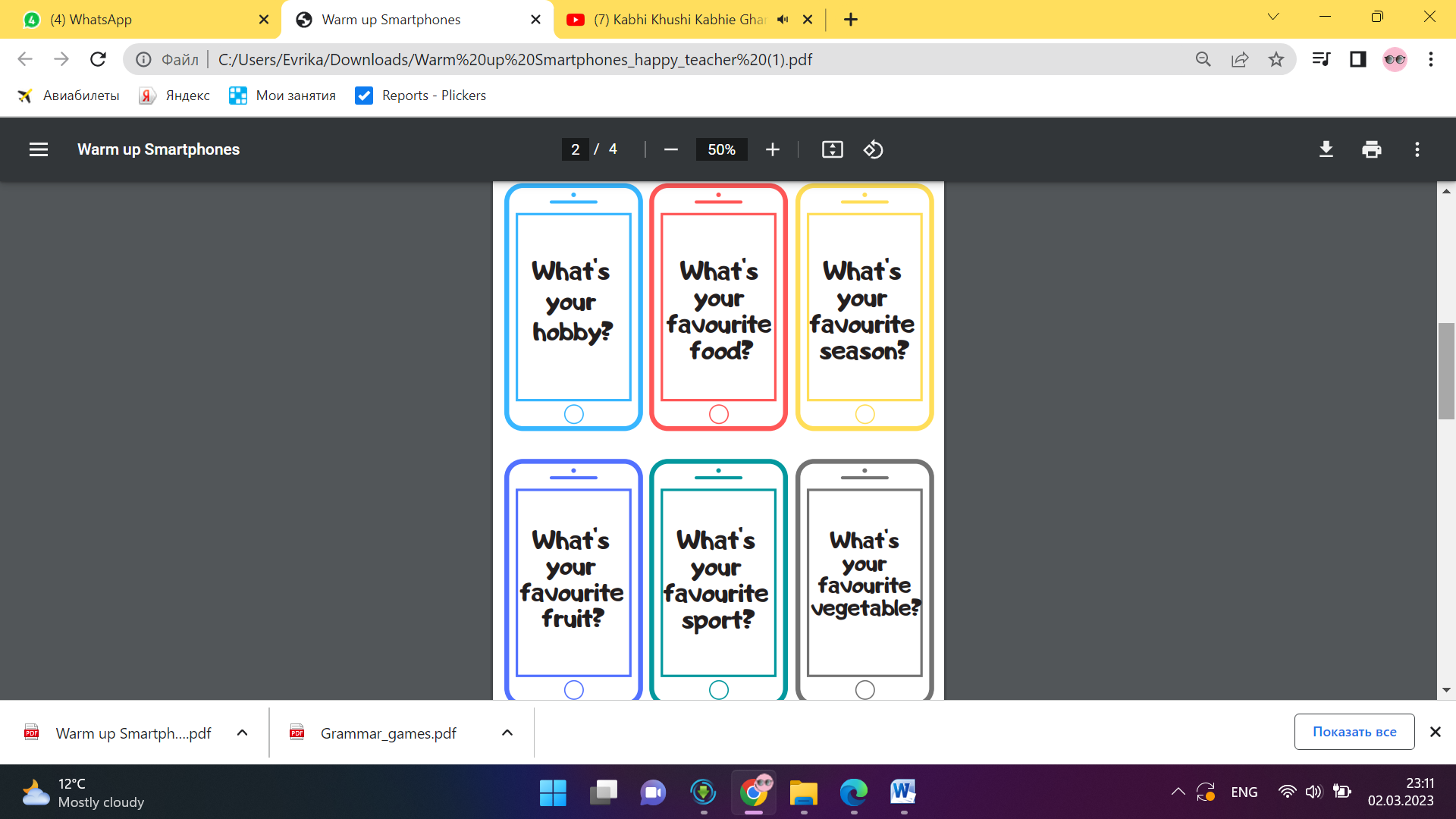


Short term plan: term 4
|
Unit 9: Transport |
Lesson 103 |
||
|
Teacher name: |
|
||
|
Date: |
|
||
|
Grade: 6 |
Number present: |
absent: |
|
|
Lesson title |
Extra reading. Public transport in Kazakhstan |
||
|
Learning objectives |
6.3.1.1 provide basic information about themselves and others at sentence level on an increasing range of general topics 6.4.7.1 recognize typical features at word, sentence and text level in a limited range of written genres |
||
|
Lesson objectives |
Learners will be able to: - read a text about public transport in Kazakhstan. - answer comprehension questions about the text. - have a debate about public bicycles. |
||
|
Value links |
Hospitality: Traditionally a nomadic culture, hospitality has always been an important part of Kazakh culture. |
||
|
Plan |
|||
|
Stages / Time |
Teachers actions |
Students actions |
Assessment criteria |
Resources |
|
Beginning of the lesson Warming-up
3 min. Pre-learning «Brainstorming» method 7 min.
|
Organization moment : 1.Greeting. Ask about the weather. The teacher sets the lesson objectives, letting students know what to anticipate from the lesson. Warming up Books closed. Ask students to draw a big circle on a page in their notebooks. Explain that you are going to give them a topic which they need to write in the circle. They will then have 30 seconds to write as many words related to the topic around the circle. You could show them how to draw a spidergram on board. Give them an example with a different topic, e.g. food. When students are ready, give them the topic: Transport. Students race to write as many words as they cammin 30 seconds. When the time is up, students compare their ideas in pairs or small groups. Lead – In
|
The aim: To develop pupils speaking skills and create friendly atmosphere Students of the class are listed. Students' attention is drawn to the lesson. Students say different words from the picture •Learners remember previous lesson vocabulary •Learners answer the questions
|
The teacher to assess learners for their ability. “Good job! Well done!” Formative Assessment
Good job! Descriptor: - remembers the lesson passed Point 1 Assessment criteria make basic statements related to personal information |
Pictures worksheet Picture |
|
Middle of the lesson Presentation part. 30 min
|
Ex:1 P:109 • Ask students to look at the photographs and read the text once. Tell them to look for any transport words that are missing from the spidergram on the board. Check answers and add any words on the board. Elicit or teach the following vocabulary: be far apart, get around, official, fairly (cheap), be in a hurry. Ask individual students to read out a question each. Check they understand them. Students read the text again, then work in pairs to answer the questions about it. Check answers with the class, then extend the work on the text by asking students to say which of the types of transport mentioned they prefer and why. Ex: 2 P: 109 • Students work in pairs. They ask and answer questions about when they travel by bus, tram, taxi, train and plane. Encourage students to answer in full sentences, and to give extra information in their answers. You could ask some students to report back to the class about their partner's answers |
• Learners read the text, then answer the questions. ANSWERS 1 Because it is such a big country and towns and cities are so far apart. 2 Because most drivers will stop and pick you up if you wave to them. 3 It is the number of kilometres of railway in Kazakhstan. 4 It is cheap, you can enjoy the views and you can sleep comfortably if there is a bed. 5 There might not be any tickets left because they sell quickly • Learn work with a partner. Ask and answer questions about when you use each form of transport ANSWERS Student’s own answer |
Descriptor: - read the text - answer the questions Total: 2point
Self assessment Descriptor: - read the information about cities Total: 2 point Descriptor: - work with a partner. - ask and answer questions Total: 2 point Total: 10 point |
Card Worksheet Students book |
|
End of the lesson 5 min |
FEEDBACK Learners provide feedback on what they have learned at the lesson. Ex: P: Home task: Write the days |
|
Poster Success
|
|









 Бұл курс Қазақстан Республикасы Оқу-ағарту министрлігімен келісілген