
 ЖИ көмекші


 Қауіпсіз төлем

жүктеу мүмкіндігіне ие боласыз
Бұл материал сайт қолданушысы жариялаған. Материалдың ішінде жазылған барлық ақпаратқа жауапкершілікті жариялаған қолданушы жауап береді. Ұстаз тілегі тек ақпаратты таратуға қолдау көрсетеді. Егер материал сіздің авторлық құқығыңызды бұзған болса немесе басқа да себептермен сайттан өшіру керек деп ойласаңыз осында жазыңыз
 01 Сәуір 2025
 85
85
1 жыл бойы шексіз жүктеңіз
қмж Laser-6, 4-тоқс
Short term plan: term 4
|
Unit 8: Our neighbourhood |
Lesson 81 |
||
|
Teacher name: |
|
||
|
Date: |
|
||
|
Grade: 6 |
Number present: |
absent: |
|
|
Lesson title |
Friends and Family! |
||
|
Learning objectives |
6.2.5.1 understand most specific information and detail of short, supported talk on a wide range of familiar topics curricular topics. 6.1.8.1 develop intercultural awareness through reading and discussion 6.6.14.1 use prepositions to talk about time and location use prepositions like to describe things and about to denote topic use prepositions of direction to, into, out of, from, towards on a limited range of familiar general and curricular topics familiar general and curricular topics |
||
|
Lesson objectives |
Learners will be able to: - learn and use phrases to talk about getting on with friends and family - develop students' topic vocabular |
||
|
Value links |
Patriotism: The formation of civil society institutions is impossible without the development of a patriotism shared by the entire Kazakhstan, and with deep roots in the culture, psychology, and historical past of the Kazakhs. |
||
|
Plan |
|||
|
Stages / Time |
Teachers actions |
Students actions |
Assessment criteria |
Resources |
|
Beginning of the lesson Warming-up
Pre-learning «Brainstorming» method 7 min. |
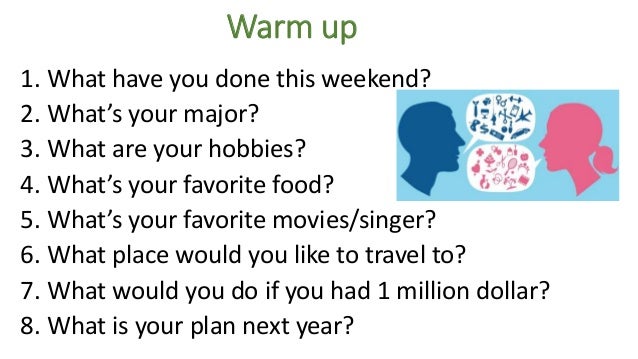
Organization moment : 1.Greeting. Ask about the weather. The teacher sets the lesson objectives, letting students know what to anticipate from the lesson.
Lead – In
|
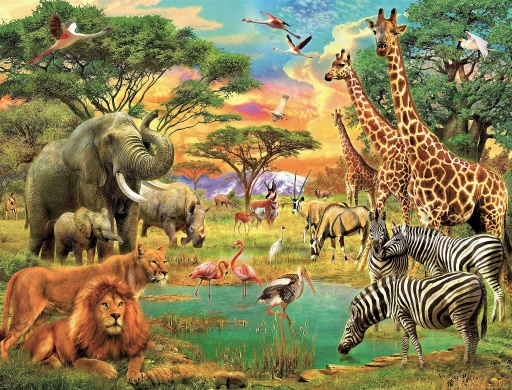
The aim: To develop pupils speaking skills and create friendly atmosphere Students' attention is drawn to the lesson. Students say different words from the picture •Learners remember previous lesson vocabulary •Learners answer the questions What do you see in this picture? What kind of animals do you see? Do they farm animals or wild animals? |
The teacher to assess learners for their ability. “Good job! Well done!” Formative Assessment
Good job! Descriptor: - remembers the lesson passed Point 1 Assessment criteria make basic statements related to |
Pictures worksheet Picture |
|
Middle of the lesson Presentation part. 30 min |
Ex:1 P: 98 • Ask students to silently and individually read the text. Encourage them to ignore all unknown vocabulary at this stage. • Ask students some very general and simple questions about the text, eg What kind of text is it? (a dialogue), Who are the speakers? (Phoebe and Lauren), What is the text about? (Lauren can't go to Phoebe's party). • Give students a few minutes to do exercise 1. • Check answers together with students. . Ex: 2 P: 99 • Encourage students to do this task quickly but carefully (to help develop their scanning skills). • Ask students to read the text again, decide whether each statement is true or false by circling 'T' or 'F. • When they have finished, discuss the answers together. Encourage students to justify their answers by giving reasons. Ex: 3 P: 99 • You can ask students to form pairs and ask and answer the questions in this task, or you can ask students to do the task individually and write their answers in their notebooks. Wordpower! Explain to students that all the answers appear in the dialogue they have read. • Ask students to try to complete the gaps without referring back to the text, but explain that they can if necessary. • Remind students that they should only write one letter in each gap and that the first letter has been given to help them. Conclusion during the lesson some tasks differentiated by outcomes of the students and by their abilities. |
• Learners read the dialogue and write ‘L’ for Lauren or ‘P’ for Phoebe. ANSWERS 1P 2 L 3 P 4 P • Learners read the dialogue again and decide if the statements are true (T) or false (F). ANSWERS 1 F (Why are you frowning, Lauren?... I can't go to your party on Saturday, Phoebe.) 2 F (I get upset and they get angry. We start shouting and then I cry.) 3 T (Try to smile and explain to them how you feel without getting upset.) 4 T (They probably worry about you.) 5 F (How can I show them I'm old enough and they can trust me?) 6 T (Could you ask your dad for me?) • Learners talk about you. ANSWERS Students own answer • Learners write one letter in each gap to complete the words ANSWERS 1 fair 2 let 3 argue 4 permission 5 get on with 6 relationship 7 grow up 8 allow |
Descriptor: - read the dialogue - write ‘L’ for Lauren or ‘P’ for Total: 2 point
Self assessment Descriptor: - read the dialogue - mark the statements Total: 2 point Descriptor: - talk about you. Total: 1 point Descriptor: - write one letter - complete the words Total: 1 point -Make CCQ questions Yes / No |
Card Worksheet Students book |
|
End of the lesson 5 min |
FEEDBACK Learners provide feedback on what they have learned at the lesson. Ex: P: Home task: Write the days |
|
Poster Success
|
|




Short term plan: term 4
|
Unit 8: Our neighbourhood |
Lesson 82 |
||
|
Teacher name: |
|
||
|
Date: |
|
||
|
Grade: 6 |
Number present: |
absent: |
|
|
Lesson title |
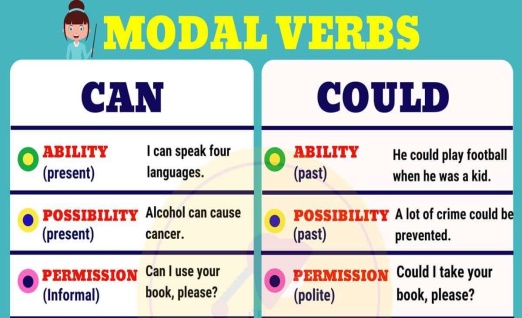
Grammar 1 can and could |
||
|
Learning objectives |
6.1.1.1 use speaking and listening skills to solve problems creatively and cooperatively in groups 6.2.5.1 understand most specific information and detail of short, supported talk on a wide range of familiar topics 6.3.7.1 use appropriate subject-specific vocabulary and syntax to talk about a limited range of general topics |
||
|
Lesson objectives |
Learners will be able to: - facilitate students' understanding of the functions and usage of can and could |
||
|
Value links |
Freedom: Freedom is the major value of the civil society being formed in Kazakhstan. This must provide everyone with the possibility of creative self-realization. |
||
|
Plan |
|||
|
Stages / Time |
Teachers actions |
Students actions |
Assessment criteria |
Resources |
|
Beginning of the lesson Warming-up
Pre-learning «Brainstorming» method 7 min. |
Organization moment : 1.Greeting. Ask about the weather. The teacher sets the lesson objectives, letting students know what to anticipate from the lesson.
Lead – In
|
The aim: To develop pupils speaking skills and create friendly atmosphere Students' attention is drawn to the lesson. Students say different words from the picture •Learners remember previous lesson vocabulary •Learners answer the questions What do you see in this picture? What kind of animals do you see? Do they farm animals or wild animals? |
The teacher to assess learners for their ability. “Good job! Well done!” Formative Assessment
Good job! Descriptor: - remembers the lesson passed Point 1 Assessment criteria make basic statements related to |
Pictures worksheet Picture |
|
Middle of the lesson Presentation part. 30 min |
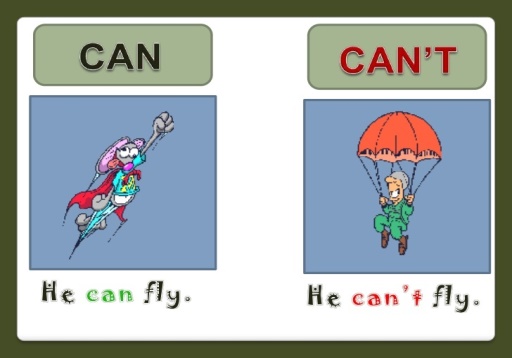
Ex:1 P: 100 • Explain to students that they have to write sentences about the pictures using can/can't and could/couldn't and the words below the pictures. • Check answers orally and/or by writing them on the board. Ex: 2 P: 100 • Ask students to choose the correct word or phrase. Check answers orally and ask students to justify their answers, eg 1 Yes, you can stay with Molly. because we use the bare infinitive after can. Ex: 3 P: 100 • Ask students to look at the words in each of these items and reorder them to make questions. • Check answers orally and/or by writing them on the board. Conclusion during the lesson some tasks differentiated by outcomes of the students and by their abilities. |
• Learners write sentences using can/can’t and could/couldn’t ANSWERS 2 She could dance yesterday, but now she can't. 3 He could play basketball last Saturday, but now he can't. 4 She couldn't have a picnic this morning, but now she can • Learners choose the correct word or phrase. ANSWERS Students own answer • Learners reorder the words to make questions. ANSWERS 2 Could you drive me to the football match? 3 Can I go to the cinema tonight with Ben / with Ben tonight? 4 Can I stay at Lizzie's house tonight? 5 Could you ask Mr Turner to come in? 6 Could Rachel stay here on Friday night |
Descriptor: - write sentences using can/can’t Total: 2 point
Self assessment Descriptor: - choose the correct word Total: 2 point Descriptor: - reorder the words to make questions. Total: 1 point -Make CCQ questions Yes / No |
Card Worksheet Students book |
|
End of the lesson 5 min |
FEEDBACK Learners provide feedback on what they have learned at the lesson. Ex: P: Home task: Write the days |
|
Poster Success
|
|
Short term plan: term 4
|
Unit 8: Our neighbourhood |
Lesson 83 |
||
|
Teacher name: |
|
||
|
Date: |
|
||
|
Grade: 6 |
Number present: |
absent: |
|
|
Lesson title |
Vocabulary |
||
|
Learning objectives |
6.3.7.1 use appropriate subject-specific vocabulary and syntax to talk about a limited range of general topics general and curricular topics 6.6.14.1 use prepositions to talk about time and location use prepositions like to describe things and about to denote topic use prepositions of direction to, into, out of, from, towards and there is / there are on a limited range of familiar general and curricular topics familiar general and curricular topics |
||
|
Lesson objectives |
Learners will be able to: - develop students' ability to recognise and use words that describe facial gestures - give practice in listening for gist and specific information |
||
|
Value links |
Tradition: Kazakh traditions and culture have been passed on from one generation to another through oral histories told by traditional Kazakh tribal leaders and elders. |
||
|
Plan |
|||
|
Stages / Time |
Teachers actions |
Students actions |
Assessment criteria |
Resources |
|
Beginning of the lesson Warming-up
Pre-learning «Brainstorming» method 7 min. |
Organization moment : 1.Greeting. Ask about the weather. The teacher sets the lesson objectives, letting students know what to anticipate from the lesson.
Lead – In
|
The aim: To develop pupils speaking skills and create friendly atmosphere Students' attention is drawn to the lesson. Students say different words from the picture •Learners remember previous lesson vocabulary •Learners answer the questions What do you see in this picture? What kind of animals do you see? Do they farm animals or wild animals? |
The teacher to assess learners for their ability. “Good job! Well done!” Formative Assessment
Good job! Descriptor: - remembers the lesson passed Point 1 Assessment criteria make basic statements related to |
Pictures worksheet Picture |
|
Middle of the lesson Presentation part. 30 min |
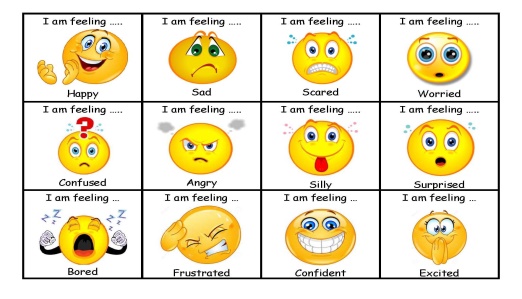
Ex:1 P: 101 • Ask students to look at the pictures and complete the emotions using the endings from the box. Encourage students to make a guess if they're not sure. You may also wish to refer students to the Vocabulary database on page 128. Check the answers orally and/or write answers on the board. Ex: 2 P: 101 • Ask students to read the short dialogues and complete each gap with an appropriate word from exercise 1. Go round the class helping students where necessary Listening Ex: 1 P: 101 • Ask or assign students to read the dialogues aloud and ask students to check their answers as they listen. Ex: 2 P: 101 • Explain to students that they are going to listen to a conversation. Go through the items in the task and ask students to predict what the person might say for each thing, eg Can I go to a party? for Item 1, I can study for the test on Sunday. for Item 2, etc. Accept all reasonable answers at this stage. Play the CD track once all the way through. Repeat if necessary. Ask students to choose the correct answer, A, B or C, as they listen to the conversation. |
• Learners complete the emotions using the endings from the box. ANSWERS 1 angry 2 confused 3 scared 4 surprised 5 upset 6 worried • Learners write a word from exercise 1 in each gap. ANSWERS 1 upset/angry2 angry/upset 3 worried 4 surprised 5 scared 6 confused • Learners listen to a conversation. As you listen, choose the correct answer, A, B or C ANSWERS 1 A (...there's a party at Oscar's house on Saturday.... Can I go?)2 C (And I can get ready for the test on Sunday.) 3 B (I couldn't stay at Paul's house last month...) 4 B (It starts at eight.... 11 o'clock. The party ends then.) • Learners listen again and circle the person who mentions these things. ANSWERS 1 Liam (Well, there's a party at Oscar's house on Saturday.) 2 Liam's dad (You've got a lot of homework at the moment,...) 3 Liam's mum (You're still very young, and we worry about you.) 4 Liam (I'm nearly 13!) 5 Liam (It starts at eight.) 6 Liam's dad (OK, but make sure you do your homework first |
Descriptor: - look at the pictures - complete the emotions using the endings Total: 2 point
Self assessment Descriptor: - read the short dialogues - complete each gap with an appropriate word Total: 2 point Descriptor: - read the dialogues - choose the correct answer Total: 1 point Descriptor: - listen to a conversation - circle the person Total: 1 point -Make CCQ questions Yes / No |
Card Worksheet Students book |
|
End of the lesson 5 min |
FEEDBACK Learners provide feedback on what they have learned at the lesson. Ex: P: Home task: Write the days |
|
Poster Success
|
|
Short term plan: term 4
|
Unit 8: Our neighbourhood |
Lesson 84 |
||
|
Teacher name: |
|
||
|
Date: |
|
||
|
Grade: 6 |
Number present: |
absent: |
|
|
Lesson title |
Speaking |
||
|
Learning objectives |
6.2.5.1 understand most specific information and detail of short, supported talk on a wide range of familiar topics 6.3.7.1 use appropriate subject-specific vocabulary and syntax to talk about a limited range of general topics |
||
|
Lesson objectives |
Learners will be able to: - provide practice in asking for, giving and refusing permission - introduce students to basic phrases and questions |
||
|
Value links |
Hospitality: Traditionally a nomadic culture, hospitality has always been an important part of Kazakh culture. |
||
|
Plan |
|||
|
Stages / Time |
Teachers actions |
Students actions |
Assessment criteria |
Resources |
|
Beginning of the lesson Warming-up
Pre-learning «Brainstorming» method 7 min. |
Organization moment : 1.Greeting. Ask about the weather. The teacher sets the lesson objectives, letting students know what to anticipate from the lesson.
Lead – In
|
The aim: To develop pupils speaking skills and create friendly atmosphere Students' attention is drawn to the lesson. Students say different words from the picture •Learners remember previous lesson vocabulary •Learners answer the questions What do you see in this picture? What kind of animals do you see? Do they farm animals or wild animals? |
The teacher to assess learners for their ability. “Good job! Well done!” Formative Assessment
Good job! Descriptor: - remembers the lesson passed Point 1 Assessment criteria make basic statements related to |
Pictures worksheet Picture |
|
Middle of the lesson Presentation part. 30 min |
Ex:1 P: 102 • Explain to students that they are going to listen to the dialogue in exercise 1. Play the CD track once all the way through. Repeat if necessary. Then, in pairs, ask students to read the dialogue. When they have finished reading the dialogue, they should swap roles Ex: 2 P: 102 • Go through the Phrase Bank! with students before you ask students to do exercise 2. Put students into pairs, or allow them to choose their own partner. Explain that they're going to do a role-play. Ask one student to pretend they are a teenager and the other student to pretend they are a parent. Ask students to use the information in the boxes to form questions and responses, and to use the phrases from the Phrase Bank!. Encourage them to use their imagination. SoundSpot Ex: 1 P: 102 • Ask students to look at the words can and can't in exercise 1 and to practise saying both words. Say them along with students if you like. Play the recording and ask students to say each word after they hear it on the recording Ex: 2 P: 102 • Explain to students that they are going to listen to the sentences in exercise 2 and ask them to circle the word they hear. Remind them to listen carefully for the difference between can and can't. |
• Learners listen. Then, in pairs, read the dialogue ANSWERS Student’s own answer • Learners in pairs, do the role-play. Follow the instructions and use your imagination. When you have finished, swap roles. ANSWERS Student’s own answer • Learners listen and repeat these words. ANSWERS Student’s own answer • Learners listen and choose the word you hear ANSWERS 1 can 2 can't 3 can't 4 can |
Descriptor: - listen to the dialogue - read the dialogue Total: 2 point
Self assessment Descriptor: - work in pairs - do a role-play. Total: 2 point Descriptor: - look at the words can and can't in exercise 1 - practise saying both words. Total: 1 point Descriptor: - listen and choose the word Total: 1 point -Make CCQ questions Yes / No |
Card Worksheet Students book |
|
End of the lesson 5 min |
FEEDBACK Learners provide feedback on what they have learned at the lesson. Ex: P: Home task: Write the days |
|
Poster Success
|
|
Short term plan: term 4
|
Unit 8: Our neighbourhood |
Lesson 85 |
||
|
Teacher name: |
|
||
|
Date: |
|
||
|
Grade: 6 |
Number present: |
absent: |
|
|
Lesson title |
Grammar 2 should, must and have to |
||
|
Learning objectives |
6.1.1.1 use speaking and listening skills to solve problems creatively and cooperatively in groups 6.2.1.1 understand a sequence of supported classroom instructions 6.3.1.1 provide basic information about themselves and others at sentence level on an increasing range of general topics |
||
|
Lesson objectives |
Learners will be able to: - consider how we talk about obligation, lack of obligation and giving advice |
||
|
Value links |
National values begin with respect for the nation Kazakhstan is a multinational state. According to research, there are more than 130 nationalities in Kazakhstan. The formation of a nation as a nation begins primarily with the glorification of national values. |
||
|
Plan |
|||
|
Stages / Time |
Teachers actions |
Students actions |
Assessment criteria |
Resources |
|
Beginning of the lesson Warming-up
Pre-learning «Brainstorming» method 7 min. |
Organization moment : 1.Greeting. Ask about the weather. The teacher sets the lesson objectives, letting students know what to anticipate from the lesson.
Lead – In
|
The aim: To develop pupils speaking skills and create friendly atmosphere Students' attention is drawn to the lesson. Students say different words from the picture •Learners remember previous lesson vocabulary •Learners answer the questions What do you see in this picture? What kind of animals do you see? Do they farm animals or wild animals? |
The teacher to assess learners for their ability. “Good job! Well done!” Formative Assessment
Good job! Descriptor: - remembers the lesson passed Point 1 Assessment criteria make basic statements related to |
Pictures worksheet Picture |
|
Middle of the lesson Presentation part. 30 min |
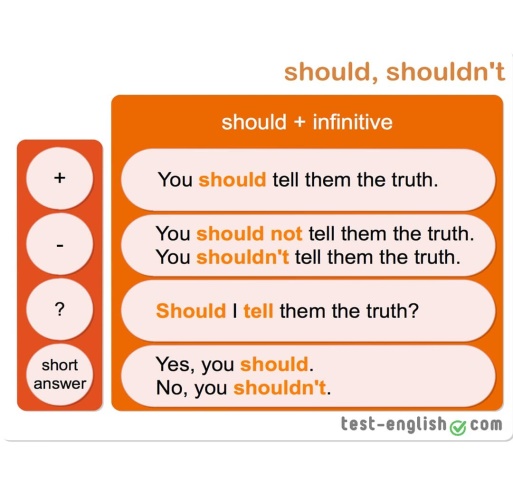
Ex:1 P: 103 • Ask students to look at the pictures and the table. Ask them to write sentences about Anna and Bobby using must or have to in the correct form. Explain that more than one answer may be possible for some of the items. When students have finished, check the answers together. Ex: 2 P: 103 • Ask students to look at the pictures again and write sentences about themselves. Go round the classroom assisting students where necessary. When students have finished, ask students to read out their sentences. You may wish to extend this task by asking students to close their books, and to repeat what they have to/don't have to/etc do. Ex: 3 P: 103 • Ask students to complete the exercise by writing advice on the second line of each item using should and shouldn't and a phrase from the box. When students have finished, check the answers together. Assign students to read out the dialogues. Time permitting, repeat with as many students as possible. |
• Learners write sentences about Anna and Bobby. Use must or have to in the correct form. ANSWERS 2 Anna must feed / has to feed the goldfish. Bobby doesn't have to feed the goldfish. 3 Anna doesn't have to cook dinner. Bobby doesn't have to cook dinner. 4 Anna doesn't have to empty the bin. Bobby must empty/has to empty the bin. 5 Anna must tidy / has to tidy her room. Bobby must tidy/has to tidy his room • Learners look at each picture in exercise 1 again and write sentences about you. ANSWERS Student’s own answer • Learners complete the advice. Use should or shouldn’t and a phrase from the box ANSWERS 1 You should ask your teacher to help you. 2 You shouldn't get upset with them. 3 You should tell her how you feel. 4 You should try to get on with him |
Descriptor: - write sentences about Anna and Bobby - use must or have to in the correct form. Total: 2 point
Self assessment Descriptor: - look at each picture - write sentences about you Total: 2 point Descriptor: - complete the advice. - use should or shouldn’t Total: 1 point -Make CCQ questions Yes / No |
Card Worksheet Students book |
|
End of the lesson 5 min |
FEEDBACK Learners provide feedback on what they have learned at the lesson. Ex: P: Home task: Write the days |
|
Poster Success
|
|
Short term plan: term 4
|
Unit 8: Our neighbourhood |
Lesson 86 |
||
|
Teacher name: |
|
||
|
Date: |
|
||
|
Grade: 6 |
Number present: |
absent: |
|
|
Lesson title |
Project: writing a set of household rules |
||
|
Learning objectives |
6.1.1.1 use speaking and listening skills to solve problems creatively and cooperatively in groups 6.3.7.1 use appropriate subject-specific vocabulary and syntax to talk about a limited range of general topics general and curricular topics 6.6.2.1 use quantifiers many, much , a lot of ,a few on a limited range of familiar general and curricular topics |
||
|
Lesson objectives |
Learners will be able to: - develop the skills necessary to write a set of rules - familiarise students with the concept of rules |
||
|
Value links |
Freedom: Freedom is the major value of the civil society being formed in Kazakhstan. This must provide everyone with the possibility of creative self-realization. |
||
|
Plan |
|||
|
Stages / Time |
Teachers actions |
Students actions |
Assessment criteria |
Resources |
|
Beginning of the lesson Warming-up
Pre-learning «Brainstorming» method 7 min. |
Organization moment : 1.Greeting. Ask about the weather. The teacher sets the lesson objectives, letting students know what to anticipate from the lesson.
Lead – In
|
The aim: To develop pupils speaking skills and create friendly atmosphere Students' attention is drawn to the lesson. Students say different words from the picture •Learners remember previous lesson vocabulary •Learners answer the questions What do you see in this picture? What kind of animals do you see? Do they farm animals or wild animals? |
The teacher to assess learners for their ability. “Good job! Well done!” Formative Assessment
Good job! Descriptor: - remembers the lesson passed Point 1 Assessment criteria make basic statements related to |
Pictures worksheet Picture |
|
Middle of the lesson Presentation part. 30 min |
Ex:1 P: 104 • * Ask students to read the dialogue silently and individually, and then to answer the questions. Check answers together when students have finished Ex: 2 P: 104 • Ask students to read the set of rules and choose Yes or No to answer the questions. Check answers together when students have finished. Additionally, ask students if they have rules like these in their house. Encourage them to say what's similar, eg I have to tidy my room once a week too. and what's different, eg Rick has to feed the dog and the cat every day, but I don't. Ex: 3 P: 104 • Explain to students that they are going to choose six of the rules in exercise 3 that they will use for their own set of rules. Give them two minutes to complete the task before moving on to exercise 4. |
• Learners read the dialogue and answer the questions ANSWERS 1 No 2 No 3 to write some rules • Learners read this set of rules and choose Yes or No to answer the questions ANSWERS 1 Yes 2 No 3 No 4 Yes 5 Yes • Learners choose six of these to write rules about. ANSWERS Student’s own answer |
Descriptor: - read the dialogue - answer the questions Total: 2 point
Self assessment Descriptor: - read this set of rules - choose Yes or No to answer Total: 2 point Descriptor: - choose six of these to write rules Total: 1 point -Make CCQ questions Yes / No |
Card Worksheet Students book |
|
End of the lesson 5 min |
FEEDBACK Learners provide feedback on what they have learned at the lesson. Ex: P: Home task: Write the days |
|
Poster Success
|
|
Short term plan: term 4
|
Unit 8: Our neighbourhood |
Lesson 87 |
||
|
Teacher name: |
|
||
|
Date: |
|
||
|
Grade: 6 |
Number present: |
absent: |
|
|
Lesson title |
Culture Spot: Daily Duties Now and in the Past |
||
|
Learning objectives |
6.3.1.1 provide basic information about themselves and others at sentence level on an increasing range of general topics 6.2.4.1 understand the main points of supported extended talk on a range of general and curricular topics |
||
|
Lesson objectives |
Learners will be able to: - introduce daily duties now and in the past, to give practice in reading and talking on the topic |
||
|
Value links |
Tradition: Kazakh traditions and culture have been passed on from one generation to another through oral histories told by traditional Kazakh tribal leaders and elders. |
||
|
Plan |
|||
|
Stages / Time |
Teachers actions |
Students actions |
Assessment criteria |
Resources |
|
Beginning of the lesson Warming-up
Pre-learning «Brainstorming» method 7 min. |
Organization moment : 1.Greeting. Ask about the weather. The teacher sets the lesson objectives, letting students know what to anticipate from the lesson.
Lead – In
|
The aim: To develop pupils speaking skills and create friendly atmosphere Students' attention is drawn to the lesson. Students say different words from the picture •Learners remember previous lesson vocabulary •Learners answer the questions What do you see in this picture? What kind of animals do you see? Do they farm animals or wild animals? |
The teacher to assess learners for their ability. “Good job! Well done!” Formative Assessment
Good job! Descriptor: - remembers the lesson passed Point 1 Assessment criteria make basic statements related to |
Pictures worksheet Picture |
|
Middle of the lesson Presentation part. 30 min |
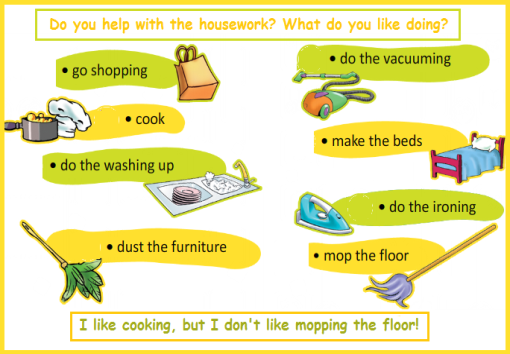
Ex:1 P: 105 • Ask students to answer the question. Invite students to make a list of duties and share their ideas in pair Ex: 2 P: 105 • Ask students to silently and individually read the text. When students have finished reading, introduce words from Glossary, ask students to write down words in their notebooks. Encourage students to make a list of household chores young people had in past. Check answers together when students have finished. Ex: 3 P: 105 • Ask students to read the text and their lists from exercise 1 again. Tell students they should work in pairs and decide who in their families performs each every duty. Encourage students to share their stories with the class |
• Learners answer the question. What are your daily chores and duties? Make a list and discuss your ideas in pairs. ANSWERS Student’s own answer • Learners read the text. Then make a list of household chores young people had in the past. ANSWERS Student’s own answer • Learners read the text and your list from exercise 1 again. Then work in pairs and decide who in your family performs each every duty. ANSWERS Student’s own answer |
Descriptor: - answer the question - discuss your ideas in pairs Total: 2 point
Self assessment Descriptor: - read the text - make a list of household chores Total: 2 point Descriptor: - read the text - work in pairs and decide Total: 1 point -Make CCQ questions Yes / No |
Card Worksheet Students book |
|
End of the lesson 5 min |
FEEDBACK Learners provide feedback on what they have learned at the lesson. Ex: P: Home task: Write the days |
|
Poster Success
|
|
Short term plan: term 4
|
Unit 8: Our neighbourhood |
Lesson 88 |
||
|
Teacher name: |
|
||
|
Date: |
|
||
|
Grade: 6 |
Number present: |
absent: |
|
|
Lesson title |
Animal Magic! |
||
|
Learning objectives |
6.1.1.1 use speaking and listening skills to solve problems creatively and cooperatively in groups 6.2.1.1 understand a sequence of supported classroom instructions 6.3.2.1 ask simple questions to get information about a limited range of general topics |
||
|
Lesson objectives |
Learners will be able to: - learn and use words for people and parts of the body - introduce the topic of strange animal facts |
||
|
Value links |
Tradition: Kazakh traditions and culture have been passed on from one generation to another through oral histories told by traditional Kazakh tribal leaders and elders. |
||
|
Plan |
|||
|
Stages / Time |
Teachers actions |
Students actions |
Assessment criteria |
Resources |
|
Beginning of the lesson Warming-up
Pre-learning «Brainstorming» method 7 min. |
Organization moment : 1.Greeting. Ask about the weather. The teacher sets the lesson objectives, letting students know what to anticipate from the lesson.
Lead – In
|
The aim: To develop pupils speaking skills and create friendly atmosphere Students' attention is drawn to the lesson. Students say different words from the picture •Learners remember previous lesson vocabulary •Learners answer the questions What do you see in this picture? What kind of animals do you see? Do they farm animals or wild animals? |
The teacher to assess learners for their ability. “Good job! Well done!” Formative Assessment
Good job! Descriptor: - remembers the lesson passed Point 1 Assessment criteria make basic statements related to |
Pictures worksheet Picture |
|
Middle of the lesson Presentation part. 30 min |
Vocabulary Ask students to look at the picture and label each of the people and parts as shown. You may wish to refer students to the Vocabulary database on page 139. Review answers together orally. You may wish to point out other body parts that were not labelled and ask students to say what they are. Ex:1 P: 106 • Choose a few volunteers to read each paragraph of the magazine article aloud. Encourage them to ignore all unknown vocabulary at this stage. Start by reading the disclaimer in the pink box. Give students a short time to match each paragraph with a photo; explain to students that one photo won't be used. Review the answers together before moving on. Ex: 2 P: 107 • Give students a short time to make questions by choosing correct phrases from the list a-e. Check the answers together orally. Ex: 3 P: 107 • Ask students to quickly read through the statements and identify any unknown vocabulary (eg they may not know that stuck in number 5 is the past participle of the verb stick). Ask students to read the article again, this time to themselves Ex: 4 P: 107 • Ask students to think about the strange facts they learned from reading the article. Give them a short time to answer the question by noting down one thing they learned. |
• Learners label the picture. ANSWERS 1 adult (man) 2 mouth 3 tooth/teeth 4 tongue 5 adult (woman) 6 foot/feet 7 child • Learners read the article and match each paragraph with a photo. There is one photo you won’t use ANSWERS 1 c 2 a 3 e 4 b • Learners match to make questions. ANSWERS 1 c 2 a 3 e 4 b 5 d • Learners read the article again and decide if the statements are true (T), false (F) or doesn’t say (DS). ANSWERS 1 T (In fact, it seems that goldfish can remember things for at least three months.) 2 F (They don't use a mouth like we do. They use their feet!) 3 DS 4 DS 5 F (...it's stuck to the bottom of its mouth.) 6 T (Their teeth are very sharp (of course!) but they fall out all the time - even when they're adults.) 7 F (A crocodile usually has about 70 teeth in its mouth...) 8 DS 9 T (Did you know... that in real life Walt Disney was scared of mice?) |
Descriptor: - look at the picture - label the picture. Total: 2 point
Self assessment Descriptor: - read the article - match each paragraph with a photo Total: 2 point Descriptor: - match to make questions. Total: 1 point Descriptor: - read the article again - mark the statement Total: 1 point -Make CCQ questions Yes / No |
Card Worksheet Students book |
|
End of the lesson 5 min |
FEEDBACK Learners provide feedback on what they have learned at the lesson. Ex: P: Home task: Write the days |
|
Poster Success
|
|
Short term plan: term 4
|
Unit 8: Our neighbourhood |
Lesson 89 |
||
|
Teacher name: |
|
||
|
Date: |
|
||
|
Grade: 6 |
Number present: |
absent: |
|
|
Lesson title |
Grammar 1 Regular and irregular plurals |
||
|
Learning objectives |
6.3.1.1 provide basic information about themselves and others at sentence level on an increasing range of general topics 6.4.7.1 recognise typical features at word, sentence and text level in a limited range of written genres 6.5.1.1 plan, write, edit and proofread work at text level with support on a limited range of general and curricular topics |
||
|
Lesson objectives |
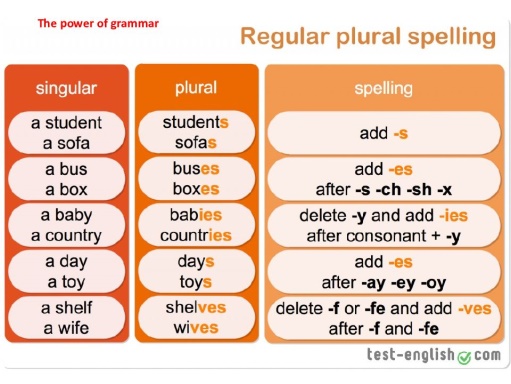
Learners will be able to: - facilitate students' understanding of the formation and usage of the regular and irregular plurals - give practice using regular plurals to talk about animal groups |
||
|
Value links |
Tradition: Kazakh traditions and culture have been passed on from one generation to another through oral histories told by traditional Kazakh tribal leaders and elders. |
||
|
Plan |
|||
|
Stages / Time |
Teachers actions |
Students actions |
Assessment criteria |
Resources |
|
Beginning of the lesson Warming-up
Pre-learning «Brainstorming» method 7 min. |
Organization moment : 1.Greeting. Ask about the weather. The teacher sets the lesson objectives, letting students know what to anticipate from the lesson.
Lead – In
|
The aim: To develop pupils speaking skills and create friendly atmosphere Students' attention is drawn to the lesson. Students say different words from the picture •Learners remember previous lesson vocabulary •Learners answer the questions What do you see in this picture? What kind of animals do you see? Do they farm animals or wild animals? |
The teacher to assess learners for their ability. “Good job! Well done!” Formative Assessment
Good job! Descriptor: - remembers the lesson passed Point 1 Assessment criteria make basic statements related to |
Pictures worksheet Picture |
|
Middle of the lesson Presentation part. 30 min |
Ex:1 P: 108 • Ask students to choose the correct word. Check answers orally and ask students to justify their answers, eg 1 cherries because nouns ending in a consonant + -y change to -ies. Ex: 2 P: 108 • Ask students to choose the correct form - regular or irregular - of the words in bold to fill in each gap. Check answers together orally. Ex: 3 P: 108 Put students into pairs, or allow them to choose a partner. Explain that they're going to look at the pictures together and ask each other the question What's happening in this picture? Students will take turns being Student A, the one who asks the question, and Student B, the one who provides short answers. |
• Learners choose the correct word. ANSWERS 1 cherries 2 watches 3 boxes 4 sheep 5 children • Learners write the words in bold in the plural to complete each question. ANSWERS 1 mice 2 children, lions 3 men, women, puppies 4 sheep, boxes 5 teeth, hands 6 flies, cherries 7 fish(es), boys • Learners in pairs, ask and answer about the pictures in exercise 2. ANSWERS 2 Four children are looking at two lions. 3 A man and two women are playing with two puppies. 4 Four sheep are jumping over two boxes. 5 A boy is holding a tooth in his hands. 6 Four flies are sitting on some cherries. 7 Five fish are swimming below two boys. |
Descriptor: - choose the correct word. Total: 2 point
Self assessment Descriptor: - choose the correct word. - complete each question. Total: 2 point Descriptor: - work in pairs - answer about the pictures Total: 1 point -Make CCQ questions Yes / No |
Card Worksheet Students book |
|
End of the lesson 5 min |
FEEDBACK Learners provide feedback on what they have learned at the lesson. Ex: P: Home task: Write the days |
|
Poster Success
|
|
Short term plan: term 4
|
Unit 8: Our neighbourhood |
Lesson 90 |
||
|
Teacher name: |
|
||
|
Date: |
|
||
|
Grade: 6 |
Number present: |
absent: |
|
|
Lesson title |
Vocabulary |
||
|
Learning objectives |
6.1.2.1 use speaking and listening skills to provide sensitive feedback to peers 6.2.2.1 understand with little or no support most specific information in extended talk on a wide range of general and curricular topics 6.3.7.1 use appropriate subject-specific vocabulary and syntax to talk about a range of general topics, and some curricular topics |
||
|
Lesson objectives |
Learners will be able to: - develop students' topic vocabulary - give practice in listening for gist and specific information |
||
|
Value links |
Tradition: Kazakh traditions and culture have been passed on from one generation to another through oral histories told by traditional Kazakh tribal leaders and elders. |
||
|
Plan |
|||
|
Stages / Time |
Teachers actions |
Students actions |
Assessment criteria |
Resources |
|
Beginning of the lesson Warming-up
Pre-learning «Brainstorming» method 7 min. |
Organization moment : 1.Greeting. Ask about the weather. The teacher sets the lesson objectives, letting students know what to anticipate from the lesson.
Lead – In
|
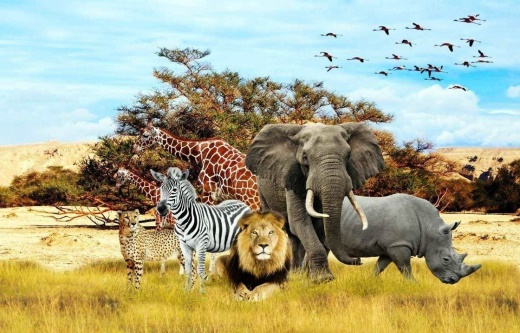
The aim: To develop pupils speaking skills and create friendly atmosphere Students' attention is drawn to the lesson. Students say different words from the picture •Learners remember previous lesson vocabulary •Learners answer the questions What do you see in this picture? What kind of animals do you see? Do they farm animals or wild animals? |
The teacher to assess learners for their ability. “Good job! Well done!” Formative Assessment
Good job! Descriptor: - remembers the lesson passed Point 1 Assessment criteria make basic statements related to |
Pictures worksheet Picture |
|
Middle of the lesson Presentation part. 30 min |
Ex:1 P: 109 • Tell students that all the words in bold describe the ways that people and animals move. Ask them to pay close attention to the names of animals as they try matching the sentences to the pictures. Explain they will use one of the pictures three times. Review answers together orally. Ex: 2 P: 109 • Give students a short time to review the cartoon and choose the correct word to describe what the people are doing. Review answers together orally. Ex: 1 P: 109 Explain to students they will be listening to someone describing two of the animals in the pictures. Ask students to look at the three pictures as they listen. As students listen, ask them to choose the correct picture for each animal that is described. Play the CD track once all the way through. Review answers orally together. Ex: 2 P: 109 Explain to students they will listen to the recording again. Ask students to fill in the gaps as they listen. Play the CD track once all the way through. Repeat if necessary. Review answers orally together. |
• Learners read the sentences and match them with the pictures. You will use a picture for three sentences. ANSWERS a 3 b1 c 4 d 2 e 6/7/8 f 5 • Learners look at the cartoon on the right and choose the correct word. ANSWERS 1 pull 2 picked 3 putting • Learners listen to someone describing two animals. Match each description with a picture. You will only use two of the pictures. ANSWERS 1 c 2 a • Learners listen again and write a word in each gap. ANSWERS 1 ears 2 mice 3 teeth 4 finger 5 pulls 6 humans 7 head 8 mouth |
Descriptor: - read the sentences - match them with the pictures Total: 2 point
Self assessment Descriptor: - match them with the pictures - choose the correct word Total: 2 point Descriptor: - listen to someone describing two animals - match each description with a picture Total: 1 point -Make CCQ questions Yes / No |
Card Worksheet Students book |
|
End of the lesson 5 min |
FEEDBACK Learners provide feedback on what they have learned at the lesson. Ex: P: Home task: Write the days |
|
Poster Success
|
|
Short term plan: term 4
|
Unit 8: Our neighbourhood |
Lesson 91 |
||
|
Teacher name: |
|
||
|
Date: |
|
||
|
Grade: 6 |
Number present: |
absent: |
|
|
Lesson title |
Speaking Summative Control work 7 for Unit 8. |
||
|
Learning objectives |
6.1.5.1 use feedback to set personal learning objectives 6.5.6.1 link, with some support, sentences into a coherent paragraph using basic connectors on a limited range of familiar general topics |
||
|
Lesson objectives |
Learners will be able to: - give practice in giving simple instructions - give students additional practice with giving instructions |
||
|
Value links |
Tradition: Kazakh traditions and culture have been passed on from one generation to another through oral histories told by traditional Kazakh tribal leaders and elders. |
||
|
Plan |
|||
|
Stages / Time |
Teachers actions |
Students actions |
Assessment criteria |
Resources |
|
Beginning of the lesson Warming-up
Pre-learning «Brainstorming» method 7 min. |
Organization moment : 1.Greeting. Ask about the weather. The teacher sets the lesson objectives, letting students know what to anticipate from the lesson.
Lead – In
|
The aim: To develop pupils speaking skills and create friendly atmosphere Students' attention is drawn to the lesson. Students say different words from the picture •Learners remember previous lesson vocabulary •Learners answer the questions What do you see in this picture? What kind of animals do you see? Do they farm animals or wild animals? |
The teacher to assess learners for their ability. “Good job! Well done!” Formative Assessment
Good job! Descriptor: - remembers the lesson passed Point 1 Assessment criteria make basic statements related to |
Pictures worksheet Picture |
|
Middle of the lesson Presentation part. 30 min |
Ex:1 P: 110 • Put students into pairs, or allow them to choose a partner. Explain that they're going to listen to a dialogue between a pet shop owner and a customer. Play the CD track once all the way through. Now ask each student pair to read the dialogue, with one student playing the role of the pet shop owner and one playing the role of the customer. When they have gone through the dialogue, they should swap roles Ex: 2 P: 110 • Students should remain in pairs to do the role-play. They will keep their roles as pet shop owner and customer, but this time the pet shop owner will give the customer instructions on how to care for a pet python. Encourage students to use the notes to help them in their role-play. •When they have finished, students can swap roles and repeat the exercise Ex: 1 P: 110 Encourage the students to say the words aloud, but don't correct their pronunciation at this stage. Explain to the students that as they listen, they should underline the correct syllable to show which part of the word is stressed the most. Play the recording and then check students' answers. Ex: 2 P: 110 Ask students to listen again to the recording and repeat the words. Remind them to be careful of which syllables they stress. |
• Learners listen. Then, in pairs, read the dialogue. ANSWERS Student’s own answer • Learners in pairs, do the role-play. Follow the instructions. When you have finished, swap roles ANSWERS Student’s own answer • Learners look at these words. Underline the syllable you think is stressed. Then listen and check. ANSWERS women python children gecko puppy kitten crocodile butterfly goldfish • Learners listen again and repeat the words in exercise 1. ANSWERS Student’s own answer |
Descriptor: - listen to a dialogue between a pet shop owner and a customer Total: 2 point
Self assessment Descriptor: - work in pairs - do the role-play Total: 2 point Descriptor: - listen again - repeat the words Total: 1 point -Make CCQ questions Yes / No |
Card Worksheet Students book |
|
End of the lesson 5 min |
FEEDBACK Learners provide feedback on what they have learned at the lesson. Ex: P: Home task: Write the days |
|
Poster Success
|
|

Short term plan: term 4
|
Unit 8: Our neighbourhood |
Lesson 92 |
||
|
Teacher name: |
|
||
|
Date: |
|
||
|
Grade: 6 |
Number present: |
absent: |
|
|
Lesson title |
Grammar 2 Articles |
||
|
Learning objectives |
6.3.1.1 provide basic information about themselves and others at sentence level on an increasing range of general topics 6.4.5.1 deduce meaning from context in short texts on a limited range of familiar general and curricular topics 6.5.1.1 plan, write, edit and proofread work at text level with support on a limited range of general and curricular topics |
||
|
Lesson objectives |
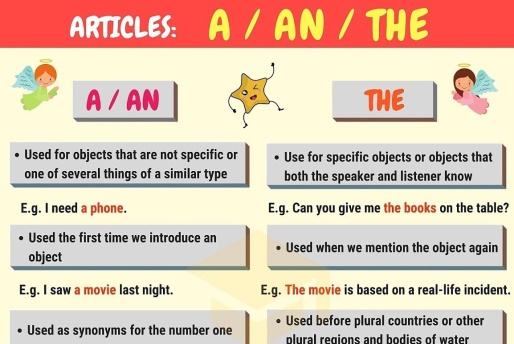
Learners will be able to: - facilitate students' understanding of the functions and usage of articles - introduce the concept of articles |
||
|
Value links |
Tradition: Kazakh traditions and culture have been passed on from one generation to another through oral histories told by traditional Kazakh tribal leaders and elders. |
||
|
Plan |
|||
|
Stages / Time |
Teachers actions |
Students actions |
Assessment criteria |
Resources |
|
Beginning of the lesson Warming-up
Pre-learning «Brainstorming» method 7 min. |
Organization moment : 1.Greeting. Ask about the weather. The teacher sets the lesson objectives, letting students know what to anticipate from the lesson.
Lead – In
|
The aim: To develop pupils speaking skills and create friendly atmosphere Students' attention is drawn to the lesson. Students say different words from the picture •Learners remember previous lesson vocabulary •Learners answer the questions What do you see in this picture? What kind of animals do you see? Do they farm animals or wild animals? |
The teacher to assess learners for their ability. “Good job! Well done!” Formative Assessment
Good job! Descriptor: - remembers the lesson passed Point 1 Assessment criteria make basic statements related to |
Pictures worksheet Picture |
|
Middle of the lesson Presentation part. 30 min |
Ex:1 P: 111 • Ask students to do their best to choose the appropriate article in each sentence, based on the rules they have studied. After they have filled in the gaps, have them listen to the conversation between Jake and Zak. Invite them to change their answers, if needed, as they listen to the recording. Review answers together orally. Ex: 2 P: 111 • Ask students to read each line of the dialogue and decide whether the article the is needed. Remind them that in some sentences the article the is not required, in which case they should choose the dash. After they have filled in the gaps, have them listen to the conversation between Jake and Zak. Invite them to change their answers, if needed, as they listen to the recording. Review answers together orally. Ex: 3 P: 111 Ask students to read each line of the dialogue and decide whether the articles the, a or an are needed. Remind them that in some sentences an article is not required, in which case they should choose the dash After they have filled in the gaps, ask them to listen to the conversation between Jake and Zak. |
• Learners write a or an. Then listen and check. ANSWERS 1 an 2 a 3 an 4 a 5 a • Learners choose the correct answer. A dash (–) means no article is necessary. Then listen and check. ANSWERS 1 the 2 - 3 - 4 the 5 - 6 - 7 the 8 - 9 the 10 The 11 the • Learners write the, a or an in each gap. If no article is necessary, put a dash (–).Then listen and check. ANSWERS 1 a 2 the 3 an/the 4 a 5 - 6 - 7 - |
Descriptor: - listen to a dialogue between a pet shop owner and a customer Total: 2 point
Self assessment Descriptor: - work in pairs - do the role-play Total: 2 point Descriptor: - listen again - repeat the words Total: 1 point -Make CCQ questions Yes / No |
Card Worksheet Students book |
|
End of the lesson 5 min |
FEEDBACK Learners provide feedback on what they have learned at the lesson. Ex: P: Home task: Write the days |
|
Poster Success
|
|
Short term plan: term 4
|
Unit 8: Our neighbourhood |
Lesson 93 |
||
|
Teacher name: |
|
||
|
Date: |
|
||
|
Grade: 6 |
Number present: |
absent: |
|
|
Lesson title |
Project: writing a note (giving instructions) |
||
|
Learning objectives |
6.3.1.1 provide basic information about themselves and others at sentence level on an increasing range of general topics 6.4.5.1 deduce meaning from context in short texts on a limited range of familiar general and curricular topics 6.5.1.1 plan, write, edit and proofread work at text level with support on a limited range of general and curricular topics |
||
|
Lesson objectives |
Learners will be able to: - to develop skills necessary to write simple instructions - to familiarise students with language used in giving instructions |
||
|
Value links |
Tradition: Kazakh traditions and culture have been passed on from one generation to another through oral histories told by traditional Kazakh tribal leaders and elders. |
||
|
Plan |
|||
|
Stages / Time |
Teachers actions |
Students actions |
Assessment criteria |
Resources |
|
Beginning of the lesson Warming-up
Pre-learning «Brainstorming» method 7 min. |
Organization moment : 1.Greeting. Ask about the weather. The teacher sets the lesson objectives, letting students know what to anticipate from the lesson.
Lead – In
|
The aim: To develop pupils speaking skills and create friendly atmosphere Students' attention is drawn to the lesson. Students say different words from the picture •Learners remember previous lesson vocabulary •Learners answer the questions What do you see in this picture? What kind of animals do you see? Do they farm animals or wild animals? |
The teacher to assess learners for their ability. “Good job! Well done!” Formative Assessment
Good job! Descriptor: - remembers the lesson passed Point 1 Assessment criteria make basic statements related to |
Pictures worksheet Picture |
|
Middle of the lesson Presentation part. 30 min |
Ex:1 P: 112 • Ask students to read the note quietly to themselves. Check they know the meanings of once ( = one time) and twice (= two times). Give them a short time to match the phrases to make sentences. Review answers together orally and ask students to justify their answers based on references in the note. Ex: 2 P: 112 • Explain to students that they're going to write down instructions for a pet sitter who will take care of their pet while they are on holiday. Ask them to think of two different pets; encourage them to use their imagination! Give students a short time to write down their two different pets Ex: 3 P: 112 Ask students to keep using their imagination to answer the questions about their pet's needs. Explain they will use this information to begin writing their instruction |
• Learners read the note and match to make sentences. ANSWERS 1 c 2 e 3 a 4 b 5 f 6 d • Learners imagine you have two different pets. First, decide what they are. Use your imagination! ANSWERS Student’s own answer • Learners now use your imagination to answer the following questions. Make notes in the table. ANSWERS Student’s own answer |
Descriptor: - read the note - make sentences. Total: 2 point
Self assessment Descriptor: - write down instructions for a pet - think of two different pets Total: 2 point Descriptor: - use your imagination to answer - make notes in the table Total: 1 point -Make CCQ questions Yes / No |
Card Worksheet Students book |
|
End of the lesson 5 min |
FEEDBACK Learners provide feedback on what they have learned at the lesson. Ex: P: Home task: Write the days |
|
Poster Success
|
|

Short term plan: term 4
|
Unit 8: Our neighbourhood |
Lesson 94 |
||
|
Teacher name: |
|
||
|
Date: |
|
||
|
Grade: 6 |
Number present: |
absent: |
|
|
Lesson title |
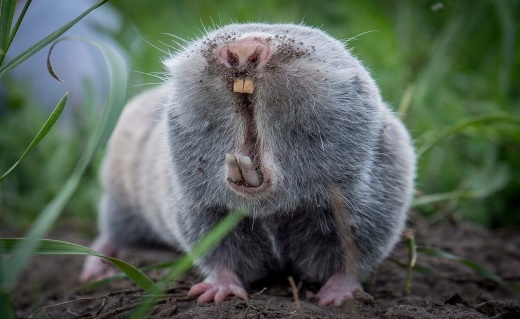
Culture Spot: Giant Mole Rat |
||
|
Learning objectives |
6.2.3.1 understand an increasing range of unsupported basic questions on general and curricular topics 6.3.2.1 ask simple questions to get information about a limited range of general and curricular topics 6.4.4.1 read and understand with some support a limited range of short fiction and non-fiction texts understanding of general topics |
||
|
Lesson objectives |
Learners will be able to: - to introduce an unusual Kazakh animal, to give practice in reading and talking on the topic |
||
|
Value links |
Tradition: Kazakh traditions and culture have been passed on from one generation to another through oral histories told by traditional Kazakh tribal leaders and elders. |
||
|
Plan |
|||
|
Stages / Time |
Teachers actions |
Students actions |
Assessment criteria |
Resources |
|
Beginning of the lesson Warming-up
Pre-learning «Brainstorming» method 7 min. |
Organization moment : 1.Greeting. Ask about the weather. The teacher sets the lesson objectives, letting students know what to anticipate from the lesson.
Lead – In
|
The aim: To develop pupils speaking skills and create friendly atmosphere Students' attention is drawn to the lesson. Students say different words from the picture •Learners remember previous lesson vocabulary •Learners answer the questions What do you see in this picture? What kind of animals do you see? Do they farm animals or wild animals? |
The teacher to assess learners for their ability. “Good job! Well done!” Formative Assessment
Good job! Descriptor: - remembers the lesson passed Point 1 Assessment criteria make basic statements related to |
Pictures worksheet Picture |
|
Middle of the lesson Presentation part. 30 min |
Ex:1 P: 113 • Ask students to answer the questions in pairs. You may ask students to answer individually, or work together as a class Ex: 2 P: 113 • Ask students to silently and individually read the text. Encourage them to ignore all unknown vocabulary at this stage. When students have finished, introduce words from Glossary and ask students to write down words from Glossary in their notebooks. Give students enough time to answer questions about the text. Check answers together orally. Ex: 3 P: 113 Ask students to read the text again. Tell students they should decide whether each statement is true or false and to circle T or F. Check answers together when students have finished. |
• Learners answer the question. Do you have your favourite animal? Why do you like it? Discuss your ideas in pairs. ANSWERS Student’s own answer • Learners read the text. What does it say about the habitat, appearance and behaviour of the giant mole rat? What did you find interesting about it? ANSWERS Student’s own answer • Learners read the text again and decide if the sentences are true or false ANSWERS 1T 2T 3F 4T 5T |
Descriptor: - answer the question - discuss your ideas in pairs. Total: 2 point
Self assessment Descriptor: - read the text - answer the question Total: 2 point Descriptor: - read the text - decide if the sentences are true or false Total: 1 point -Make CCQ questions Yes / No |
Card Worksheet Students book |
|
End of the lesson 5 min |
FEEDBACK Learners provide feedback on what they have learned at the lesson. Ex: P: Home task: Write the days |
|
Poster Success
|
|
Short term plan: term 4
|
Unit 9: Transport |
Lesson 95 |
||
|
Teacher name: |
|
||
|
Date: |
|
||
|
Grade: 6 |
Number present: |
absent: |
|
|
Lesson title |
At the Airport! |
||
|
Learning objectives |
6.2.1.1 understand a sequence of supported classroom instructions 6.6.9.1 use simple present and simple past regular and irregular forms to describe routines, habits and states on a limited range of familiar general and curricular topics 6.1.1.1 use speaking and listening |
||
|
Lesson objectives |
Learners will be able to: - to learn and use phrases to talk about travelling by plane - to give practice in reading for gist and specific information |
||
|
Value links |
Tradition: Kazakh traditions and culture have been passed on from one generation to another through oral histories told by traditional Kazakh tribal leaders and elders. |
||
|
Plan |
|||
|
Stages / Time |
Teachers actions |
Students actions |
Assessment criteria |
Resources |
|
Beginning of the lesson Warming-up
Pre-learning «Brainstorming» method 7 min. |
Organization moment : 1.Greeting. Ask about the weather. The teacher sets the lesson objectives, letting students know what to anticipate from the lesson.
Lead – In
|
The aim: To develop pupils speaking skills and create friendly atmosphere Students' attention is drawn to the lesson. Students say different words from the picture •Learners remember previous lesson vocabulary •Learners answer the questions What do you see in this picture? What kind of animals do you see? Do they farm animals or wild animals? |
The teacher to assess learners for their ability. “Good job! Well done!” Formative Assessment
Good job! Descriptor: - remembers the lesson passed Point 1 Assessment criteria make basic statements related to |
Pictures worksheet Picture |
|
Middle of the lesson Presentation part. 30 min |
Ex:1 P: 114 • Ask students to silently and individually read the text. Encourage them to ignore all unknown vocabulary at this stage. Ask students some very general and simple questions about the text, eg What kind of text is this? (an article), Who is it about? (people who work at airports), What is the article about? (airport jobs), etc. Check answers orally and/or write answers on the board. Ex: 2 P: 115 • Encourage students to do this task quickly but carefully (to help develop their scanning skills). Tell students they should decide whether each statement is true or false by circling 'T' or 'F. Encourage students to underline in the text where they find the answer. Ex: 3 P: 115 Ask students to form pairs, or allow them to choose their own partner. Explain that they're going to ask each other questions about airport travel. Ask one student in each pair to ask the questions in exercise 3 and note down the other student's replies. When the student has asked all the questions, they should swap roles. Wordpower! Tell students that all the answers appear in the article they have read. Ask students to try to complete the gaps without referring back to the text, but explain that they can if necessary. Remind students that they should only write one letter in each gap and that the first letter has been given to help them. Check the answers orally by asking students to read out the sentences. |
• Learners read the article and write ‘R’ for Rick, ‘J’ for Jennifer or ‘N’ for Nigella. ANSWERS 1 j 2 R 3 J 4 N 5 N 6 R • Learners read the article again and decide if the statements are true (T) or false (F). ANSWERS 1 T (Every time a plane lands, a mechanic like me checks that everything's fine.) 2 T (I check the wings carefully and tell the pilot that it's safe to fly.) 3 F (I explain to passengers how to stay safe on a plane,...) 4 T (To be a good flight attendant, you need to have a good smile and enjoy helping people.) 5 F (Sometimes someone brings their wife's or husband's passport by mistake, but we can't let them travel, I'm afraid.) 6 F (We put all the bags through a scanner so that we can see inside them.) • Learners talk about you. ANSWERS Student’s own answer. • Learners write one letter in each gap to complete the words. ANSWERS 1 catch 2 take off 3 land 4 passengers 5 safe 6 emergency 7 passport 8 baggage |
Descriptor: - read the article - write ‘R’ for Rick, ‘J’ for Jennifer or ‘N’ for Nigella. Total: 2 point
Self assessment Descriptor: - read the article again - decide if the statements Total: 2 point Descriptor: - decide if the statements - talk about you. Total: 1 point Descriptor: - write one letter in each gap - complete the words Total: 1 point -Make CCQ questions Yes / No |
Card Worksheet Students book |
|
End of the lesson 5 min |
FEEDBACK Learners provide feedback on what they have learned at the lesson. |
|
Poster Success
|
|

Short term plan: term 4
|
Unit 9: Transport |
Lesson 96 |
||
|
Teacher name: |
|
||
|
Date: |
|
||
|
Grade: 6 |
Number present: |
absent: |
|
|
Lesson title |
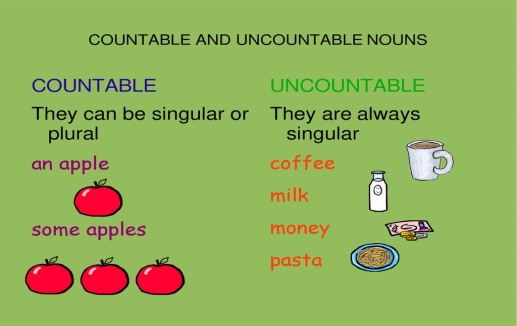
Grammar 1 Countable and uncountable |
||
|
Learning objectives |
6.2.4.1 understand the main points of supported extended talk on a range of general and curricular topics 6.4.5.1 deduce meaning from context in short texts on a limited range of familiar general and curricular topics 6.5.1.1 plan, write, edit and proofread work at text level with support on a limited range of general and curricular topics |
||
|
Lesson objectives |
Learners will be able to: - to facilitate students' understanding of the functions and usage of countable and uncountable nouns - to practise recognising and using countable and uncountable nouns |
||
|
Value links |
Tradition: Kazakh traditions and culture have been passed on from one generation to another through oral histories told by traditional Kazakh tribal leaders and elders. |
||
|
Plan |
|||
|
Stages / Time |
Teachers actions |
Students actions |
Assessment criteria |
Resources |
|
Beginning of the lesson Warming-up
Pre-learning «Brainstorming» method 7 min. |
Organization moment : 1.Greeting. Ask about the weather. The teacher sets the lesson objectives, letting students know what to anticipate from the lesson.
Lead – In
|
The aim: To develop pupils speaking skills and create friendly atmosphere Students' attention is drawn to the lesson. Students say different words from the picture •Learners remember previous lesson vocabulary •Learners answer the questions What do you see in this picture? What kind of animals do you see? Do they farm animals or wild animals? |
The teacher to assess learners for their ability. “Good job! Well done!” Formative Assessment
Good job! Descriptor: - remembers the lesson passed Point 1 Assessment criteria make basic statements related to |
Pictures worksheet Picture |
|
Middle of the lesson Presentation part. 30 min |
Ex:1 P: 116 • Ask students to choose the correct word or phrase. Check answers orally and ask students to justify their answers The information is correct. because information is an uncountable noun, so we use is. Ex: 2 P: 116 • Explain to students that they have to complete the gaps with the correct form of each of the nouns. Check answers orally and/or by writing them on the board. Ex: 3 P: 116 Explain to students that they have to tick the correct sentences and underline the mistakes in the incorrect sentences and write the correct word. Check answers orally and/or by writing them on the board. Ex: 4 P: 116 Ask students to read the text and choose the correct word to complete the sentences. When students have finished, check their answers together. Ask a student to read the text aloud. |
• Learners choose the correct word or phrase ANSWERS 1 is 2 food 3 pop music 4 advice • Learners write the words in bold in the singular or the plural. ANSWERS 1 hair 2 fruit 3 planes 4 work 5 trips • Learners tick (✔) the correct sentences. Underline the mistake in the incorrect sentences and write the correct word. ANSWERS 1 Don't leave your baggages alone in the airport. (baggage) 2 ✔ 3 ✔ 4 I got some informations about how you become a flight attendant. (information) 5 Lots of people were asleep on the furnitures in the airport. (furniture) 6 They usually play relaxing musics in airports. (music) • Learners choose the correct word or phrase. ANSWERS 1 gentlemen 2 information 3 metres 7 attendants are 8 food 4 kilometres 9 drinks 5 hours |
Descriptor: - choose the correct word - complete the task Total: 2 point
Self assessment Descriptor: - write the words in bold - complete the gaps Total: 2 point Descriptor: - tick (✔) the correct sentences - underline the mistake in the incorrect Total: 1 point Descriptor: - read the text - choose the correct word Total: 1 point -Make CCQ questions Yes / No |
Card Worksheet Students book |
|
End of the lesson 5 min |
FEEDBACK Learners provide feedback on what they have learned at the lesson. |
|
Poster Success
|
|
Short term plan: term 4
|
Unit 9: Transport |
Lesson 97 |
||
|
Teacher name: |
|
||
|
Date: |
|
||
|
Grade: 6 |
Number present: |
absent: |
|
|
Lesson title |
Vocabulary |
||
|
Learning objectives |
6.2.1.1 understand a sequence of supported classroom instructions 6.6.9.1 use simple present and simple past regular and irregular forms to describe routines, habits and states on a limited range of familiar general and curricular topic 6.3.1.1 provide basic information about themselves and others at sentence level on an increasing range of general topics |
||
|
Lesson objectives |
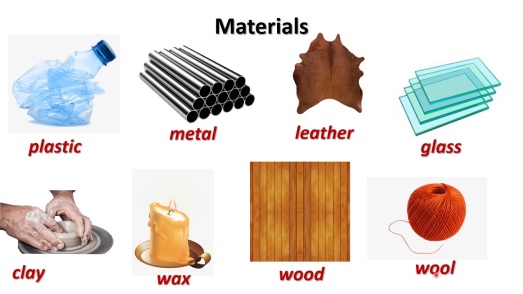
Learners will be able to: - to develop students' ability to recognise and use words that show what material objects are made of |
||
|
Value links |
Tradition: Kazakh traditions and culture have been passed on from one generation to another through oral histories told by traditional Kazakh tribal leaders and elders. |
||
|
Plan |
|||
|
Stages / Time |
Teachers actions |
Students actions |
Assessment criteria |
Resources |
|
Beginning of the lesson Warming-up
Pre-learning «Brainstorming» method 7 min. |
Organization moment : 1.Greeting. Ask about the weather. The teacher sets the lesson objectives, letting students know what to anticipate from the lesson.
Lead – In
|
The aim: To develop pupils speaking skills and create friendly atmosphere Students' attention is drawn to the lesson. Students say different words from the picture •Learners remember previous lesson vocabulary •Learners answer the questions What do you see in this picture? What kind of animals do you see? Do they farm animals or wild animals? |
The teacher to assess learners for their ability. “Good job! Well done!” Formative Assessment
Good job! Descriptor: - remembers the lesson passed Point 1 Assessment criteria make basic statements related to |
Pictures worksheet Picture |
|
Middle of the lesson Presentation part. 30 min |
Ex:1 P: 117 • * Ask students to look at the pictures and write a word from the box that shows the material each object is made of. You can also ask students to name the objects before they start the task. Encourage students to make a guess if they're not sure. Check the answers orally and/or write answers on the board. Ex: 2 P: 117 • Ask students to form pairs. Give each pair a different material and tell them to write it in the table. Explain to students that each pair has two minutes to write as many objects as they can think of that are made of that material. Remind them to write the words in English and to use their dictionaries if necessary. When they have finished, ask one student in each pair to read out their material and the objects they came up with. Ex: 1 P: 117 Explain to students that they are going to listen to someone trying to travel by plane. Ask students to choose the correct answer for each item, A, B or C, while they listen to the conversation. • Play the CD track once all the way through. Repeat if necessary. Ex: 2 P: 117 Explain to students that they will listen to the recording again. Ask them to read through the sentences before they listen, and to predict the answers. Play the CD again. Pause when you hear the first correct answer (Egypt), and ask students to write it in the gap. Check their answers. Check answers together with students. If necessary, play the recording again for students to check incorrect answers. |
• Learners write a word from the box to show the material each object is made of. ANSWERS 1 metal 2 plastic 3 cotton 4 rubber 5 glass 6 cardboard 7 leather 8 wood • Learners read the instructions and play the game. ANSWERS Student’s own answer • Learners listen to this conversation and choose the correct answer, A, B or C. ANSWERS 1 B (That's where your plane is.) 2 C (It's usually 20 minutes before the plane leaves.) 3 A (I asked for a seat next to the window.) • Learners listen again and write a word or short phrase in each gap. ANSWERS 1 Egypt 2 217 3 D13 4 9.30 5 7F |
Descriptor: - write a word from the box - show the material each object is made of. Total: 2 point
Self assessment Descriptor: - read the instructions - play the game. Total: 2 point Descriptor: - listen to this conversation - choose the correct answer Total: 1 point Descriptor: - listen again - write a word or short phrase Total: 1 point -Make CCQ questions Yes / No |
Card Worksheet Students book |
|
End of the lesson 5 min |
FEEDBACK Learners provide feedback on what they have learned at the lesson. |
|
Poster Success
|
|
Short term plan: term 4
|
Unit 9: Transport |
Lesson 98 |
||
|
Teacher name: |
|
||
|
Date: |
|
||
|
Grade: 6 |
Number present: |
absent: |
|
|
Lesson title |
Speaking Summative Control work 8 for unit 9. |
||
|
Learning objectives |
6.3.1.1 provide basic information about themselves and others at sentence level on an increasing range of general topics 6.2.4.1 understand the main points of supported extended talk on a range of general and curricular topics |
||
|
Lesson objectives |
Learners will be able to: - provide practice in talking about travelling by plane, and agreeing and disagreeing with people - to introduce students to the different stages of flying |
||
|
Value links |
Tradition: Kazakh traditions and culture have been passed on from one generation to another through oral histories told by traditional Kazakh tribal leaders and elders. |
||
|
Plan |
|||
|
Stages / Time |
Teachers actions |
Students actions |
Assessment criteria |
Resources |
|
Beginning of the lesson Warming-up
Pre-learning «Brainstorming» method 7 min. |
Organization moment : 1.Greeting. Ask about the weather. The teacher sets the lesson objectives, letting students know what to anticipate from the lesson.
Lead – In |
The aim: To develop pupils speaking skills and create friendly atmosphere Students' attention is drawn to the lesson. Students say different words from the picture •Learners remember previous lesson vocabulary •Learners answer the questions What do you see in this picture? What kind of animals do you see? Do they farm animals or wild animals? |
The teacher to assess learners for their ability. “Good job! Well done!” Formative Assessment
Good job! Descriptor: - remembers the lesson passed Point 1 Assessment criteria make basic statements related to |
Pictures worksheet Picture |
|
Middle of the lesson Presentation part. 30 min |
Ex:1 P: 118 • Ask students to form pairs, look at the pictures and talk with each other about which picture happens first, which picture happens second and so on. Go round the class helping students where necessary. When they have finished, check the answers orally, and/ or write them on the boar Ex: 2 P: 118 • Explain to students that one of them is a passenger who's travelling by plane and the other is working at the information desk. Once they've decided who plays which role, ask them to read the instructions and the example conversation below the instructions. They should then have a similar conversation. When the students have completed their roles, they should swap. You may wish to encourage them to ask and answer one additional question which is not in the instructions. Go round the class helping students where necessary Ex: 1 P: 118 Ask students to look at the words and guess how we say each of them. Encourage them to say the words aloud, but don't correct their pronunciation or answers at this stage. Additionally, you can ask students if they can tell you when we say a hard 'g' (when the g is in front of a consonant or the vowels a, o and u) and when we say a soft 'g' (when the g is in front of the vowels e and i). Explain to students that, rarely, when the g is in front of e and i, such as in the words girl and get, it is pronounced like a hard 'g'. Summative Control work 8 for unit 9. |
• Learners in pairs, put the pictures a–f on the left in the correct order (1–6). ANSWERS 1 c 2 d 3 e 4 a 5 f 6 b • Learners in pairs, do the role-play. Follow the instructions. When you have finished, swap roles. ANSWERS Student’s own answer • Learners write the words in the table. One word has both sounds in it. Write that word in both columns. Then listen and check. ANSWERS A hard'g' sound glass gate bag baggage ground guard A soft'g' sound (like'j') emergency engine baggage dangerous passenger |
Descriptor: - workin pairs - put the pictures a–f on the left in the correct order Total: 2 point
Self assessment Descriptor: - in pairs, do the role-play - follow the instructions. Total: 2 point Descriptor: - write the words in the table - write that word in both columns Total: 1 point -Make CCQ questions Yes / No |
Card Worksheet Students book |
|
End of the lesson 5 min |
FEEDBACK Learners provide feedback on what they have learned at the lesson. |
|
Poster Success
|
|
Short term plan: term 4
|
Unit 9: Transport |
Lesson 99 |
||
|
Teacher name: |
|
||
|
Date: |
|
||
|
Grade: 6 |
Number present: |
absent: |
|
|
Lesson title |
Grammar 2 Quantitative adjectives (some, any, many, much, a lot of, no) |
||
|
Learning objectives |
6.3.1.1 provide basic information about themselves and others at sentence level on an increasing range of general topics 6.2.4.1 understand the main points of supported extended talk on a range of general and curricular topics 6.5.5.1 link without support sentences using basic coordinating connectors |
||
|
Lesson objectives |
Learners will be able to: - to talk about amounts of things when they are countable nouns or uncountable nouns - to facilitate students' understanding of the functions and usage of quantitative adjectives |
||
|
Value links |
Tradition: Kazakh traditions and culture have been passed on from one generation to another through oral histories told by traditional Kazakh tribal leaders and elders. |
||
|
Plan |
|||
|
Stages / Time |
Teachers actions |
Students actions |
Assessment criteria |
Resources |
|
Beginning of the lesson Warming-up
Pre-learning «Brainstorming» method 7 min. |
Organization moment : 1.Greeting. Ask about the weather. The teacher sets the lesson objectives, letting students know what to anticipate from the lesson.
Lead – In |
The aim: To develop pupils speaking skills and create friendly atmosphere Students' attention is drawn to the lesson. Students say different words from the picture •Learners remember previous lesson vocabulary •Learners answer the questions What do you see in this picture? What kind of animals do you see? Do they farm animals or wild animals? |
The teacher to assess learners for their ability. “Good job! Well done!” Formative Assessment
Good job! Descriptor: - remembers the lesson passed Point 1 Assessment criteria make basic statements related to |
Pictures worksheet Picture |
|
Middle of the lesson Presentation part. 30 min |
Ex:1 P: 119 • Ask students to look at the phrases in exercise 1 and to cross out the ones that are incorrect. When students have finished, check the answers together. Ex: 2 P: 119 • Ask students to complete the exercise by choosing the correct word or phrase to complete each sentence. When students have finished, check the answers together orally. Ex: 3 P: 119 Ask students to read the text and to complete the exercise by putting the correct quantitative adjective into each gap. Remind students that they will use some of the words or phrases more than once, and that there is more than one answer for some gaps. When students have finished, check the answers together. Assign students to read out the text. Time permitting, repeat with as many students as possible. |
• Learners сross out the phrases which are incorrect. ANSWERS 1 some passengers
3
4 a lot of money 5 no information 6 many flights 7 no baggage 8
9 many jobs 10 any bags • Learners сhoose the correct word or phrase to complete each sentence. ANSWERS 1 many 4 no 2 a lot of 5 any 7 a lot of 3 much 6 any 8 many • Learners write a word or phrase from the box in each gap. You will use some words or phrases more than once. ANSWERS 1 a lot of/many 2 no 3 A lot of 4 some 5 much/a lot of 6 any 7 any 8 no |
Descriptor: - look at the phrases in exercise - cross out the ones that are incorrect Total: 2 point
Self assessment Descriptor: - сhoose the correct word - complete each sentence. Total: 2 point Descriptor: - write a word or phrase from the box - write a word or phrase from the box Total: 1 point -Make CCQ questions Yes / No |
Card Worksheet Students book |
|
End of the lesson 5 min |
FEEDBACK Learners provide feedback on what they have learned at the lesson. |
|
Poster Success
|
|
Short term plan: term 4
|
Unit 9: Transport |
Lesson 100 |
||
|
Teacher name: |
|
||
|
Date: |
|
||
|
Grade: 6 |
Number present: |
absent: |
|
|
Lesson title |
Project: writing a description of a scene |
||
|
Learning objectives |
6.2.2.1 understand with little or no support most specific information in extended talk on a wide range of general and curricular topics 6.3.7.1 use appropriate subject-specific vocabulary and syntax to talk about a range of general topics, and some curricular topics |
||
|
Lesson objectives |
Learners will be able to: - to develop the skills necessary to write a description of a scene - to familiarise students with the concept of descriptions |
||
|
Value links |
Tradition: Kazakh traditions and culture have been passed on from one generation to another through oral histories told by traditional Kazakh tribal leaders and elders. |
||
|
Plan |
|||
|
Stages / Time |
Teachers actions |
Students actions |
Assessment criteria |
Resources |
|
Beginning of the lesson Warming-up
Pre-learning «Brainstorming» method 7 min. |
Organization moment : 1.Greeting. Ask about the weather. The teacher sets the lesson objectives, letting students know what to anticipate from the lesson.
Lead – In |
The aim: To develop pupils speaking skills and create friendly atmosphere Students' attention is drawn to the lesson. Students say different words from the picture •Learners remember previous lesson vocabulary •Learners answer the questions What do you see in this picture? What kind of animals do you see? Do they farm animals or wild animals? |
The teacher to assess learners for their ability. “Good job! Well done!” Formative Assessment
Good job! Descriptor: - remembers the lesson passed Point 1 Assessment criteria make basic statements related to |
Pictures worksheet Picture |
|
Middle of the lesson Presentation part. 30 min |
Ex:1 P: 120 • Ask students to read the description again and match each part of the description with a statement. Check answers together when students have finished. Ex: 2 P: 120 • Explain to students that they are going to write a description similar to the one in the writing section. Ask them to look at the picture and answer the questions below. Explain to them that they can answer the questions with a short phrase. Check answers together when students have finished. Ex: 3 P: 120 Explain to students that they are going to complete the Planner on page 127. Point to the first column and explain that these are the different parts of the description. Point to the second column and explain that this is useful information about each part. Ask the students to write a title and to write as much information as they can (in note form) in the third column. Check their planners. |
• Learners label the picture ANSWERS 1 d 2 b 3 a 4 c • Learners read the description and match each paragraph with a statement. ANSWERS 1 a food truck 2 a plane 3 small planes/airport building / a plane landing 4 (part of) an/the airport building • Learners look at the picture and answer the questions. ANSWERS Student’s own answer |
Descriptor: - read the description again - label the picture Total: 2 point
Self assessment Descriptor: - read the description - match each paragraph Total: 2 point Descriptor: - look at the picture - answer the questions. Total: 1 point -Make CCQ questions Yes / No |
Card Worksheet Students book |
|
End of the lesson 5 min |
FEEDBACK Learners provide feedback on what they have learned at the lesson. |
|
Poster Success
|
|
Short term plan: term 4
|
Unit 9: Transport |
Lesson 101 |
||
|
Teacher name: |
|
||
|
Date: |
|
||
|
Grade: 6 |
Number present: |
absent: |
|
|
Lesson title |
Culture Spot: Air Astana |
||
|
Learning objectives |
6.3.1.1 provide basic information about themselves and others at sentence level on an increasing range of general topics 6.4.7.1 recognize typical features at word, sentence and text level in a limited range of written genres |
||
|
Lesson objectives |
Learners will be able to: - to introduce the airline of the Republic of Kazakhstan, to give practice in reading and talking on the topic |
||
|
Value links |
Tradition: Kazakh traditions and culture have been passed on from one generation to another through oral histories told by traditional Kazakh tribal leaders and elders. |
||
|
Plan |
|||
|
Stages / Time |
Teachers actions |
Students actions |
Assessment criteria |
Resources |
|
Beginning of the lesson Warming-up
Pre-learning «Brainstorming» method 7 min. |
Organization moment : 1.Greeting. Ask about the weather. The teacher sets the lesson objectives, letting students know what to anticipate from the lesson.
Lead – In |
The aim: To develop pupils speaking skills and create friendly atmosphere Students' attention is drawn to the lesson. Students say different words from the picture •Learners remember previous lesson vocabulary •Learners answer the questions What do you see in this picture? What kind of animals do you see? Do they farm animals or wild animals? |
The teacher to assess learners for their ability. “Good job! Well done!” Formative Assessment
Good job! Descriptor: - remembers the lesson passed Point 1 Assessment criteria make basic statements related to |
Pictures worksheet Picture |
|
Middle of the lesson Presentation part. 30 min |
Ex:1 P: 121 • Ask students to answer the questions in pairs. Invite students to share their stories with the class. Ex: 2 P: 121 • Ask students to silently and individually read the text. Encourage students to answer the question. When students have finished reading, introduce words from Glossary. Ask students to write down words from Glossary in their notebooks. Ex: 3 P: 121 Ask students to read the text again. Tell students they should complete the sentences to make them true about the text. Check answers together orally. |
• Learners have you ever flown by plane? By which airline have you travelled? Where did you go? Discuss your ideas in pairs. ANSWERS Student’s own answer • Learners read the text about Air Astana. What is Economy Sleeper? ANSWERS Passengers of the Economy Sleeper get a row of three Economy Class seats, turn-down service, Business Class amenity kits and KCTV, along with various perks at the airport, including access to Business Class lounges • Learners read the text again and choose the correct word in each sentence, so that the sentence is true for the text. ANSWERS 1. Air Astana sends its planes to 64 destinations both domestic and international. 2. Nearly 4,700 people work for this airline. 3. It employs more than 500 pilots. 4. The airline started offering new type of class in 2015 |
Descriptor: - answer the question. - discuss your ideas in pairs. Total: 2 point
Self assessment Descriptor: - read the text - answer the question Total: 2 point Descriptor: - read the text - choose the correct word Total: 1 point -Make CCQ questions Yes / No |
Card Worksheet Students book |
|
End of the lesson 5 min |
FEEDBACK Learners provide feedback on what they have learned at the lesson. |
|
Poster Success
|
|
Short term plan: term 4
|
Unit 9 Transport. |
Lesson 102 |
||
|
Teacher’s name: |
|
||
|
Date: |
|
||
|
Grade: 6 |
Number present: |
absent: |
|
|
Lesson title |
Summative Control work for the 4th term. |
||
|
Learning objectives |
6.2.4.1 Understand with limited support the main points of extended talk on a range of general and curricular topics 6.4.2.1 Understand independently specific information and detail in short, simple texts on a limited range of general and curricular topics 6.5.3.1 Write with some support about personal feelings and opinions on a limited range of familiar general and curricular topics 6.3.7.1 Use appropriate subject-specific vocabulary and syntax to talk about a limited range of general topics, and some curricular topics |
||
|
Lesson objectives |
Learners will be able to: -follow the direction of the talk by tracking the key words - pronounce words and phrases correctly - identify specific information |
||
|
Plan |
|||
|
Stages / Time |
Teachers’ actions |
Students’ actions |
Assessment criteria |
Resources |
|
Beginning of the lesson 5 min |
Organization moment 1.Greeting. Ask about the weather. The teacher sets the lesson objectives, letting students know what to anticipate from the lesson. Warm-up
Lead – In |
Students' attention is drawn to the lesson. Students discuss the pictures in pairs. Determines the topic and aim of the lesson Students say different words from the picture |
Formative Assessment
Good job! Assessment criteria -Identify detailed information in extended conversation with support |
Pictures Student’s book |
|
Middle of the lesson Presentation part. 35 min |
Listening Task. Listen to the talk twice. CD3. Tapescript 3. And transcript for listening task can be found after the mark scheme Mark sentences as True or False. Fill in the gaps. Write no more than ONE WORD OR A NUMBER for each answer. Reading Task. Read the dialogue about transportation Choose the right option. Answer the questions. Write NO MORE THAN THREE WORDS OR A NUMBER for each answer Answer the questions. Write NO MORE THAN THREE WORDS OR A NUMBER for each answer Writing Task. Choose ONE of the topics below. Speaking Task. Choose one of the cards and make up an individual talk. Use subject related vocabulary while talking on a given topic. You have 1 minute to prepare and 1-2 minutes to talk Conclusion during the lesson some tasks differentiated by outcomes of the students and by their abilities. |
Students listen to the talk twice Answers: Student’s own answer Differentiation: «Verbal support» method is used to help Students use new words in the text. Students read the dialogue about transportation Answers: Students choose ONE of the topics below. Answers: Students choose one of the cards and make up an individual talk |
Descriptor: - listen to the talk twice - Mark sentences as True or False. Total: 5 point Descriptor: -can read the dialogue about transportation Total: 5 point Descriptor: - answer the questions. -can choose ONE of the topics below. Total: 6 point Descriptor: - choose one of the cards - make up an individual talk Total: 6 point Answers: |
Worksheets |
|
End of the lesson 5 min |
FEEDBACK Learners provide feedback on what they have learned at the lesson. |
|
Students evaluate each other and encourage classmate with phrases like: Well done! Brilliant! |
Poster
|


Short term plan: term 4
|
Unit 9: Transport |
Lesson 103 |
||
|
Teacher name: |
|
||
|
Date: |
|
||
|
Grade: 6 |
Number present: |
absent: |
|
|
Lesson title |
CLIL Science: Strange Animals |
||
|
Learning objectives |
6.3.1.1 provide basic information about themselves and others at sentence level on an increasing range of general topics 6.2.4.1 understand the main points of supported extended talk on a range of general and curricular topics 6.5.5.1 link without support sentences using basic coordinating connectors |
||
|
Lesson objectives |
Learners will be able to: - to learn about Australian animals, to learn and practice new vocabulary in the subject area |
||
|
Value links |
Tradition: Kazakh traditions and culture have been passed on from one generation to another through oral histories told by traditional Kazakh tribal leaders and elders. |
||
|
Plan |
|||
|
Stages / Time |
Teachers actions |
Students actions |
Assessment criteria |
Resources |
|
Beginning of the lesson Warming-up
Pre-learning «Brainstorming» method 7 min. |
Organization moment : 1.Greeting. Ask about the weather. The teacher sets the lesson objectives, letting students know what to anticipate from the lesson.
Lead – In |
The aim: To develop pupils speaking skills and create friendly atmosphere Students' attention is drawn to the lesson. Students say different words from the picture •Learners remember previous lesson vocabulary •Learners answer the questions What do you see in this picture? What kind of animals do you see? Do they farm animals or wild animals? |
The teacher to assess learners for their ability. “Good job! Well done!” Formative Assessment
Good job! Descriptor: - remembers the lesson passed Point 1 Assessment criteria make basic statements related to |
Pictures worksheet Picture |
|
Middle of the lesson Presentation part. 30 min |
Ex:1 P: 123 • Ask students to read the text on page 122. • Encourage students to answer the question. Ex: 2 P: 123 • Ask students to look at the map of Australia and label the areas with the words in the box. Go round the class helping students where necessary. Ask students to compare their answers in pairs. Check answers with the class. Ex: 3 P: 123 Ask students to match these Australian animals with the descriptions. Give students some time to do the exercise. Check answers orally and/or writing them on the board. Ex: 4 P: 123 Tell students they should decide whether each statement is true or false by circling 'T' or 'F' Check answers together when students have finished. |
• Learners read about some strange animals that live in Australia ANSWERS The duck-billed platypus is special because it is a mammal but it does not give birth to live young like other mammals. It lays eggs • Learners look at the map of Australia. Label the areas (1–6) with the words in the box. ANSWERS 1 river 2 mountains 3 desert 4 beach 5 forest 6 lake • Learners match these Australian animals with the descriptions. ANSWERS 1 d (kangaroo) 2a (koala) 3 b (echidna) 4 c (duck-billed platypus • Learners are the sentences true (T) or false (F)? ANSWERS 1 T 2 T 3 F 4 T 5 T 6 F |
Descriptor: - read about some strange animals - answer the question Total: 2 point
Self assessment Descriptor: -look at the map of Australia - label the areas Total: 2 point Descriptor: - match these Australian animal - complete the task Total: 1 point -Make CCQ questions Yes / No |
Card Worksheet Students book |
|
End of the lesson 5 min |
FEEDBACK Learners provide feedback on what they have learned at the lesson. |
|
Poster Success
|
|









 Бұл курс Қазақстан Республикасы Оқу-ағарту министрлігімен келісілген










