ЖИ көмекші


жүктеу мүмкіндігіне ие боласыз
Бұл материал сайт қолданушысы жариялаған. Материалдың ішінде жазылған барлық ақпаратқа жауапкершілікті жариялаған қолданушы жауап береді. Ұстаз тілегі тек ақпаратты таратуға қолдау көрсетеді. Егер материал сіздің авторлық құқығыңызды бұзған болса немесе басқа да себептермен сайттан өшіру керек деп ойласаңыз осында жазыңыз
 29 Қазан 2025
 76
76
Vocabulary. Modifiers
Short term plan
|
Unit 2: Daily life and shopping |
lesson 15 |
||
|
Teacher name: |
Mamurzayeva G.R |
||
|
Date |
19.09.2025 |
||
|
Grade: 8 |
Number present: |
absent: |
|
|
Lesson title |
Vocabulary. Modifiers |
||
|
Learning objectives |
8.2.2.1 understand with little or no support most specific information in extended talk on a wide range of general and curricular topics; 8.3.7.1 use appropriate subject-specific vocabulary and syntax to talk about a range of general topics, and some curricular topics |
||
|
Lesson objectives |
Learners will be able to: - Recognize and understand common modifiers of adjectives. - Use modifiers to make descriptions stronger or weaker. - Speak and write sentences with correct use of modifiers. |
||
|
Plan |
|||
|
Stages / Time |
Teachers’ actions |
Students’ actions |
Assessment criteria |
Resources |
|
Start 5 min Main part 10 min |
Organization moment Instilling values of theprogram“Birtutastarbiye” Honesty and fairness Unity and solidarity Diligence and professional competence –respect Justice and Responsibility Independence and Patriotism 1.Greeting. Ask about the weather. Warm-up Write two sentences on the board: The film was interesting. The film was really interesting. Ask: Which sentence is stronger? Why? → Introduce “modifiers = words that change the strength of adjectives.” Presentation Present modifiers in two groups: Strengthening: very, really, extremely, too Weakening:quite, a bit, a little, not very, pretty Give examples: It’s very cold today. This book is quite interesting. The shop is too expensive. Draw a scale on the board (weak → strong) and place modifiers on it. Ex: 1 p:20 Ask students to open their books at page 20. Put students into pairs to answer the question about the objects in the photos. in Do not check answers at this point. Students will do that Exercise 2 by listening to the recording. Values to Integrate (BirtutasTarbiye)Respect & Cooperation: Group work encourages listening to and valuing others’ ideas. |
Learners read the given sentences on the board and guess the topic and share with their ideas. Remember and recognize the main vocabulary. Students work with a partner. Look at the objects in the pictures and guess what they are used for. Which do you think is a) the most expensive and b) the cheapest? ANSWERS : Students own answer |
Teacher evaluate pupils with phrases like: “Good job! Well done!”
Descriptor: - answer the question about the objects in the photos Total: 3 point |
Flashcards / pictures (e.g., tall building, cheap vs. expensive items, hot vs. cold weather) Handouts with fill-in-the-blank activities Whiteboard&markers |
|
8 min 8 min 10 min |
Ex: 2 p:20 Before you play the recording, put the word stall /sto:l/ on the board and check that students understand that it refers to a stand at which particular goods are sold at a market or a covered area. Tell students they are going to listen to a reporter at a market in Brixton in London talking to stallholders (a person who owns or runs a stall) about the objects that they sell. Play the recording for students to check the answers that they gave in Exercise 1. Students can compare their answers in pairs before you check answers with the whole class. Values to Integrate (BirtutasTarbiye)Responsibility: Students are accountable for choosing and justifying answers. Ex: 3 p:20 Refer students back to the objects pictured above Exercise 1, which are labelled a, b and c. Play the recording again for students to listen and match the objects with the sentences. Students can compare their answers in pairs before you check answers with the whole class. Values to Integrate (BirtutasTarbiye)Confidence: Explaining choices helps students express their thinking clearly. Ex: 4 p:19 Refer students to the words and phrases in the box. Explain that they are used in front of adjectives to modify the meaning of those adjectives, e.g. extremely when used in front of tired intensifies the expression of the speaker's tiredness. We imagine that someone who says they are extremely tired is even more tired than someone who simply says they are tired. Tell students they are going to listen to extracts from the recording in order to complete the gapped sentences with the words and phrases in the box. Play the recording. Values to Integrate (BirtutasTarbiye) Critical Thinking: Differentiating between connectors develops logical reasoning. |
Students listen to a radio reporter talking about the three objects and check your answers. ANSWERS : a) reading light and heater - £250 b) battery charger - £100 c) fan- £5 Students listen again and match the objects with the sentences. ANSWERS: 1b 2 a, b 3 c 4 a 5 c 6 a Students listen to the extracts from the recording and complete them with the modifiers in the box. Then listen, check and repeat. ANSWERS: 2 really 3 ridiculously 4 extremely 5 kind of 6 much too 7 a bit 8 totally |
Descriptor: -. listen to a radio reporter talking about the three objects Total:2 point
Descriptor: -listen again and match the objects Total: 2 point Descriptor: -listen to the extracts from the recording and complete Total: 3 point
-Make CCQ questions Yes / No |
|
|
End 5 min |
- Quick fire round: Teacher says an adjective, students give a full sentence with a modifier. - Homework: Write a short paragraph (6–7 sentences) describing your town using at least 5 modifiers. |
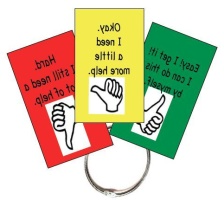
Ss use their stickers to show their knowledge according to the lesson |
Poster |
|


 Жүктеу


 Жүктеу
шағым қалдыра аласыз




 Бұл курс Қазақстан Республикасы Оқу-ағарту министрлігімен келісілген